



Mohammad Reza Pahlavi
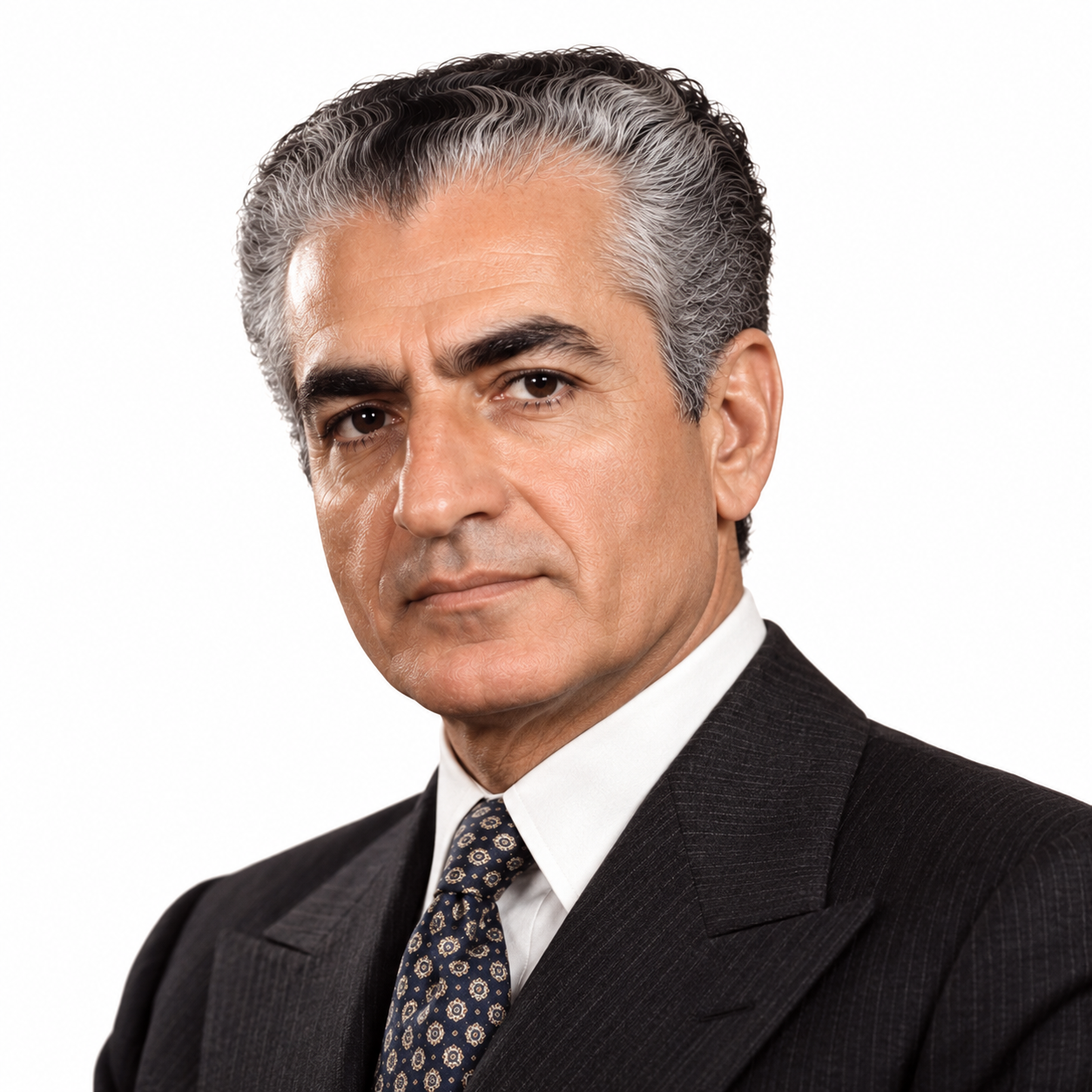
The last Shah of Iran whose rapid modernization efforts and autocratic rule ended in the 1979 Islamic Revolution.
At a glance
- Born
- 1919 CE
- Died
- 1980 CE
- Era classification
- 60
- Homeland
- Iran
- Period
- 1919–1980 CE
- Field
- Politics, Leadership & War
- Language
- Persian
- Religion
- Islam
- Gender
- male
Biography
Mohammad Reza Pahlavi was born in 1919 to Reza Shah, the founder of the Pahlavi dynasty. He ascended to the Sun Throne in 1941 during World War II, following the Anglo-Soviet invasion of Iran that forced his father's abdication. His early reign was characterized by political instability, foreign interference, and a prolonged power struggle with the Iranian parliament.
In 1953, a pivotal moment in his reign occurred when a CIA and MI6-backed coup d'état overthrew the democratically elected Prime Minister Mohammad Mosaddegh, who had nationalized Iran's oil industry. This intervention allowed the Shah to consolidate his autocratic power. He subsequently aligned Iran closely with the United States and the Western bloc during the Cold War, relying on his domestic intelligence agency, the SAVAK, to suppress political dissent and maintain control.
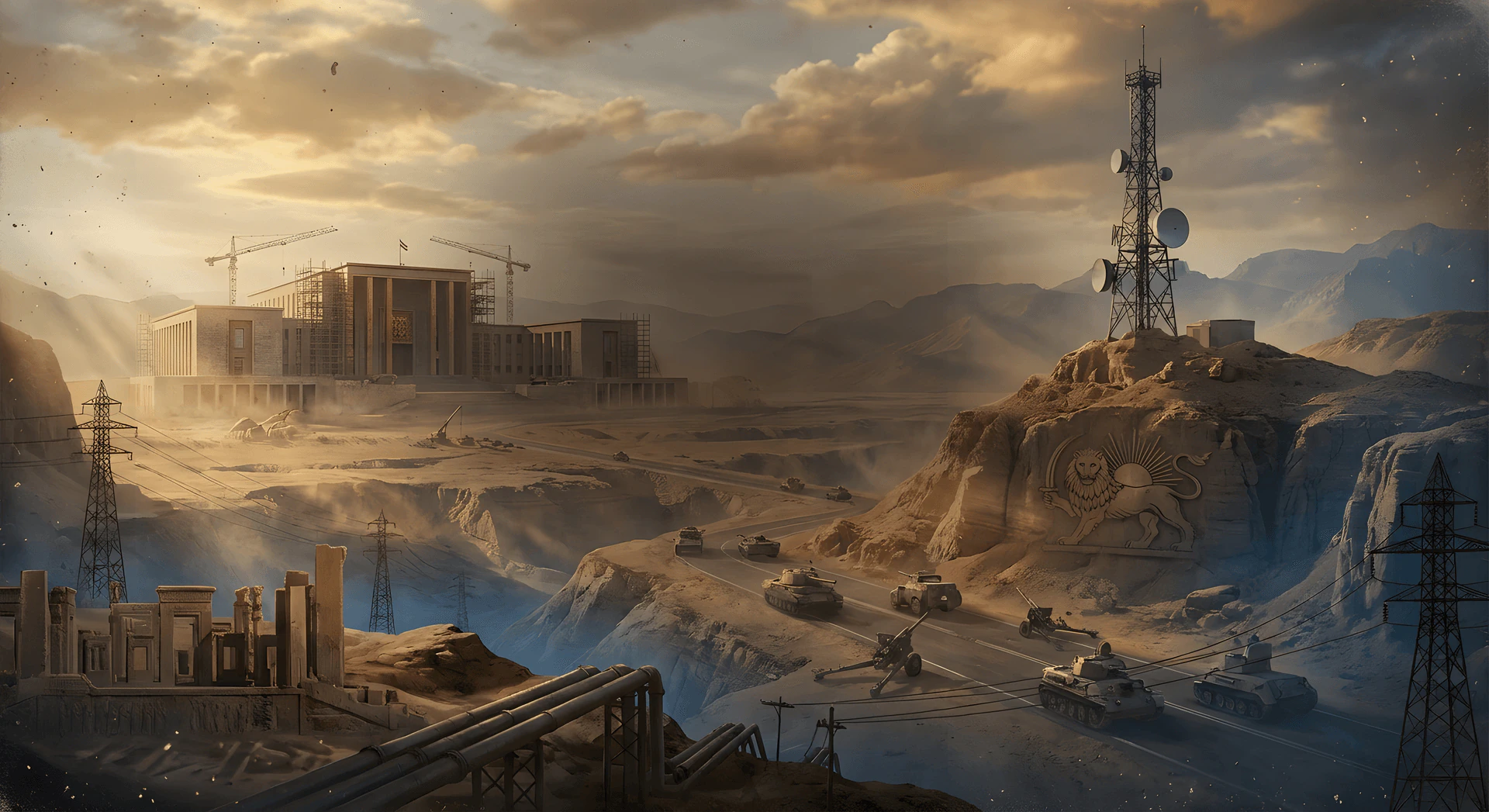
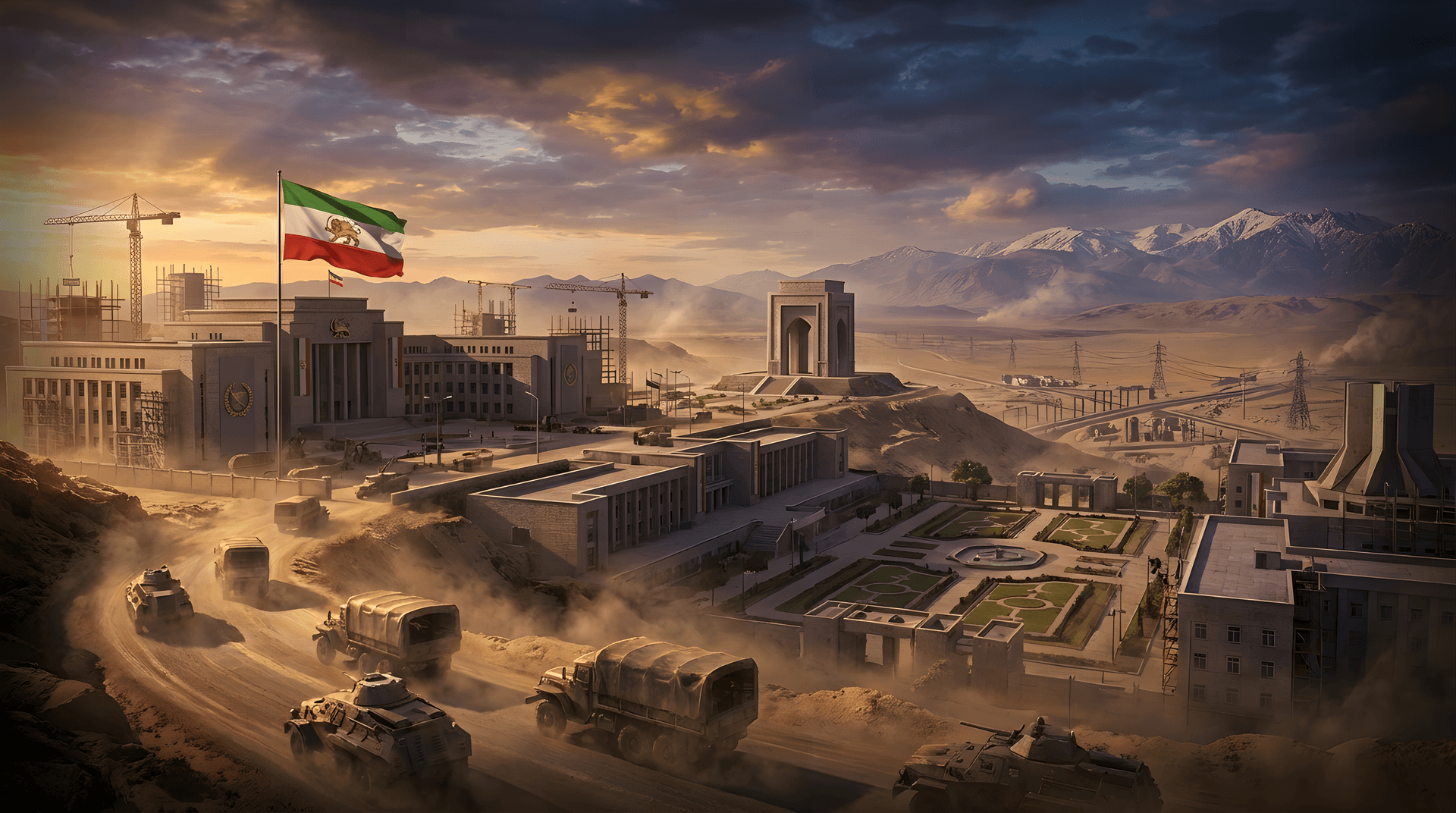
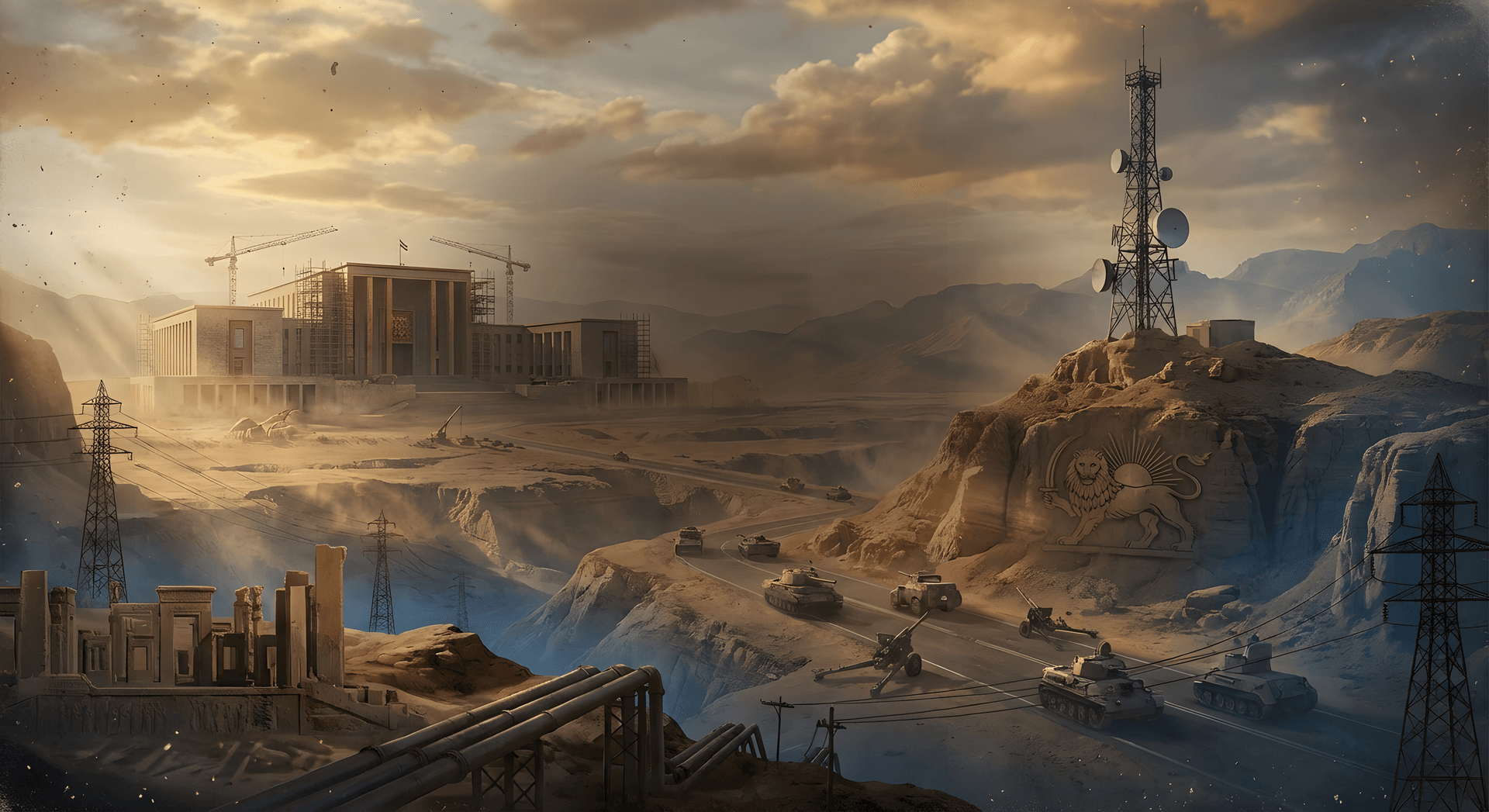
During the 1960s, the Shah launched the 'White Revolution', a sweeping program of economic and social reforms designed to transform Iran into a global power. The initiative included land reform, massive infrastructure development, the expansion of education, and the enfranchisement of women. While these policies spurred rapid economic growth and urbanization, they also disrupted traditional social structures and deeply alienated the conservative Shia clergy.
Despite the influx of massive oil wealth in the 1970s, widespread corruption, severe political repression, and stark economic inequality fueled mounting public anger. A broad coalition of leftists, students, and religious conservatives united against his regime. In early 1979, the massive uprisings of the Islamic Revolution forced the Shah to flee Iran. He lived his final months in exile and died of cancer in Cairo, Egypt, in 1980.
Portrayal characteristics
Saved editorial descriptions used for the reconstruction; these are not authenticated statements by the depicted person.
- Autocratic
- Modernizing
- Pro-Western
- Ambitious
- Secular-leaning
Images & artwork 5
Connections
Forough Farrokhzad
Subject & Sovereign
Farrokhzad lived and produced her most influential work during the reign of the last Shah of Iran.
Her poetry often challenged the traditional social and patriarchal norms that persisted during the Pahlavi Dynasty's modernization efforts. Her work was occasionally censored or viewed as controversial by the conservative elements of the society the Shah governed.
Jimmy Carter
Political Allies & Crisis
The Iranian Revolution and the subsequent fall of the Shah's regime occurred during Carter's presidency.
Carter's decision to allow the exiled Shah into the United States for medical treatment triggered the 1979 Iran Hostage Crisis. This event dominated the final year of Carter's presidency and contributed significantly to his 1980 election defeat.
Mahmoud Hessabi
Political Appointment
Hessabi served as the Minister of Education during the reign of Mohammad Reza Pahlavi.
In addition to his scientific work, Hessabi was a senator and a cabinet member under the Shah. He utilized his political influence to establish the University of Tehran and various other scientific institutions in Iran.
Jimmy Carter
Complex Diplomatic Relationship
US President Jimmy Carter's human rights policies inadvertently weakened the Shah's autocratic grip, contributing to the 1979 Islamic Revolution. Carter's later decision to admit the exiled Shah to the US for medical treatment triggered the Iran Hostage Crisis.
The relationship between Mohammad Reza Pahlavi and Jimmy Carter was fraught with contradiction and ultimately disastrous for both men. When Carter took office in 1977, his administration's emphasis on global human rights put pressure on the Shah to loosen political repression and curb the abuses of his secret police, SAVAK. The Shah, heavily dependent on US military support, reluctantly initiated a brief period of political liberalization, which inadvertently provided an opening for revolutionary forces to mobilize. Despite this friction, Carter visited Tehran on New Year's Eve 1977, famously toasting the Shah's Iran as an 'island of stability in one of the more troubled areas of the world.' As the Islamic Revolution escalated in 1978, the Carter administration sent mixed signals, oscillating between supporting the Shah and urging democratic reforms. After the Shah fled Iran in early 1979, Carter initially refused him entry to the US. However, in October 1979, Carter relented on humanitarian grounds, allowing the cancer-stricken Shah into New York for medical treatment. This decision enraged the new revolutionary government in Tehran, directly sparking the takeover of the US Embassy and the 444-day Iran Hostage Crisis, which doomed Carter's presidency.
Anwar El Sadat
Allies & Final Host
Anwar El Sadat was a staunch ally of the Shah and provided him with refuge in Egypt after he was exiled during the 1979 Islamic Revolution. Sadat defied the new Iranian regime by hosting the Shah and giving him a state funeral upon his death.
Throughout the 1970s, Mohammad Reza Pahlavi and Egyptian President Anwar El Sadat cultivated a strong geopolitical alliance, united by their pro-Western stances and opposition to radical leftist and Islamist movements in the Middle East. The Shah provided crucial financial and oil support to Egypt, particularly after the Yom Kippur War and during Egypt's pivot away from the Soviet Union. When the Islamic Revolution forced the Shah to flee Iran in 1979, he became a political pariah, rejected by many former Western allies, including the United States, who feared angering the new regime in Tehran. Sadat, however, remained fiercely loyal to his friend, welcoming the ailing Shah to Egypt with full state honors. The Shah spent his final months in Cairo, where he died of cancer in July 1980. Defying threats from the new Islamic Republic of Iran, Sadat organized a grand state funeral for the Shah, interring him in the Al-Rifa'i Mosque, cementing a bond of loyalty that ultimately contributed to Sadat's own unpopularity among Islamist extremists.
Abu Ali Sina (Avicenna)
Cultural Heritage & State Patronage
The Shah's regime utilized the legacy of the great Persian polymath Avicenna (Abu Ali Sina) to promote Iranian nationalism, most notably by constructing a grand modern mausoleum for him in Hamadan.
As part of his broader strategy to forge a strong, secular national identity, Mohammad Reza Pahlavi and his government heavily promoted Iran's historical contributions to global science and culture. A prime example of this was the state's treatment of the legendary 11th-century polymath Abu Ali Sina, known in the West as Avicenna. In 1952, under the auspices of the Pahlavi government and the Society for the National Heritage of Iran, a magnificent new mausoleum was constructed over Avicenna's tomb in the city of Hamadan. The architecture of the monument deliberately blended traditional Persian elements with modernist design, perfectly encapsulating the Shah's vision for the country: deeply rooted in a glorious past but rapidly advancing toward a modern, Western-aligned future. By celebrating figures like Avicenna, the Shah sought to instill national pride and project an image of Iran as a historic center of enlightenment, countering the influence of the traditional Islamic clergy by emphasizing secular intellectual achievements.
Mustafa Kemal Atatürk
Ideological Inspiration
Mustafa Kemal Atatürk's successful secularization and modernization of Turkey served as the primary blueprint for the Pahlavi dynasty. Mohammad Reza Pahlavi continued his father's Atatürk-inspired policies to forcefully Westernize Iran.
Although Mohammad Reza Pahlavi never met Mustafa Kemal Atatürk, the founder of modern Turkey cast a massive shadow over the Shah's entire reign. Atatürk's radical program of secularization, state-led industrialization, and Westernization was deeply admired by the Shah's father, Reza Shah, who visited Turkey in 1934 and sought to replicate the Kemalist model in Iran. When Mohammad Reza ascended to the throne, he inherited and expanded upon this Atatürk-inspired vision. The Shah's 'White Revolution' in the 1960s—which included land reform, the enfranchisement of women, and the expansion of secular education—was a direct continuation of the Kemalist belief that rapid, top-down modernization was necessary for national survival. However, unlike Atatürk, who successfully dismantled the Ottoman religious establishment and forged a republic, the Shah attempted to fuse Western secularism with an autocratic, ancient monarchy. This ideological balancing act ultimately failed, as the Shah's Atatürk-style reforms deeply alienated the powerful Iranian Shia clergy, leading to the Islamic Revolution.
Cyrus the Great
Historical Idol & Source of Legitimacy
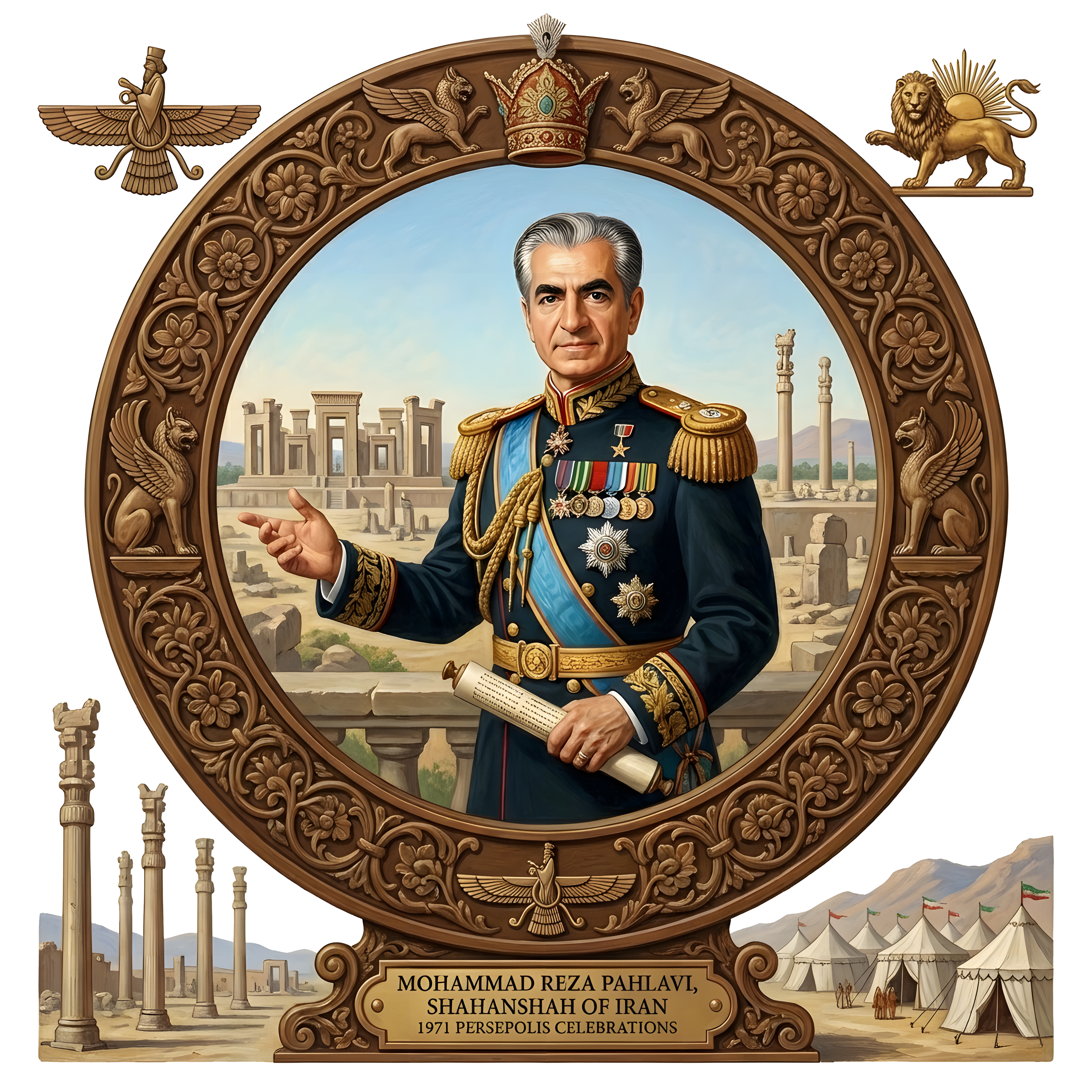
Mohammad Reza Pahlavi heavily utilized the legacy of Cyrus the Great to legitimize his own rule, most notably during the extravagant 1971 Persepolis celebrations. The Shah sought to position himself as the modern successor to Cyrus's ancient empire.
In his quest to forge a secular, nationalist identity for modern Iran, Mohammad Reza Pahlavi frequently invoked the grandeur of the pre-Islamic Achaemenid Empire, with Cyrus the Great as its ultimate symbol. This ideological connection reached its zenith in 1971 during the 2,500-year celebration of the Persian Empire, a lavish event hosted at the ancient ruins of Persepolis. During the ceremonies, the Shah famously stood before the Tomb of Cyrus at Pasargadae and delivered a speech declaring, 'Rest in peace, Cyrus, for we are awake, and we will always stay awake.' By directly addressing the ancient king, the Shah attempted to draw an unbroken line of monarchical continuity from Cyrus to the Pahlavi dynasty, bypassing centuries of Islamic history. He also heavily promoted the 'Cyrus Cylinder' as the world's first charter of human rights, aligning ancient Persian history with his modern, pro-Western image. However, this intense focus on pre-Islamic antiquity alienated the conservative Shia clergy and highlighted the disconnect between the Shah's grandiose imperial vision and the socio-economic realities of the Iranian populace.
Darius the Great
Historical Predecessor & Imperial Model
The Shah utilized the architectural and imperial legacy of Darius the Great, particularly the ancient capital of Persepolis, as the dramatic backdrop for his regime's propaganda. He sought to emulate Darius's image as a powerful, centralizing monarch.
Darius the Great, who expanded the Achaemenid Empire and built its magnificent ceremonial capital at Persepolis, served as a profound historical model for Mohammad Reza Pahlavi. The Shah's vision of a 'Great Civilization' (Tamaddon-e Bozorg) was deeply inspired by the administrative and infrastructural achievements of Darius. To showcase Iran's resurgence as a global power, the Shah chose Persepolis—Darius's crowning architectural achievement—as the site for the extravagant 1971 celebrations marking 2,500 years of the Persian monarchy. The Shah invested heavily in excavating and restoring Achaemenid sites, using the monumental ruins to project an aura of eternal kingship and imperial continuity. By associating his own massive infrastructure projects and autocratic centralization with Darius's historical precedents, the Shah attempted to root his modernizing, secular regime in the bedrock of ancient Persian glory, though this ultimately fueled resentment among religious and anti-monarchist factions.
Ferdowsi
Cultural Symbol & Nationalist Tool
The Shah heavily promoted the works of the 10th-century poet Ferdowsi, author of the Shahnameh (Book of Kings), to foster a secular, monarchist national identity. Ferdowsi's epic was used to glorify the institution of the Persian monarchy.
Mohammad Reza Pahlavi, continuing a cultural policy initiated by his father Reza Shah, elevated Ferdowsi to the status of Iran's supreme national poet. Ferdowsi's magnum opus, the Shahnameh, which chronicles the mythical and historical past of the Persian Empire before the Islamic conquest, perfectly aligned with the Shah's desire to cultivate a pre-Islamic, secular nationalism. The Pahlavi regime heavily subsidized the publication of the Shahnameh, incorporated it into the national educational curriculum, and funded the maintenance of Ferdowsi's grand mausoleum in Tus. The Shah frequently cited Ferdowsi's verses to emphasize the sacred and eternal nature of the Iranian monarchy, using the poet's legacy to legitimize his own autocratic rule. By championing Ferdowsi, the Shah sought to anchor modern Iranian identity in its ancient, royalist past, a cultural strategy that deliberately marginalized the influence of the Islamic clergy.
Forough Farrokhzad
Contemporary Cultural Figure
Forough Farrokhzad was a pioneering modernist poet and filmmaker whose work flourished during the Shah's reign. Her art reflected the rapid social changes, women's emancipation, and underlying societal tensions of the Pahlavi era.
Forough Farrokhzad lived her entire creative life under the rule of Mohammad Reza Pahlavi. The Shah's era, particularly the modernization efforts of the White Revolution, created a complex environment for artists like Farrokhzad. On one hand, the regime's push for secularism and women's enfranchisement provided a backdrop against which Farrokhzad could challenge traditional patriarchal norms through her bold, deeply personal poetry. On the other hand, the Pahlavi state maintained strict censorship and political repression through SAVAK. Farrokhzad's groundbreaking 1962 documentary, 'The House is Black', which depicted a leper colony, was widely interpreted as a subtle allegory for the hidden suffering and societal decay beneath the glittering, modernizing facade of the Shah's Iran. While she was not an overt political dissident, her tragic death in a car accident in 1967 cut short the life of a cultural icon whose work captured the profound contradictions of the Shah's rapidly changing society.
İsmet İnönü
Regional Allies & Contemporaries
İsmet İnönü, as a leading statesman and President/Prime Minister of Turkey, interacted with the Shah as both nations navigated the Cold War. They were key partners in pro-Western regional alliances like the Baghdad Pact and CENTO.
Mohammad Reza Pahlavi and İsmet İnönü were contemporary leaders of the two most powerful non-Arab states in the Middle East during the early-to-mid Cold War. Following the legacy of Atatürk and Reza Shah, both leaders were committed to secular modernization and maintaining strong ties with the West to counter Soviet expansionism. During İnönü's tenures as President and later Prime Minister of Turkey, he and the Shah collaborated closely on regional security. This partnership was formalized through their mutual membership in the Baghdad Pact (later the Central Treaty Organization, or CENTO), a US-backed military alliance designed to contain Soviet influence in the Middle East. While their personal relationship was formal and diplomatic, their geopolitical alignment was crucial in shaping the strategic architecture of the region, with both leaders relying on American military and economic support to maintain their respective domestic and international positions.
Karl Marx
Ideological Opponents
The Shah was a staunch anti-communist who viewed Marxist ideology as an existential threat to his monarchy. He ruthlessly suppressed Marxist groups in Iran, aligning his regime firmly with the capitalist West.
Mohammad Reza Pahlavi's reign was defined by his fierce opposition to the ideology of Karl Marx and its political manifestations. Sharing a border with the Soviet Union, the Shah viewed communism not just as an ideological rival, but as a direct geopolitical and existential threat to the Iranian monarchy. Throughout his rule, he utilized his brutal domestic intelligence agency, SAVAK, to hunt down, imprison, and execute members of the Tudeh Party (Iran's communist party) and various Marxist-Leninist guerrilla groups, such as the Fedaiyan-e Khalq. The Shah's 'White Revolution'—a massive program of land reform and modernization—was explicitly designed as a preemptive, top-down 'bloodless' revolution to undercut the appeal of Marxist class warfare among the Iranian peasantry and working class. By firmly aligning Iran with the United States and the capitalist bloc during the Cold War, the Shah positioned himself as a primary bulwark against Marxist expansion in the Middle East, making him a prime target for leftist revolutionaries who eventually joined forces with Islamists to overthrow him in 1979.
Mahmoud Hessabi
Monarch & State Scientist
Mahmoud Hessabi was a prominent Iranian physicist and educator who served as Minister of Education during the Shah's reign. He played a crucial role in developing Iran's modern scientific and academic infrastructure under the Pahlavi regime.
Mahmoud Hessabi's career as the 'father of modern physics in Iran' spanned the reigns of both Reza Shah and Mohammad Reza Pahlavi. Under Mohammad Reza Pahlavi, Hessabi's efforts to modernize Iran's educational and scientific institutions aligned perfectly with the Shah's ambitions to transform Iran into a technologically advanced global power. During the Shah's reign, Hessabi served as a senator and briefly as the Minister of Education in the early 1950s under Prime Minister Mohammad Mosaddegh, though he continued to be a highly respected academic figure after the Shah consolidated power in 1953. Hessabi was instrumental in expanding the University of Tehran, founding the Atomic Energy Organization of Iran, and establishing the country's first modern meteorological and telecommunications networks. While Hessabi was primarily a man of science rather than politics, his foundational work provided the intellectual and infrastructural backbone for the rapid modernization programs the Shah championed during the White Revolution.
Nelson Mandela
Geopolitical Opponents
The Shah's regime was a crucial economic ally of Apartheid South Africa, supplying it with oil, which placed him in direct opposition to Nelson Mandela's anti-apartheid struggle.
During the 1970s, Mohammad Reza Pahlavi's Iran was one of the few nations willing to defy international embargoes and supply massive quantities of oil to the Apartheid regime in South Africa. This geopolitical alliance was driven by mutual anti-communist sentiments and lucrative trade deals, but it placed the Shah in direct opposition to the liberation struggle led by Nelson Mandela and the African National Congress (ANC). Mandela, imprisoned at the time, and the ANC viewed the Shah as a complicit enabler of their oppressors. Consequently, the Iranian opposition, including both leftists and Islamists, forged ties with the global anti-apartheid movement. When the Shah was overthrown in 1979, the ANC celebrated his downfall as a major victory for global liberation movements. The new Islamic Republic immediately severed all ties with Pretoria, halted oil shipments, and officially supported Mandela's ANC, highlighting how the Shah's Cold War alliances made him an adversary to anti-colonial figures like Mandela.
Omar Khayyam
Cultural Heritage & State Patronage
The Pahlavi regime celebrated the legacy of the poet and mathematician Omar Khayyam, commissioning a modernist mausoleum for him to promote a secular, culturally rich Iranian national identity.
Mohammad Reza Pahlavi's cultural policies were heavily focused on reviving and monumentalizing Iran's pre-Islamic and classical Persian heritage to foster a secular national identity. The 11th-century polymath and poet Omar Khayyam, famous globally for his Rubaiyat, was a central figure in this cultural campaign. Khayyam's reputation as a rationalist, astronomer, and poet who often expressed skepticism toward orthodox religious dogma made him an ideal historical symbol for the Shah's secularizing, modernizing state. In the early 1960s, the Pahlavi government commissioned the prominent Iranian architect Houshang Seyhoun to design a striking, modernist mausoleum for Khayyam in his hometown of Nishapur. The construction of this monument was part of a broader initiative by the Shah and Empress Farah to elevate Iranian arts and sciences, using the genius of historical figures like Khayyam to legitimize the regime's progressive, Western-facing vision for Iran's future.
Sohrab Sepehri
Contemporary Cultural Figure
Sohrab Sepehri was one of Iran's most celebrated modern poets and painters whose career blossomed during the cultural renaissance fostered by the Shah's regime.
Sohrab Sepehri's artistic career coincided almost entirely with the reign of Mohammad Reza Pahlavi. During the 1960s and 1970s, the Shah and Empress Farah heavily patronized the arts, seeking to project an image of a modern, culturally sophisticated Iran. This environment allowed modernist movements in Persian poetry and visual arts to thrive. Sepehri, known for his introduction of Zen Buddhist concepts into Persian literature and his distinct, nature-focused painting style, frequently exhibited his work in galleries and institutions supported by the Pahlavi state. Unlike many of his literary contemporaries who used their art to subtly or overtly criticize the Shah's autocratic rule and the rapid, disorienting pace of Westernization, Sepehri remained famously apolitical. His introspective and mystical focus provided a stark contrast to the highly charged political atmosphere of the Shah's later years, making him a unique cultural fixture of the Pahlavi era.
Winston Churchill
Geopolitical Allies & Imperial Interveners
Winston Churchill played a decisive role in both the beginning and the consolidation of the Shah's reign. As UK Prime Minister, Churchill oversaw the 1941 invasion that put the Shah on the throne, and later backed the 1953 coup that secured his absolute power.
The political destiny of Mohammad Reza Pahlavi was inextricably linked to the strategic decisions of Winston Churchill. In 1941, during World War II, Prime Minister Churchill and Soviet leader Joseph Stalin ordered the Anglo-Soviet invasion of Iran to secure oil fields and Allied supply lines. This invasion forced the abdication of Reza Shah, who was deemed too sympathetic to the Axis, and placed the young, more pliable Mohammad Reza Pahlavi on the throne. A decade later, their paths crossed again during Churchill's second premiership. When Iranian Prime Minister Mohammad Mosaddegh nationalized the British-owned Anglo-Iranian Oil Company, Churchill viewed it as a severe blow to British imperial prestige and economy. Churchill's government, alongside the American CIA, orchestrated Operation Ajax in 1953. This covert coup d'état overthrew the democratically elected Mosaddegh and restored absolute power to the Shah, who had briefly fled the country. Churchill's interventions thus bookended the early phases of the Shah's rule, transforming him from a weak constitutional monarch into a staunchly pro-Western autocrat.
Xerxes (Khashayarsha)
Historical Predecessor & Source of Legitimacy
The Shah invoked the legacy of Achaemenid kings like Xerxes the Great to legitimize his own rule, celebrating their ancient empire to project modern Iranian power.
Mohammad Reza Pahlavi sought to bypass the Islamic history of Iran by anchoring his regime's legitimacy in the ancient, pre-Islamic glory of the Achaemenid Empire. Xerxes the Great, who ruled over the empire at its territorial zenith and expanded the monumental complex at Persepolis, was a key figure in this historical narrative. During the extravagant 1971 celebrations marking 2,500 years of the Persian monarchy, the Shah utilized the ruins of Persepolis—heavily shaped by Xerxes's architectural ambitions—as the ultimate stage to showcase Iran's modern resurgence to the world. By associating his own reign with the imperial might of kings like Xerxes, the Shah attempted to foster a secular, nationalist pride among Iranians. However, this grandiose identification with ancient despots also served to highlight the Shah's own autocratic tendencies, alienating the religious establishment and the impoverished masses who felt disconnected from this revival of ancient imperial splendor.
Charles de Gaulle
Diplomatic Allies & Fellow Nationalists
De Gaulle and the Shah of Iran shared a mutual admiration based on their respective desires to assert national independence from the Cold War superpowers. They engaged in significant diplomatic and cultural exchanges during the 1960s.
During the 1960s, Charles de Gaulle's foreign policy sought to establish France as an independent global power, a vision that resonated deeply with Mohammad Reza Pahlavi's ambitions for Iran. The Shah admired de Gaulle's strong leadership and his successful establishment of the Fifth Republic. In 1963, de Gaulle made a highly publicized state visit to Iran, where he praised the Shah's 'White Revolution' and Iran's ancient civilization. The two leaders found common ground in their skepticism of American and Soviet hegemony, seeking to diversify their geopolitical alliances. France became a key partner for Iran in technology, military procurement, and cultural exchange. Their relationship epitomized de Gaulle's strategy of building a 'third way' in global politics by forging strong bilateral ties with emerging regional powers.
Known for
- Last Shah of Iran
- The White Revolution
- 1953 Iranian coup d'état
- Establishment of SAVAK
- 1971 Persepolis celebrations
Episodes featuring or mentioning this figure
No eligible published episode featuring this figure is currently in the library.