



Darius the Great
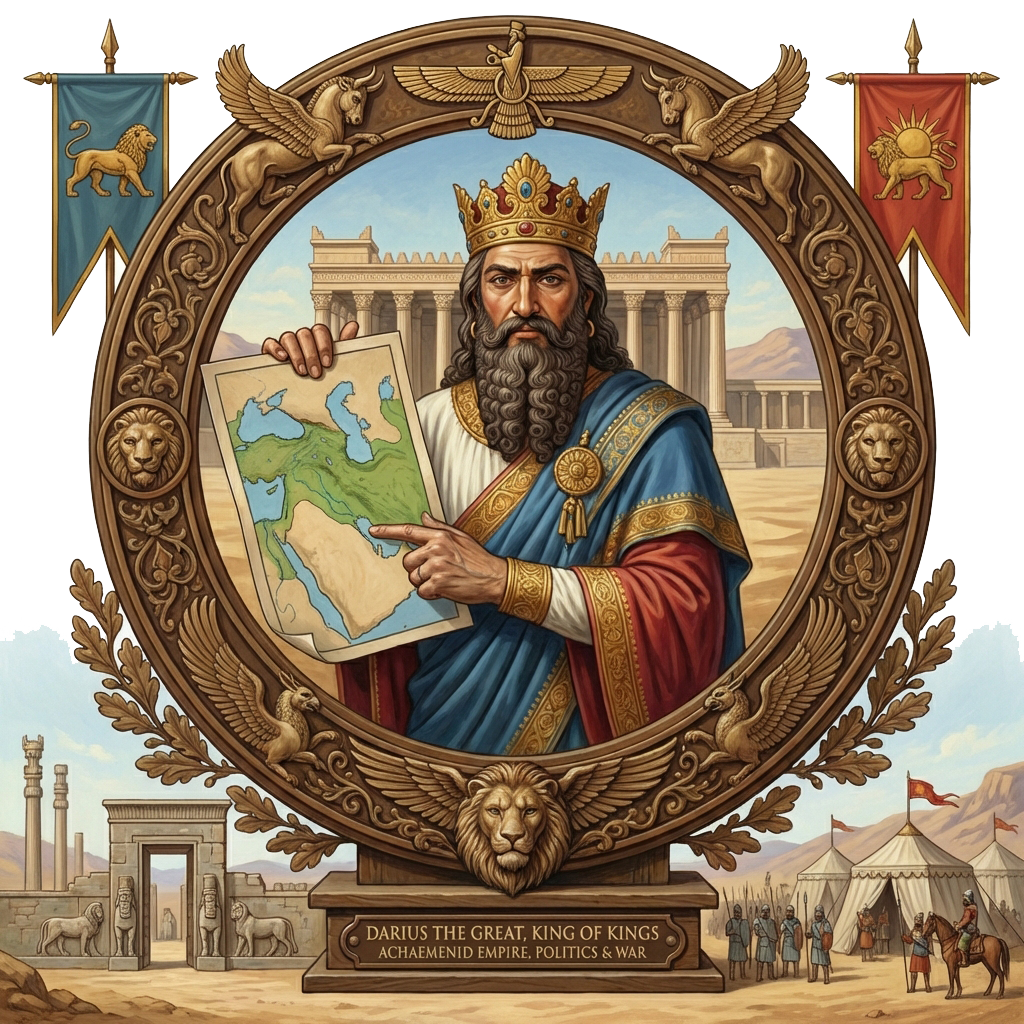
The third King of Kings of the Achaemenid Empire who expanded Persia to its greatest territorial extent.
At a glance
- Born
- c. 550 BCE
- Died
- 486 BCE
- Era classification
- 64
- Homeland
- Persia
- Period
- 550–486 BCE
- Field
- Politics, Leadership & War
- Language
- Old Persian
- Religion
- Zoroastrianism
- Gender
- male
Biography
Darius I, commonly known as Darius the Great, was the third King of Kings of the Achaemenid Empire, reigning from 522 BCE until his death in 486 BCE. Born to Hystaspes, a Persian noble, Darius ascended the throne by overthrowing the alleged usurper Bardiya (or Gaumata). His early reign was marked by widespread revolts across the empire, which he systematically and ruthlessly suppressed, immortalizing his victories in the monumental rock relief of the Behistun Inscription.
Under Darius's leadership, the Persian Empire reached its zenith, becoming the largest empire the ancient world had ever seen. His military campaigns expanded the empire's borders to include the Indus Valley in the east and parts of the Balkans, Thrace, and Macedon in the west. Although his punitive expedition against Athens ended in defeat at the Battle of Marathon in 490 BCE, his overall military successes vastly enriched the Persian state and secured its borders.
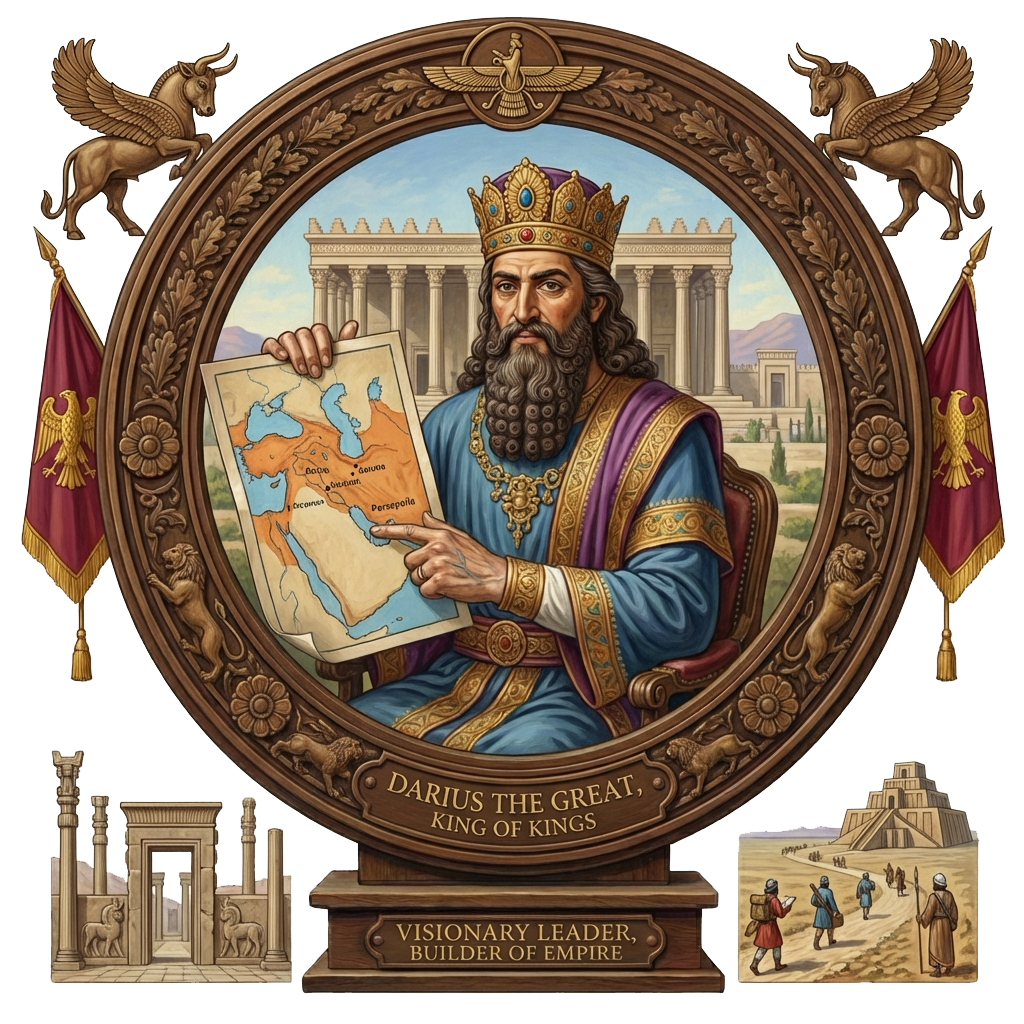
Beyond his military conquests, Darius was a visionary administrator. He divided his vast domain into provinces known as satrapies, each governed by a satrap, and instituted a standardized system of taxation and coinage, introducing the gold daric. To facilitate trade, military movement, and rapid communication, he constructed the Royal Road, a massive highway stretching from Susa to Sardis, and completed a canal connecting the Nile River to the Red Sea.
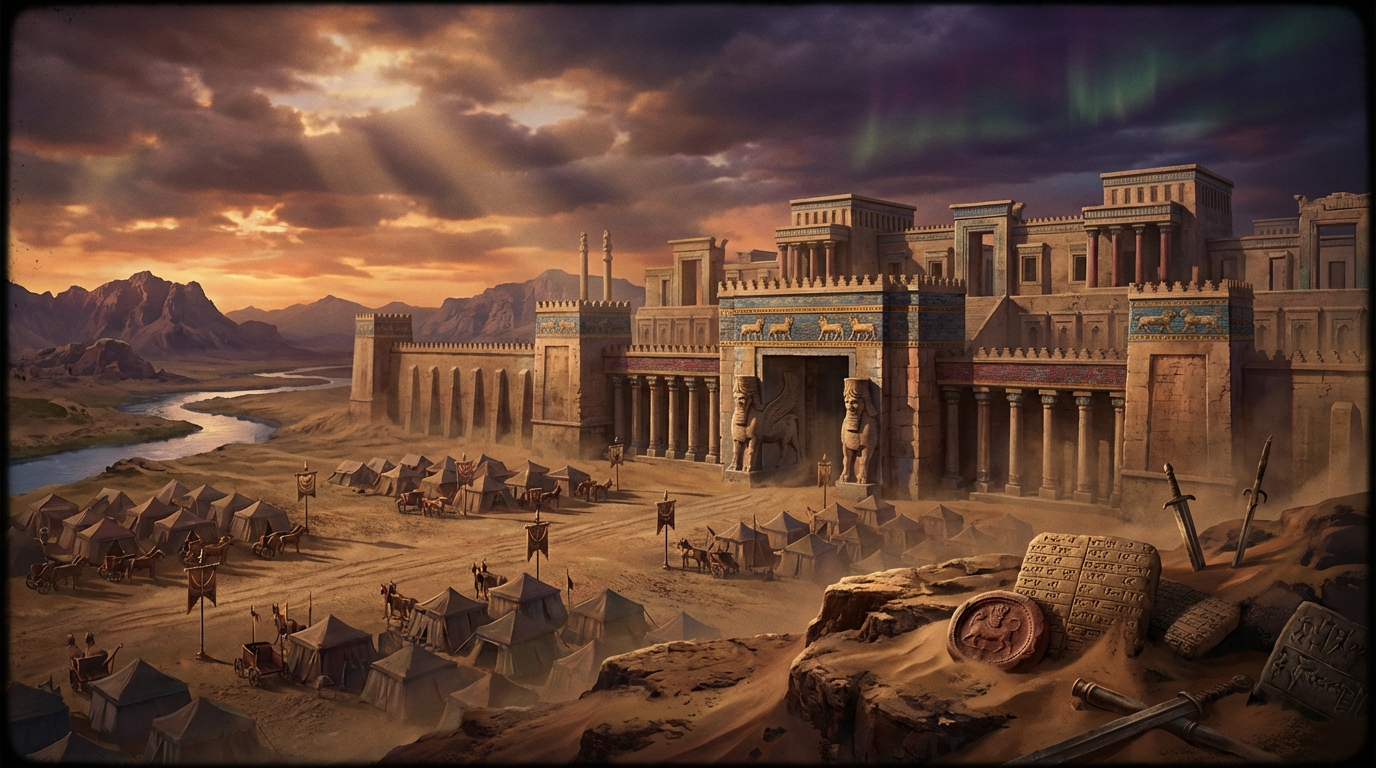
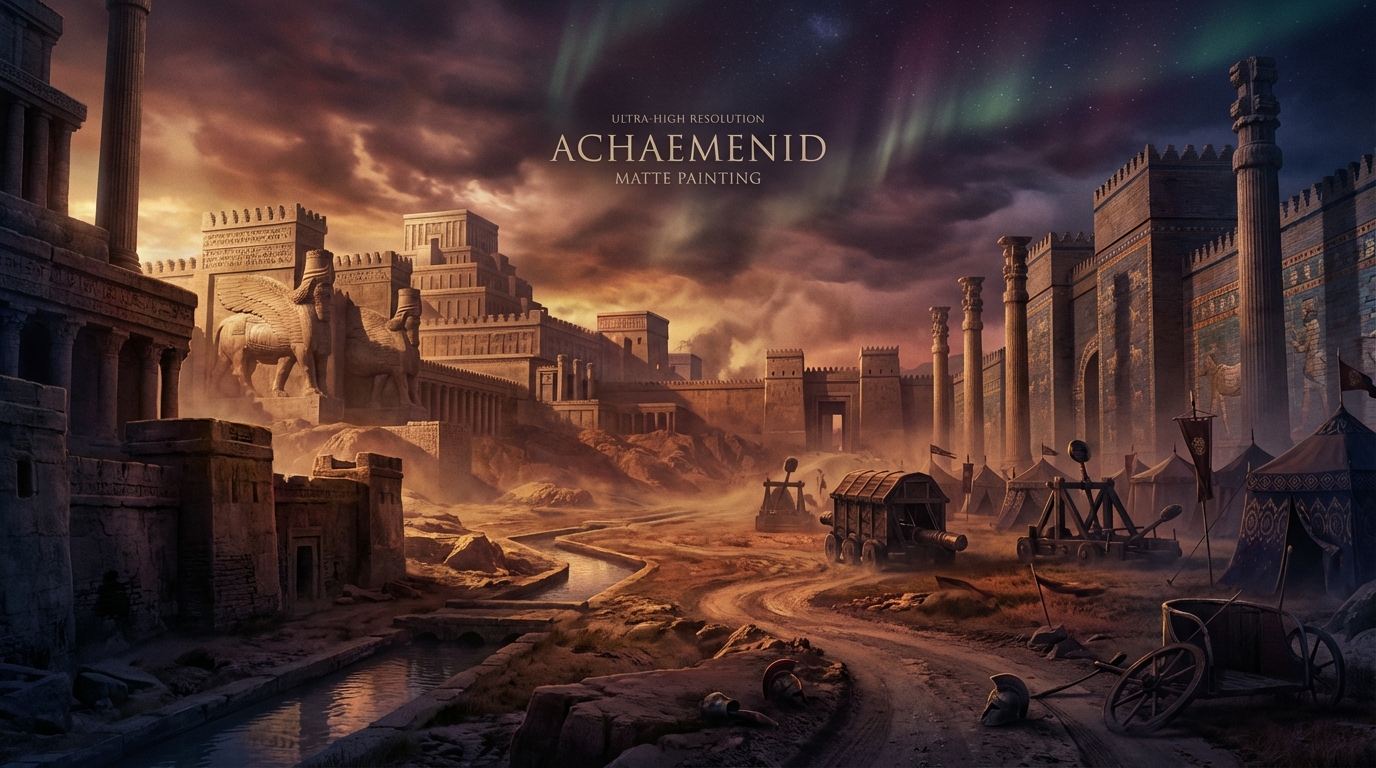
A devout follower of Ahura Mazda, Darius heavily promoted Zoroastrian principles, often attributing his right to rule and his imperial successes to divine favor. He initiated grand architectural projects, most notably the construction of the magnificent ceremonial capital of Persepolis. Darius died in 486 BCE, leaving behind a highly centralized, prosperous, and culturally diverse empire whose administrative innovations influenced civilizations for centuries.
Portrayal characteristics
Saved editorial descriptions used for the reconstruction; these are not authenticated statements by the depicted person.
- Strategic
- Visionary
- Authoritative
- Organized
- Ambitious
- Pious
Images & artwork 6
Connections
Cyrus the Great
Successor & Relative
Darius the Great was a relative of Cyrus who stabilized and expanded the Achaemenid Empire after the death of Cyrus's son, Cambyses II.
Darius claimed descent from the same Achaemenid line as Cyrus and solidified the administrative foundations of the empire Cyrus founded. He famously recorded his lineage and his rise to power on the Behistun Inscription, linking his legitimacy to the legacy of Cyrus.
Cyrus the Great
Predecessor & Relative
Darius I rose to power following the death of Cyrus's son and worked to preserve and expand the empire Cyrus had established.
Darius emphasized his connection to Cyrus the Great to legitimize his rule after a period of civil unrest. He continued Cyrus's policy of religious tolerance while introducing the satrapy system to manage the empire's vast territories.
Xerxes (Khashayarsha)
Father & Predecessor
Darius the Great was the father of Xerxes I, whom he designated as his successor to the Persian throne.
Darius spent much of his later reign preparing Xerxes for leadership, including involving him in the administration of the empire. Xerxes inherited his father's ambitious projects, including the construction of Persepolis and the planned invasion of Greece.
Alexander the Great
Conqueror of his Empire
Alexander the Great dismantled the Achaemenid administrative and military structures that Darius the Great had perfected.
While Alexander fought against Darius III, his conquest was of the specific imperial system and infrastructure—such as the Royal Road—that Darius the Great had built. Alexander eventually adopted many of Darius's administrative techniques to govern the newly conquered Persian territories.
Xerxes (Khashayarsha)
Father & Son
Xerxes I was the son and successor of Darius the Great, inheriting the Achaemenid Empire at its territorial peak.
Xerxes spent the early years of his reign suppressing revolts in Egypt and Babylon that had begun under his father, before continuing Darius's planned invasion of Greece to avenge the Persian defeat at Marathon.
Mohammad Reza Pahlavi
Historical Predecessor & Imperial Model
The Shah utilized the architectural and imperial legacy of Darius the Great, particularly the ancient capital of Persepolis, as the dramatic backdrop for his regime's propaganda. He sought to emulate Darius's image as a powerful, centralizing monarch.
Darius the Great, who expanded the Achaemenid Empire and built its magnificent ceremonial capital at Persepolis, served as a profound historical model for Mohammad Reza Pahlavi. The Shah's vision of a 'Great Civilization' (Tamaddon-e Bozorg) was deeply inspired by the administrative and infrastructural achievements of Darius. To showcase Iran's resurgence as a global power, the Shah chose Persepolis—Darius's crowning architectural achievement—as the site for the extravagant 1971 celebrations marking 2,500 years of the Persian monarchy. The Shah invested heavily in excavating and restoring Achaemenid sites, using the monumental ruins to project an aura of eternal kingship and imperial continuity. By associating his own massive infrastructure projects and autocratic centralization with Darius's historical precedents, the Shah attempted to root his modernizing, secular regime in the bedrock of ancient Persian glory, though this ultimately fueled resentment among religious and anti-monarchist factions.
Known for
- Construction of Persepolis
- Creation of the Royal Road
- Establishing the satrapy system
- The Behistun Inscription
- Introduction of a uniform monetary system (the daric)
- First Persian invasion of Greece
Episodes featuring or mentioning this figure
No eligible published episode featuring this figure is currently in the library.