



Alexander the Great
Macedonian king who conquered the Persian Empire and forged one of the largest empires in ancient history.
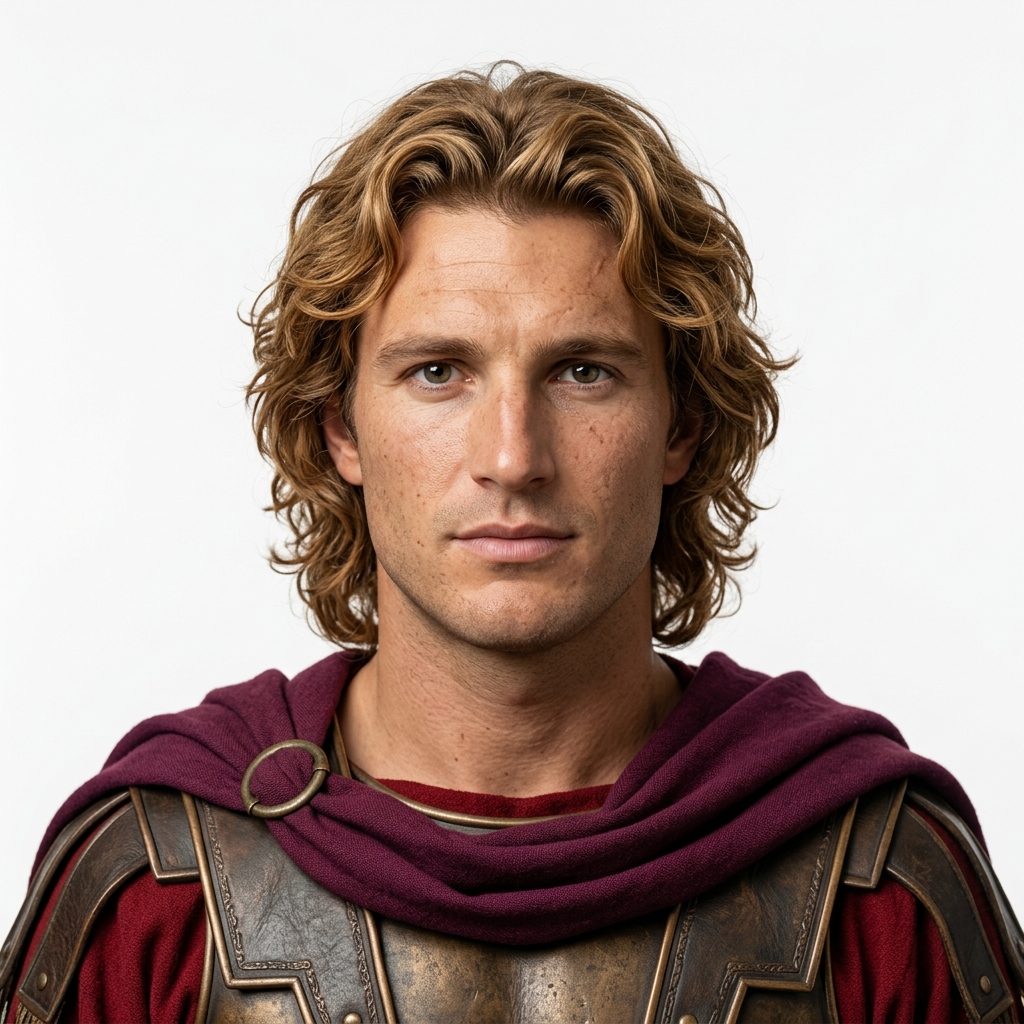
At a glance
- Born
- 356 BCE
- Died
- 323 BCE
- Era classification
- 32
- Homeland
- Macedonia
- Period
- 356–323 BCE
- Field
- Politics, Leadership & War
- Language
- Ancient Greek
- Religion
- Ancient Greek polytheism
- Gender
- male
Biography
Alexander III of Macedon, commonly known as Alexander the Great, was born in Pella in 356 BCE to King Philip II and Queen Olympias. Tutored by the philosopher Aristotle in his youth, Alexander received a comprehensive education in politics, warfare, and Greek culture. Upon his father's assassination in 336 BCE, the twenty-year-old Alexander inherited a powerful kingdom and a highly disciplined, experienced army.
Securing his rule over Greece, Alexander launched a monumental military campaign against the vast Achaemenid Persian Empire. Over the next decade, he led his forces to a series of decisive victories, most notably at the battles of Issus and Gaugamela. His tactical brilliance allowed him to overthrow the Persian King Darius III, ultimately extending his empire from Greece and Egypt all the way to the Indian subcontinent. Remarkably, he remained undefeated in battle throughout his entire military career.
Beyond his military conquests, Alexander's legacy lies in his profound cultural impact. His campaigns initiated the Hellenistic period, facilitating the spread of Greek culture, language, and architecture across the known world. He founded over twenty cities bearing his name, with Alexandria in Egypt becoming a major center of learning and civilization. Alexander died in Babylon in 323 BCE at the age of 32, leaving behind a fragmented empire that would be divided among his generals, yet forever altering the course of Western and Eastern history.
Portrayal characteristics
Saved editorial descriptions used for the reconstruction; these are not authenticated statements by the depicted person.
- Ambitious
- Charismatic
- Tactical genius
- Fearless
- Visionary
- Culturally adaptable
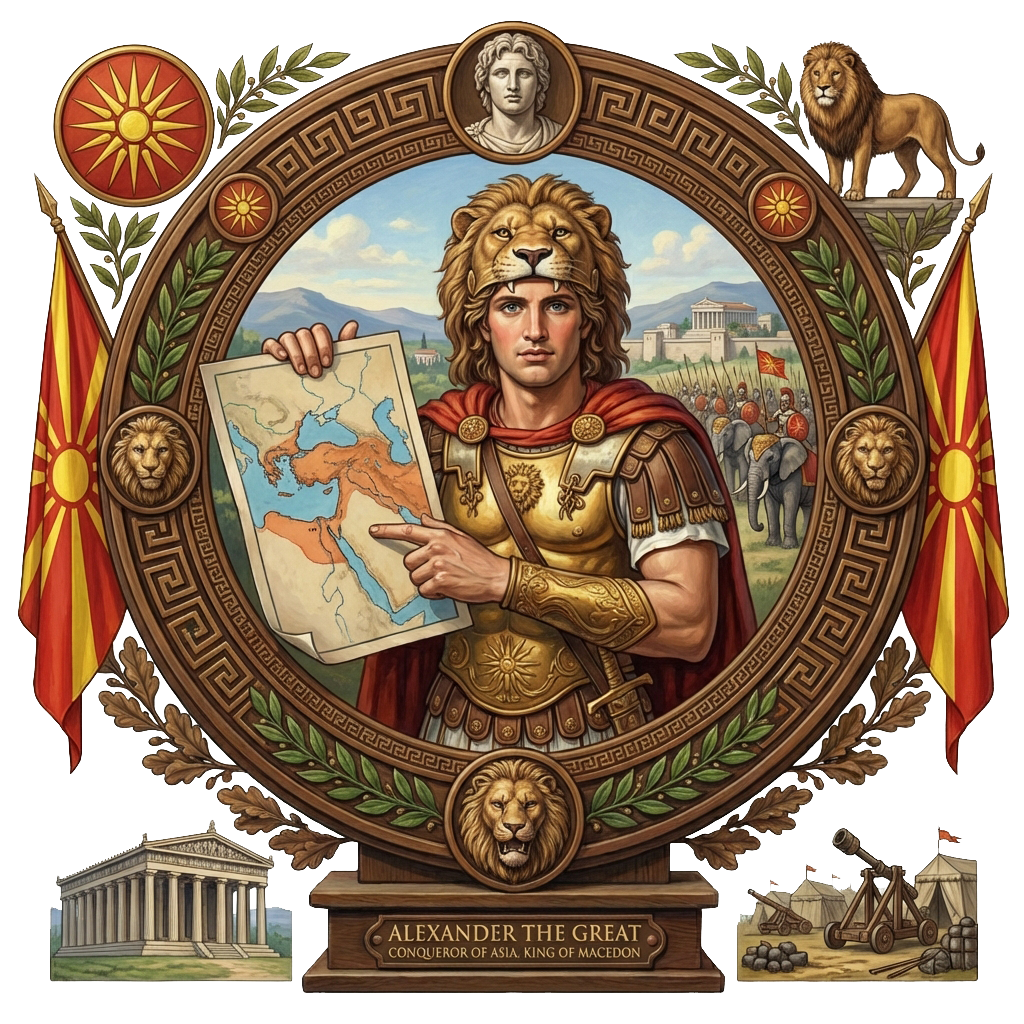
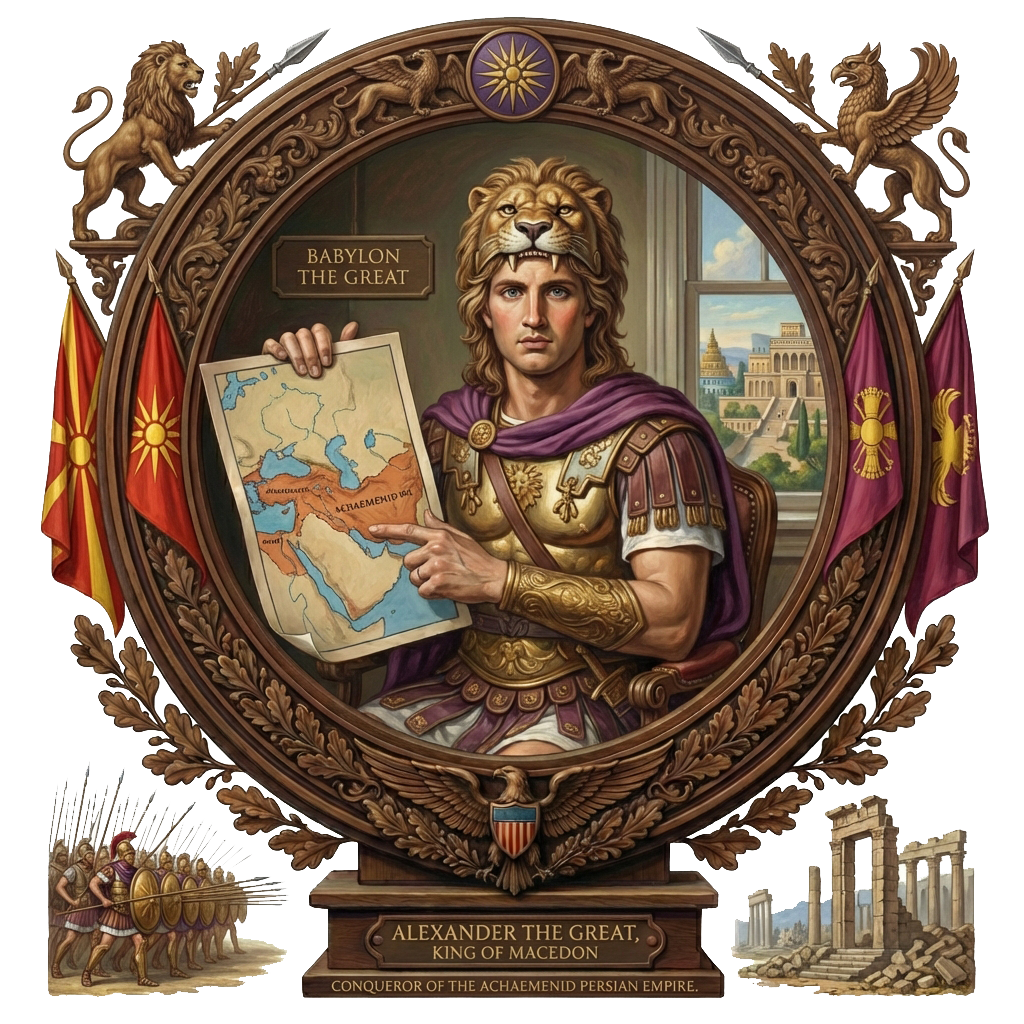
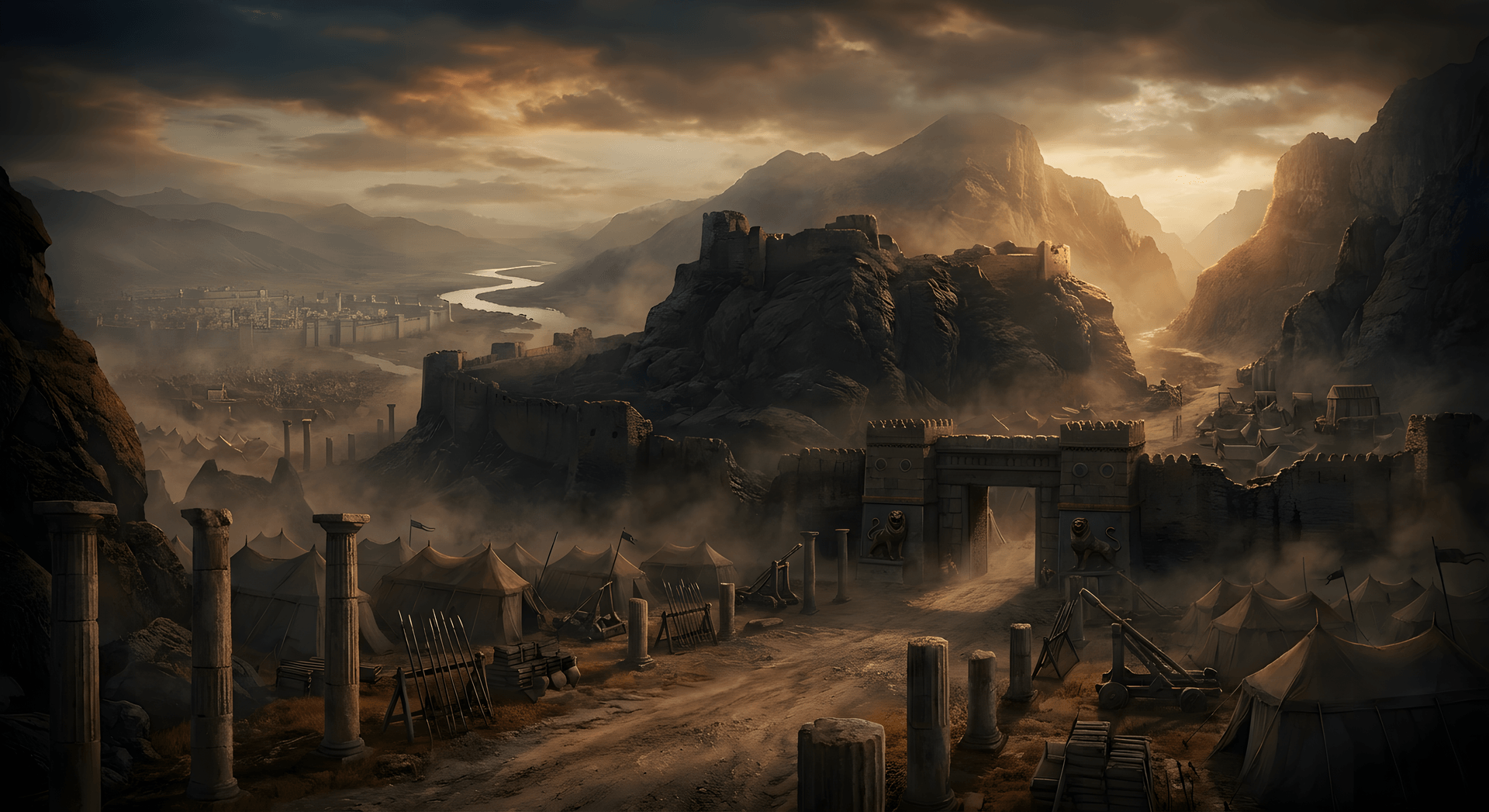
Images & artwork 5
Connections
Aristotle
Teacher & Student
Aristotle served as the personal tutor to the young Alexander the Great for several years.
In 343 BCE, Philip II of Macedon invited Aristotle to tutor his son, Alexander. Aristotle's teachings on politics, ethics, and science are believed to have significantly influenced Alexander's later governance and his interest in scientific exploration during his conquests.
Aristotle
Teacher & Student
Aristotle served as the personal tutor to the young Alexander for three years, teaching him philosophy, medicine, and scientific inquiry.
Aristotle's influence is seen in Alexander's habit of bringing scientists on his campaigns and his lifelong interest in Greek literature, particularly the works of Homer.
Cyrus the Great
Admirer & Successor
Alexander deeply admired Cyrus the Great as a model of a just and powerful conqueror.
Upon reaching Pasargadae, Alexander ordered the restoration of Cyrus's tomb and punished those who had desecrated it, signaling his intent to rule as a legitimate successor to the Achaemenid throne.
Xerxes (Khashayarsha)
Historical Rivalry
Alexander framed his invasion of the Persian Empire as a pan-Hellenic crusade to avenge Xerxes' invasion of Greece.
The symbolic burning of the palace at Persepolis by Alexander's forces was widely interpreted as a final act of retribution for Xerxes' destruction of the Athenian Acropolis over a century earlier.
Julius Caesar
Inspiration & Rival
Caesar viewed Alexander as the ultimate standard of military achievement and political glory.
According to Plutarch, Caesar wept while reading a biography of Alexander, lamenting that at an age when Alexander had conquered the world, he himself had achieved nothing of note.
Cleopatra
Dynastic Link
Cleopatra was the last active ruler of the Ptolemaic Kingdom, a dynasty founded by one of Alexander's generals.
The Ptolemaic line was established by Ptolemy I Soter, a childhood friend and bodyguard of Alexander who claimed Egypt during the partition of the empire after Alexander's death.
Cyrus the Great
Admirer & Conqueror
Alexander the Great deeply admired Cyrus as a model of kingship and visited his tomb in Pasargadae after conquering Persia.
Alexander was influenced by Xenophon's 'Cyropaedia,' a fictionalized biography of Cyrus, and sought to emulate his style of benevolent rule. Upon finding Cyrus's tomb plundered, Alexander ordered its immediate restoration and punished those responsible.
Darius the Great
Conqueror of his Empire
Alexander the Great dismantled the Achaemenid administrative and military structures that Darius the Great had perfected.
While Alexander fought against Darius III, his conquest was of the specific imperial system and infrastructure—such as the Royal Road—that Darius the Great had built. Alexander eventually adopted many of Darius's administrative techniques to govern the newly conquered Persian territories.
Cleopatra
Dynastic Successor
Cleopatra was the last ruler of the Ptolemaic dynasty, which was established by one of Alexander the Great's generals.
Following Alexander's death, his general Ptolemy I Soter took control of Egypt, founding the Greek-speaking dynasty that Cleopatra would eventually lead. She viewed herself as the heir to Alexander's empire and was the first in her line to adopt many local Egyptian customs and the language.
Ferdowsi
Subject of Epic
Alexander appears as the character 'Eskandar' in Ferdowsi's epic poem, the Shahnameh.
Ferdowsi's portrayal of Alexander is a blend of historical conquest and Persian legend, depicting him as a seeker of wisdom and a legitimate successor to the Persian throne. This narrative helped the Persian people reconcile with the historical trauma of the Macedonian conquest.
Julius Caesar
Influenced By
Caesar viewed Alexander the Great as his primary historical role model and rival for glory.
Ancient biographers like Plutarch record that Caesar wept at a statue of Alexander, lamenting that he had achieved so little by the age at which Alexander had already conquered the known world.
Napoleon Bonaparte
Inspired By
Napoleon deeply admired Alexander the Great and studied his military campaigns as a model for his own conquests.
During his Egyptian campaign, Napoleon frequently compared himself to Alexander, seeking to emulate the ancient Macedonian's feat of bridging Western and Eastern empires. He carried a history of Alexander with him and viewed his own career as a modern continuation of the Great Conqueror's legacy.
Xerxes (Khashayarsha)
Historical Successor & Conqueror
Alexander the Great eventually conquered the empire Xerxes had ruled, famously destroying the palace at Persepolis.
Alexander viewed himself as the successor to the Persian kings while simultaneously seeking to avenge the Persian invasions of Greece led by Xerxes over a century earlier.
Known for
- Conquering the Achaemenid Persian Empire
- Initiating the Hellenistic period
- Founding the city of Alexandria
- Remaining undefeated in battle
- Cutting the Gordian Knot
Episodes featuring or mentioning this figure
No eligible published episode featuring this figure is currently in the library.