



Anwar El Sadat
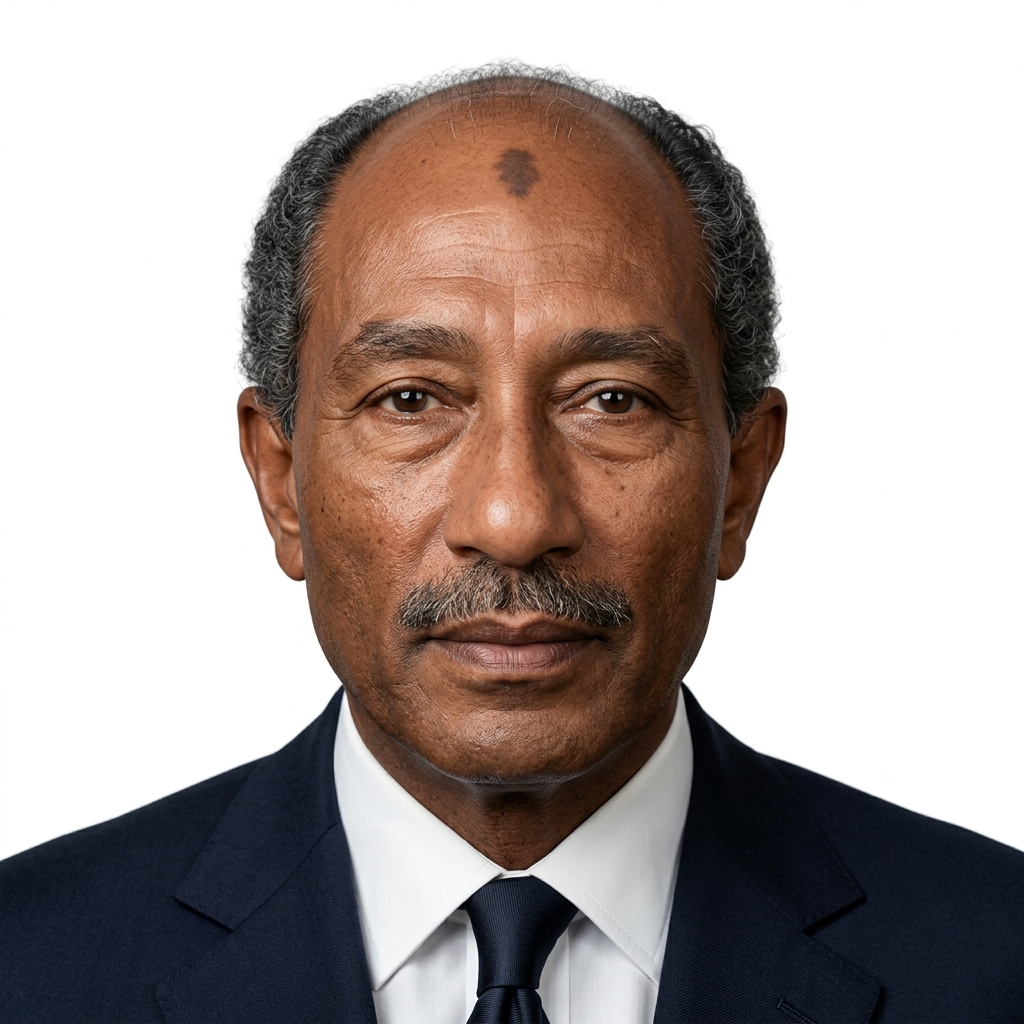
Third President of Egypt who led the Yom Kippur War and later signed the historic Camp David Accords with Israel.
At a glance
- Born
- 1918 CE
- Died
- 1981 CE
- Era classification
- 62
- Homeland
- Egypt
- Period
- 1918–1981
- Field
- Politics, Leadership & War
- Language
- Arabic
- Religion
- Islam
- Gender
- male
Biography
Muhammad Anwar el-Sadat was born in 1918 in the village of Mit Abu El Kom, Egypt. After graduating from the Royal Military Academy, he became a core member of the Free Officers Movement led by Gamal Abdel Nasser. This group successfully overthrew the Egyptian monarchy in the 1952 revolution, setting the stage for a new republic. Sadat served in various high-ranking roles under Nasser, eventually becoming Vice President and succeeding him as President of Egypt in 1970.
As president, Sadat sought to restore Egyptian pride and reclaim the Sinai Peninsula, which had been lost to Israel in the 1967 Six-Day War. In October 1973, he led Egypt and a coalition of Arab states in the Yom Kippur War (October War). Although the military outcome was complex, the initial Egyptian successes shattered the myth of Israeli invincibility, restored Arab morale, and fundamentally altered the geopolitical dynamics of the Middle East, giving Sadat significant political leverage.
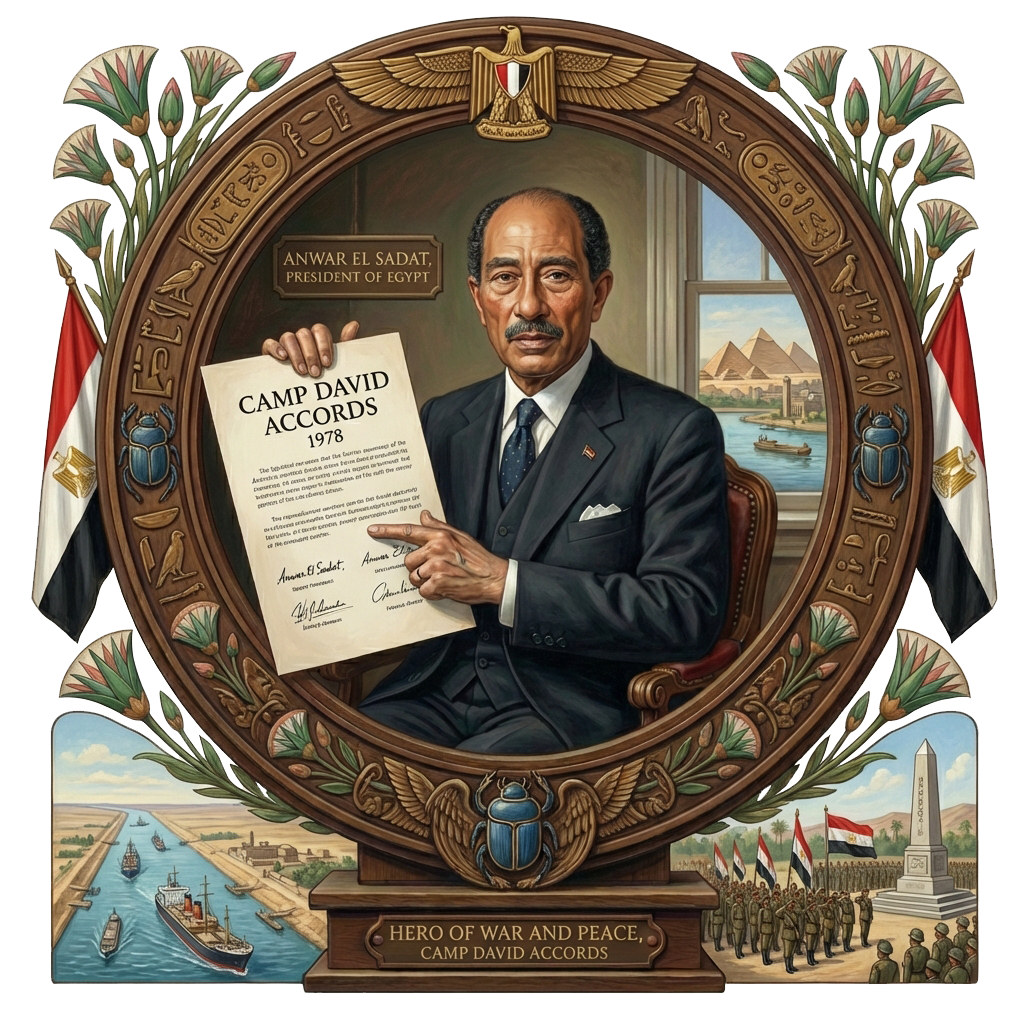
Capitalizing on this newfound leverage, Sadat made a bold and unprecedented pivot toward peace. In 1977, he shocked the world by traveling to Jerusalem to address the Israeli Knesset. This historic visit paved the way for the 1978 Camp David Accords, brokered by US President Jimmy Carter, and the subsequent 1979 Egypt-Israel Peace Treaty. For these efforts, Sadat and Israeli Prime Minister Menachem Begin were jointly awarded the Nobel Peace Prize.
Domestically, Sadat instituted the 'Infitah' (open door) policy, shifting Egypt away from Nasser's socialist model toward a free-market economy and aligning the nation closer to the United States. However, his peace treaty with Israel and domestic policies deeply alienated the broader Arab world and radical Islamist factions within Egypt. On October 6, 1981, during a military parade commemorating the 1973 war, Sadat was assassinated by members of the Egyptian Islamic Jihad, leaving behind a complex legacy of war, peace, and transformation.
Portrayal characteristics
Saved editorial descriptions used for the reconstruction; these are not authenticated statements by the depicted person.
- Pragmatic
- Bold
- Visionary
- Charismatic
- Resolute
- Controversial
Images & artwork 4


Connections
Jimmy Carter
Diplomatic Partners
President Carter was the primary mediator who brought Sadat and Menachem Begin together to sign the Camp David Accords.
The partnership between Sadat and Carter was essential for the 1979 Egypt-Israel Peace Treaty, which fundamentally altered the geopolitics of the Middle East and earned Sadat the Nobel Peace Prize.
Winston Churchill
Political Inspiration
Sadat was a great admirer of Churchill's leadership style and strategic thinking, often citing him as an influence.
In his autobiography, Sadat noted how he studied Churchill's wartime speeches and resolve, which influenced his own bold decision-making during the 1973 October War and the subsequent peace process.
Mustafa Kemal Atatürk
Modernizing Influence
Sadat looked to the reforms of Mustafa Kemal Atatürk as a model for modernizing and secularizing Egyptian state institutions.
Sadat's 'Infitah' (Open Door) policy and his attempts to move Egypt toward a more Western-aligned, nationalist identity mirrored aspects of Atatürk's transformation of Turkey.
Jimmy Carter
Diplomatic Allies
Carter mediated the historic 1978 Camp David Accords between Sadat and Israeli Prime Minister Menachem Begin.
Carter's personal diplomacy was essential in bringing Sadat to the table, resulting in the first peace treaty between Israel and an Arab neighbor. This achievement remains the hallmark of Carter's foreign policy legacy.
Mohammad Reza Pahlavi
Allies & Final Host
Anwar El Sadat was a staunch ally of the Shah and provided him with refuge in Egypt after he was exiled during the 1979 Islamic Revolution. Sadat defied the new Iranian regime by hosting the Shah and giving him a state funeral upon his death.
Throughout the 1970s, Mohammad Reza Pahlavi and Egyptian President Anwar El Sadat cultivated a strong geopolitical alliance, united by their pro-Western stances and opposition to radical leftist and Islamist movements in the Middle East. The Shah provided crucial financial and oil support to Egypt, particularly after the Yom Kippur War and during Egypt's pivot away from the Soviet Union. When the Islamic Revolution forced the Shah to flee Iran in 1979, he became a political pariah, rejected by many former Western allies, including the United States, who feared angering the new regime in Tehran. Sadat, however, remained fiercely loyal to his friend, welcoming the ailing Shah to Egypt with full state honors. The Shah spent his final months in Cairo, where he died of cancer in July 1980. Defying threats from the new Islamic Republic of Iran, Sadat organized a grand state funeral for the Shah, interring him in the Al-Rifa'i Mosque, cementing a bond of loyalty that ultimately contributed to Sadat's own unpopularity among Islamist extremists.
Known for
- Camp David Accords
- 1973 Yom Kippur War (October War)
- Nobel Peace Prize (1978)
- Infitah economic policy
- 1952 Egyptian Revolution
Episodes featuring or mentioning this figure
No eligible published episode featuring this figure is currently in the library.