



Mustafa Kemal Atatürk
The visionary military commander and statesman who founded the Republic of Turkey and served as its first president.
At a glance
- Born
- 1881 CE
- Died
- 1938 CE
- Era classification
- 57
- Homeland
- Turkey
- Period
- 1881–1938
- Field
- Politics, Leadership & War
- Language
- Turkish
- Religion
- Secularist
- Gender
- male
Biography
Mustafa Kemal Atatürk was born in 1881 in Salonica (now Thessaloniki), then part of the Ottoman Empire. He pursued a military education and quickly rose through the ranks of the Ottoman army. His reputation as a brilliant tactician was cemented during World War I, particularly at the Battle of Gallipoli in 1915, where his decisive leadership and defensive strategies successfully thwarted the Allied invasion and made him a national hero.
Following the Ottoman Empire's defeat and subsequent partition by the Allies after World War I, Mustafa Kemal rejected the capitulation of the Sultan's government. He organized and led the Turkish National Movement in the War of Independence (1919–1923). By establishing a provisional government in Ankara and rallying the fragmented military forces, he successfully repelled occupying powers and secured the Treaty of Lausanne, which recognized the sovereignty of the new Turkish state.
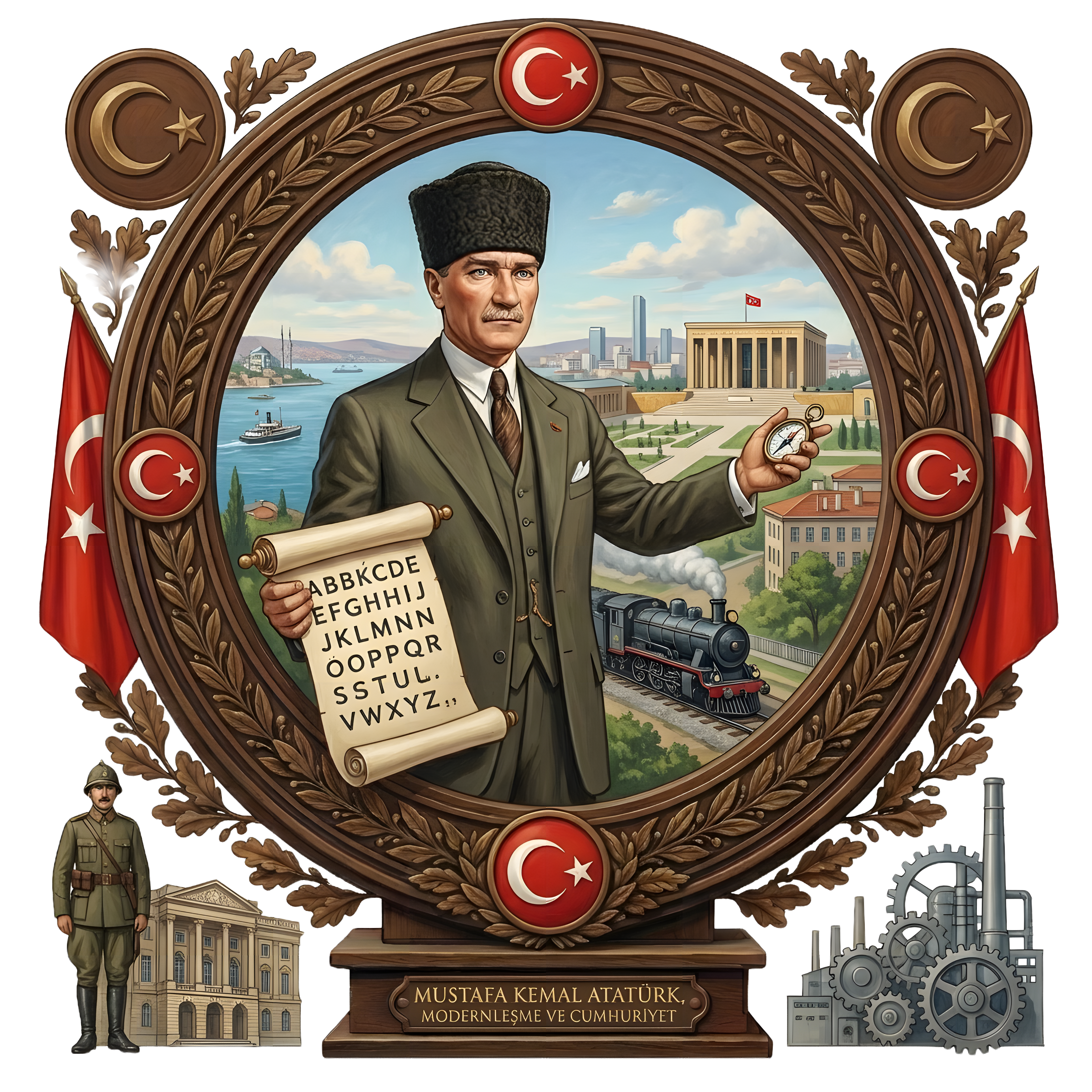
Upon the founding of the Republic of Turkey in 1923, Atatürk became its first president and embarked on an ambitious, sweeping program of modernization and secularization known as Kemalism. He abolished the centuries-old Ottoman caliphate, replaced Islamic courts with secular law codes inspired by European models, and introduced a new Latin-based Turkish alphabet to increase literacy. His reforms fundamentally transformed Turkish society, notably by granting women equal civil rights, including the right to vote and hold public office.
Atatürk served as president until his death in 1938 at the Dolmabahçe Palace in Istanbul. He left behind a profoundly transformed nation, having successfully bridged the gap between a traditional imperial past and a modern, secular, and Western-oriented future. He remains the paramount figure of modern Turkish history, revered as the 'Father of the Turks.'
Portrayal characteristics
Saved editorial descriptions used for the reconstruction; these are not authenticated statements by the depicted person.
- Visionary
- Resolute
- Charismatic
- Pragmatic
- Strategic
- Modernizer
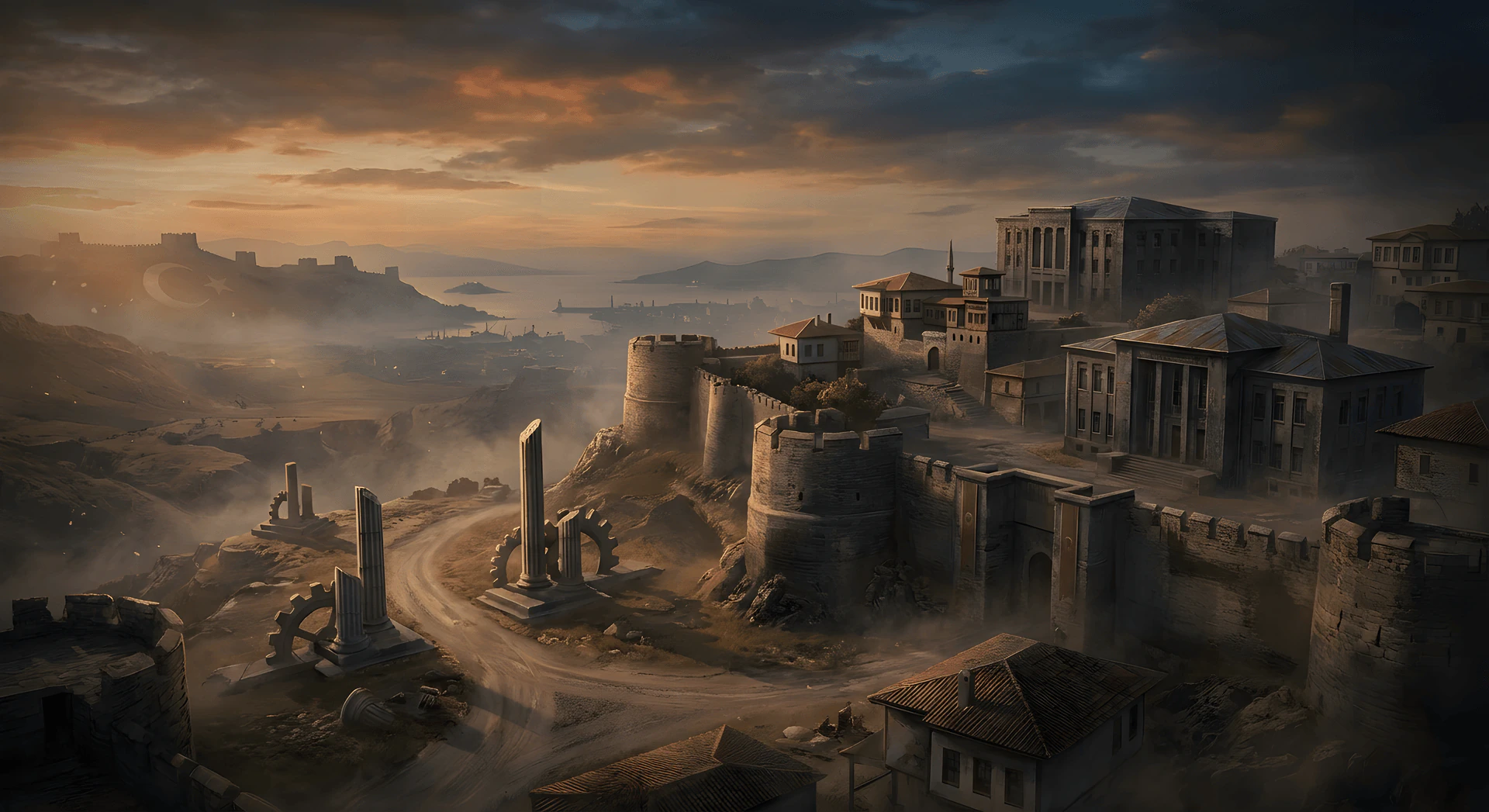
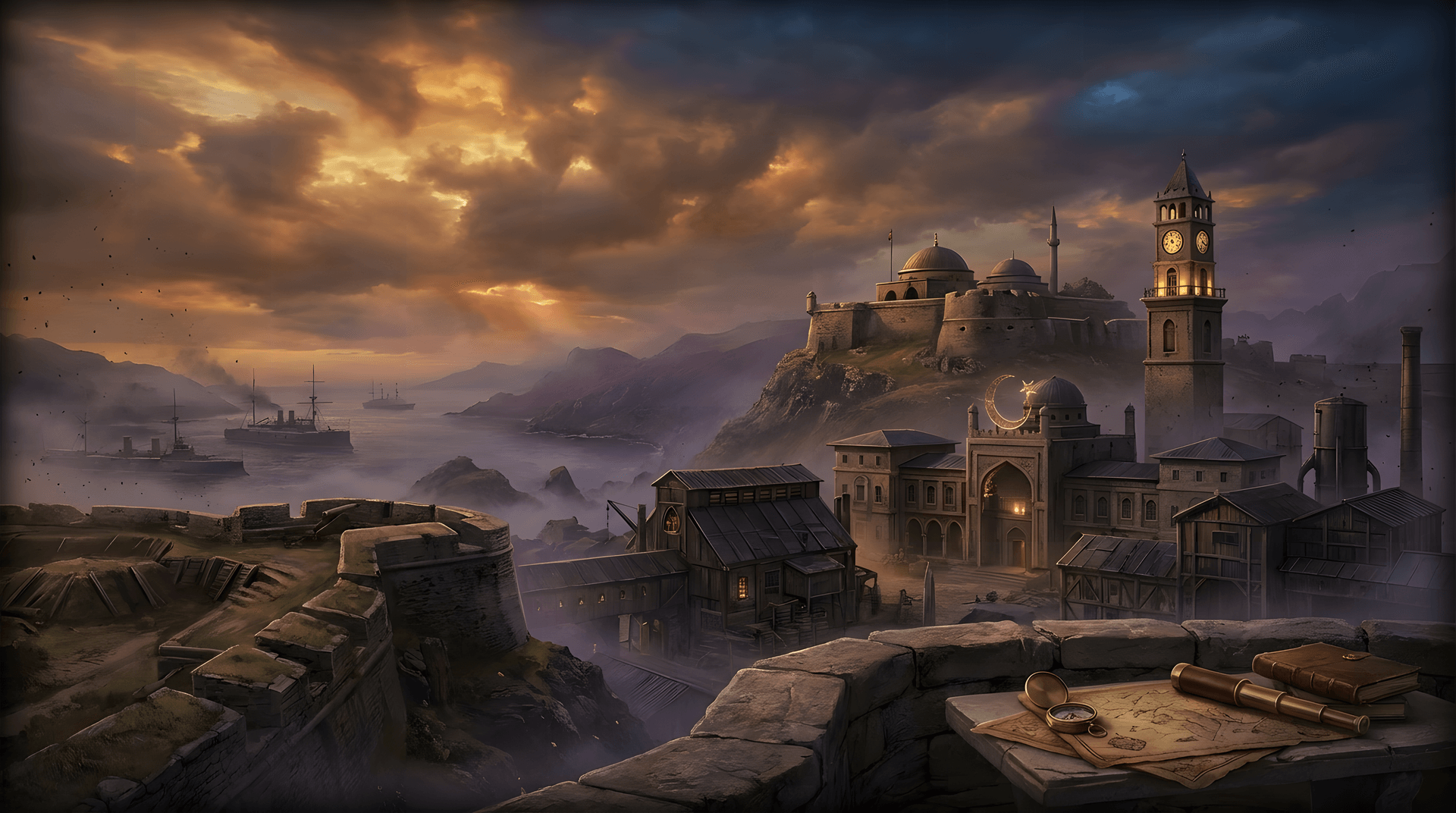
Images & artwork 7
Connections
Amir Kabir
Modernizing Influence
Amir Kabir is often seen as a precursor to later Middle Eastern modernizers like Mustafa Kemal Atatürk.
His efforts to centralize the state, reduce clerical influence in civil matters, and introduce Western science and technology laid the conceptual groundwork for the secular modernization movements of the 20th century.
Anwar El Sadat
Modernizing Influence
Sadat looked to the reforms of Mustafa Kemal Atatürk as a model for modernizing and secularizing Egyptian state institutions.
Sadat's 'Infitah' (Open Door) policy and his attempts to move Egypt toward a more Western-aligned, nationalist identity mirrored aspects of Atatürk's transformation of Turkey.
Halide Edib Adıvar
Political & Military Allies
Halide Edib was a prominent figure in the Turkish War of Independence and served as a close aide to Mustafa Kemal Atatürk.
She worked in Atatürk's headquarters during the national struggle, achieving the rank of sergeant and corporal. Although they later had significant political disagreements regarding the transition to a multi-party system, her early support was crucial to the nationalist cause.
İsmet İnönü
Political Allies & Successor
İnönü was Mustafa Kemal Atatürk's closest military and political collaborator and his successor as President of Turkey.
He served as the first Prime Minister of the Republic and was the chief negotiator at the Treaty of Lausanne, later succeeding Atatürk as the 'National Chief' (Milli Şef) in 1938.
İsmet İnönü
Political & Military Ally
İnönü was Atatürk's right-hand man, chief of staff during the War of Independence, and his successor as President.
İnönü played a crucial role in the military victories at the Battles of İnönü and represented the new Turkish Republic at the Treaty of Lausanne. He was instrumental in implementing Atatürk's secularist and modernist reforms across the nation.
Halide Edib Adıvar
Contemporary Ally & Critic
A prominent novelist and nationalist, she served alongside Atatürk during the Turkish War of Independence.
Halide Edib was one of the few women to hold a military rank during the struggle for independence and was a key figure in mobilizing public support. However, she later became a vocal critic of Atatürk's centralized power, leading to her eventual exile for several years.
Winston Churchill
Military Opponents & Mutual Respect
Churchill was the primary architect of the Gallipoli campaign, where he was defeated by the forces led by Mustafa Kemal Atatürk.
Despite being adversaries during WWI, Churchill later expressed great admiration for Atatürk’s transformation of Turkey into a modern secular state, viewing him as a 'man of destiny'.
Mohammad Reza Pahlavi
Ideological Inspiration
Mustafa Kemal Atatürk's successful secularization and modernization of Turkey served as the primary blueprint for the Pahlavi dynasty. Mohammad Reza Pahlavi continued his father's Atatürk-inspired policies to forcefully Westernize Iran.
Although Mohammad Reza Pahlavi never met Mustafa Kemal Atatürk, the founder of modern Turkey cast a massive shadow over the Shah's entire reign. Atatürk's radical program of secularization, state-led industrialization, and Westernization was deeply admired by the Shah's father, Reza Shah, who visited Turkey in 1934 and sought to replicate the Kemalist model in Iran. When Mohammad Reza ascended to the throne, he inherited and expanded upon this Atatürk-inspired vision. The Shah's 'White Revolution' in the 1960s—which included land reform, the enfranchisement of women, and the expansion of secular education—was a direct continuation of the Kemalist belief that rapid, top-down modernization was necessary for national survival. However, unlike Atatürk, who successfully dismantled the Ottoman religious establishment and forged a republic, the Shah attempted to fuse Western secularism with an autocratic, ancient monarchy. This ideological balancing act ultimately failed, as the Shah's Atatürk-style reforms deeply alienated the powerful Iranian Shia clergy, leading to the Islamic Revolution.
Known for
- Founding the Republic of Turkey
- Victory at the Battle of Gallipoli
- Abolishing the Ottoman Caliphate
- Introducing the Latin-based Turkish alphabet
- Secularizing Turkish law and society
- Granting political rights to women
Episodes featuring or mentioning this figure
No eligible published episode featuring this figure is currently in the library.