



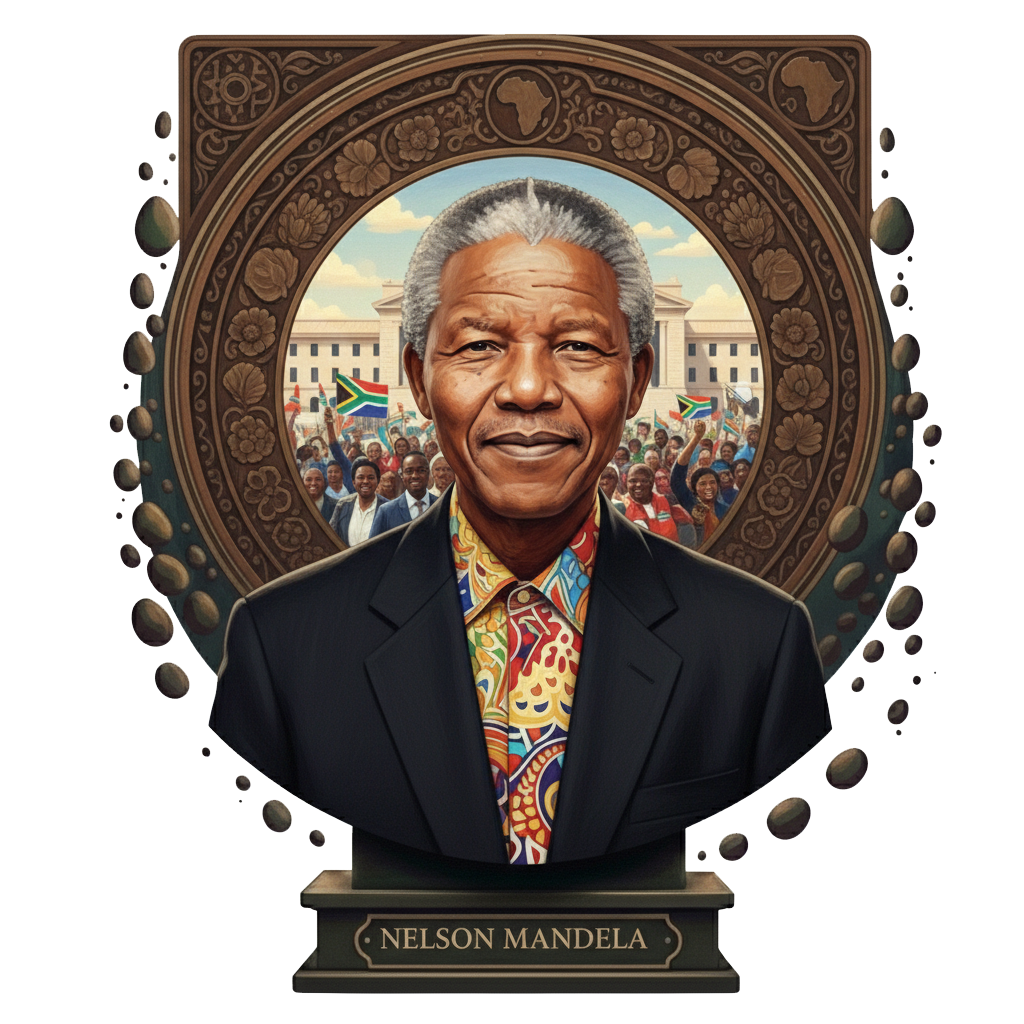
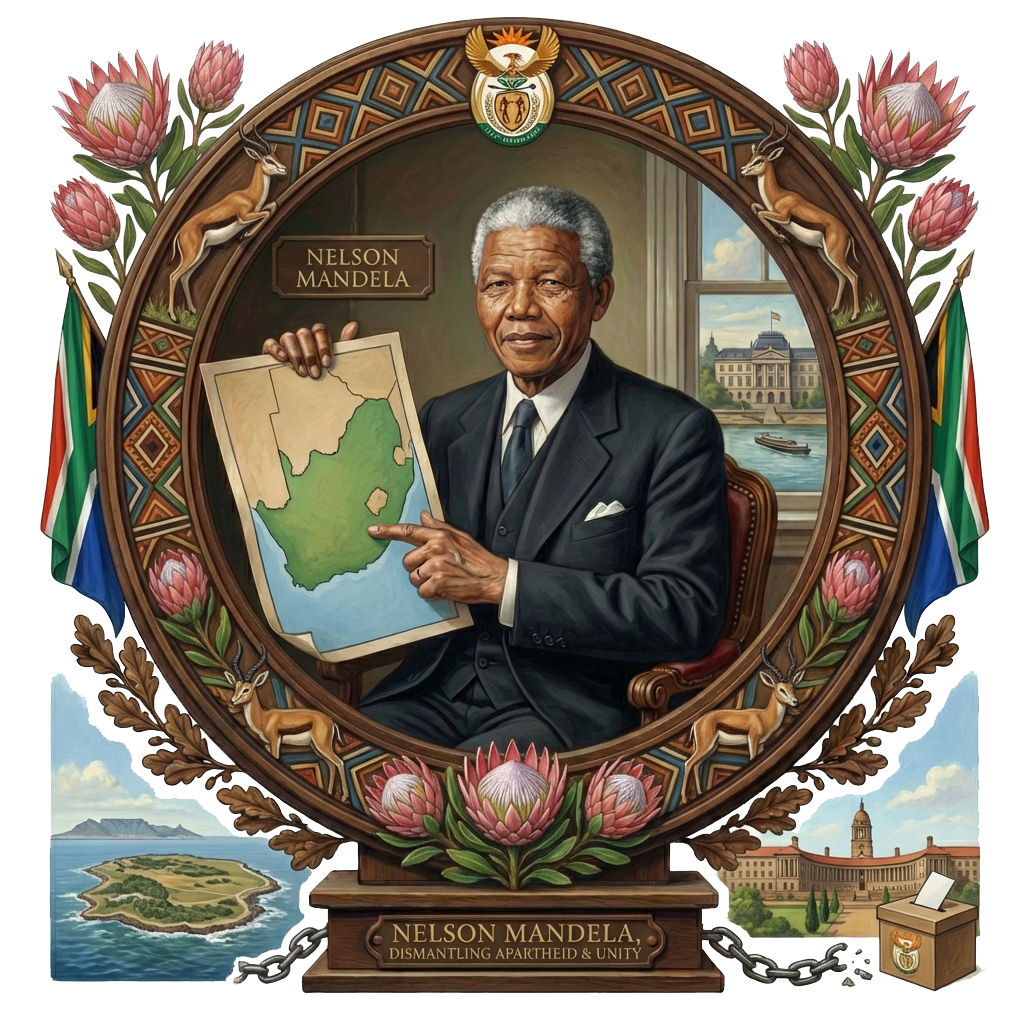
Nelson Mandela
Anti-apartheid revolutionary who became South Africa's first black president.
At a glance
- Born
- July 18, 1918
- Died
- December 5, 2013
- Era classification
- 95
- Homeland
- South Africa
- Period
- 1918–2013
- Field
- Politics, Leadership & War
- Language
- Xhosa, English
- Religion
- Methodist
- Gender
- male
Biography
Nelson Rolihlahla Mandela was born on July 18, 1918, in the village of Mvezo, South Africa, into the Thembu royal family. He studied law at the University of Fort Hare and the University of Witwatersrand before working as a lawyer in Johannesburg. Deeply affected by the systemic racial segregation and discrimination of the apartheid regime, Mandela joined the African National Congress (ANC) in 1944 and helped form its Youth League, dedicating his life to the fight for racial equality.
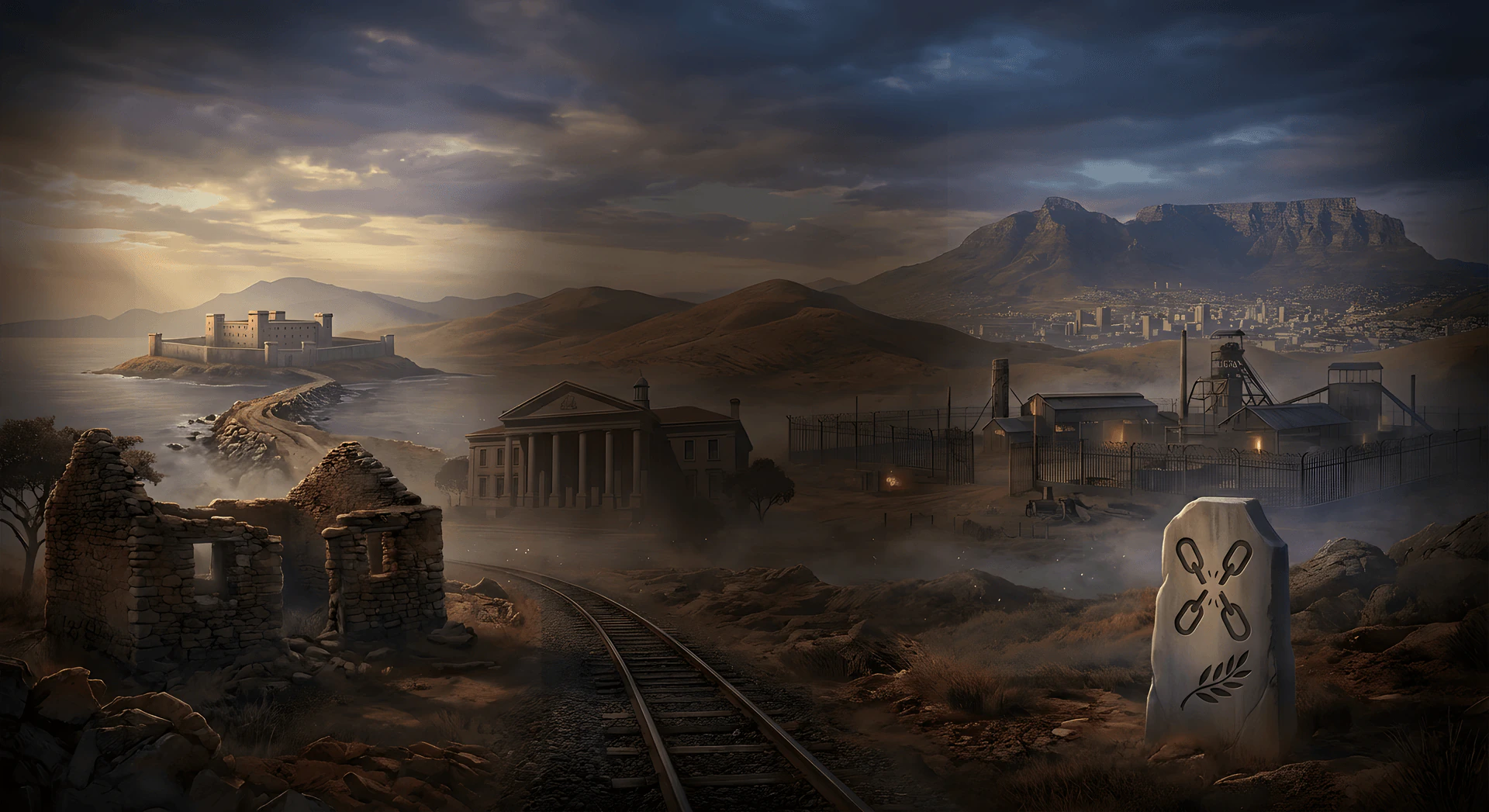
Initially committed to non-violent protest, Mandela co-founded the militant group Umkhonto we Sizwe in 1961 after the Sharpeville massacre convinced him that peaceful resistance was no longer sufficient. He was subsequently arrested and stood trial during the infamous Rivonia Trial. In 1964, he was sentenced to life imprisonment for conspiring to overthrow the state. Mandela spent the next 27 years incarcerated, primarily on Robben Island, where his resolve and dignity transformed him into a potent global symbol of the anti-apartheid movement.
Amidst growing international pressure and domestic unrest, President F.W. de Klerk released Mandela in 1990. The two leaders then engaged in delicate negotiations to dismantle the apartheid system, an effort that earned them the joint Nobel Peace Prize in 1993. In 1994, Mandela led the ANC to victory in South Africa's first fully representative democratic election, making history as the nation's first black president.
During his presidency, Mandela prioritized racial reconciliation, famously establishing the Truth and Reconciliation Commission to investigate past human rights abuses. He also introduced initiatives to combat poverty and expand healthcare. True to his democratic principles, he stepped down after a single term in 1999. In his later years, Mandela remained a revered elder statesman and philanthropist, focusing on rural development, school construction, and combating the HIV/AIDS epidemic until his death in 2013.
Portrayal characteristics
Saved editorial descriptions used for the reconstruction; these are not authenticated statements by the depicted person.
- Resilient
- Forgiving
- Charismatic
- Principled
- Visionary
- Courageous
Images & artwork 4
Connections
Jimmy Carter
Contemporary Allies
Carter was a vocal supporter of Mandela and the anti-apartheid movement, later serving with him in 'The Elders'.
After their respective presidencies, Carter and Mandela collaborated on global peace and human rights initiatives. Carter was invited by Mandela to join The Elders, an international non-governmental organization of public figures.
Mahatma Gandhi
Ideological Inspiration
Mandela viewed Gandhi as a primary influence in the struggle against apartheid in South Africa.
Mandela often cited Gandhi's early activism in South Africa as a blueprint for mass mobilization. While Mandela eventually accepted the necessity of armed struggle, he continued to honor Gandhi's legacy as a 'sacred warrior' for justice and human rights.
Mikhail Gorbachev
Contemporary Global Figures
Gorbachev's foreign policy shifts and the end of the Cold War helped create the international environment that pressured the end of Apartheid.
The reduction of Soviet influence in Africa and the de-escalation of Cold War tensions allowed for a negotiated settlement in South Africa, facilitating Mandela's release and the transition to democracy.
Mahatma Gandhi
Philosophical Influence
Mandela was deeply influenced by Gandhi's philosophy of non-violent resistance (Satyagraha).
Mandela often cited Gandhi as a primary inspiration for the anti-apartheid movement in South Africa, where Gandhi himself had first developed his political tactics. While Mandela eventually accepted the need for armed struggle, he maintained a lifelong reverence for Gandhi's moral leadership.
Martin Luther King Jr.
Civil Rights Peers
Mandela and King are the two most iconic figures of the 20th-century struggle for racial equality.
Though they never met, Mandela felt a strong kinship with King's struggle in the United States. Mandela frequently referenced King's speeches and the American Civil Rights Movement as a parallel to the fight against South African apartheid.
Jimmy Carter
Diplomatic Allies
Jimmy Carter was a vocal supporter of Mandela and later worked closely with him on global humanitarian issues.
During and after his presidency, Carter advocated for Mandela's release from prison. In 2007, they both became founding members of 'The Elders,' an international non-governmental organization of public figures noted as elder statesmen and peace activists.
Mohammad Reza Pahlavi
Geopolitical Opponents
The Shah's regime was a crucial economic ally of Apartheid South Africa, supplying it with oil, which placed him in direct opposition to Nelson Mandela's anti-apartheid struggle.
During the 1970s, Mohammad Reza Pahlavi's Iran was one of the few nations willing to defy international embargoes and supply massive quantities of oil to the Apartheid regime in South Africa. This geopolitical alliance was driven by mutual anti-communist sentiments and lucrative trade deals, but it placed the Shah in direct opposition to the liberation struggle led by Nelson Mandela and the African National Congress (ANC). Mandela, imprisoned at the time, and the ANC viewed the Shah as a complicit enabler of their oppressors. Consequently, the Iranian opposition, including both leftists and Islamists, forged ties with the global anti-apartheid movement. When the Shah was overthrown in 1979, the ANC celebrated his downfall as a major victory for global liberation movements. The new Islamic Republic immediately severed all ties with Pretoria, halted oil shipments, and officially supported Mandela's ANC, highlighting how the Shah's Cold War alliances made him an adversary to anti-colonial figures like Mandela.
Known for
- Dismantling apartheid in South Africa
- Serving as South Africa's first black president
- Winning the 1993 Nobel Peace Prize
- Establishing the Truth and Reconciliation Commission
- Enduring a 27-year political imprisonment
Episodes featuring or mentioning this figure
No eligible published episode featuring this figure is currently in the library.