



Emiliano Zapata
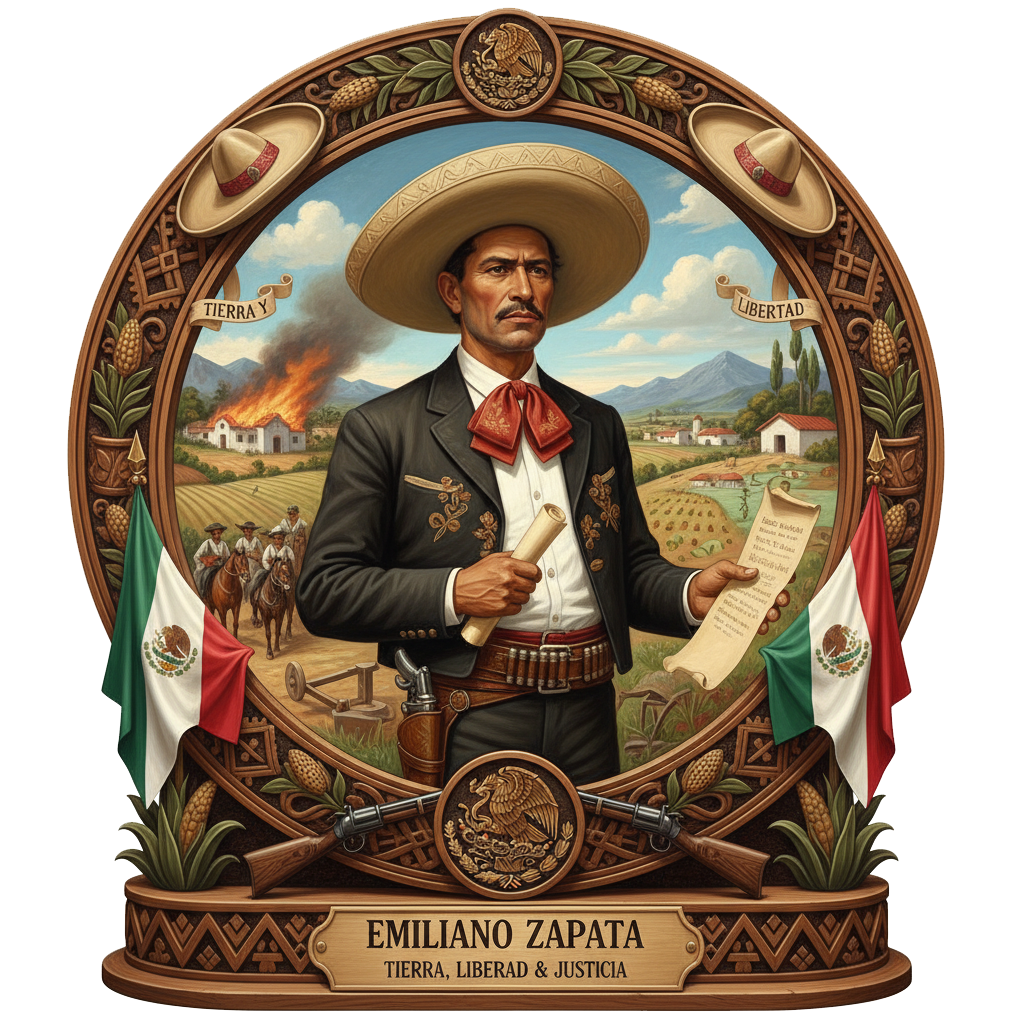
A leading figure in the Mexican Revolution and the main leader of the peasant revolution in Morelos.
At a glance
- Born
- 1879 CE
- Died
- 1919 CE
- Era classification
- Modern
- Homeland
- Mexico
- Period
- Early 20th Century
- Field
- Politics, Leadership & War
- Language
- Spanish
- Religion
- Catholic
- Gender
- male
Biography
Emiliano Zapata Salazar was a leading figure in the Mexican Revolution, the main leader of the peasant revolution in the state of Morelos, and the inspiration of the agrarian movement called Zapatismo. Born into a rural family, he became deeply involved in the struggles of local communities against the wealthy landowners who monopolized land and water resources.
Zapata formed and commanded the Liberation Army of the South. He is famous for his Plan of Ayala, which demanded the redistribution of land to the peasants and the return of stolen communal lands. His unwavering commitment to agrarian reform made him a hero to the rural poor.
He was assassinated in 1919 in an ambush orchestrated by government forces. However, his legacy endured, and he remains a powerful symbol of resistance and social justice in Mexico, inspiring modern movements such as the Zapatista Army of National Liberation.
Portrayal characteristics
Saved editorial descriptions used for the reconstruction; these are not authenticated statements by the depicted person.
- Idealistic
- Courageous
- Uncompromising
- Charismatic
- Rebellious
Images & artwork 3
Connections
Diego Rivera
Mural Subject & Ideological Hero
Rivera immortalized the revolutionary leader Emiliano Zapata in his murals, portraying him as the ultimate symbol of agrarian reform.
Zapata is a recurring figure in Rivera's work, most notably in the 'Agrarian Leader Zapata' fresco. Rivera's depictions helped cement Zapata's image in the Mexican national consciousness as a martyr for the rights of the peasantry.
Pancho Villa
Revolutionary Allies
The two primary leaders of the Mexican Revolution who joined forces to occupy Mexico City.
Zapata and Villa met at Xochimilco in 1914 to sign the Pact of Xochimilco, an alliance against the Constitutionalist forces. While Zapata focused on land reform in the south and Villa on the north, their temporary union remains the most iconic moment of the peasant revolution.
Diego Rivera
Artistic Legacy
Rivera immortalized Zapata as the central hero of the Mexican Revolution in his murals.
Rivera was a staunch supporter of Zapatismo and featured Zapata prominently in murals like 'The Agrarian Leader Zapata.' These works helped transform Zapata from a regional rebel into a national symbol of indigenous and peasant rights.
Lázaro Cárdenas
Political Successor
Cárdenas fulfilled the agrarian promises of Zapata's Plan of Ayala decades later.
As President of Mexico in the 1930s, Cárdenas oversaw the largest land redistribution in the country's history. This policy was the direct realization of the 'Tierra y Libertad' (Land and Liberty) platform that Zapata had fought and died for.
Lázaro Cárdenas
Ideological Successor
Cárdenas is historically credited with fulfilling the land reform promises that Zapata fought for during the Mexican Revolution.
Although Zapata was assassinated years before Cárdenas took office, Cárdenas's massive redistribution of land to the peasantry through the ejido system is seen as the ultimate realization of Zapata's Plan of Ayala. This policy cemented Cárdenas's legacy as the true heir to the agrarian revolution.
Octavio Paz
Historical Subject
Paz wrote extensively about the symbolic and historical importance of Emiliano Zapata in the Mexican consciousness.
In his essays, Paz explored Zapata as a symbol of the agrarian soul of Mexico and the purity of the Revolution. Paz's own father had served as a representative for Zapata, giving the poet a personal connection to the revolutionary leader's legacy.
Pancho Villa
Revolutionary Allies
Villa and Zapata were the two most prominent leaders of the Mexican Revolution, representing the north and south respectively.
The two leaders famously met at Xochimilco in 1914 to sign the Pact of Xochimilco, an alliance against the forces of Venustiano Carranza. Although they shared a common goal of agrarian reform and social justice, their cooperation was often hindered by geographical distance and differing regional priorities.
Known for
- Mexican Revolution leadership
- Plan of Ayala
- Agrarian reform advocacy
- Zapatismo movement
Episodes featuring or mentioning this figure
No eligible published episode featuring this figure is currently in the library.