



Forough Farrokhzad
A highly influential Iranian poet and film director who was a controversial modernist and feminist icon.
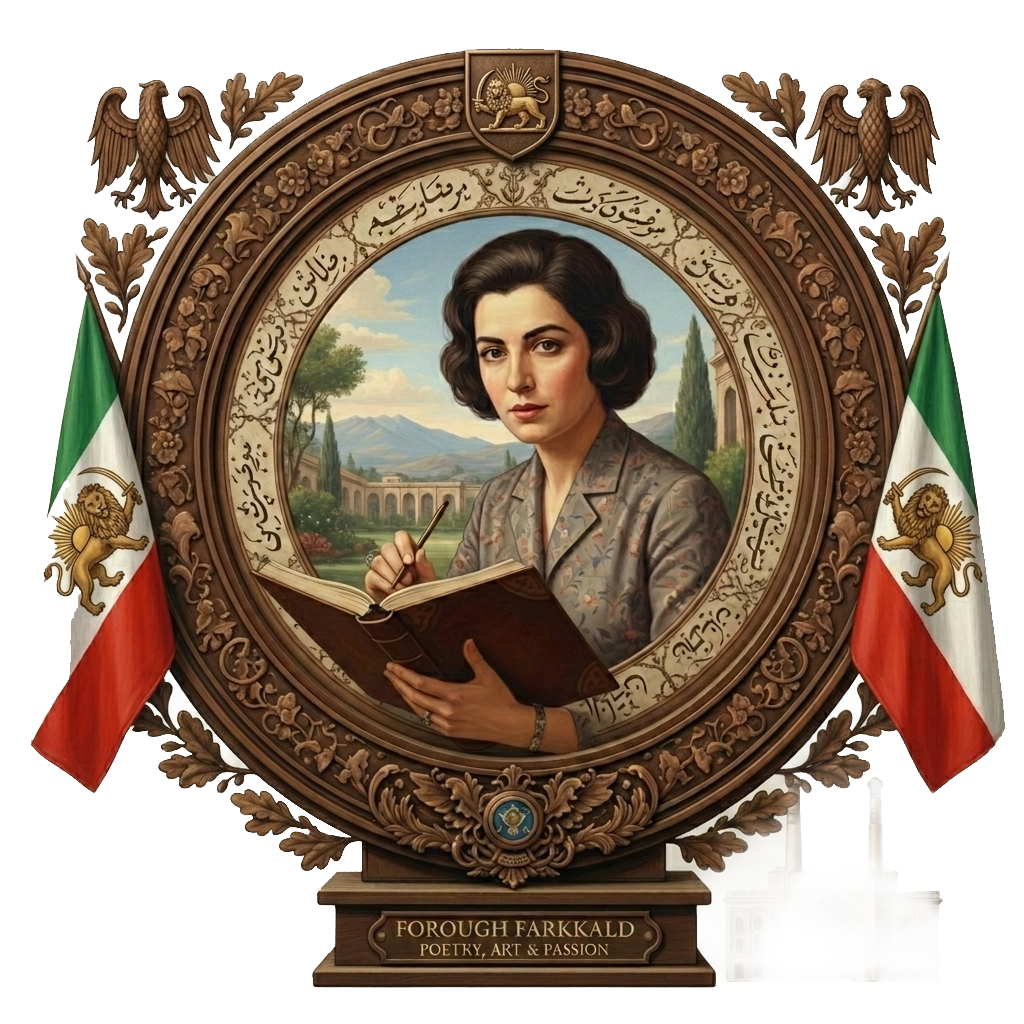
At a glance
- Born
- 1934 CE
- Died
- 1967 CE
- Era classification
- Modern
- Homeland
- Iran
- Period
- Pahlavi Dynasty
- Field
- Poetry, Art & Ethics
- Language
- Farsi
- Religion
- Islam
- Gender
- female
Biography
Forough Farrokhzad was a revolutionary figure in 20th-century Iranian literature, known for her bold, deeply personal poetry that defied the patriarchal norms of her society. Born in Tehran, she married at sixteen and had a son, but soon divorced, losing custody of her child—a trauma that deeply affected her life and work. Rejecting the traditional expectations placed upon Iranian women, she embraced a bohemian lifestyle and poured her experiences into her writing.
Farrokhzad was a pioneer of modern Persian poetry, breaking away from classical meters to write in free verse. Her early collections, such as 'The Captive' and 'The Wall', explored themes of female desire, rebellion, and emotional confinement with unprecedented frankness. Her later works, particularly 'Another Birth', are considered masterpieces of modern Persian literature, showcasing a mature, philosophical voice that engaged with existential themes and the rapid modernization of Iranian society.
Beyond poetry, Farrokhzad was also a talented filmmaker. Her 1962 documentary, 'The House Is Black', which depicted life in a leper colony, is widely regarded as a foundational work of the Iranian New Wave cinema. Tragically, her life was cut short in a car accident at the age of 32. Despite her early death, Forough Farrokhzad remains a towering cultural icon in Iran, celebrated for her artistic genius and her courageous assertion of female independence.
Portrayal characteristics
Saved editorial descriptions used for the reconstruction; these are not authenticated statements by the depicted person.
- Rebellious
- Introspective
- Avant-garde
- Passionate
- Courageous
Images & artwork 3
Connections
Sohrab Sepehri
Contemporary Modernists
Both were leading figures in the 'New Poetry' movement in 20th-century Iran.
Farrokhzad and Sepehri were contemporaries who revolutionized Persian literature by breaking away from traditional rhyming structures. While Sepehri focused on nature and mysticism, Farrokhzad's work was more personal and socially transgressive, yet both are considered the pillars of Iranian modernism.
Parvin E'tesami
Literary Successors
Farrokhzad is often viewed as the modernist successor to Parvin E'tesami in the lineage of great Iranian female poets.
While E'tesami wrote within more classical structures and used allegory to address social issues, Farrokhzad adopted a candid, first-person voice. Together, they represent the evolution of female intellectual expression in Iran during the Pahlavi era.
Mohammad Reza Pahlavi
Subject & Sovereign
Farrokhzad lived and produced her most influential work during the reign of the last Shah of Iran.
Her poetry often challenged the traditional social and patriarchal norms that persisted during the Pahlavi Dynasty's modernization efforts. Her work was occasionally censored or viewed as controversial by the conservative elements of the society the Shah governed.
Parvin E'tesami
Literary Successors
Both are considered the most influential female poets in Iranian history, representing different eras of Persian literature.
Parvin E'tesami is celebrated for her mastery of the classical 'Debate' (Munazara) style and ethical themes, while Forough Farrokhzad broke boundaries with modern, personal, and feminist 'New Poetry.' Together, they define the evolution of the female voice in Persian letters.
Sohrab Sepehri
Contemporary Peers
Both were leading figures in the 'New Poetry' (She'r-e Now) movement in 20th-century Iran.
Sepehri and Farrokhzad revolutionized Persian literature by moving away from rigid classical structures toward more personal, modernist, and nature-oriented expressions.
Mohammad Reza Pahlavi
Contemporary Cultural Figure
Forough Farrokhzad was a pioneering modernist poet and filmmaker whose work flourished during the Shah's reign. Her art reflected the rapid social changes, women's emancipation, and underlying societal tensions of the Pahlavi era.
Forough Farrokhzad lived her entire creative life under the rule of Mohammad Reza Pahlavi. The Shah's era, particularly the modernization efforts of the White Revolution, created a complex environment for artists like Farrokhzad. On one hand, the regime's push for secularism and women's enfranchisement provided a backdrop against which Farrokhzad could challenge traditional patriarchal norms through her bold, deeply personal poetry. On the other hand, the Pahlavi state maintained strict censorship and political repression through SAVAK. Farrokhzad's groundbreaking 1962 documentary, 'The House is Black', which depicted a leper colony, was widely interpreted as a subtle allegory for the hidden suffering and societal decay beneath the glittering, modernizing facade of the Shah's Iran. While she was not an overt political dissident, her tragic death in a car accident in 1967 cut short the life of a cultural icon whose work captured the profound contradictions of the Shah's rapidly changing society.
Known for
- Pioneering modern Persian poetry
- The House Is Black (documentary)
- Feminist literary themes
- Another Birth (poetry collection)
Episodes featuring or mentioning this figure
No eligible published episode featuring this figure is currently in the library.