



Hafez
A celebrated Persian poet whose lyrical ghazals masterfully blend mysticism, love, and profound spiritual longing.

At a glance
- Born
- c. 1315 CE
- Died
- c. 1390 CE
- Era classification
- c. 75
- Homeland
- Persia
- Period
- 14th Century
- Field
- Poetry, Art & Ethics
- Language
- Persian
- Religion
- Islam (Sufi)
- Gender
- male
Biography
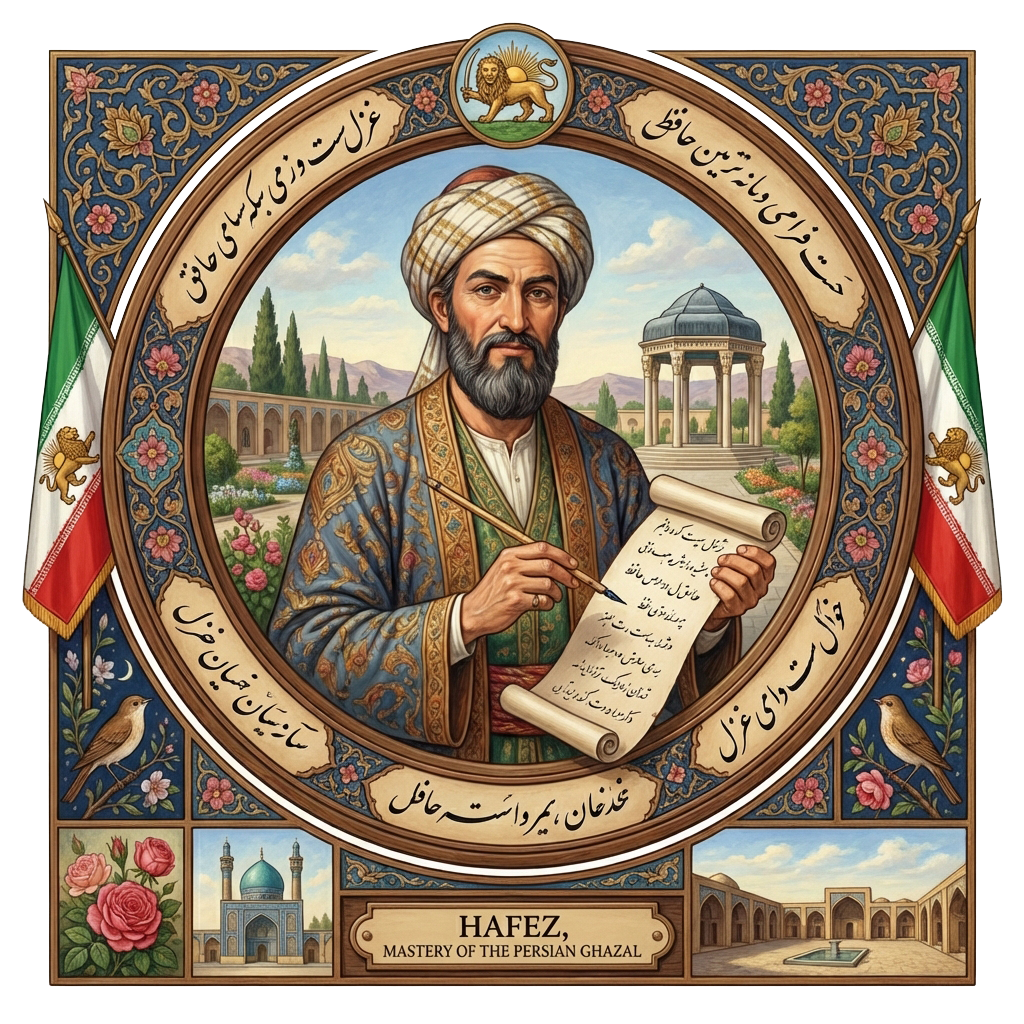
Khwāja Shams-ud-Dīn Muḥammad Ḥāfeẓ-e Shīrāzī, known simply as Hafez, was a 14th-century Persian poet whose collected works (the Divan) are regarded as a pinnacle of Persian literature. Born in Shiraz, he memorized the Quran at an early age, earning him the pen name 'Hafez' (meaning 'memorizer' or 'safe keeper'). Despite his immense posthumous fame, few concrete details about his early life survive, though it is known he received a classical Islamic education and enjoyed the patronage of several local rulers.
Hafez's poetry is primarily written in the literary form of the ghazal, which he elevated to unprecedented heights of expressive beauty and thematic complexity. His verses seamlessly weave together themes of earthly love, wine, and nature with profound Sufi mysticism and spiritual yearning. This deliberate ambiguity allows his poetry to be read simultaneously as a celebration of worldly pleasures and an allegorical pursuit of the divine, making his work universally resonant across different interpretations.
Throughout his life, Hafez lived through a turbulent period of Persian history, witnessing the rise and fall of various dynasties in Shiraz, including the Injuids, Muzaffarids, and the conquests of Timur (Tamerlane). Despite the political instability and occasional religious orthodoxy that threatened his livelihood, he remained deeply attached to his hometown of Shiraz. He frequently critiqued religious hypocrisy and dogmatism in his poetry, championing spiritual sincerity over superficial piety.
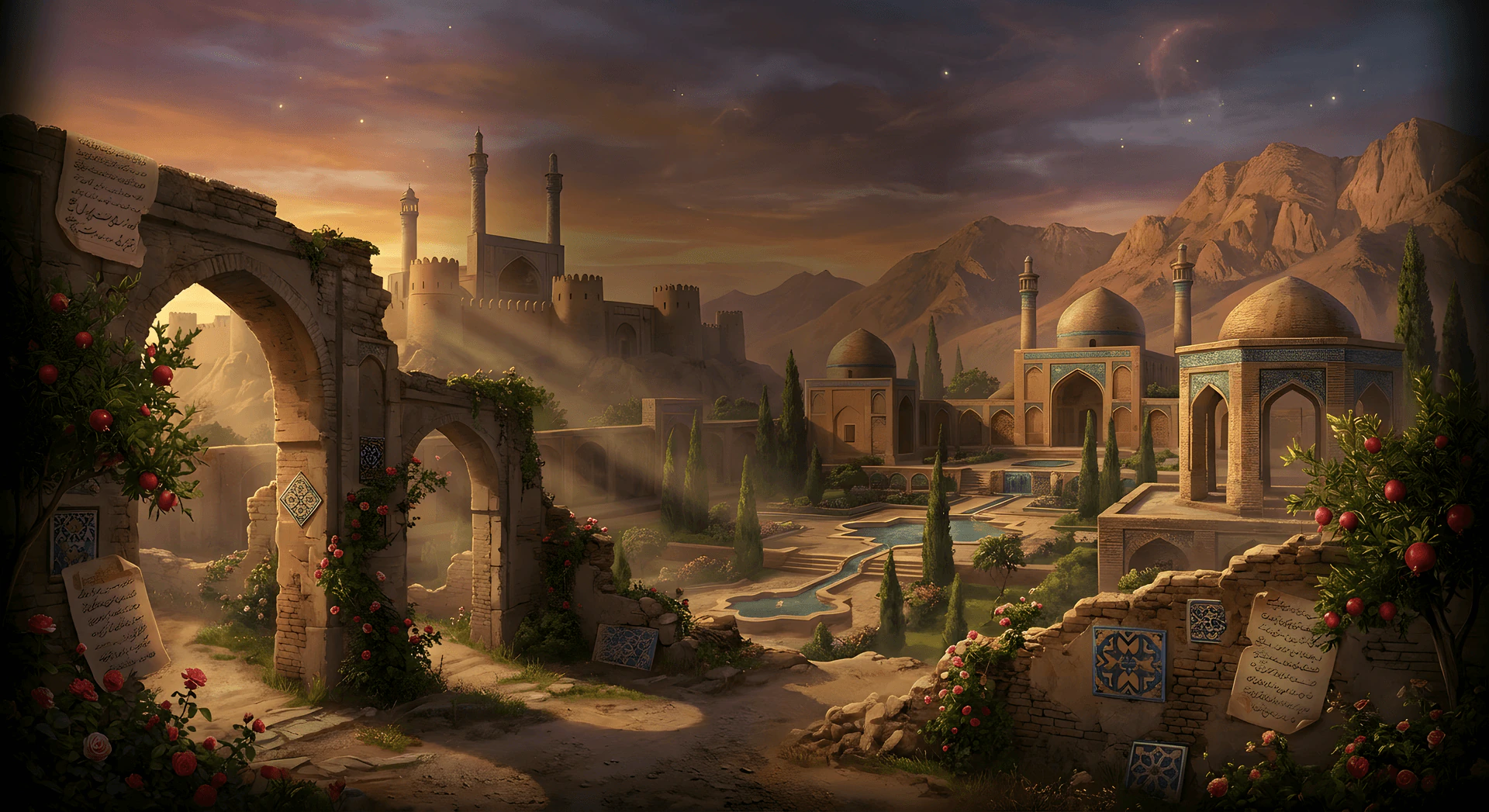
Today, Hafez is celebrated not only as a national hero in Iran but also as a world-class literary figure whose influence extends globally. His Divan is found in the homes of most Persian speakers, who frequently use it for bibliomancy (fal-e Hafez) to seek guidance and insight. His tomb in Shiraz, the Hafezieh, remains a major site of reverence, reflecting his enduring legacy as the 'Tongue of the Unseen' (Lisan al-Ghayb).
Portrayal characteristics
Saved editorial descriptions used for the reconstruction; these are not authenticated statements by the depicted person.
- Mystical
- Lyrical
- Philosophical
- Anti-hypocritical
- Romantic
- Spiritual
Images & artwork 4
Connections
Johann Wolfgang von Goethe
Literary Influence
Goethe was deeply inspired by Hafez's poetry, leading him to write the 'West-Eastern Diwan' as a tribute.
In the early 19th century, Goethe encountered a translation of Hafez's Divan. This encounter profoundly shifted Goethe's poetic style, as he sought to bridge Western and Eastern literary traditions through his own lyrical responses to Hafez's mystical and romantic themes.
Saadi Shirazi
Poetic Predecessor
Hafez was significantly influenced by the ghazal form and linguistic style perfected by Saadi in Shiraz a century earlier.
Both poets hailed from Shiraz and are considered the twin pillars of Persian literature. Hafez refined the ghazal form that Saadi had popularized, often engaging in a literary dialogue with Saadi's themes of love, ethics, and mysticism.
Molana Rumi
Spiritual Influence
Hafez's work reflects the mystical and Sufi traditions that were heavily shaped by Rumi's earlier contributions to Persian poetry.
While they lived in different centuries, Hafez's use of wine and love as metaphors for divine intoxication draws directly from the spiritual framework established by Rumi. Hafez integrated Rumi's ecstatic mysticism into the more structured ghazal format.
Saadi Shirazi
Literary Influence
Saadi's perfection of the Persian ghazal (lyric poem) provided the structural and thematic blueprint for Hafez a century later.
Hafez, also a native of Shiraz, grew up in the shadow of Saadi's immense reputation. Hafez's work often references or refines the linguistic style and romantic themes that Saadi had popularized during the previous era.
Known for
- The Divan of Hafez
- Mastery of the Persian Ghazal
- Fal-e Hafez (Bibliomancy)
- Lisan al-Ghayb (Tongue of the Unseen)
- Sufi mystical poetry
Episodes featuring or mentioning this figure
No eligible published episode featuring this figure is currently in the library.