



Saadi Shirazi
A major Persian poet and prose writer of the medieval period, renowned for his moral wisdom and social depth.

At a glance
- Born
- c. 1210 CE
- Died
- c. 1291 CE
- Era classification
- c. 81
- Homeland
- Persia
- Period
- 13th Century
- Field
- Poetry, Art & Ethics
- Language
- Persian
- Religion
- Islam (Sufi)
- Gender
- male
Biography
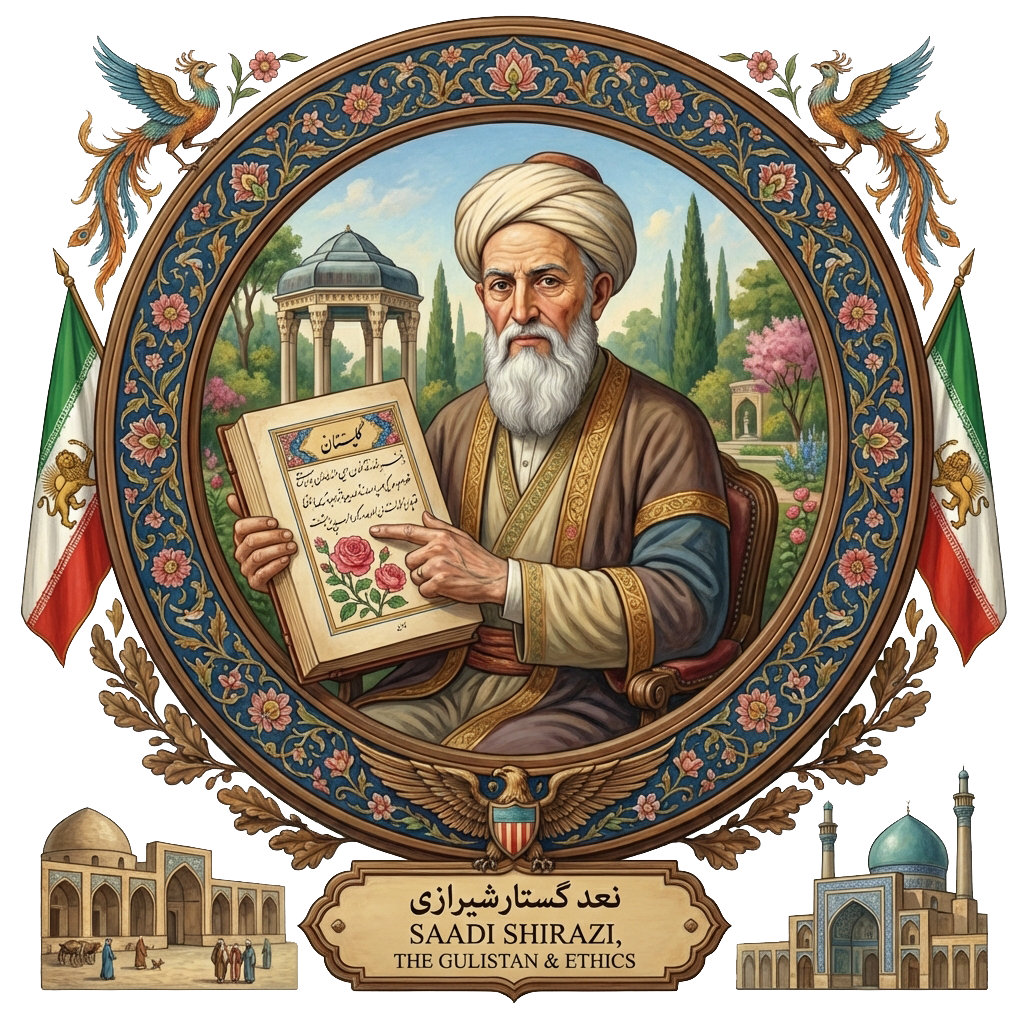
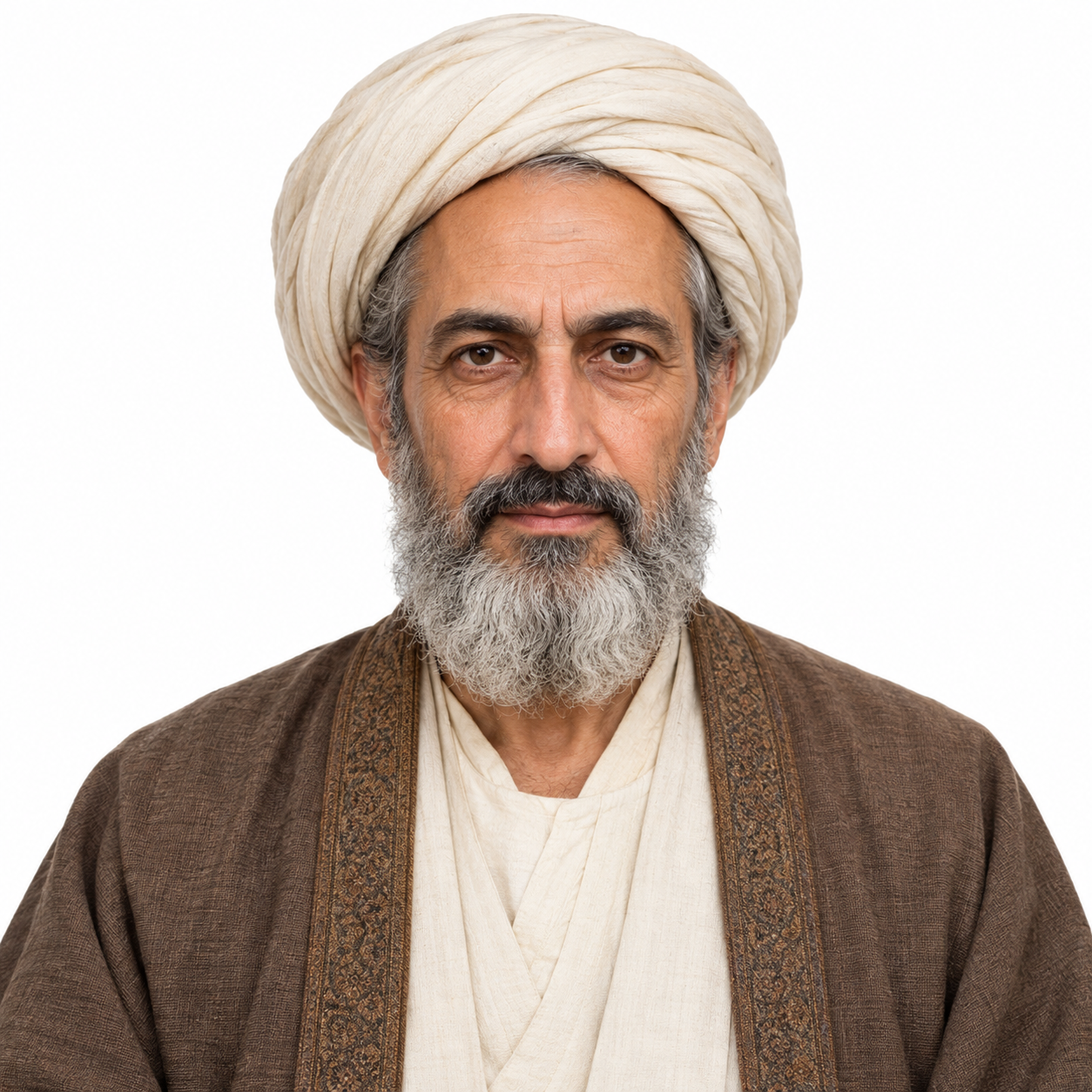
Abū-Muhammad Muslih al-Dīn bin Abdallāh Shīrāzī, better known as Saadi Shirazi, was born in Shiraz, Persia, around 1210 CE. Following the devastating Mongol invasions of his homeland, he left Shiraz at a young age to pursue his education. He enrolled at the prestigious Al-Nizamiyya of Baghdad, where he studied Islamic sciences, law, history, and Arabic literature, laying a strong intellectual foundation for his future works.
Driven by the turbulence of his era and a thirst for knowledge, Saadi spent the next three decades traveling extensively across the Islamic world. His journeys took him through Anatolia, Syria, Egypt, and Iraq. Often traveling as a wandering dervish, he mingled with people from all walks of life—from merchants and farmers to scholars and rulers. These experiences exposed him to the harsh realities of war, displacement, and human suffering, profoundly shaping his pragmatic and compassionate worldview.
Saadi returned to his native Shiraz around 1257 CE, finding the city in a state of relative peace under the rule of the Salghurid dynasty. It was during this tranquil period that he composed his two enduring masterpieces. In 1257, he completed the 'Bustan' (The Orchard), a book of poetry written in epic meter that explores moral virtues and ideal governance. The following year, he authored the 'Gulistan' (The Rose Garden), a seminal collection of poems and stories in both prose and verse that offers practical wisdom on human behavior and society.
Revered as the 'Master of Speech' (Ostad-e Sokhan) by Persian scholars, Saadi's legacy extends far beyond the borders of Iran. His eloquent simplicity, moral clarity, and profound understanding of human nature have made his works timeless. His famous poem 'Bani Adam', which speaks to the interconnectedness of all human beings, remains a universal symbol of human rights and solidarity.
Portrayal characteristics
Saved editorial descriptions used for the reconstruction; these are not authenticated statements by the depicted person.
- Wise
- Observant
- Eloquent
- Compassionate
- Worldly
- Philosophical
Images & artwork 5
Connections
Farid ud-Din Attar
Literary Influence
Attar's mystical poetry deeply influenced the later works of Saadi Shirazi.
Attar's use of anecdotes to illustrate spiritual truths in 'The Conference of the Birds' served as a model for Saadi's 'Bustan' and 'Gulistan.' Both poets are considered pillars of the Persian literary tradition, bridging the gap between mysticism and ethics.
Hafez
Poetic Predecessor
Hafez was significantly influenced by the ghazal form and linguistic style perfected by Saadi in Shiraz a century earlier.
Both poets hailed from Shiraz and are considered the twin pillars of Persian literature. Hafez refined the ghazal form that Saadi had popularized, often engaging in a literary dialogue with Saadi's themes of love, ethics, and mysticism.
Molana Rumi
Contemporary Poets
Rumi and Saadi were the two most influential Persian poets of the 13th century, representing different facets of Sufism.
While Rumi focused on ecstatic divine love in Anatolia, Saadi focused on moral wisdom and practical ethics in Shiraz. Historical accounts suggest they were aware of each other's work, and Saadi is said to have sent a poem to Rumi as a gesture of respect.
Nizami Ganjavi
Literary Influence
Nizami's narrative style and ethical themes served as a major influence on the later works of Saadi Shirazi.
Saadi's didactic and romantic poetry, particularly in the 'Bustan', reflects the structural and thematic influence of Nizami's 'Khamseh'. Nizami's ability to weave moral lessons into complex romantic epics set a standard that Saadi and subsequent Persian poets followed for centuries.
Molana Rumi
Contemporary Peers
Saadi and Rumi were the two most influential Persian poets of the 13th century, representing different facets of Sufi thought.
Historical accounts suggest Saadi traveled to Konya to meet Rumi, and he reportedly sent some of his poems to Rumi for review. While Saadi focused on practical ethics and social wisdom in the 'Gulistan,' Rumi focused on the ecstatic union with the divine.
Hafez
Literary Influence
Saadi's perfection of the Persian ghazal (lyric poem) provided the structural and thematic blueprint for Hafez a century later.
Hafez, also a native of Shiraz, grew up in the shadow of Saadi's immense reputation. Hafez's work often references or refines the linguistic style and romantic themes that Saadi had popularized during the previous era.
Shams Tabrizi
Contemporary Mystics
Saadi and Shams were both wandering dervishes during the 13th century, moving through the same intellectual and spiritual circuits of the Middle East.
Though their personal interactions are less documented than Saadi's connection to Rumi, they both lived through the Mongol invasions and were part of the widespread Sufi movement that sought spiritual meaning amidst political chaos.
Shams Tabrizi
Contemporary Mystics
Shams and Saadi were both active in the 13th-century Persian world, traveling extensively as Sufi seekers.
While Saadi's mysticism was more grounded in social ethics and Shams's was more radical and iconoclastic, they both represent the peak of the Sufi intellectual movement that flourished despite the Mongol threat.
Known for
- The Gulistan (The Rose Garden)
- The Bustan (The Orchard)
- Bani Adam (poem on human solidarity)
- Earning the title 'Master of Speech'
- Pioneering classical Persian prose and poetry
Episodes featuring or mentioning this figure
No eligible published episode featuring this figure is currently in the library.