



Taras Shevchenko
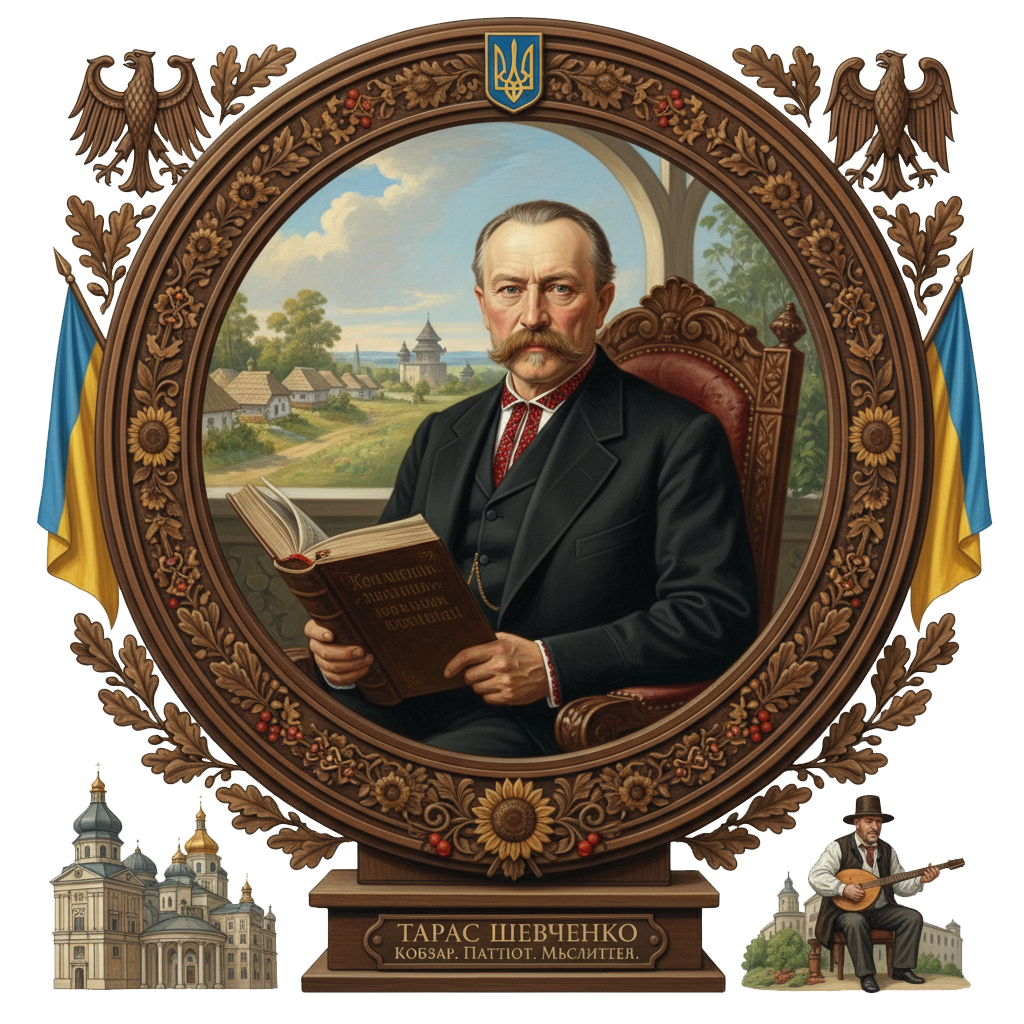
Ukrainian poet, writer, and artist whose literary heritage is regarded as the foundation of modern Ukrainian literature.
At a glance
- Born
- 1814 CE
- Died
- 1861 CE
- Era classification
- Modern
- Homeland
- Ukraine
- Period
- 19th Century
- Field
- Poetry, Art & Ethics
- Language
- Ukrainian
- Religion
- Orthodox Christian
- Gender
- male
Biography
Taras Shevchenko was born a serf in the Russian Empire but his immense talent in art and poetry bought his freedom. He became the foremost figure of the Ukrainian national revival in the 19th century. His poetry collection, 'Kobzar,' expressed the deep yearning of the Ukrainian people for freedom and social justice.
Shevchenko's works were highly critical of the Tsarist regime and the oppression of Ukrainians, leading to his arrest and exile. He was forced to serve in the imperial military under strict orders forbidding him to write or paint. Despite these harsh conditions, he secretly continued his creative work.
Today, Shevchenko is revered as a national hero of Ukraine. His legacy extends beyond literature; he is a symbol of resilience, national identity, and the enduring spirit of the Ukrainian people.
Portrayal characteristics
Saved editorial descriptions used for the reconstruction; these are not authenticated statements by the depicted person.
- Patriotic
- Creative
- Resilient
- Visionary
- Rebellious
Images & artwork 3
Connections
Bohdan Khmelnytsky
Literary Chronicler
Shevchenko's poetry frequently analyzed and critiqued Khmelnytsky's historical legacy.
As the national poet of Ukraine, Shevchenko portrayed Khmelnytsky as a tragic hero. While he honored Khmelnytsky's leadership in the uprising against Poland, he also lamented the Treaty of Pereyaslav, which he believed led to centuries of Russian dominance over Ukraine.
Ivan Franko
Literary Influence
Franko is considered the primary successor to Shevchenko's role as the national poet and intellectual leader of Ukraine.
Franko dedicated much of his career to modernizing the Ukrainian literary tradition that Shevchenko had established, moving it toward realism and social activism.
Lesya Ukrainka
Influenced By
Shevchenko's poetry and national vision were the primary inspirations for Ukrainka's work and her commitment to Ukrainian identity.
As a leading figure in the Ukrainian national revival, Ukrainka built upon the foundation laid by Shevchenko, modernizing Ukrainian literature while maintaining its revolutionary spirit. She is often cited alongside Shevchenko as one of the most important figures in the Ukrainian literary canon.
Mykhailo Hrushevsky
Intellectual Influence
Hrushevsky's historical work provided the academic foundation for the national identity that Shevchenko's poetry had popularized.
As a historian, Hrushevsky viewed Shevchenko as the spiritual father of the Ukrainian nation. He dedicated much of his career to documenting the historical continuity of the Ukrainian people that Shevchenko had celebrated in verse.
Alexander Pushkin
Literary Contemporaries
Shevchenko and Pushkin were the preeminent poets of the Ukrainian and Russian languages, respectively, during the 19th century.
While Shevchenko respected Pushkin's talent, he used his poetry to critique the Russian imperial system that Pushkin was often associated with, establishing a distinct Ukrainian literary identity in opposition to imperial hegemony.
Mykhailo Hrushevsky
Cultural Legacy
Hrushevsky, a historian and political leader, viewed Shevchenko as the foundational figure of modern Ukrainian national identity.
Hrushevsky's historical narratives heavily emphasized Shevchenko's role in awakening the Ukrainian national spirit, treating the poet's work as a primary catalyst for the 20th-century independence movement.
Known for
- Writing the 'Kobzar'
- Founding modern Ukrainian literature
- Symbol of Ukrainian national revival
- Paintings and illustrations
Episodes featuring or mentioning this figure
No eligible published episode featuring this figure is currently in the library.