



Virginia Woolf
Modernist English novelist and essayist renowned for pioneering stream of consciousness and feminist literary theory.
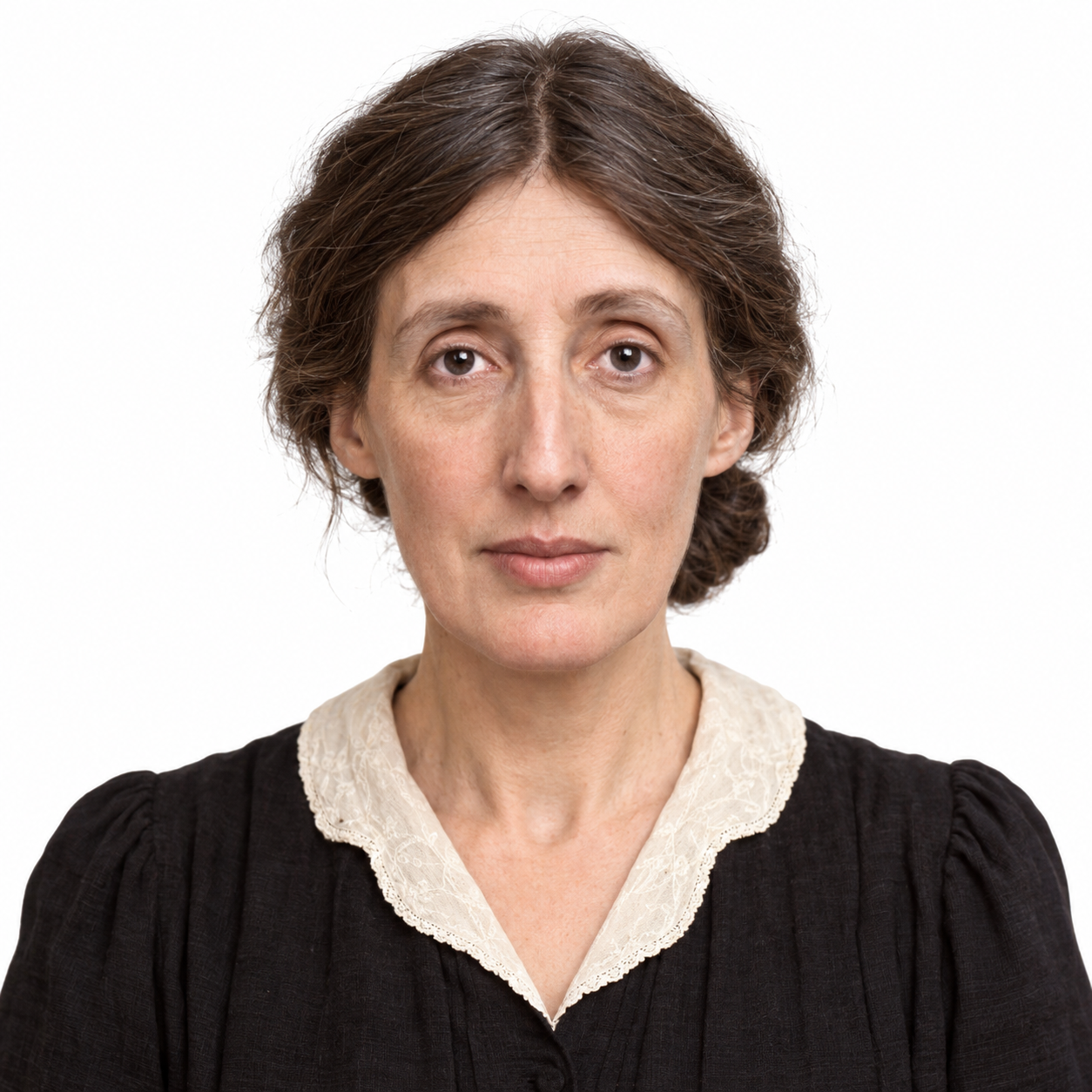
At a glance
- Born
- 1882 CE
- Died
- 1941 CE
- Era classification
- Modern
- Occupation
- Novelist & Essayist
- Homeland
- England, United Kingdom
- Period
- Early 20th Century
- Field
- Poetry, Art & Ethics
- Language
- English
- Religion
- Atheist
- Gender
- female
Biography
Born Adeline Virginia Stephen in London in 1882, Virginia Woolf grew up in an intellectually vibrant Victorian household headed by her father, the distinguished editor and critic Sir Leslie Stephen. Following the deaths of her parents and elder sister, Woolf relocated with her siblings to the bohemian district of Bloomsbury. There, she became a central figure in the Bloomsbury Group, an elite circle of artists, philosophers, and writers who rejected Victorian moral and aesthetic constraints.
Woolf fundamentally transformed the landscape of the English novel during the 1920s and 1930s. Moving away from conventional realism and rigid narrative structures, she pioneered the stream-of-consciousness technique to capture the elusive, fleeting nature of human consciousness and memory. Masterpieces such as 'Mrs Dalloway' (1925), 'To the Lighthouse' (1927), and 'The Waves' (1931) established her as a preeminent voice of modernist experimentation alongside James Joyce and T. S. Eliot.
In addition to her groundbreaking fiction, Woolf was a profound essayist and feminist pioneer. Her extended essay 'A Room of One's Own' (1929) famously asserted that intellectual freedom and artistic creation for women depend entirely on financial independence and physical space. In 'Three Guineas' (1938), she explored the intersecting evils of patriarchy, militarism, and fascism, cementing her status as a vital social critic.
Throughout her life, Woolf wrestled with severe recurrent mental illness, likely bipolar disorder, which was exacerbated by personal grief and the stresses of war. In March 1941, fearing another debilitating breakdown during the height of the London Blitz, she tragically took her own life by drowning in the River Ouse. Today, Woolf is celebrated worldwide for her extraordinary prose style, psychological depth, and enduring legacy in feminist thought.
Portrayal characteristics
Saved editorial descriptions used for the reconstruction; these are not authenticated statements by the depicted person.
- Introspective
- Visionary
- Avant-garde
- Perceptive
- Intellectually Independent
Images & artwork 2
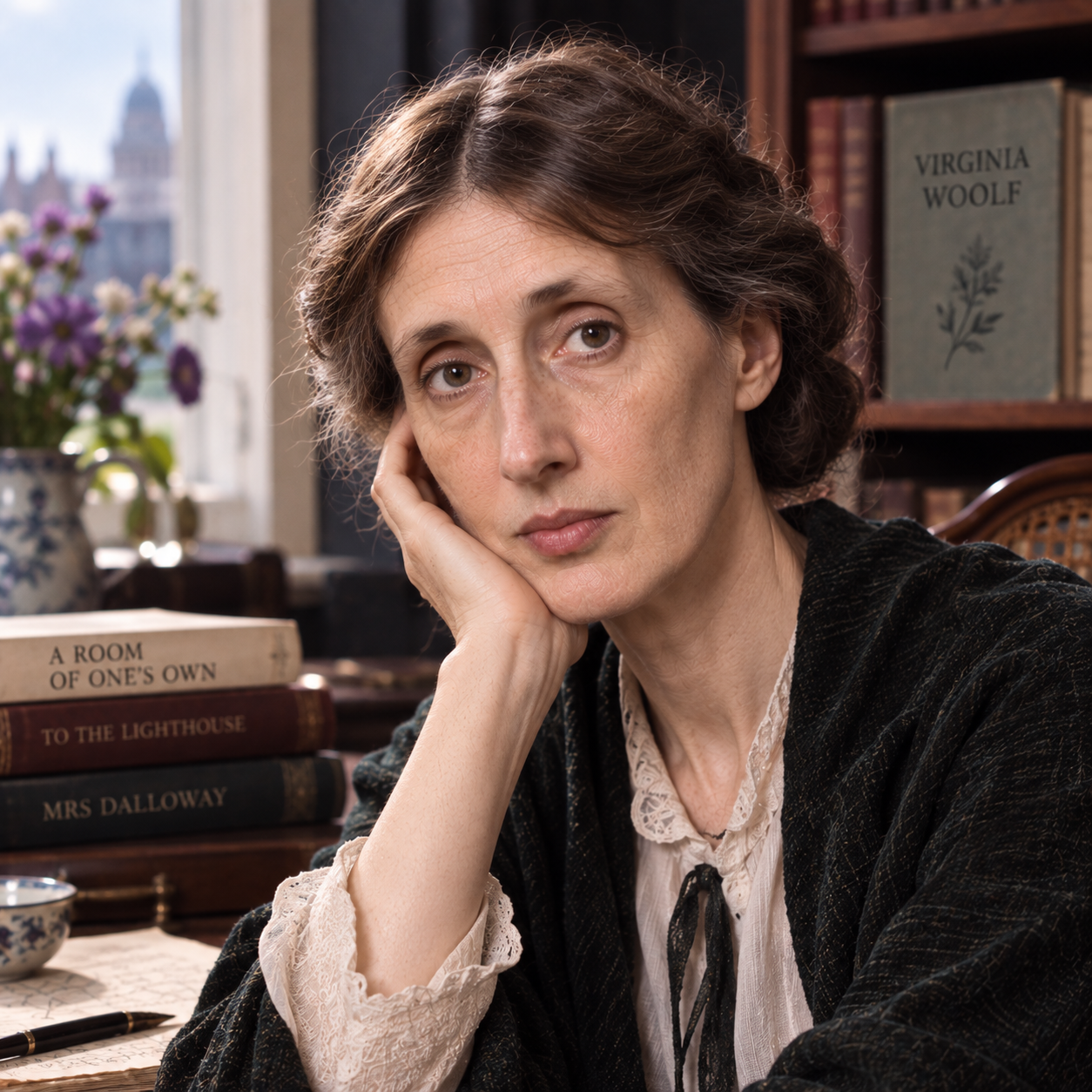
Known for
- Pioneering stream-of-consciousness narrative style
- Authoring 'Mrs Dalloway' and 'To the Lighthouse'
- Feminist essay 'A Room of One's Own'
- Key figure of the Bloomsbury Group
- Co-founding the Hogarth Press
Episodes featuring or mentioning this figure
No eligible published episode featuring this figure is currently in the library.