



Shams Tabrizi
A wandering Persian Sufi mystic who profoundly transformed Rumi into one of history's greatest spiritual poets.

At a glance
- Born
- c. 1185 CE
- Died
- c. 1248 CE
- Era classification
- 63
- Homeland
- Persia
- Period
- 1185–1248 CE
- Field
- Poetry & Mysticism
- Language
- Persian
- Religion
- Islam (Sufism)
- Gender
- male
Biography
Shams al-Din Mohammad, widely known as Shams Tabrizi, was born in the city of Tabriz around 1185 CE. From a young age, he exhibited a profound spiritual restlessness and an intense devotion to mysticism. Leaving his homeland, he became a wandering dervish, traveling extensively across the Middle East in search of a spiritual companion who could match his intense devotion and understand his unorthodox, ecstatic approach to divine love. His constant nomadic lifestyle earned him the nickname 'Shams-e Parande,' or the Flying Sun.
In 1244 CE, Shams arrived in Konya, where he encountered Jalal al-Din Muhammad Rumi, who was then a traditional and highly respected Islamic scholar. The meeting between the two was explosive and transformative. Shams challenged Rumi's reliance on academic theology, urging him to experience the divine directly through love and spiritual ecstasy. Under Shams's guidance, Rumi abandoned his public preaching and immersed himself in mystical contemplation, forging an unbreakable spiritual bond that transcended ordinary friendship.
The intense exclusivity of their relationship sparked deep jealousy and resentment among Rumi's followers and family. In 1248 CE, Shams vanished under mysterious circumstances; historical accounts remain divided on whether he left voluntarily or was murdered by Rumi's disciples. His sudden disappearance plunged Rumi into profound grief, catalyzing his transformation into a legendary poet. Rumi dedicated his monumental collection of lyric poetry, the 'Divan-e Shams-e Tabrizi,' to his master, ensuring that Shams's legacy as the catalyst of ecstatic Sufi poetry would endure forever.
Portrayal characteristics
Saved editorial descriptions used for the reconstruction; these are not authenticated statements by the depicted person.
- Mystical
- Unorthodox
- Charismatic
- Wandering
- Intense
- Enigmatic
Images & artwork 6
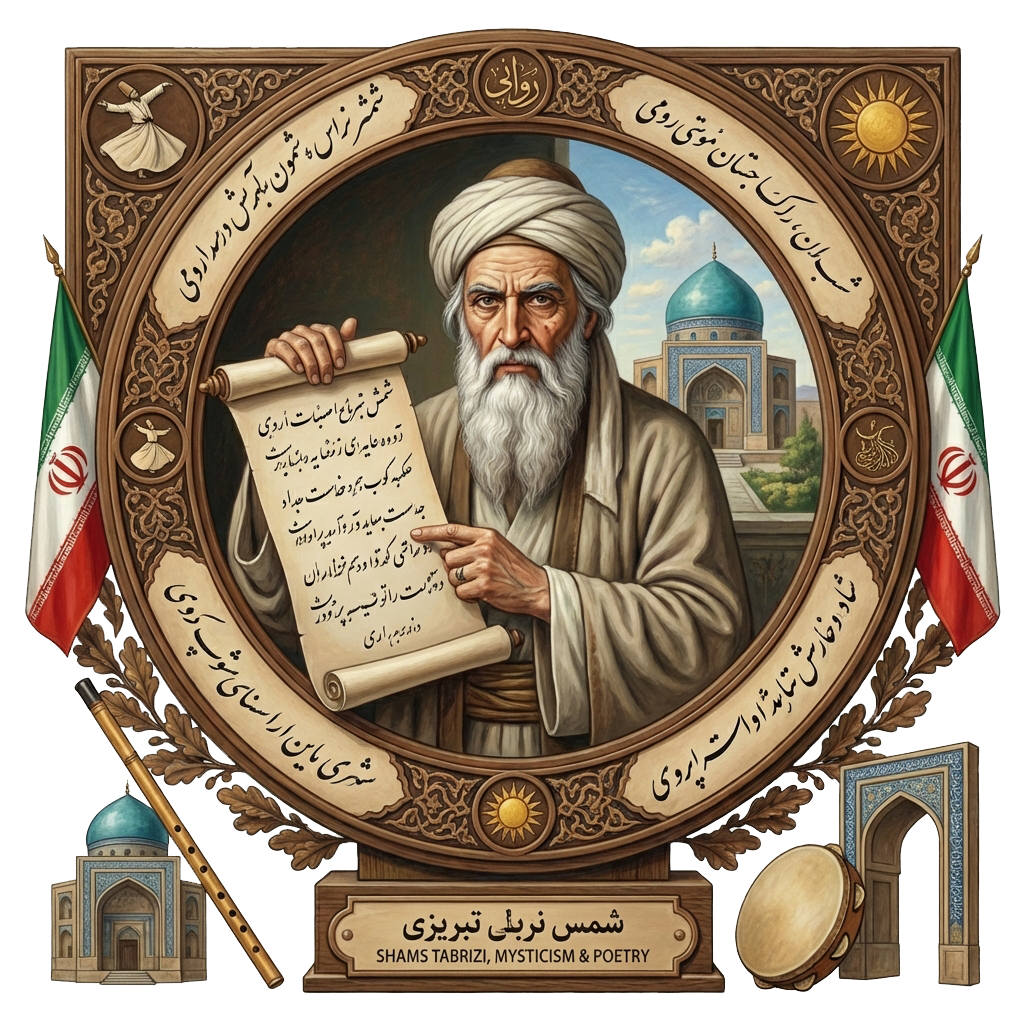
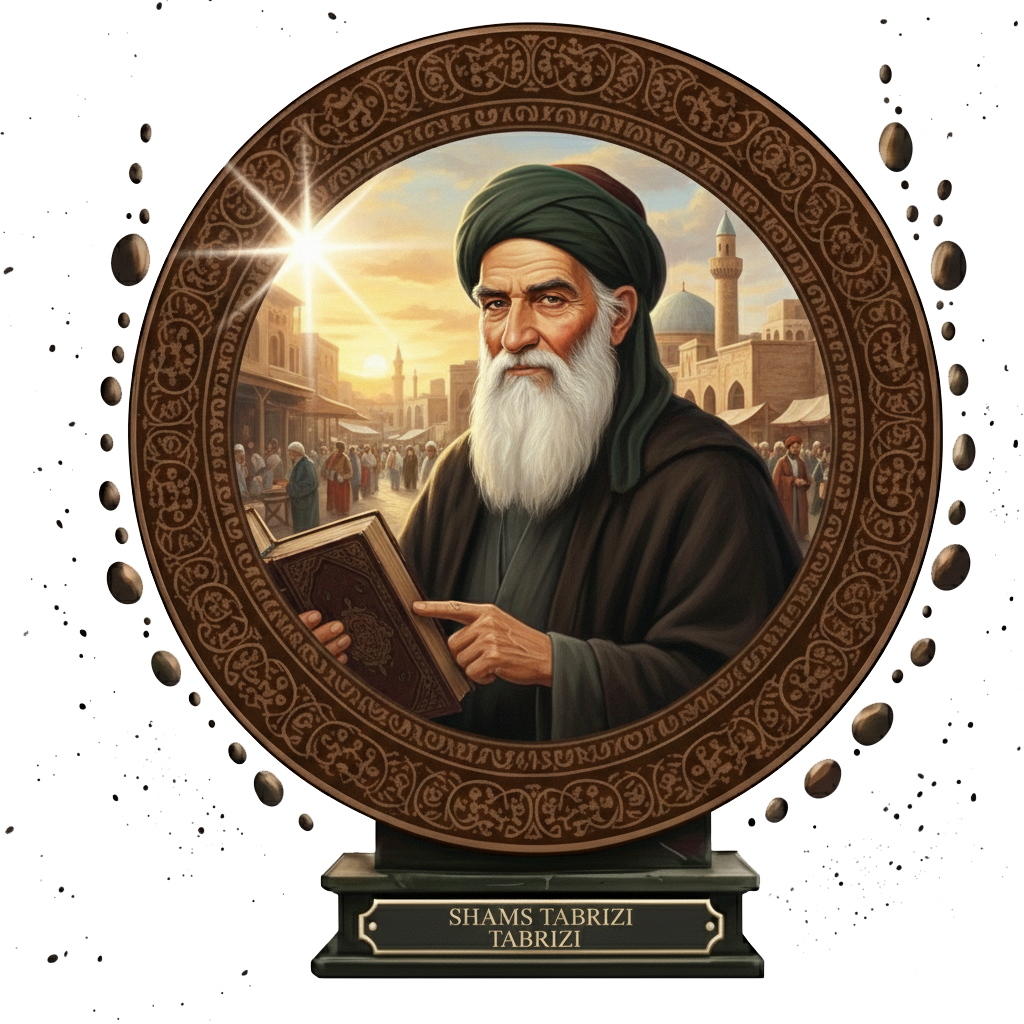
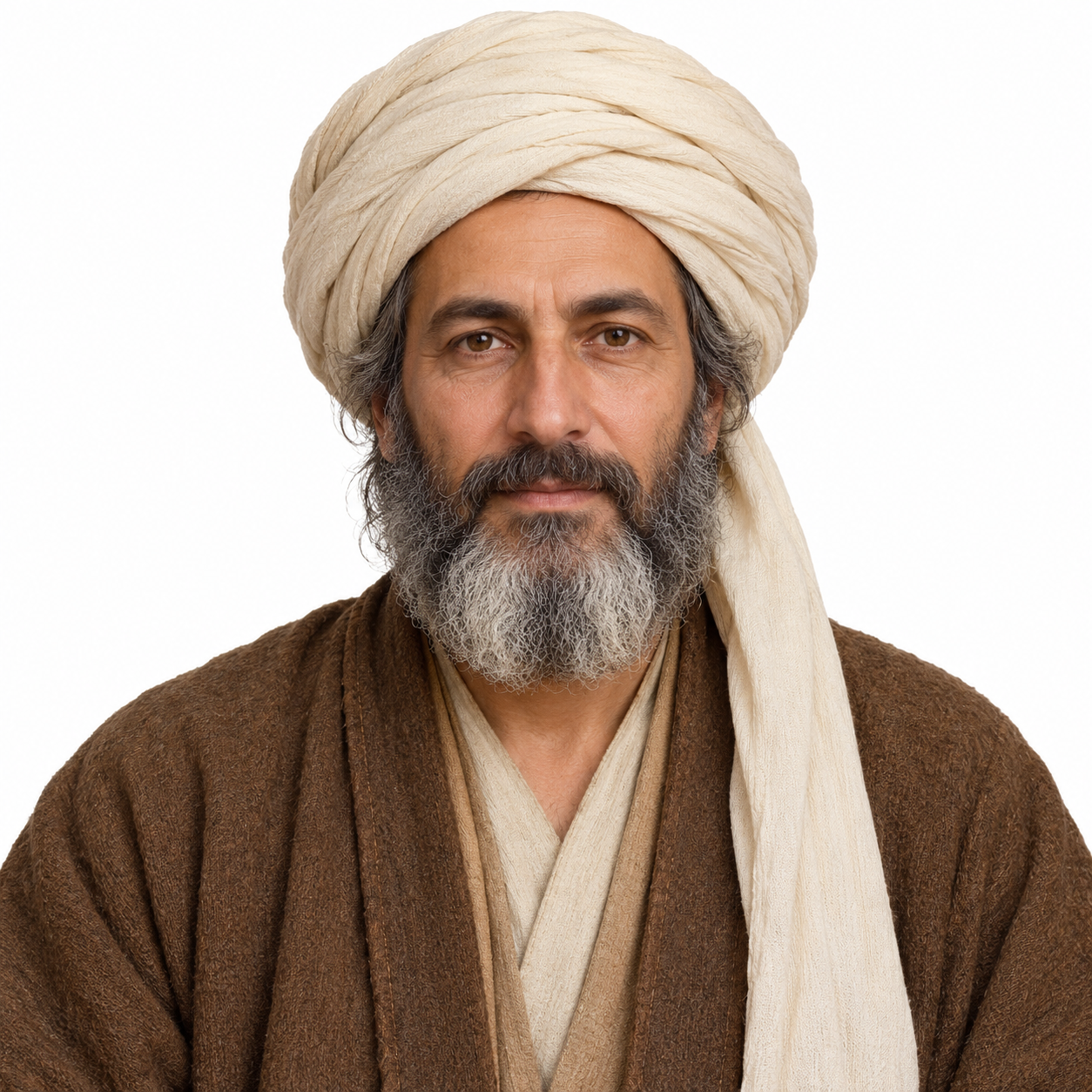


Connections
Molana Rumi
Spiritual Mentor
Shams Tabrizi was the wandering mystic who transformed Rumi from a traditional scholar into an ecstatic poet.
Their meeting in Konya in 1244 CE is one of the most famous encounters in mystical history. After Shams disappeared, Rumi's grief found expression in the 'Divan-e Shams-e Tabrizi,' marking the birth of his greatest poetic works.
Saadi Shirazi
Contemporary Mystics
Saadi and Shams were both wandering dervishes during the 13th century, moving through the same intellectual and spiritual circuits of the Middle East.
Though their personal interactions are less documented than Saadi's connection to Rumi, they both lived through the Mongol invasions and were part of the widespread Sufi movement that sought spiritual meaning amidst political chaos.
Molana Rumi
Teacher & Student
Shams was the spiritual mentor whose arrival in Konya fundamentally transformed Rumi from a traditional jurist into a mystical poet.
Their intense relationship is one of the most famous in history, leading Rumi to compose the 'Divan-e Shams-e Tabrizi' in honor of his friend. Shams's sudden disappearance or death prompted Rumi's most profound spiritual realizations and poetic output.
Farid ud-Din Attar
Mystical Predecessor
Attar's allegorical Sufi poetry provided the spiritual framework that Shams utilized in his teachings to Rumi.
Shams was deeply familiar with Attar's 'Conference of the Birds,' which describes the soul's journey toward the divine. This tradition of the 'wandering dervish' and the search for the 'Beloved' was the cultural air Shams breathed and passed on to his disciples.
Saadi Shirazi
Contemporary Mystics
Shams and Saadi were both active in the 13th-century Persian world, traveling extensively as Sufi seekers.
While Saadi's mysticism was more grounded in social ethics and Shams's was more radical and iconoclastic, they both represent the peak of the Sufi intellectual movement that flourished despite the Mongol threat.
Yunus Emre
Spiritual Influence
The spiritual revolution sparked by Shams Tabrizi and Rumi created the cultural environment in which Yunus Emre’s poetry flourished.
Though there is no direct record of a meeting, the 'School of Love' established by Shams and Rumi in Konya deeply influenced the wandering dervish tradition that Yunus Emre epitomized.
Known for
- Transforming Rumi into a mystic poet
- Maqalat-e Shams-e Tabrizi (The Discourses)
- Inspiring the Divan-e Shams-e Tabrizi
- Pioneering ecstatic divine love in Sufism
Episodes featuring or mentioning this figure
No eligible published episode featuring this figure is currently in the library.