



Baruch Spinoza
A pioneering Enlightenment philosopher who equated God with nature and laid foundations for modern biblical criticism.

At a glance
- Born
- 1632 CE
- Died
- 1677 CE
- Era classification
- 44
- Homeland
- Netherlands
- Period
- 1632–1677
- Field
- Philosophy & Ideology
- Language
- Latin
- Religion
- Jewish (Pantheist)
- Gender
- male
Biography
Baruch Spinoza was born in 1632 in Amsterdam to a family of Sephardic Jewish immigrants who had fled the Portuguese Inquisition. Raised in the vibrant Dutch Jewish community, he received a traditional religious education but soon began to question orthodox doctrines. His voracious reading of contemporary philosophy, including the works of René Descartes, led him to develop highly unorthodox views regarding the nature of the Divine and the authenticity of the Hebrew Bible.
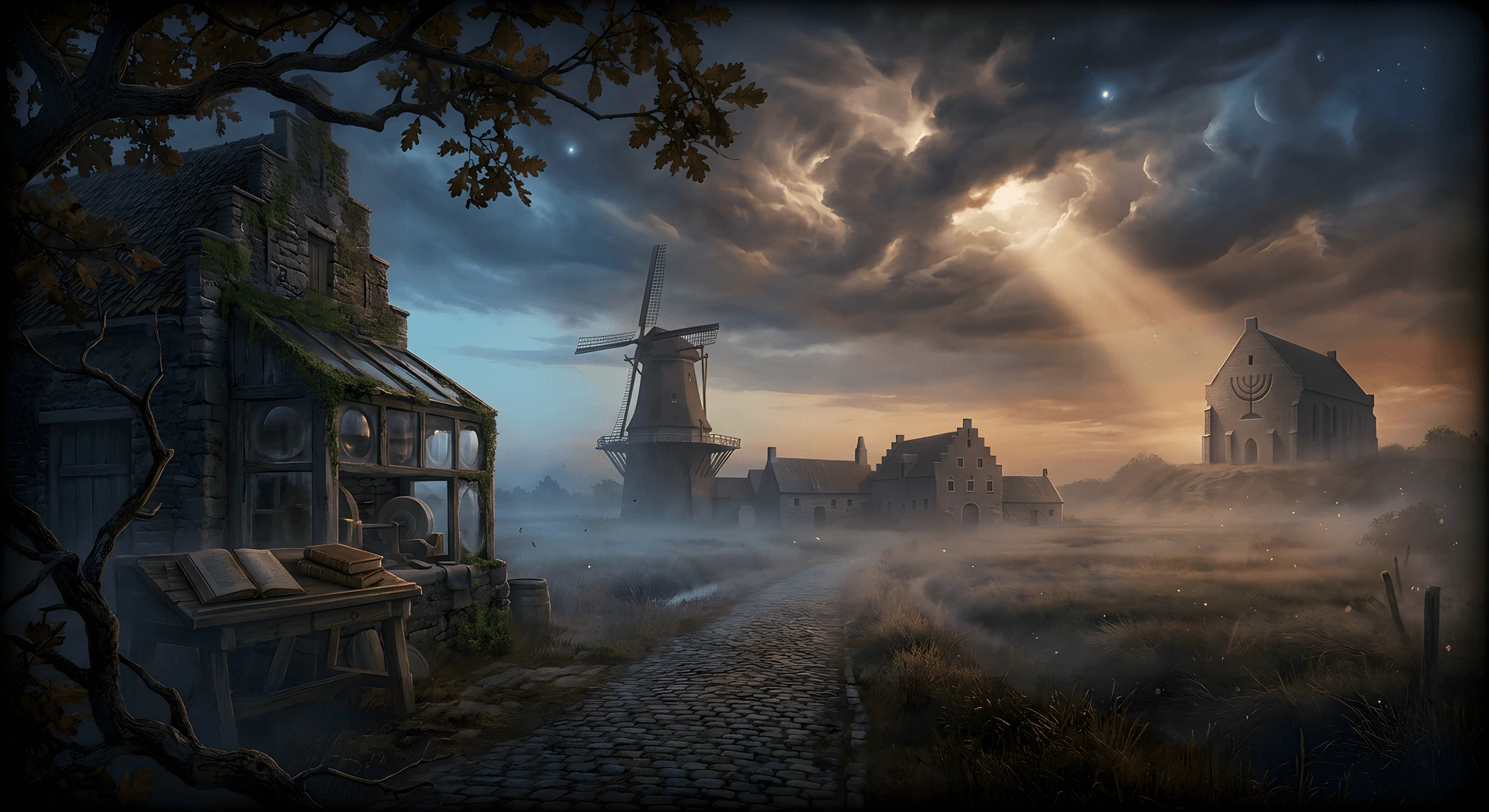
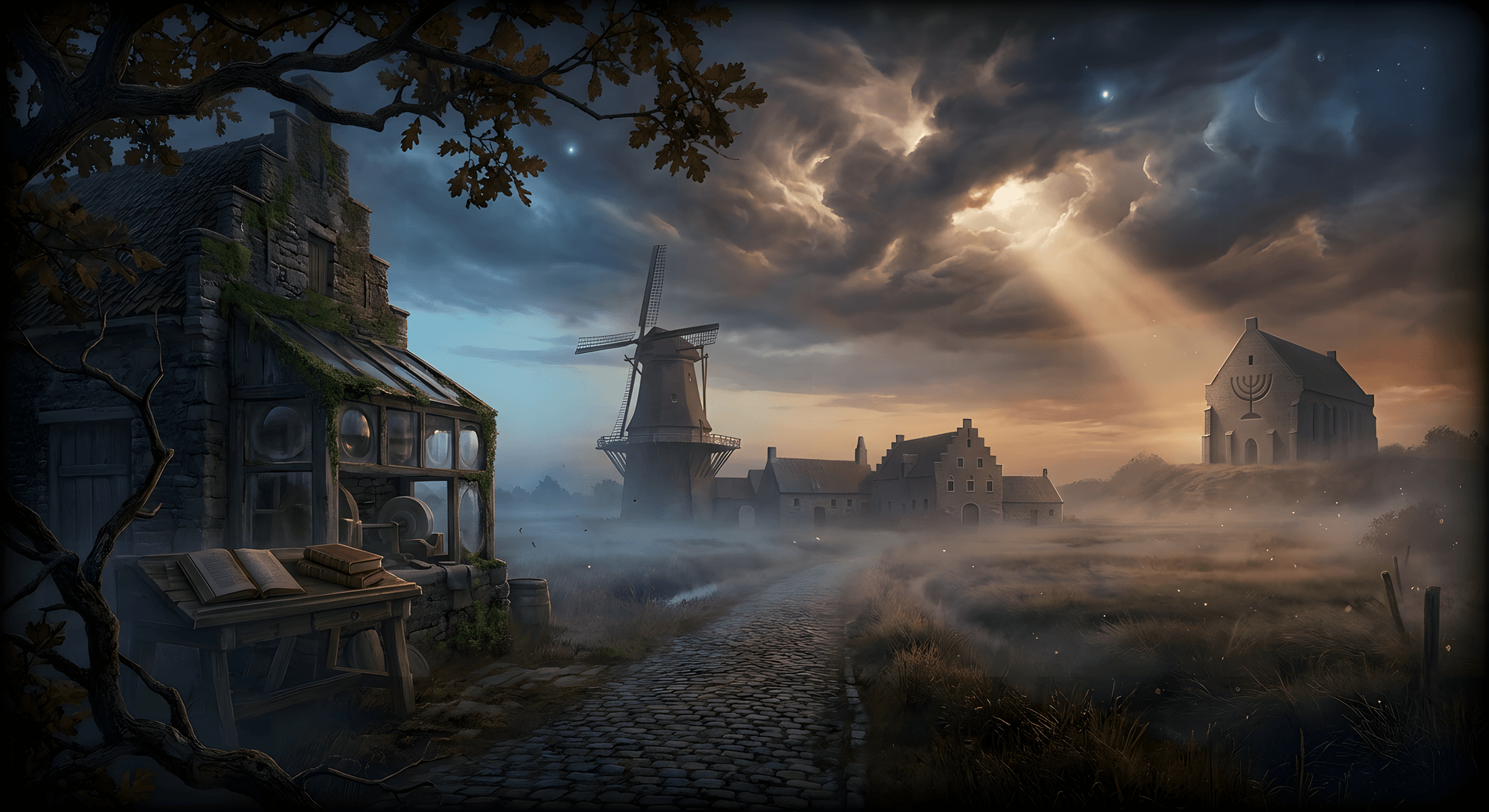
In 1656, at the age of 23, Spinoza's radical ideas resulted in a 'herem' (excommunication) from the Jewish community of Amsterdam. Shunned by his former peers, he adopted the Latin name Benedictus and lived a quiet, ascetic life. He supported himself as a lens grinder and instrument maker, a profession that allowed him the independence to pursue his philosophical inquiries without the constraints of academic or religious patronage.
Spinoza's magnum opus, 'Ethics', published posthumously in 1677, presented a groundbreaking monistic worldview. He famously posited 'Deus sive Natura' (God or Nature), arguing that God is not a transcendent creator but the infinite substance of the universe itself. His deterministic philosophy asserted that everything happens through the necessity of nature's laws, fundamentally challenging traditional concepts of free will and divine providence.
Despite the immense controversy his writings generated—often being labeled as heretical or atheistic by contemporaries—Spinoza's work laid the crucial groundwork for the Enlightenment. His advocacy for secular, democratic governance and freedom of thought in the 'Tractatus Theologico-Politicus' profoundly shaped modern political theory. He died at the young age of 44 from a lung illness, likely exacerbated by inhaling glass dust from his trade, leaving behind a legacy that would inspire generations of thinkers, from Hegel to Einstein.
Portrayal characteristics
Saved editorial descriptions used for the reconstruction; these are not authenticated statements by the depicted person.
- Rational
- Ascetic
- Independent
- Courageous
- Principled
Images & artwork 5


Connections
René Descartes
Philosophical Successor
Spinoza's early work was an exposition of Cartesian philosophy, which he later fundamentally transformed.
Spinoza's first published book was 'Principles of Cartesian Philosophy'. While he adopted Descartes' geometric method, he rejected Cartesian dualism in favor of monism, arguing that mind and body are attributes of a single substance.
Albert Einstein
Theological Influence
Einstein famously stated that he believed in 'Spinoza's God,' who reveals Himself in the orderly harmony of what exists.
Einstein rejected the idea of a personal God and instead embraced Spinoza's pantheistic view of a universe governed by immutable laws. He often cited Spinoza as the philosopher who best expressed his own spiritual and scientific worldview.
Gottfried Wilhelm Leibniz
Intellectual Peers
Leibniz visited Spinoza in 1676 to discuss philosophy and read the manuscript of Spinoza's 'Ethics'.
The two shared a complex relationship; while Leibniz was deeply influenced by Spinoza's rationalism, he publicly distanced himself from Spinoza's perceived atheism and developed his 'Monadology' as a more religiously acceptable alternative to Spinoza's monism.
Thomas Hobbes
Political Influence
Spinoza was significantly influenced by Hobbes' secular and realistic approach to political power.
In his 'Tractatus Theologico-Politicus', Spinoza built upon Hobbes' social contract theory but moved toward a more democratic conclusion, arguing that the state's ultimate purpose is the preservation of liberty rather than just security.
David Hume
Philosophical Influence
Hume engaged deeply with Spinoza's metaphysical system, famously critiquing it in 'A Treatise of Human Nature'.
Hume referred to Spinoza's monism as a 'hideous hypothesis' but was nonetheless influenced by Spinoza's naturalism and his critique of miracles. Hume's own work on the nature of belief and causality often serves as a counter-point to Spinoza's rationalist determinism.
Gottfried Wilhelm Leibniz
Philosophical Contemporaries
Leibniz met with Spinoza in 1676 to discuss metaphysics and optics, though he later publicly distanced himself from Spinoza's views.
Leibniz spent several days in The Hague discussing the 'Ethics' with Spinoza. Although Leibniz was deeply influenced by Spinoza's rationalism, he feared being associated with Spinoza's perceived atheism and spent much of his later career trying to refute Spinozistic monism.
Johann Wolfgang von Goethe
Philosophical Influence
Goethe was a lifelong devotee of Spinoza's philosophy, particularly his pantheistic view of God and nature.
Goethe claimed that Spinoza's 'Ethics' provided him with a sense of peace and a way to view the divine as immanent within the natural world, a concept that permeated his poetry and scientific writings.
René Descartes
Influenced By
Spinoza's early philosophical work was a systematic exposition of Descartes' principles.
Spinoza's first published book, 'Renati Des Cartes Principia Philosophiae', was a geometric-style commentary on Descartes. While Spinoza eventually diverged significantly from Cartesian dualism, his rationalist framework was deeply rooted in the Cartesian method.
Known for
- The Ethics (Ethica)
- Tractatus Theologico-Politicus
- Pantheism (Deus sive Natura)
- Modern biblical criticism
- Foundations of the Enlightenment
Episodes featuring or mentioning this figure
No eligible published episode featuring this figure is currently in the library.