



Cesare Beccaria
Italian jurist and philosopher whose seminal treatise laid the foundations of modern criminology and penal reform.
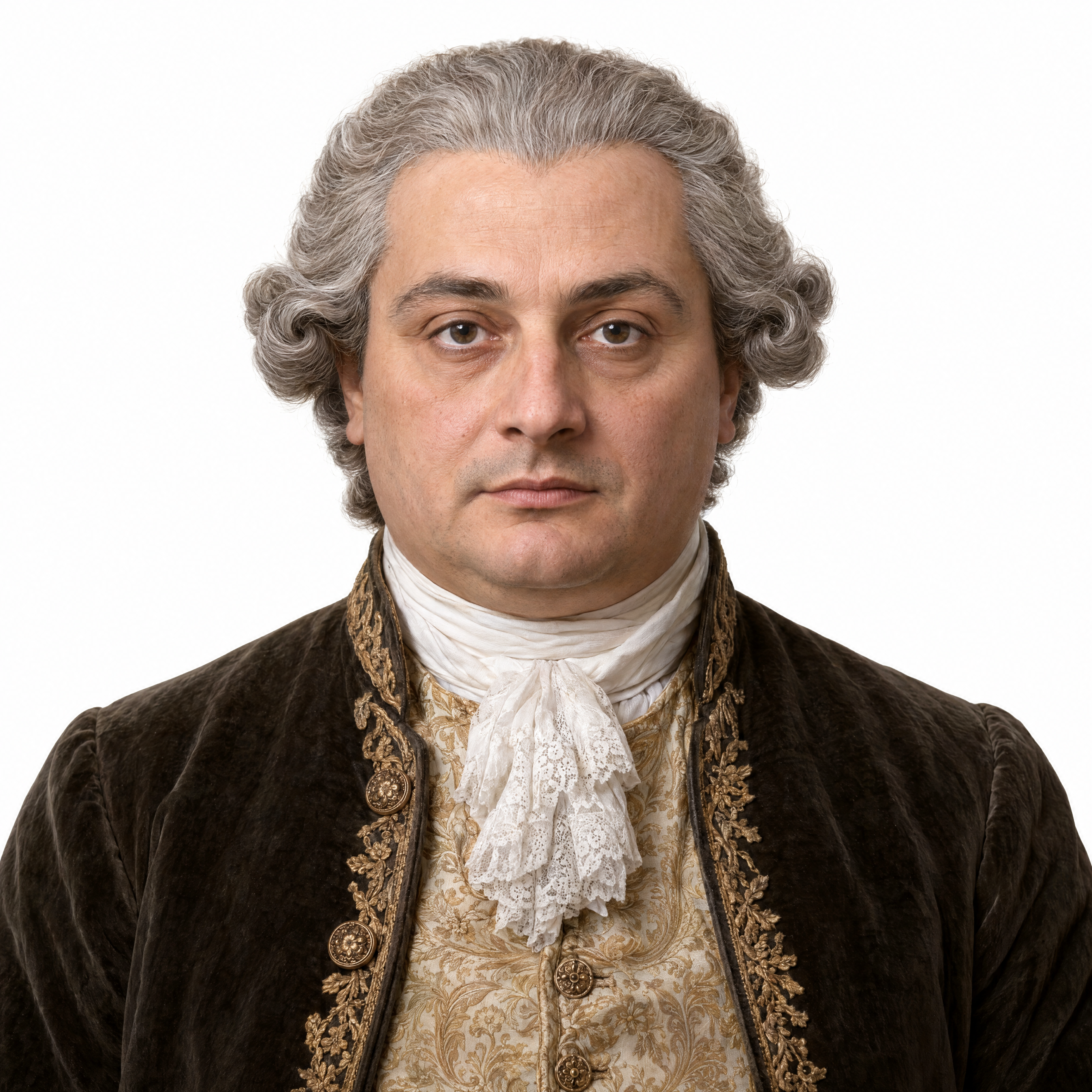
At a glance
- Born
- 1738 CE
- Died
- 1794 CE
- Era classification
- Modern
- Occupation
- Philosopher and Jurist
- Homeland
- Duchy of Milan
- Period
- Age of Enlightenment
- Field
- Philosophy & Ideology
- Language
- Italian
- Religion
- Roman Catholicism
- Gender
- male
Biography
Cesare Bonesana, Marquis of Beccaria, was born on March 15, 1738, into an aristocratic family in Milan, then under Austrian Habsburg rule. He received an early education at a Jesuit college in Parma and went on to study law at the University of Pavia, graduating in 1758. Deeply inspired by the writings of Montesquieu, Rousseau, and the French Encyclopedists, Beccaria turned away from the conservative conventions of his social class and joined the intellectual circle known as the 'Accademia dei Pugni' (Academy of Fists), founded by Pietro and Alessandro Verri.
In 1764, Beccaria published his most influential work, 'Dei delitti e delle pene' ('On Crimes and Punishments'). The groundbreaking treatise offered a systematic critique of contemporary European criminal justice, which relied heavily on judicial torture, secret trials, and severe, arbitrary executions. Drawing upon social contract theory and utilitarian concepts, Beccaria argued that laws should ensure the greatest happiness for the greatest number. He maintained that punishment must be proportionate, prompt, and established by clear statutes, arguing that crime prevention through certainty of punishment was far more effective than severity.
The book achieved instant acclaim across Europe, attracting praise from prominent Enlightenment figures like Voltaire and directly shaping the legal reforms of monarchs such as Leopold II of Tuscany, Catherine the Great, and Frederick the Great, as well as influencing early American legal thinkers. In his later years, Beccaria held the chair in political economy at the Palatine School in Milan and served in various Austrian administrative posts focused on legal, economic, and educational policy, where he worked pragmatically on public administration until his death in 1794.
Portrayal characteristics
Saved editorial descriptions used for the reconstruction; these are not authenticated statements by the depicted person.
- Humanitarian
- Analytical
- Reform-minded
- Reserved
- Utilitarian
Images & artwork 1
Known for
- Authoring 'On Crimes and Punishments' (1764)
- Founding classical criminology and modern penology
- Pioneering intellectual opposition to the death penalty
- Advocating the complete abolition of judicial torture
- Formulating the principle of proportional sentencing
Episodes featuring or mentioning this figure
No eligible published episode featuring this figure is currently in the library.