



Rudaki
Widely regarded as the founder of classical Persian literature and the first great genius of the Persian language.
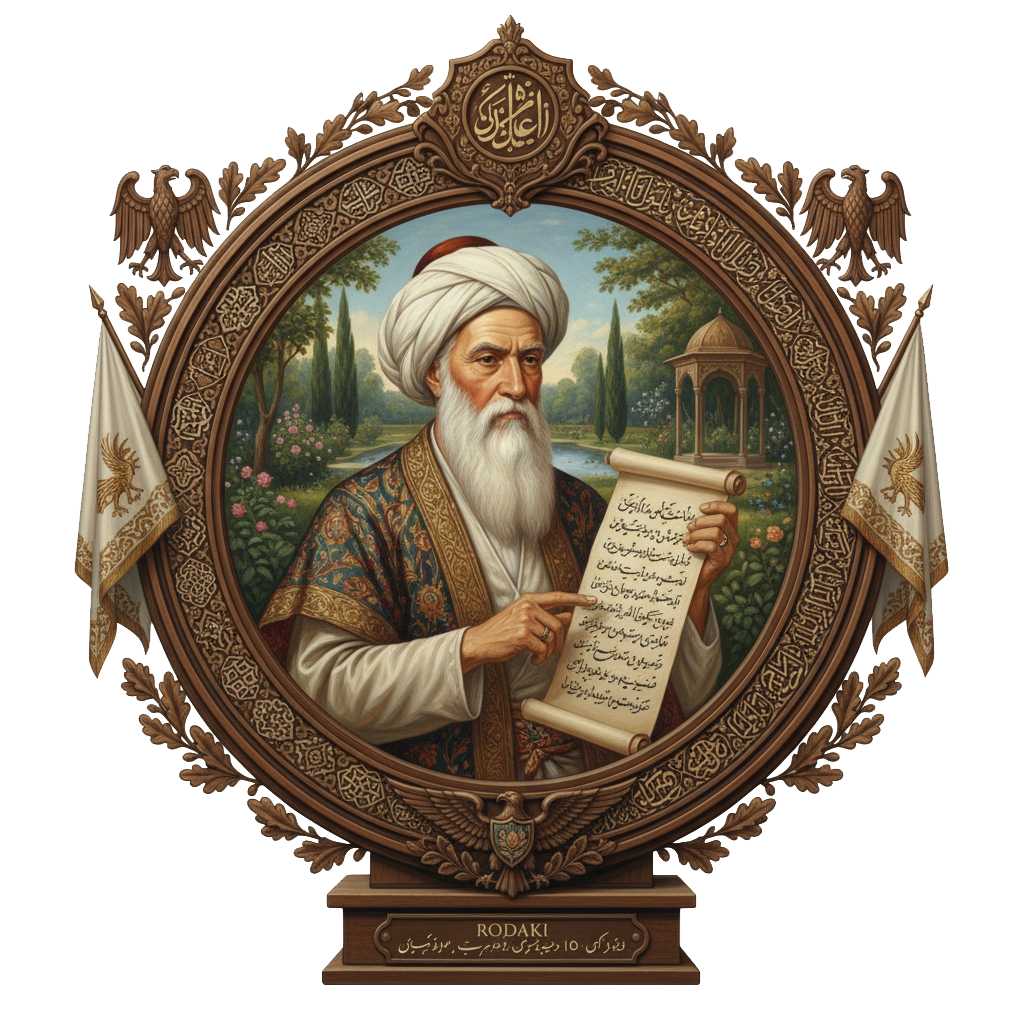
At a glance
- Born
- 858 CE
- Died
- 941 CE
- Era classification
- Medieval
- Homeland
- Samanid Empire
- Period
- Samanid Era
- Field
- Poetry, Art & Ethics
- Language
- Farsi
- Religion
- Islam
- Gender
- male
Biography
Abu 'Abd Allah Ja'far ibn Muhammad al-Rudaki is universally celebrated as the father of classical Persian poetry. Born in the village of Banoosh in modern-day Tajikistan, he lived during the Samanid Empire, a period that witnessed a massive cultural revival of the Persian language and identity. Rudaki was exceptionally gifted from a young age, possessing a beautiful voice and mastering the lute, which helped him gain prominence at the Samanid court in Bukhara.
As the court poet of Nasr II, Rudaki enjoyed immense wealth and prestige. He was a prolific writer, credited with composing hundreds of thousands of verses, though only a fraction of his work survives today. He is credited with standardizing the forms of Persian poetry, including the mathnawi, qasida, and the ruba'i (quatrain). His most famous surviving work is a poetic translation of the Indian fable collection 'Kalila wa-Dimna', which he rendered into accessible and elegant Persian verse.
Despite his early success, Rudaki's life ended in tragedy. In his later years, he fell out of favor with the court, possibly due to his sympathies with the Ismaili sect. He was blinded—some historical accounts suggest he was born blind, but modern analysis indicates he was blinded later in life as a punishment—and died in poverty in his home village. Nevertheless, his pioneering contributions laid the foundation for all subsequent Persian literature.
Portrayal characteristics
Saved editorial descriptions used for the reconstruction; these are not authenticated statements by the depicted person.
- Pioneering
- Eloquent
- Musical
- Prolific
- Expressive
Images & artwork 3


Connections
Ferdowsi
Literary Successor
Ferdowsi continued the revival of Persian literature that began with Rudaki, the 'Father of Persian Poetry.'
Rudaki established the poetic forms and the use of the New Persian language in the 10th century. Ferdowsi took these linguistic tools and used them to compose the Shahnameh, the definitive epic of the Iranian people.
Abu Ali Sina (Avicenna)
Samanid Contemporaries
Both figures were central to the intellectual flourishing of the Samanid Empire, representing the peaks of Persian poetry and science respectively.
While Rudaki was the premier poet of the early Samanid era, Avicenna (Abu Ali Sina) served the later Samanid rulers. Together, they represent the 'Persian Renaissance,' where the court at Bukhara became a global center for both art and logic.
Ferdowsi
Literary Predecessor
Known for
- Father of Persian poetry
- Translating Kalila wa-Dimna into verse
- Developing the Ruba'i form
- Reviving the Persian literary identity
Episodes featuring or mentioning this figure
No eligible published episode featuring this figure is currently in the library.