



Nikola Tesla
A visionary Serbian-American inventor and engineer who pioneered the alternating current (AC) electrical system.
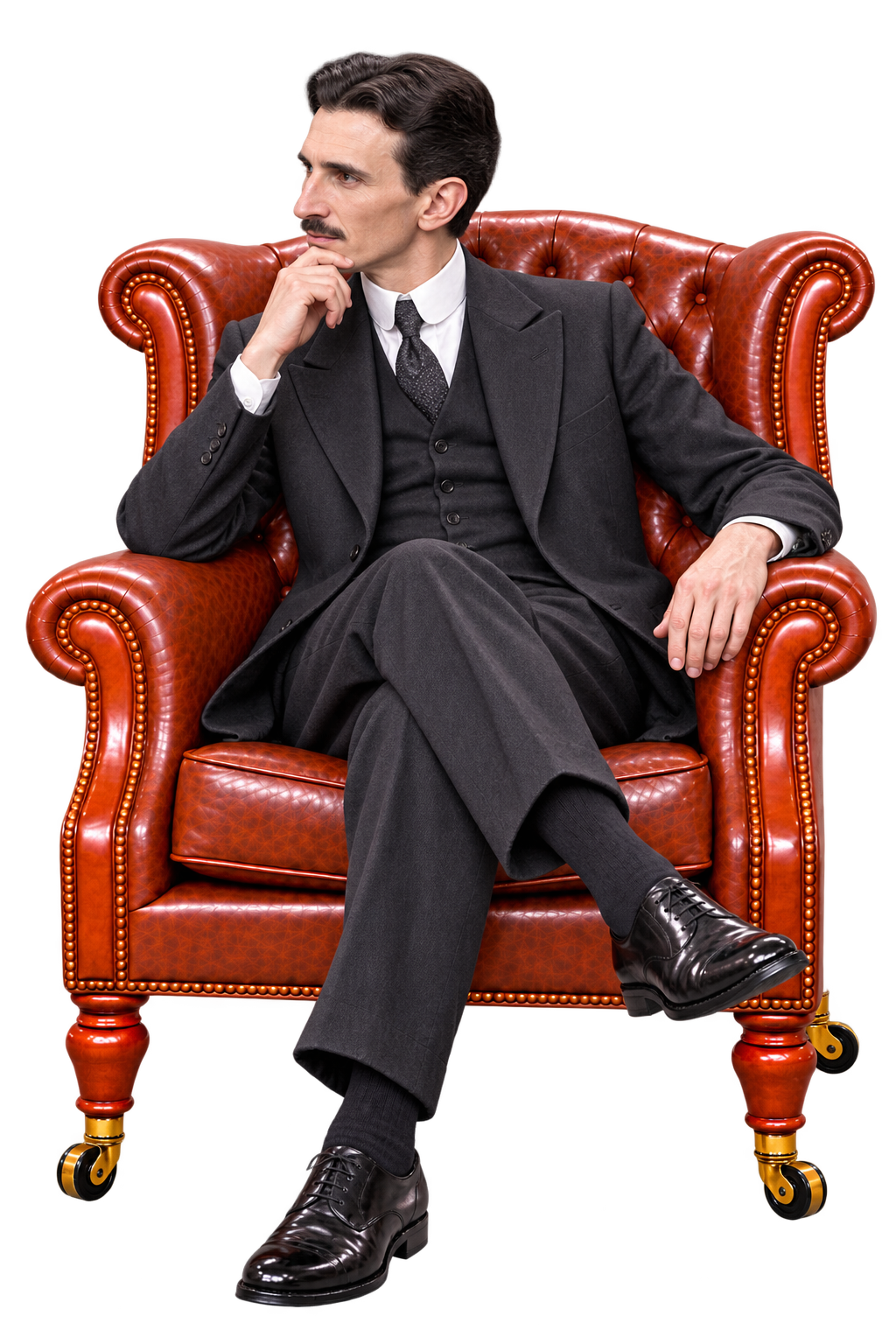
At a glance
- Born
- 1856 CE
- Died
- 1943 CE
- Era classification
- 86
- Homeland
- Austrian Empire (Modern Croatia) / USA
- Period
- 1856–1943 CE
- Field
- Science, Medicine & Engineering
- Language
- Serbo-Croatian
- Religion
- Serbian Orthodox Christian
- Gender
- male
Biography
Nikola Tesla was born in 1856 in the village of Smiljan, within the Austrian Empire (present-day Croatia), to a Serbian Orthodox priest. He displayed an early fascination with electricity and mechanics, studying engineering and physics at the Technical University of Graz and attending philosophy classes at the University of Prague. Though he never formally graduated, he gained invaluable practical experience working in telephony and electrical engineering across Europe.
In 1884, Tesla emigrated to the United States, initially working for Thomas Edison in New York City before the two parted ways over financial and technical disputes. Striking out on his own, Tesla developed the alternating current (AC) induction motor and a system of polyphase AC patents. These were licensed by George Westinghouse, sparking the famous 'War of the Currents' against Edison's direct current (DC) system. Tesla's AC system ultimately prevailed due to its superior efficiency in long-distance power transmission.
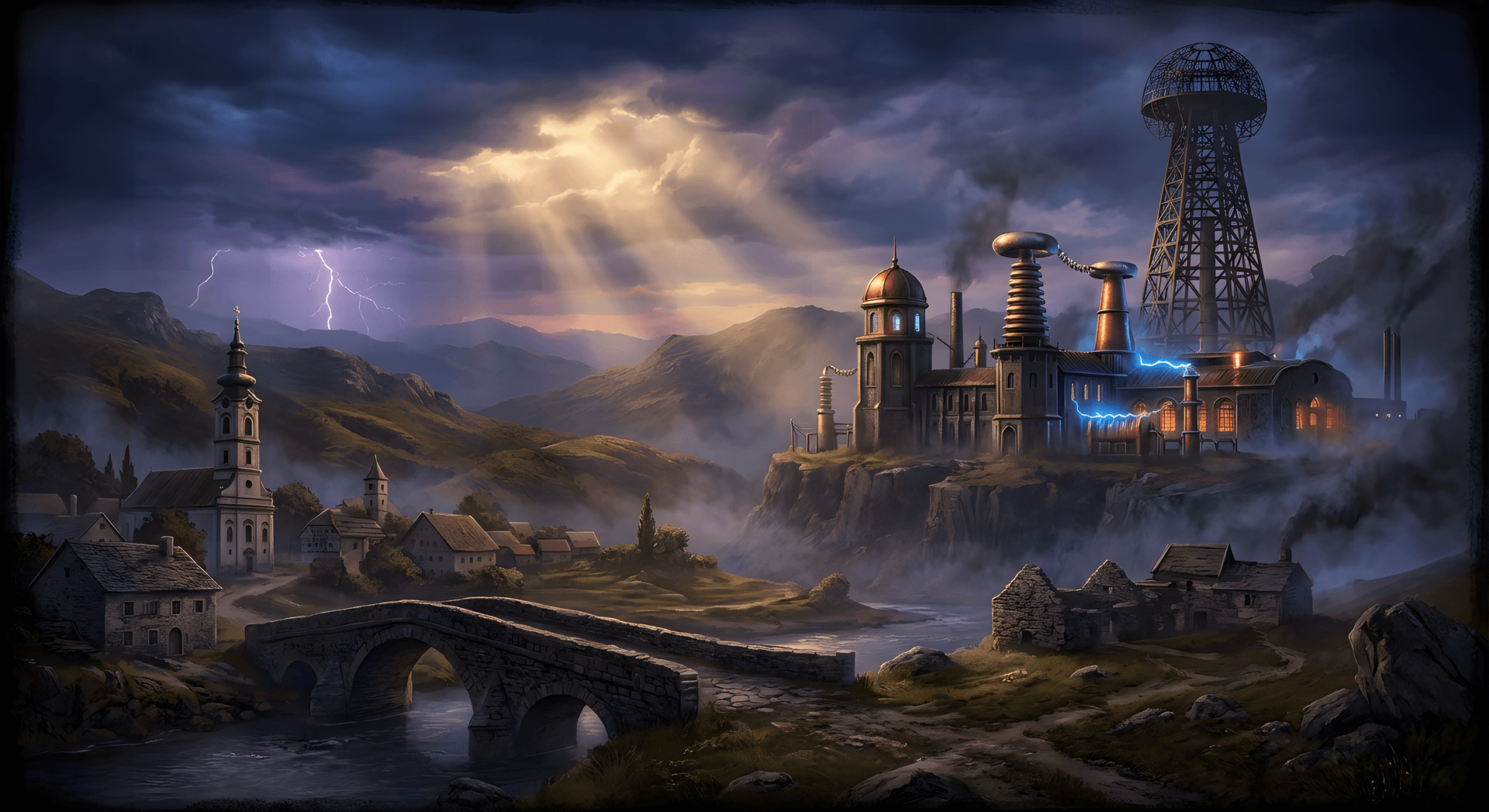
Throughout the 1890s, Tesla conducted groundbreaking experiments in his New York laboratories, inventing the Tesla coil, exploring early X-ray imaging, and demonstrating wireless radio communication. His most ambitious project was the Wardenclyffe Tower, designed to be a global wireless communication and power transmission station. However, the project was abandoned after his primary backer, J.P. Morgan, withdrew funding.
Tesla spent his final decades living in various New York City hotels, continuing to conceptualize futuristic inventions but struggling with financial ruin and increasing eccentricity. He died in 1943 in relative obscurity. Today, Tesla is celebrated as a quintessential visionary genius whose pioneering contributions laid the indispensable foundation for modern electrical engineering and wireless technology.
Portrayal characteristics
Saved editorial descriptions used for the reconstruction; these are not authenticated statements by the depicted person.
- Visionary
- Eccentric
- Brilliant
- Idealistic
- Persistent
- Solitary
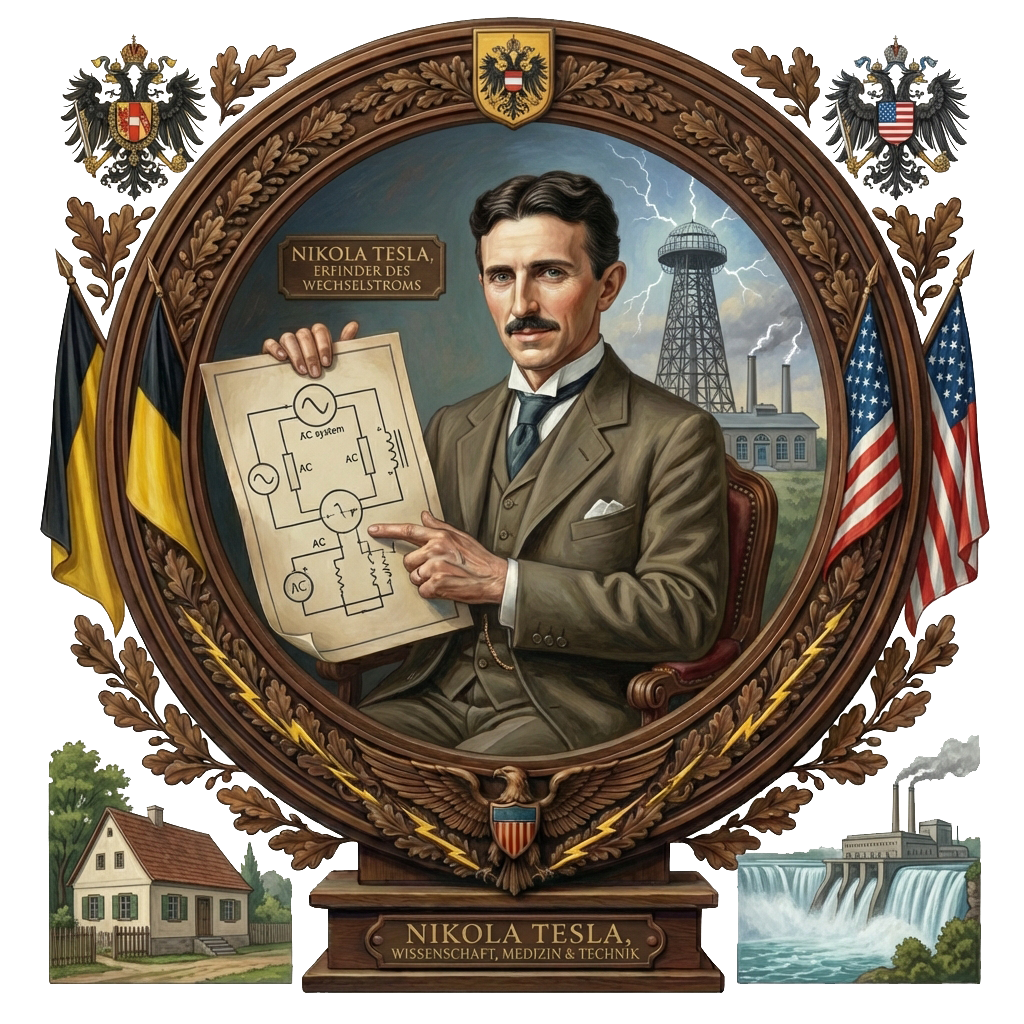
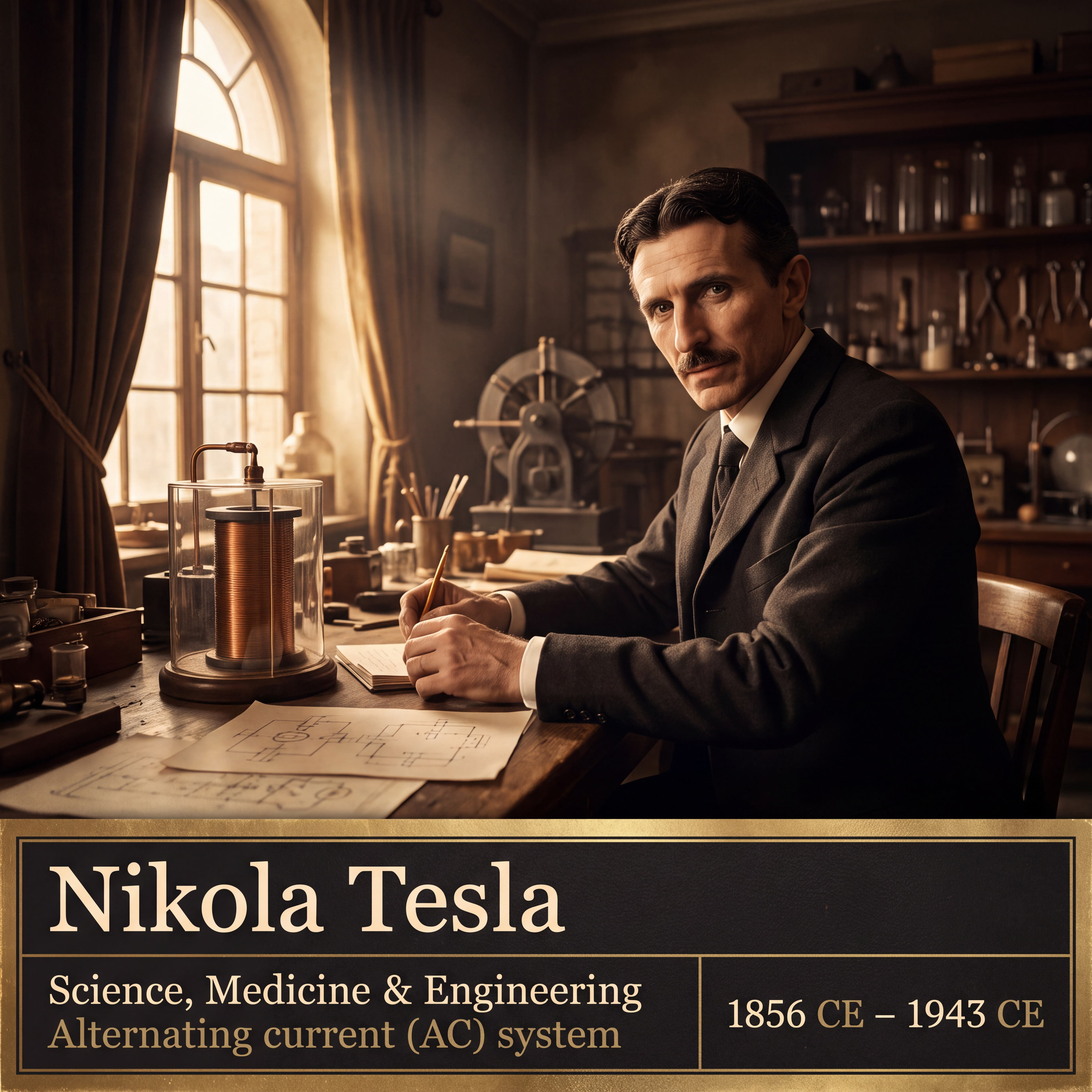
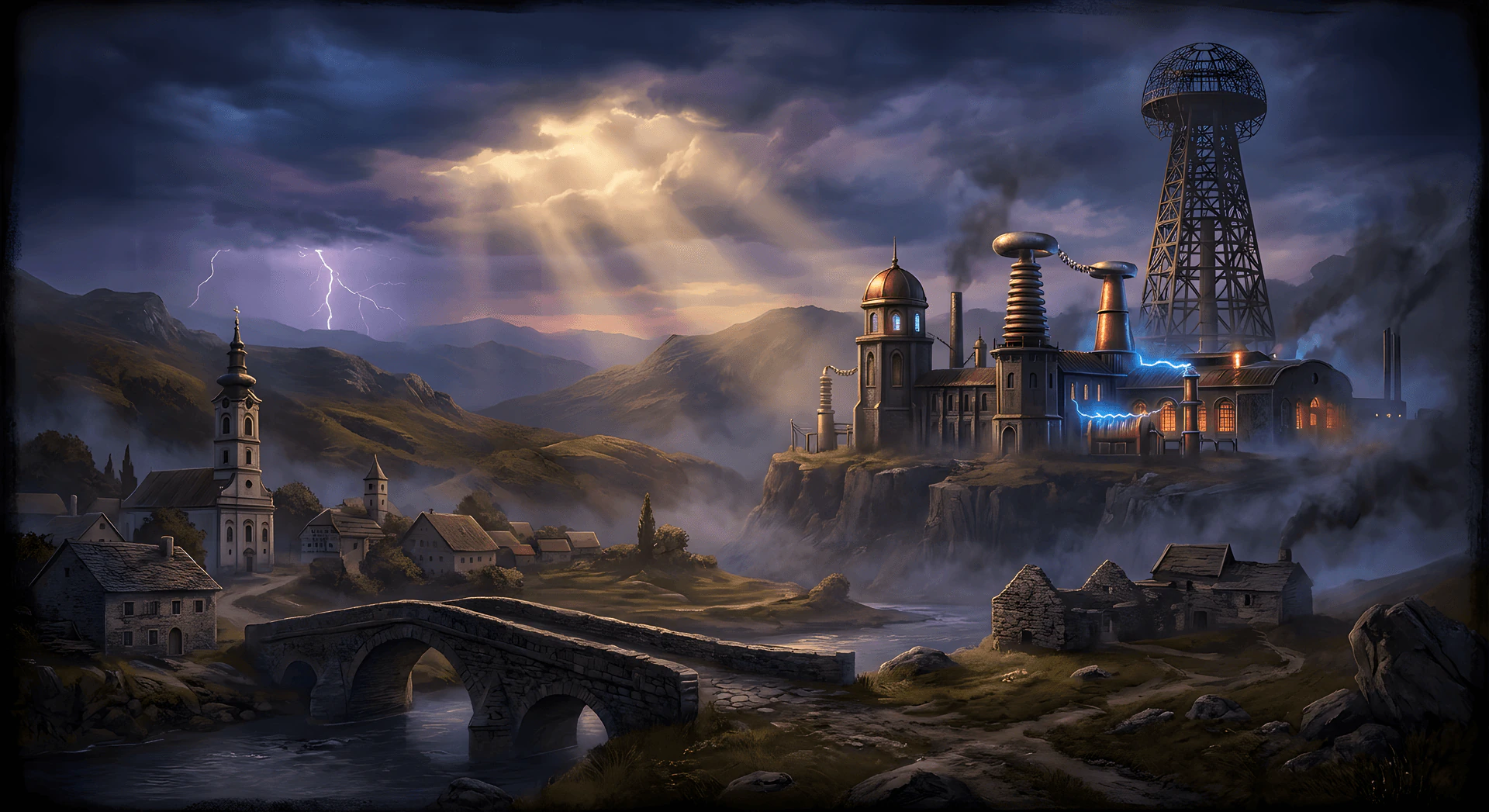
Images & artwork 5
Connections
James Clerk Maxwell
Theoretical Foundation
Maxwell's electromagnetic theory provided the mathematical basis for Tesla's practical inventions in alternating current and radio.
Tesla's development of high-frequency currents and wireless transmission was a direct application of the electromagnetic wave theories first predicted and mathematically formulated by Maxwell.
Mark Twain
Close Friends
Twain and Tesla shared a long-standing and well-documented friendship based on a mutual fascination with science and technology.
Twain was a frequent visitor to Tesla's laboratory, where he often participated in experiments and witnessed Tesla's latest inventions. Tesla, in turn, credited Twain's books with helping him recover from a serious illness during his youth in Europe.
Thomas Edison
Professional Rivals
Tesla and Edison were the primary antagonists in the 'War of Currents' over the future of electricity.
Tesla briefly worked for Edison but left after a dispute over promised payments. Their rivalry intensified as Tesla's Alternating Current (AC) system competed against Edison's Direct Current (DC) system for dominance in the global power grid.
Mark Twain
Close Friends
Tesla and Mark Twain shared a long and deep friendship based on a mutual fascination with science and technology.
Twain was a frequent visitor to Tesla's laboratory, where he participated in experiments and witnessed Tesla's high-frequency demonstrations. Tesla, in turn, credited Twain's books with helping him recover from a childhood illness.
Albert Einstein
Scientific Contemporaries
Tesla and Einstein were the two most famous scientists of their era, though they disagreed on fundamental physics.
Tesla was a vocal critic of Einstein's theory of relativity, which he dismissed as 'a magnificent mathematical garb' that obscured physical reality. Despite their theoretical differences, they corresponded occasionally, and Einstein sent Tesla a congratulatory letter on his 75th birthday.
James Clerk Maxwell
Scientific Foundation
Tesla's inventions in radio and wireless power were built upon the electromagnetic theories of James Clerk Maxwell.
Tesla studied Maxwell's equations extensively and viewed his own work as the practical realization of Maxwell's theoretical predictions regarding electromagnetic waves and the ether.
Thomas Edison
Professional Rivals
Edison and Tesla were the primary figures in the 'War of Currents' to determine the standard for electrical power distribution.
Edison championed direct current (DC) and attempted to discredit Tesla's alternating current (AC) through public demonstrations. Despite their rivalry, Tesla briefly worked for Edison's company before their professional split.
Known for
- Alternating current (AC) system
- Tesla coil
- Induction motor
- Radio technology contributions
- Wireless power transmission concepts
Episodes featuring or mentioning this figure
Nikola Tesla: The Inventions, Alternating Current, and Wardenclyffe
Nikola Tesla’s engineering helped electrify modern industry, yet his career ended with some of his boldest visions left unfulfilled.
The Architecture of Electrical Power: Edison vs Tesla
AI jury: 3 members
Does the future of electrical infrastructure belong to localized direct-current microgrids or vast, interconnected alternating-current networks?