



Max Planck
A German theoretical physicist whose discovery of energy quanta won him the Nobel Prize and revolutionized physics.
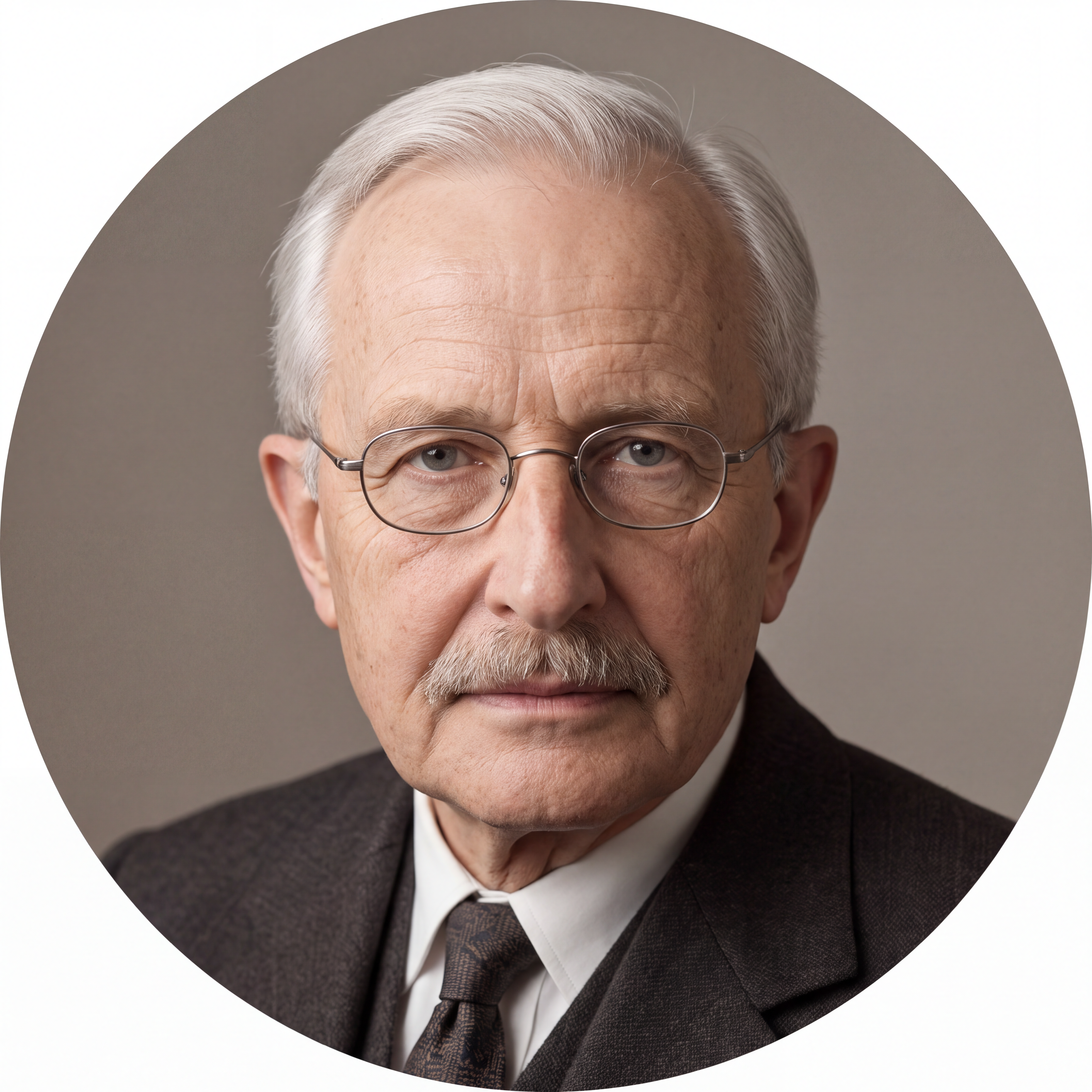
At a glance
- Born
- 1858 CE
- Died
- 1947 CE
- Era classification
- Modern
- Homeland
- Germany
- Period
- Late 19th - Mid 20th Century
- Field
- Science, Medicine & Engineering
- Language
- German
- Religion
- Lutheran
- Gender
- male
Biography
Max Karl Ernst Ludwig Planck was a German theoretical physicist whose work fundamentally altered our understanding of atomic and subatomic processes. Born in Kiel, he studied at the universities of Munich and Berlin, where he was mentored by prominent physicists like Hermann von Helmholtz and Gustav Kirchhoff. Planck dedicated his career to thermodynamics and the study of black-body radiation.
In 1900, Planck solved the problem of black-body radiation by proposing that electromagnetic energy could only be emitted or absorbed in discrete "packets" or "quanta," rather than in a continuous wave. This radical idea introduced the concept of the Planck constant and marked the birth of quantum theory. His discovery was a paradigm shift that laid the groundwork for the quantum mechanics developed by later physicists like Einstein and Bohr.
Planck was awarded the Nobel Prize in Physics in 1918 for his discovery of energy quanta. Beyond his scientific achievements, he was a respected leader in the German scientific community, serving as president of the Kaiser Wilhelm Society. He endured immense personal tragedy during World War II, including the execution of his son for participating in a plot to assassinate Hitler, yet he remained a steadfast symbol of scientific integrity.
Portrayal characteristics
Saved editorial descriptions used for the reconstruction; these are not authenticated statements by the depicted person.
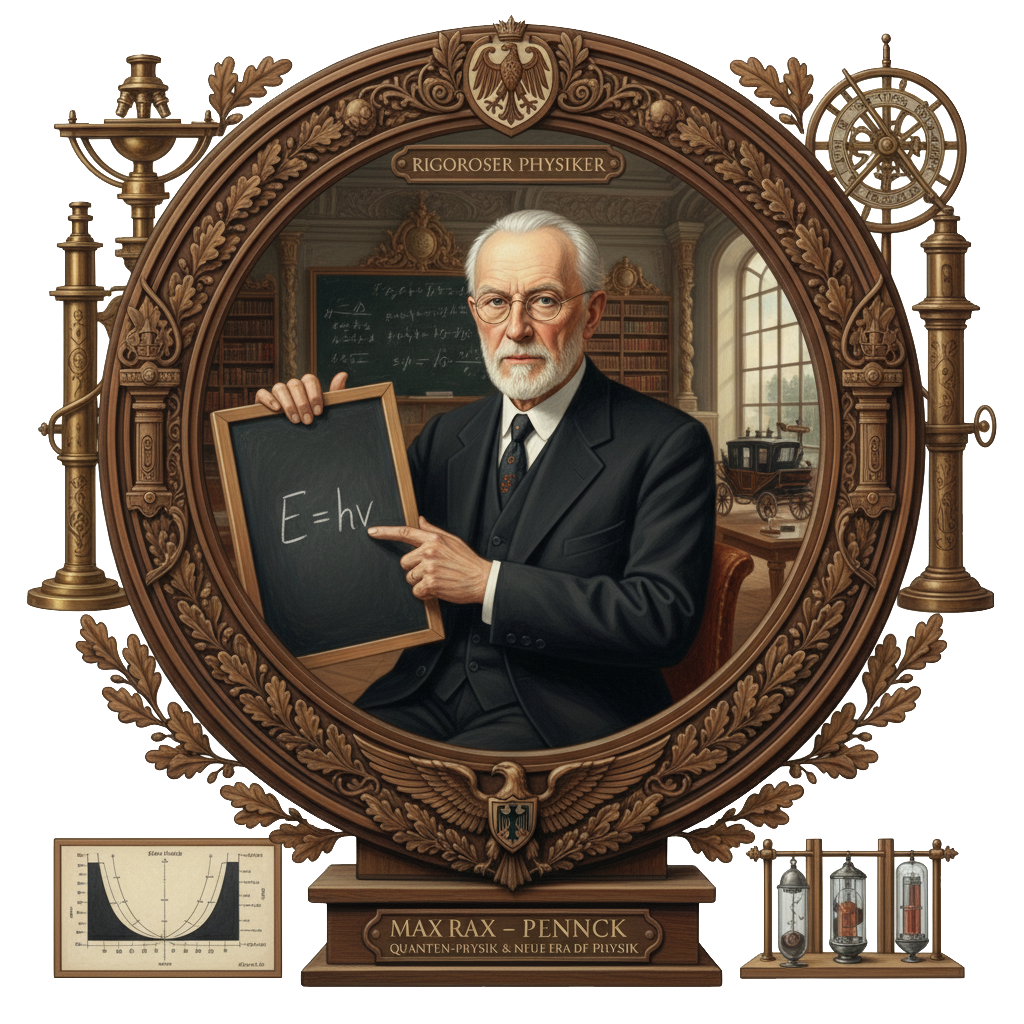
- Rigorous
- Principled
- Resilient
- Pioneering
- Methodical
Images & artwork 4


Connections
Albert Einstein
Colleague & Mentor
Planck was one of the first to recognize the importance of Einstein's 1905 papers and helped bring him to Berlin.
As the father of quantum theory, Planck's support was crucial for Einstein's early career. They worked together at the Kaiser Wilhelm Institute and remained close friends and colleagues, representing the two pillars of 20th-century physics.
James Clerk Maxwell
Influenced By
Maxwell's work on thermodynamics and the statistical distribution of molecular velocities influenced Planck's early research.
Planck's journey toward the discovery of the quantum of action began with an intensive study of Maxwell's theories on heat and electromagnetism, which defined the classical limits Planck eventually transcended.
Marie Curie
Scientific Colleagues
Curie and Planck were fellow pioneers of modern physics and regular participants in the Solvay Conferences.
As the founders of radioactivity and quantum theory respectively, their work provided the dual pillars of 20th-century physics. They maintained a professional relationship characterized by mutual respect for each other's contributions to the understanding of atomic structure.
Albert Einstein
Scientific Colleagues
Planck was one of the first prominent physicists to recognize the importance of Einstein's special theory of relativity.
Planck recruited Einstein to the Prussian Academy of Sciences in Berlin in 1914. Despite their later disagreements over the philosophical implications of quantum mechanics, they remained close lifelong friends.
Marie Curie
Scientific Contemporaries
Planck and Curie were both foundational figures in modern physics and regular participants in the Solvay Conferences.
They interacted frequently at international scientific gatherings during the early 20th century, where they collectively transitioned physics from the classical era to the quantum and nuclear era.
Known for
- Quantum theory
- Planck constant
- Planck's law of black-body radiation
Episodes featuring or mentioning this figure
No eligible published episode featuring this figure is currently in the library.