



Marie Curie
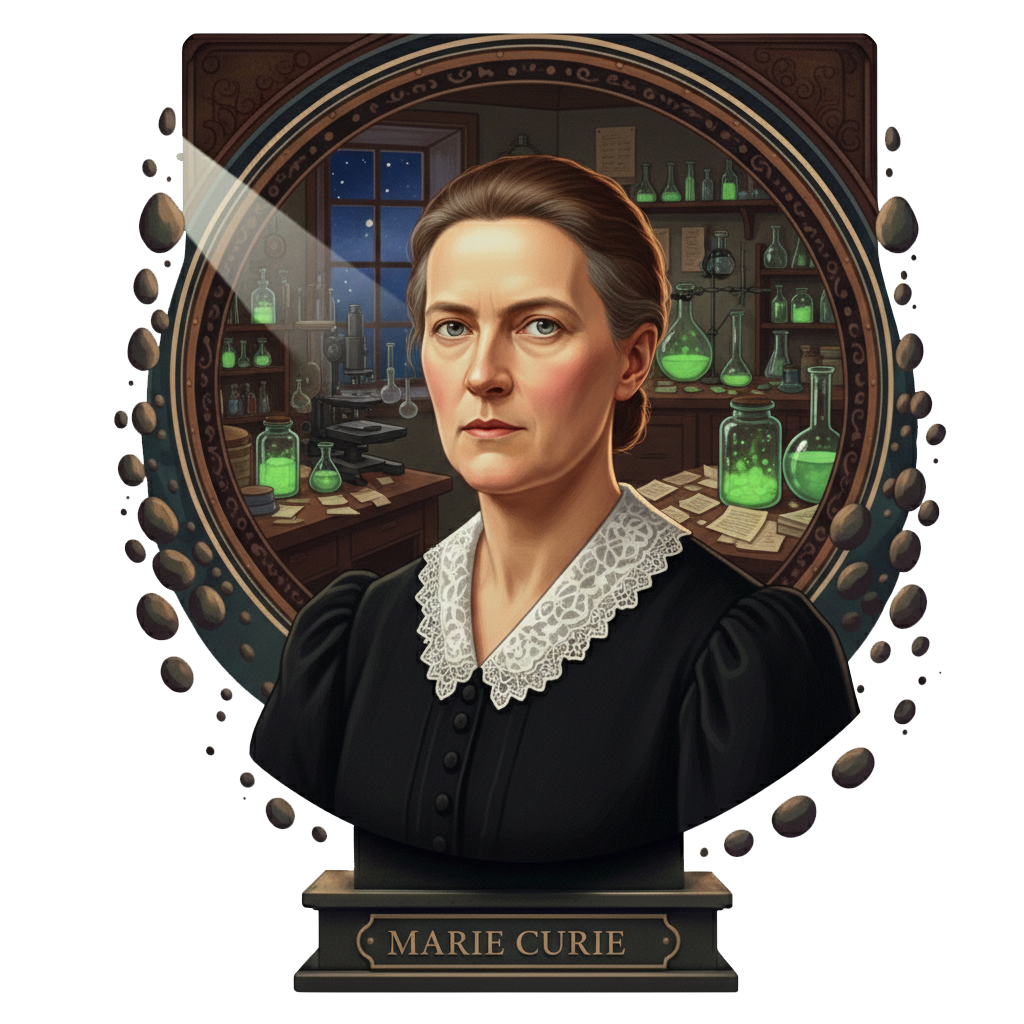
Pioneering physicist and chemist who conducted groundbreaking research on radioactivity and won two Nobel Prizes.
At a glance
- Born
- 1867 CE
- Died
- 1934 CE
- Era classification
- 66
- Homeland
- Poland/France
- Period
- 1867–1934
- Field
- Science, Medicine & Engineering
- Language
- Polish, French
- Religion
- Agnostic
- Gender
- female
Biography
Maria Salomea Skłodowska was born in Warsaw, Poland, then part of the Russian Empire. Facing limited educational opportunities for women under Russian rule, she participated in the clandestine Flying University before moving to Paris in 1891 to study physics and mathematics at the Sorbonne. There, she met and married French physicist Pierre Curie, forging one of the most famous scientific partnerships in history.
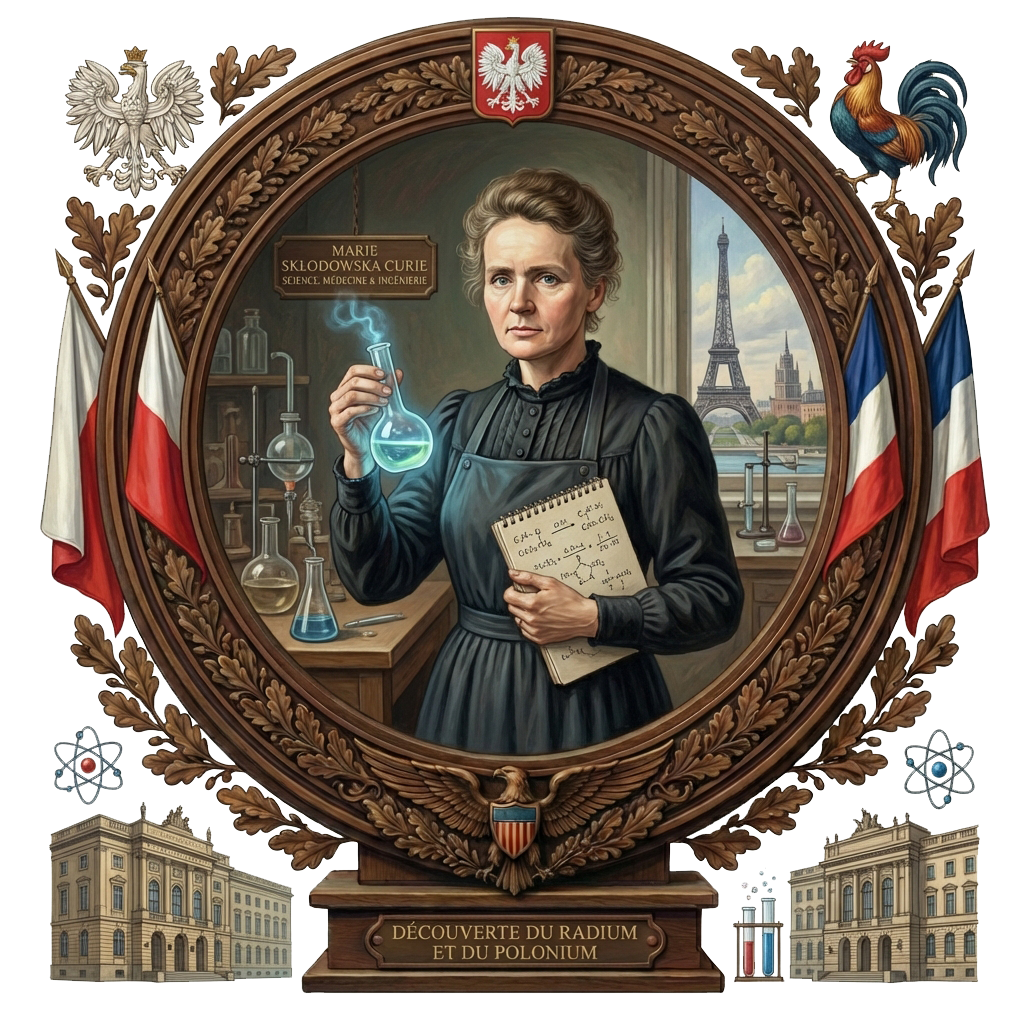
Fascinated by Henri Becquerel's discovery of uranium radiation, Curie began investigating the phenomenon, eventually coining the term 'radioactivity'. Together with Pierre, she discovered two new elements, polonium (named after her native Poland) and radium. In 1903, Marie, Pierre, and Becquerel were jointly awarded the Nobel Prize in Physics, making her the first woman to receive the prestigious honor.
Following Pierre's tragic death in a street accident in 1906, Marie took over his teaching post, becoming the first female professor at the University of Paris. She continued her relentless research, successfully isolating pure radium. This monumental achievement earned her the 1911 Nobel Prize in Chemistry, making her the first person—and still the only person—to win Nobel Prizes in two different scientific fields.
During World War I, Curie developed mobile radiography units, affectionately known as 'Little Curies', to provide X-ray services to field hospitals, saving countless lives. She later founded the Curie Institutes in Paris and Warsaw, which remain major centers of medical research today. She died in 1934 from aplastic anemia, a condition brought on by her decades of unprotected exposure to radiation, leaving behind a legacy that forever transformed physics, chemistry, and medicine.
Portrayal characteristics
Saved editorial descriptions used for the reconstruction; these are not authenticated statements by the depicted person.
- Brilliant
- Resilient
- Dedicated
- Pioneering
- Selfless
- Analytical
Images & artwork 5

Connections
Albert Einstein
Contemporary & Friend
Einstein and Curie were colleagues in the Solvay Conferences and shared a deep mutual respect.
Einstein famously defended Curie during her personal scandals in France, and they spent time hiking together in the Alps discussing physics. He admired her integrity and once remarked that she was the only person he knew who was not corrupted by fame.
Dmitri Mendeleev
Scientific Peers
Mendeleev visited the Curies in Paris and discussed the implications of radioactivity on the Periodic Table.
In 1902, Mendeleev visited Marie and Pierre Curie's laboratory. Although he was initially skeptical of the idea of atomic disintegration, he recognized the importance of their discovery of radium and polonium, eventually incorporating these elements into his periodic system.
Mahmoud Hessabi
Teacher & Student
Hessabi studied under Marie Curie during his time in Paris.
As a young scholar in Europe, Hessabi attended lectures and conducted research under Curie's guidance at the Sorbonne. This experience was foundational to his efforts to modernize scientific education and research infrastructure upon his return to Iran.
Albert Einstein
Scientific Colleagues
Curie and Einstein were close friends and colleagues within the elite circle of early 20th-century physicists.
Einstein was a vocal supporter of Curie, famously writing a letter of encouragement to her during a period of intense public scrutiny in France. They frequently met at the Solvay Conferences to discuss the burgeoning field of quantum mechanics and radioactivity.
Max Planck
Scientific Colleagues
Curie and Planck were fellow pioneers of modern physics and regular participants in the Solvay Conferences.
As the founders of radioactivity and quantum theory respectively, their work provided the dual pillars of 20th-century physics. They maintained a professional relationship characterized by mutual respect for each other's contributions to the understanding of atomic structure.
Mahmoud Hessabi
Teacher & Student
Marie Curie served as a mentor to the young Iranian scientist Mahmoud Hessabi in Paris.
Hessabi was one of the many international students who sought out Curie's expertise at the Radium Institute. Her mentorship helped shape the scientific methodology that Hessabi later used to establish modern physics departments in Iran.
Max Planck
Scientific Contemporaries
Planck and Curie were both foundational figures in modern physics and regular participants in the Solvay Conferences.
They interacted frequently at international scientific gatherings during the early 20th century, where they collectively transitioned physics from the classical era to the quantum and nuclear era.
Known for
- Discovery of radium and polonium
- Coining the term 'radioactivity'
- First woman to win a Nobel Prize
- Only person to win Nobel Prizes in two scientific fields
- Development of mobile X-ray units (Little Curies)
Episodes featuring or mentioning this figure
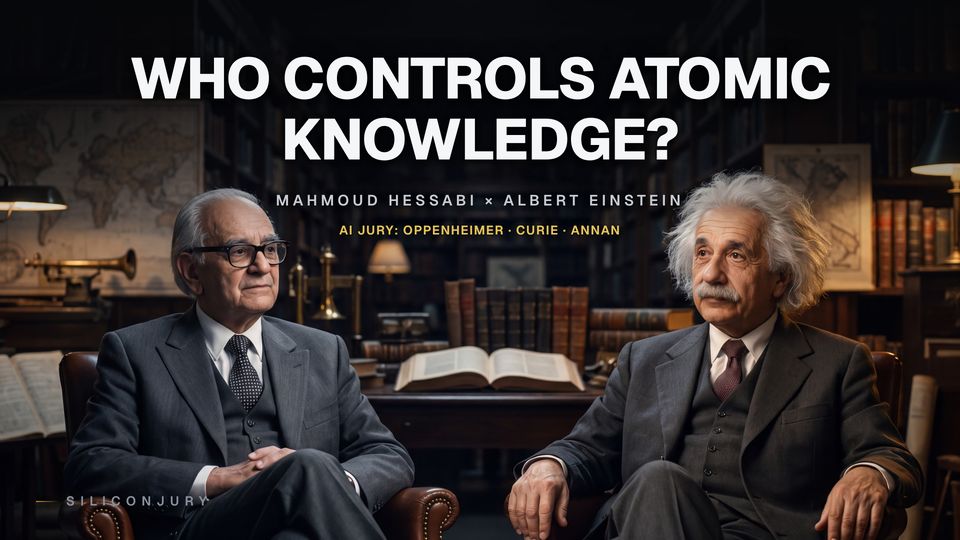
Mahmoud Hessabi vs Albert Einstein: Nuclear Access and Scientific Sovereignty
AI jury: 3 members
Should developing nations have unrestricted access to peaceful nuclear technology, or do the attendant geopolitical and safety risks demand strict limits?