



Leonardo da Vinci
Italian polymath of the High Renaissance, renowned as a painter, engineer, scientist, and visionary.
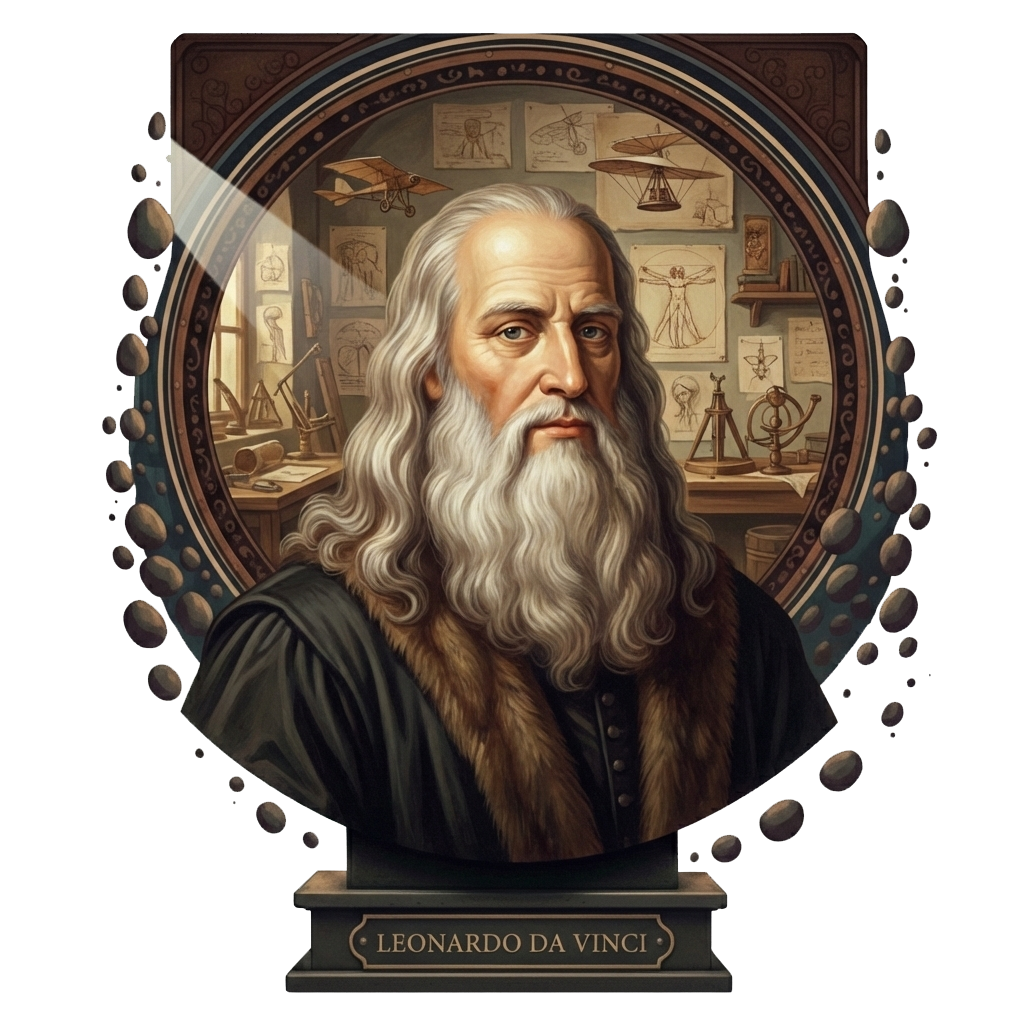
At a glance
- Born
- 1452 CE
- Died
- 1519 CE
- Era classification
- 67
- Homeland
- Italy
- Period
- 1452–1519 CE
- Field
- Arts & Architecture
- Language
- Italian
- Religion
- Catholic
- Gender
- male
Biography
Born in Vinci, Italy in 1452, Leonardo di ser Piero da Vinci was the illegitimate son of a notary and a peasant woman. Despite receiving little formal education, he demonstrated immense artistic talent early on. This led to an apprenticeship with the renowned Florentine painter and sculptor Andrea del Verrocchio, where Leonardo honed his skills in painting, metalworking, and drafting.
In his twenties, Leonardo established his own workshop in Florence before moving to Milan to serve Duke Ludovico Sforza. During this period, he painted masterpieces such as 'The Virgin of the Rocks' and 'The Last Supper.' His work demonstrated a revolutionary use of sfumato—a technique of blending colors to soften outlines—and a profound understanding of perspective, light, and human emotion.
Beyond art, Leonardo's insatiable curiosity drove him to study anatomy, engineering, botany, and physics. He filled thousands of notebook pages with mirror-script writings and sketches of flying machines, armored vehicles, and highly accurate anatomical studies that were centuries ahead of their time. His iconic drawing, the 'Vitruvian Man,' perfectly encapsulates his belief in the interconnectedness of nature, proportion, and human anatomy.
Leonardo spent his final years in France under the patronage of King Francis I, passing away in Amboise in 1519. Though he left many projects unfinished and his scientific writings remained unpublished for centuries, his surviving paintings—particularly the enigmatic 'Mona Lisa'—and his visionary notebooks cemented his legacy. He remains the quintessential 'Renaissance Man,' a genius whose imagination and intellect transcended disciplinary boundaries.
Portrayal characteristics
Saved editorial descriptions used for the reconstruction; these are not authenticated statements by the depicted person.
- Curious
- Visionary
- Observant
- Innovative
- Perfectionist
- Polymathic
Images & artwork 4
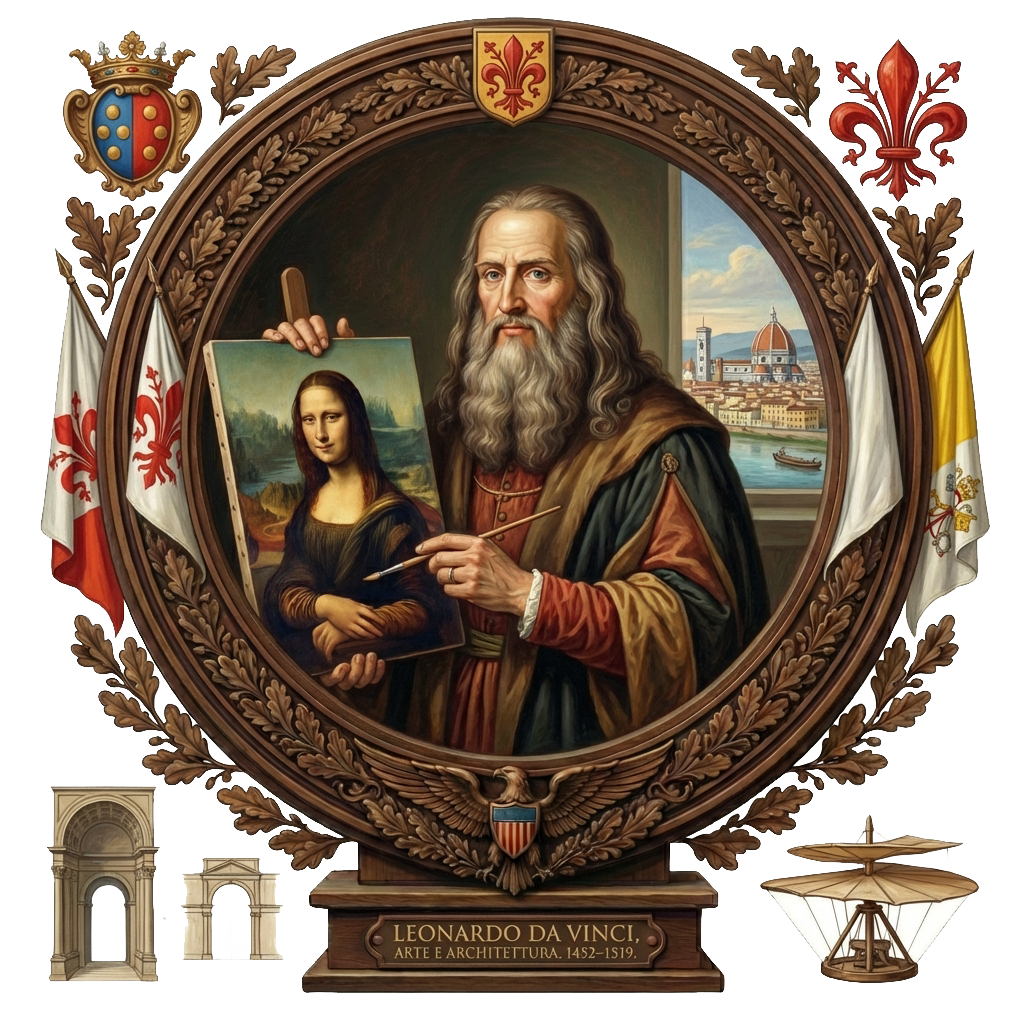
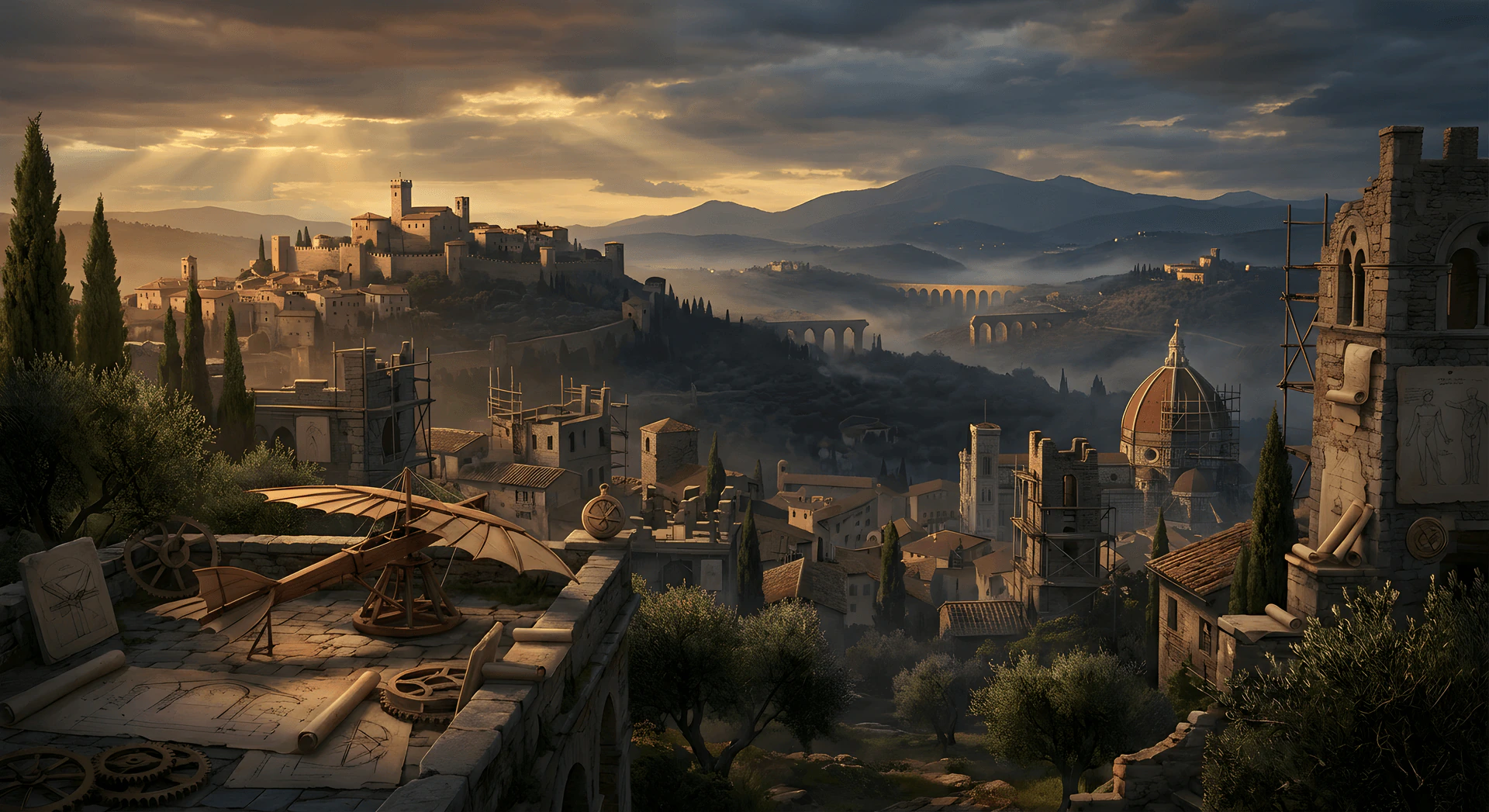
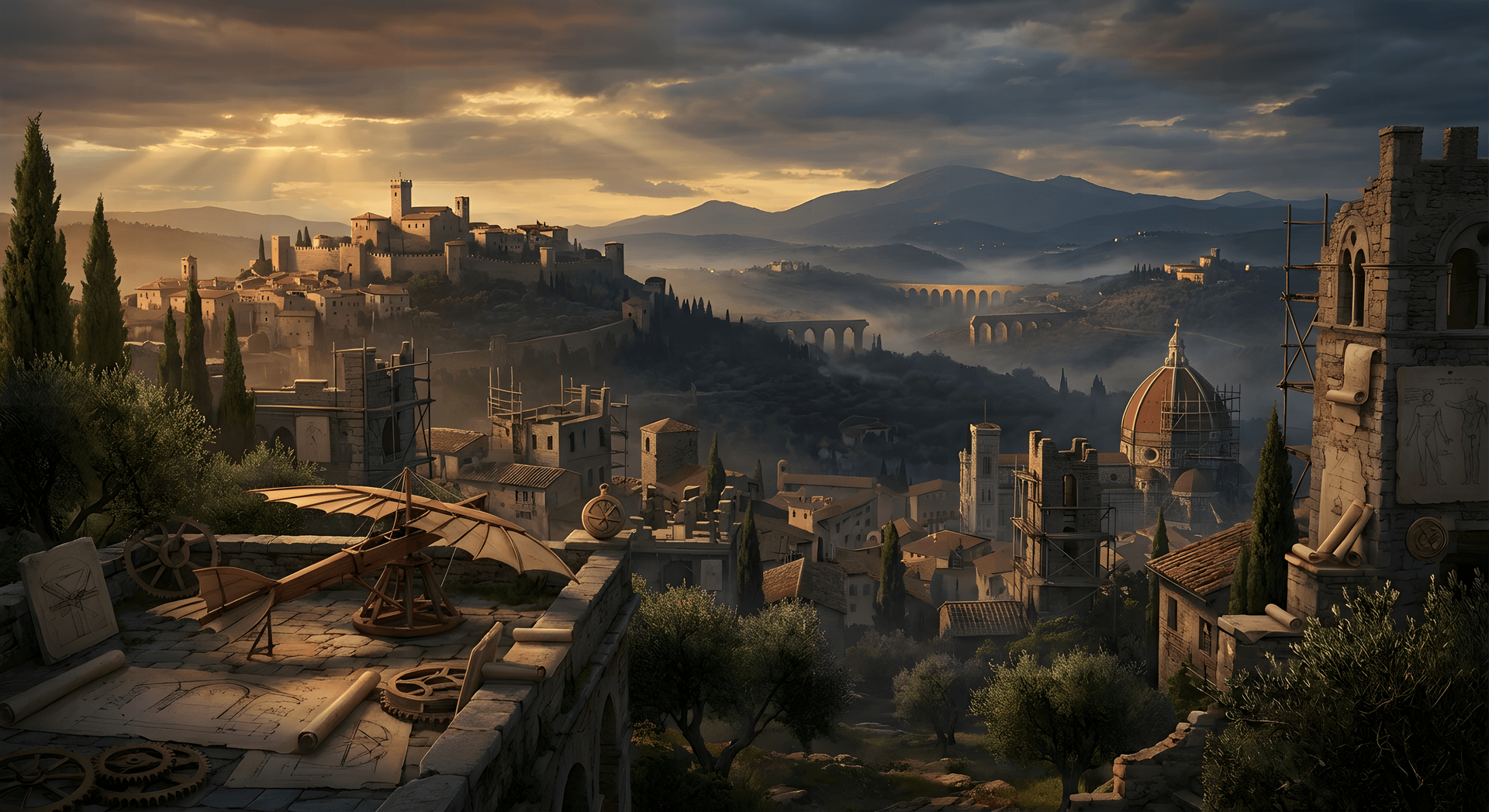
Connections
Abu Ali Sina (Avicenna)
Influenced
Leonardo da Vinci studied Avicenna's medical writings to inform his own pioneering anatomical research.
Avicenna's 'Canon of Medicine' was a standard text in Renaissance Italy. Da Vinci referenced Avicenna's works in his notebooks, particularly regarding the anatomy of the eye, the heart, and the nervous system. He used the Persian polymath's theories as a starting point for his own empirical investigations and highly detailed anatomical drawings.
Andreas Vesalius
Contemporary Anatomists
Both men revolutionized the study of the human body through direct observation and highly detailed anatomical illustration.
While Leonardo's anatomical notebooks remained unpublished for centuries, both figures represent the Renaissance shift toward empirical study and the marriage of art and science.
Igor Sikorsky
Inspired By
Sikorsky was famously inspired by Leonardo da Vinci's 15th-century sketches of an 'aerial screw'.
Sikorsky often credited Da Vinci's early conceptual designs for a vertical flight machine as the spark for his lifelong obsession with helicopters. He successfully realized the mechanical principles that Da Vinci had only been able to theorize on paper.
Michelangelo
Artistic Rivals
The two giants of the High Renaissance had a well-documented personal and professional rivalry in Florence.
They competed for major commissions, most notably the battle frescos for the Palazzo Vecchio, and held starkly different views on art and sculpture. Their rivalry was fueled by contrasting personalities—Leonardo being the polished courtier and Michelangelo the brooding, solitary genius.
Niccolò Machiavelli
Collaborators
Leonardo and Machiavelli worked together in Florence on military and engineering projects for the Republic.
They collaborated on a plan to divert the Arno River to cut off Pisa's access to the sea during a conflict. This partnership combined Leonardo's engineering genius with Machiavelli's political strategy, though the ambitious project was ultimately unsuccessful.
Michelangelo
Artistic Rivals
The two greatest masters of the High Renaissance shared a famous and bitter personal rivalry in Florence and Rome.
Their mutual dislike was well-documented, characterized by public insults and a competition for commissions, such as the planned battle frescoes for the Palazzo Vecchio in Florence.
Niccolò Machiavelli
Collaborators
Machiavelli and Leonardo worked together on military and civil engineering projects for the Florentine Republic.
The two collaborated on a plan to divert the Arno River to bypass Pisa during a war, and Machiavelli likely helped Leonardo secure his position as a military engineer for Cesare Borgia, a figure Machiavelli famously analyzed in 'The Prince'.
Known for
- Painting the Mona Lisa
- Painting The Last Supper
- Drawing the Vitruvian Man
- Conceptualizing flying machines
- Pioneering anatomical studies
- Inventing the sfumato technique
Episodes featuring or mentioning this figure
No eligible published episode featuring this figure is currently in the library.