



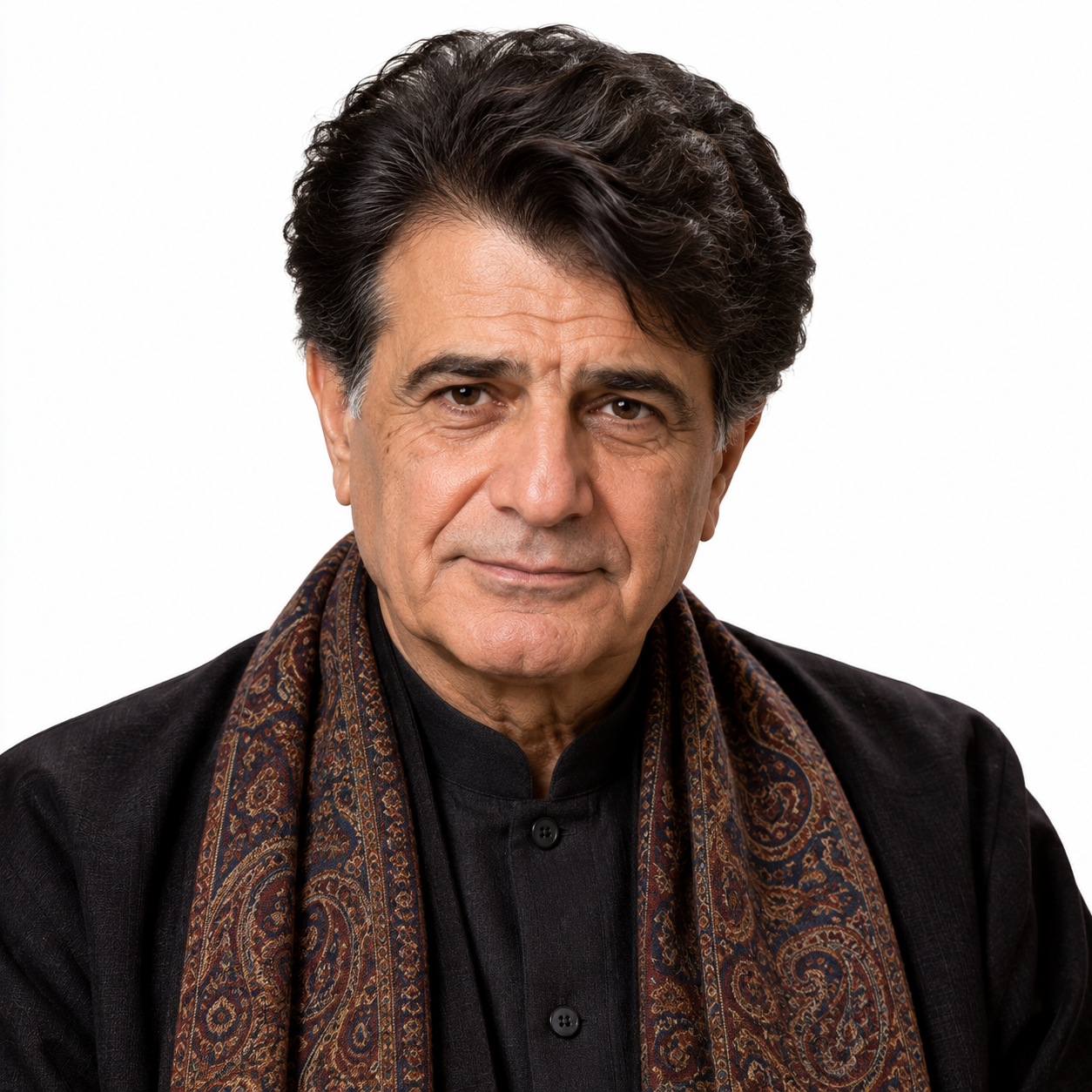
Mohammad-Reza Shajarian
Iran's preeminent master of traditional Persian music, renowned for his profound vocal mastery and cultural impact.
At a glance
- Born
- 1940 CE
- Died
- 2020 CE
- Era classification
- Modern
- Occupation
- Classical Vocalist & Musician
- Homeland
- Iran
- Period
- 20th–21st century CE
- Field
- Arts & Architecture
- Language
- Persian
- Religion
- Islam (Shia)
- Gender
- male
Biography
Mohammad-Reza Shajarian was born on September 23, 1940, in Mashhad, Iran. He began his musical path through Quranic recitation under his father's instruction, winning national recitation titles in his youth. In his late teens and twenties, he turned his focus toward secular classical Persian music, studying the vocal radif—the canonical foundation of Persian music—under masters such as Esmaeil Mehrtash, Abdollah Davami, and Nour-Ali Boroumand. Simultaneously, he developed an accomplished skill in classical Persian calligraphy under master calligraphers of the Nasta'liq script.
Beginning in the late 1960s, Shajarian gained national prominence through radio broadcasts, initially performing under the pseudonym Siavash Bidgani before establishing his own name. Over the following decades, he collaborated with many of Iran's foremost instrumentalists and composers, including Jalil Shahnaz, Mohammad-Reza Lotfi, Parviz Meshkatian, Hossein Alizadeh, and Kayhan Kalhor. Together with these ensembles, he set the mystical and philosophical poetry of Hafez, Sa'di, Rumi, and Attar to music, elevating the avaz (unmetered vocal improvisation) to unprecedented technical and emotional heights. He also designed several new bowed and plucked instruments, such as the sorahi, saghar, and barbat-e karraneh, to enrich the tonal palette of traditional ensembles.
Throughout his life, Shajarian served as a cultural pillar of Iranian society while maintaining strict artistic standards. His 1979 recitation of the Quranic supplication 'Rabbana' became a central auditory tradition of Ramadan in Iran for decades. In recognition of his musical contributions and defense of cultural heritage, UNESCO awarded him the Picasso Medal in 1999 and the Mozart Medal in 2006. Shajarian passed away in Tehran on October 8, 2020, and was buried in Tus beside the mausoleum of the national epic poet Ferdowsi.
Portrayal characteristics
Saved editorial descriptions used for the reconstruction; these are not authenticated statements by the depicted person.
- Vocal mastery
- Artistic independence
- Meticulous discipline
- Cultural stewardship
- Innovative craftsmanship
Images & artwork 2
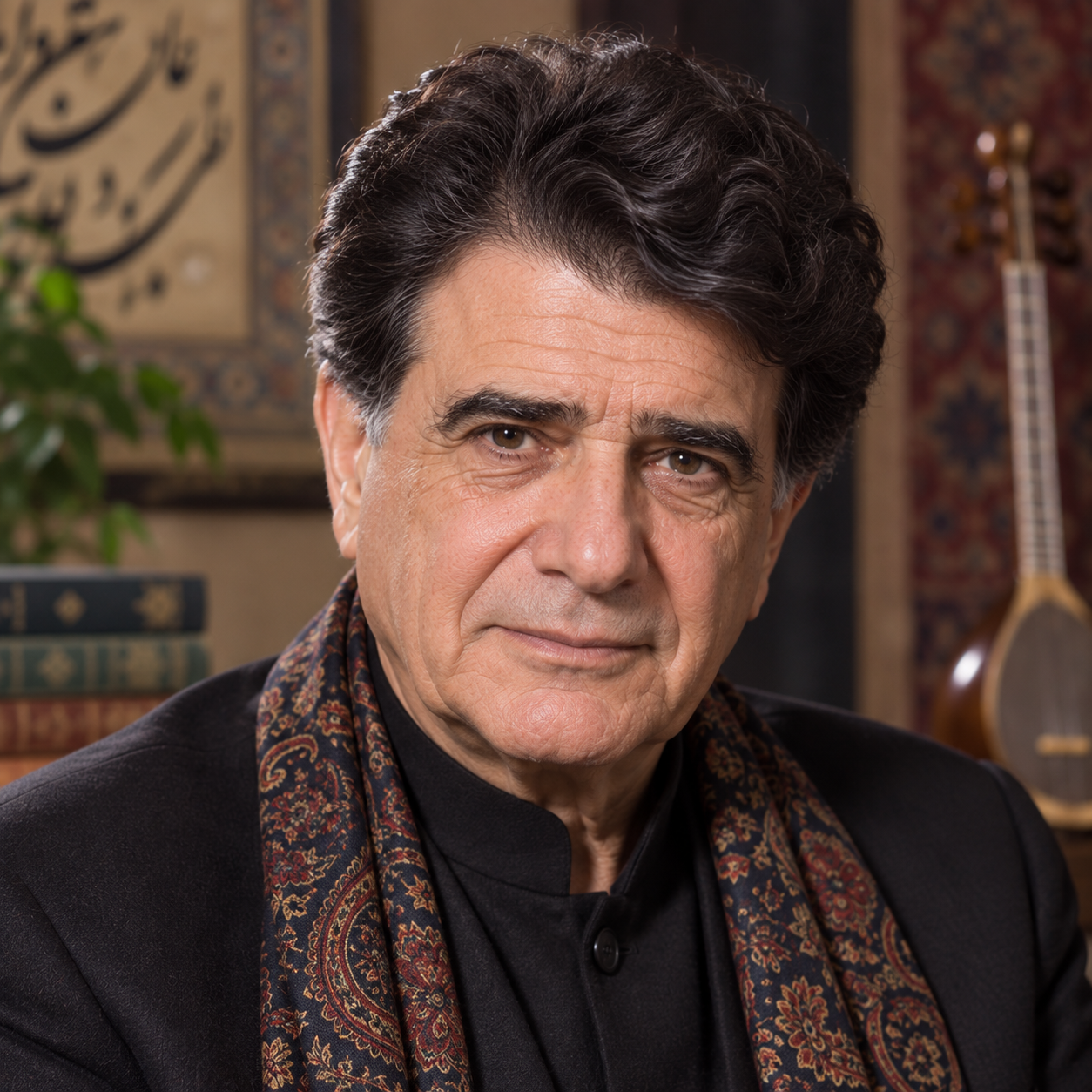
Known for
- Mastery and preservation of the Persian vocal radif
- Iconic Ramadan invocation 'Rabbana'
- Musical interpretations of classical poets like Hafez and Rumi
- Invention of new acoustic instruments including the Sorahi and Saghar
- Recipient of the UNESCO Picasso Medal and Mozart Medal
Episodes featuring or mentioning this figure
No eligible published episode featuring this figure is currently in the library.