



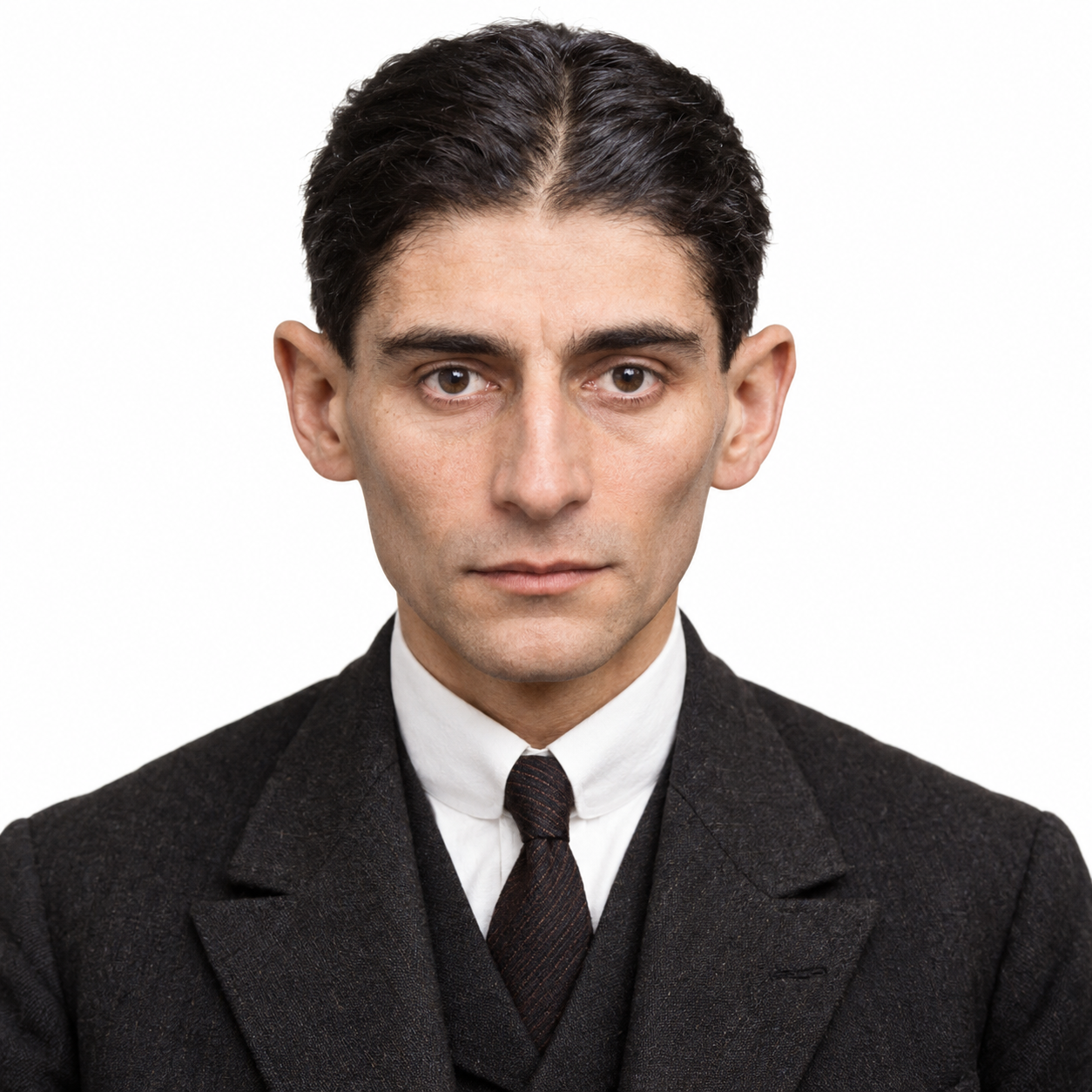
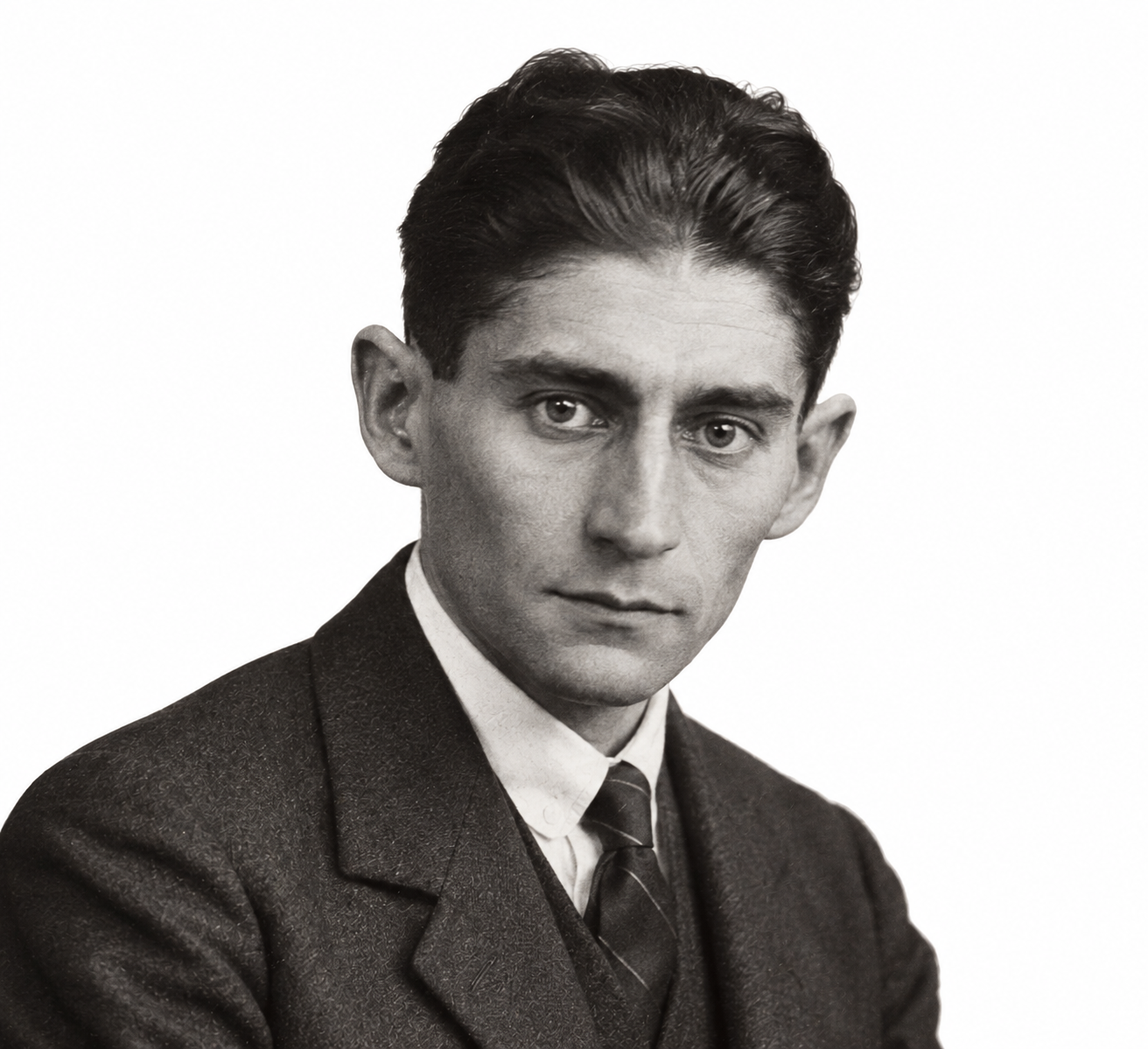
Franz Kafka
Bohemian novelist whose surreal works explored alienation, existential anxiety, and bureaucratic absurdity.
At a glance
- Born
- 1883 CE
- Died
- 1924 CE
- Era classification
- Modern
- Occupation
- Novelist / Writer
- Homeland
- Kingdom of Bohemia (Austria-Hungary)
- Period
- Late 19th – Early 20th Century
- Field
- Arts & Architecture
- Language
- German
- Religion
- Judaism
- Gender
- male
Biography
Franz Kafka was born on July 3, 1883, into a middle-class, German-speaking Jewish family in Prague, then part of the Austro-Hungarian Empire. His early life was heavily shaped by a strained and domineering relationship with his father, Hermann Kafka, a dynamic that fueled intense feelings of inadequacy and guilt that later permeated his literary work. Kafka studied law at the Charles-Ferdinand University of Prague, earning his doctorate in 1906 before beginning a career in the insurance sector.
Kafka worked by day as an official at the Workers' Accident Insurance Institute for the Kingdom of Bohemia, a position that exposed him intimately to the grinding, labyrinthine machinery of state bureaucracy. He reserved his nights for writing, viewing his creative endeavors as a sacred calling despite suffering from chronic self-doubt, insomnia, and debilitating health issues. His complex romantic relationships, particularly with Felice Bauer and Milena Jesenská, were fraught with ambivalence and never resulted in marriage.
During his lifetime, Kafka published only a small fraction of his output, including the celebrated novella 'The Metamorphosis' (1915) and several collections of short stories. Stricken with tuberculosis in 1917, his health steadily deteriorated over the following decade, culminating in his death at a sanatorium in Kierling, Austria, on June 3, 1924, at the age of forty.
Before his death, Kafka instructed his close friend and literary executor, Max Brod, to burn all his unpublished manuscripts, diaries, and letters. Brod defied these wishes and oversaw the posthumous publication of Kafka's major unfinished novels—'The Trial', 'The Castle', and 'Amerika'. Kafka's unique vision of individuals trapped in grotesque, illogical, and oppressive systems gave rise to the term 'Kafkaesque' and established him as one of the most influential figures of 20th-century world literature.
Portrayal characteristics
Saved editorial descriptions used for the reconstruction; these are not authenticated statements by the depicted person.
- Introverted
- Perfectionist
- Melancholic
- Deeply observant
- Anxious
- Visionary
Images & artwork 3
Known for
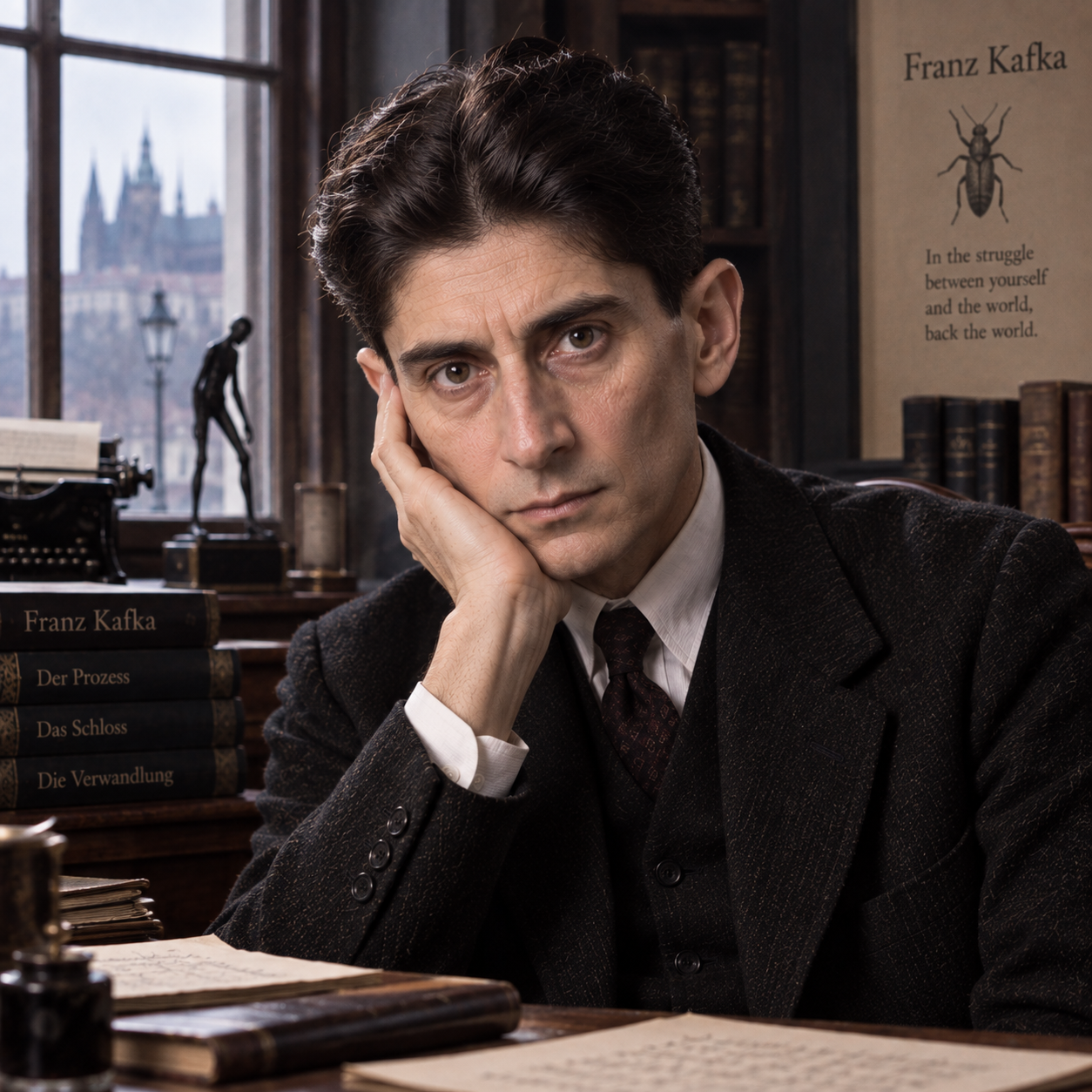
- The Metamorphosis
- The Trial
- The Castle
- Pioneering modernist existential fiction
- Originating the concept of the 'Kafkaesque'
Episodes featuring or mentioning this figure
No eligible published episode featuring this figure is currently in the library.