



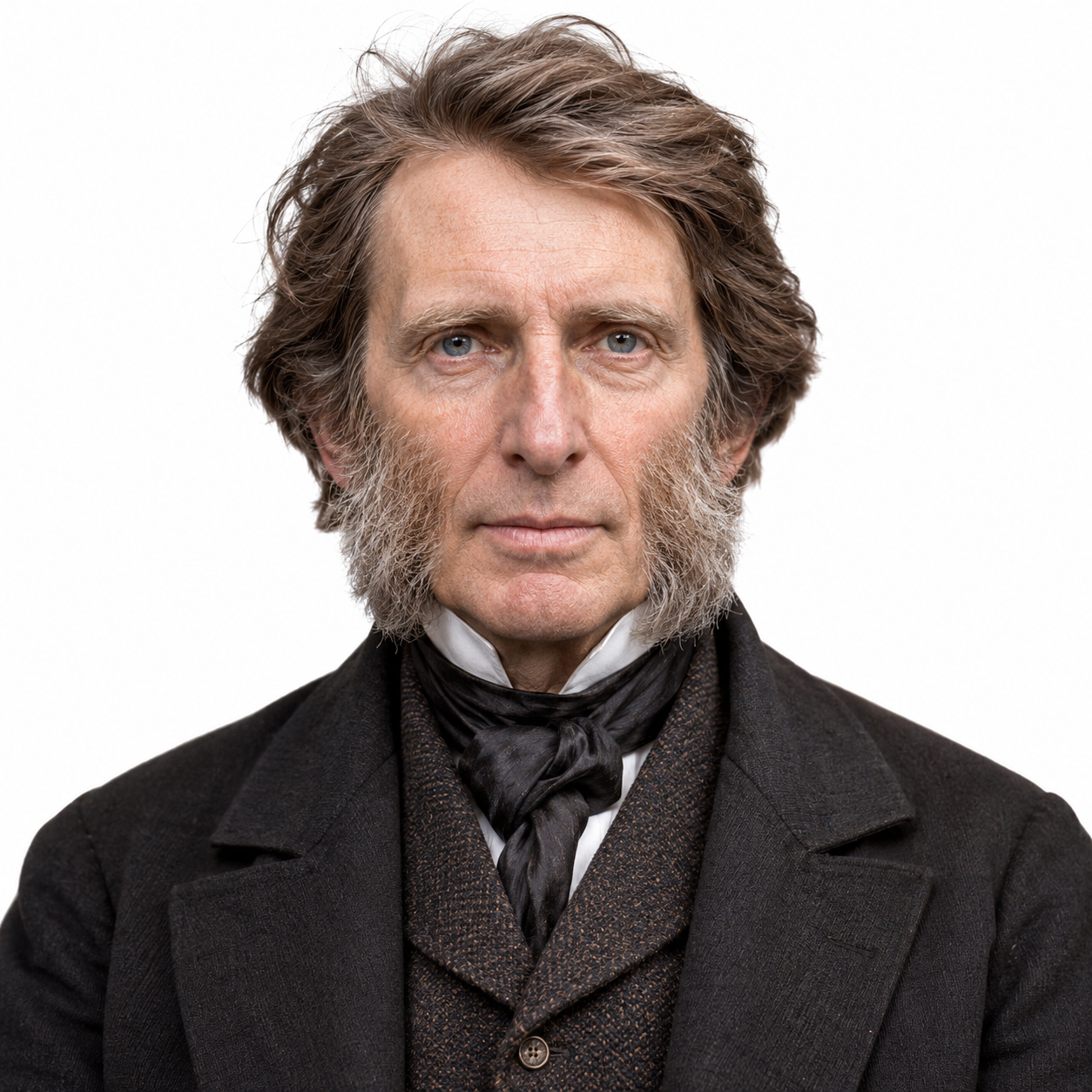
John Ruskin
Leading Victorian art critic and social thinker who profoundly shaped architectural theory and moral aesthetics.
At a glance
- Born
- 1819 CE
- Died
- 1900 CE
- Era classification
- Modern
- Occupation
- Art Critic / Social Reformer
- Homeland
- United Kingdom
- Period
- Victorian Era
- Field
- Arts & Architecture
- Language
- English
- Religion
- Christianity
- Gender
- male
Biography
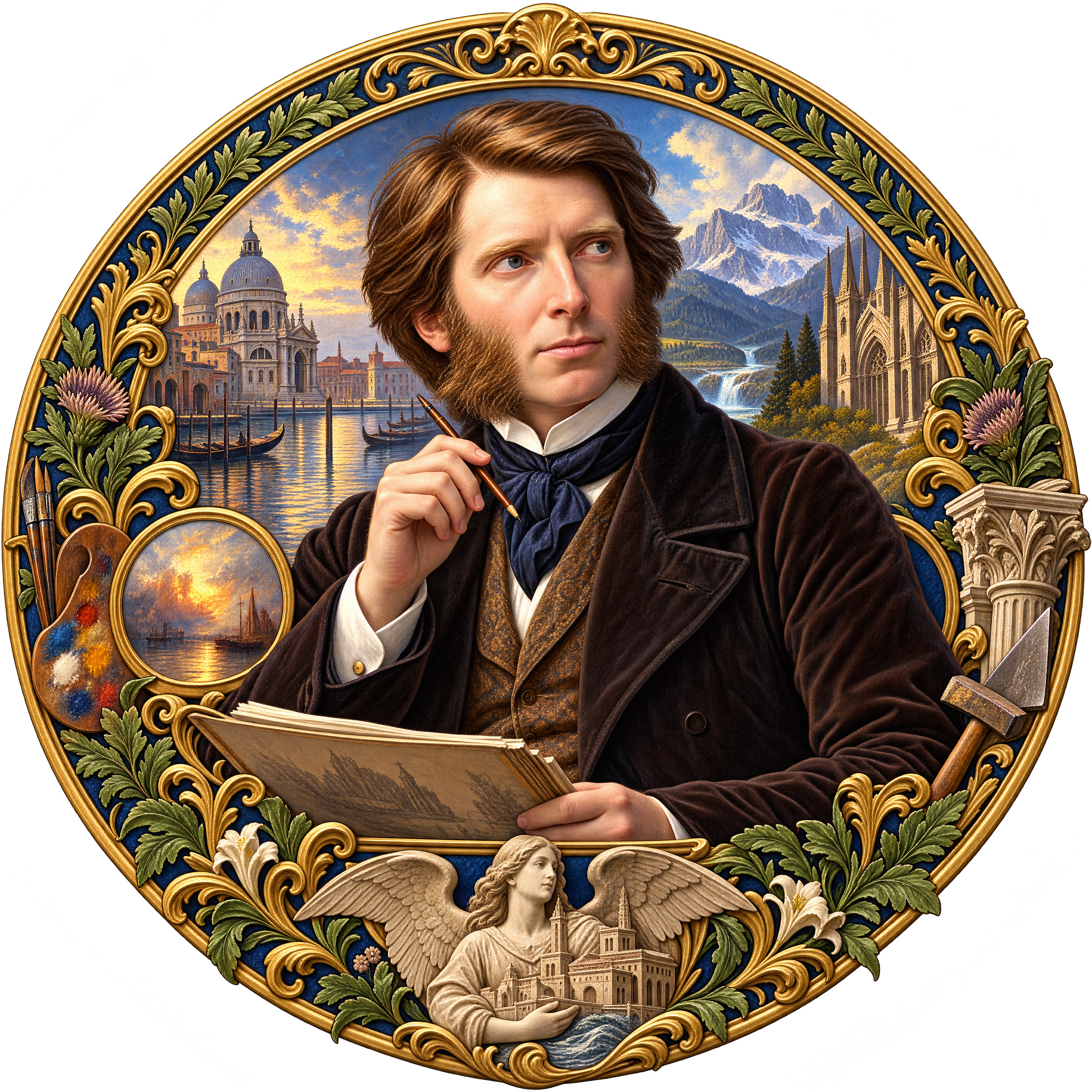
John Ruskin was born in London in 1819 to a prosperous sherry importer and a devout evangelical mother. Raised in an environment steeped in literature, art, and intense biblical study, he developed an acute sensitivity to the natural world and aesthetic beauty. He first gained widespread prominence in 1843 with the publication of the first volume of 'Modern Painters', a passionate defense of the landscape painter J. M. W. Turner, arguing that the primary role of the artist is moral and naturalistic truth.
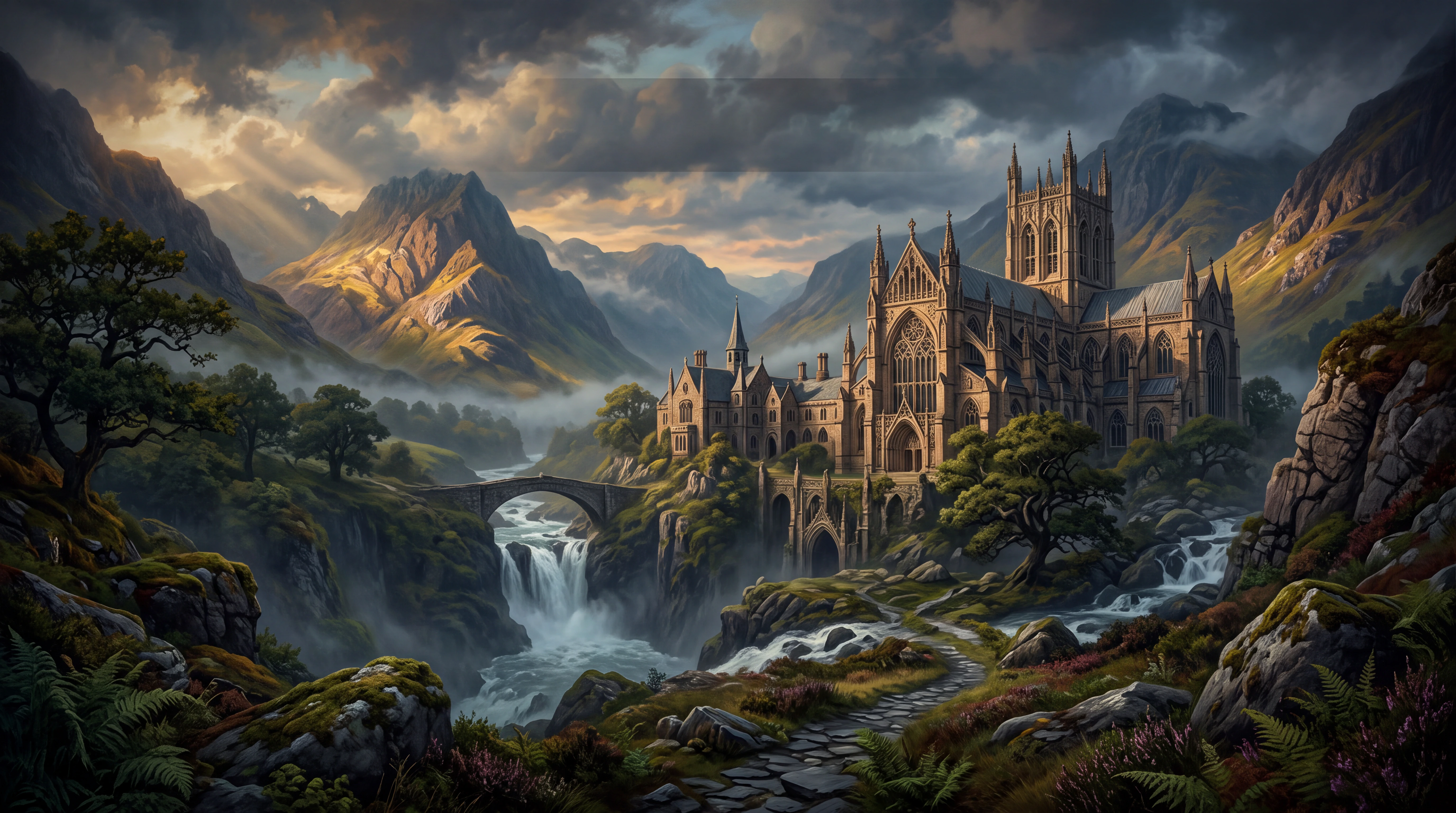
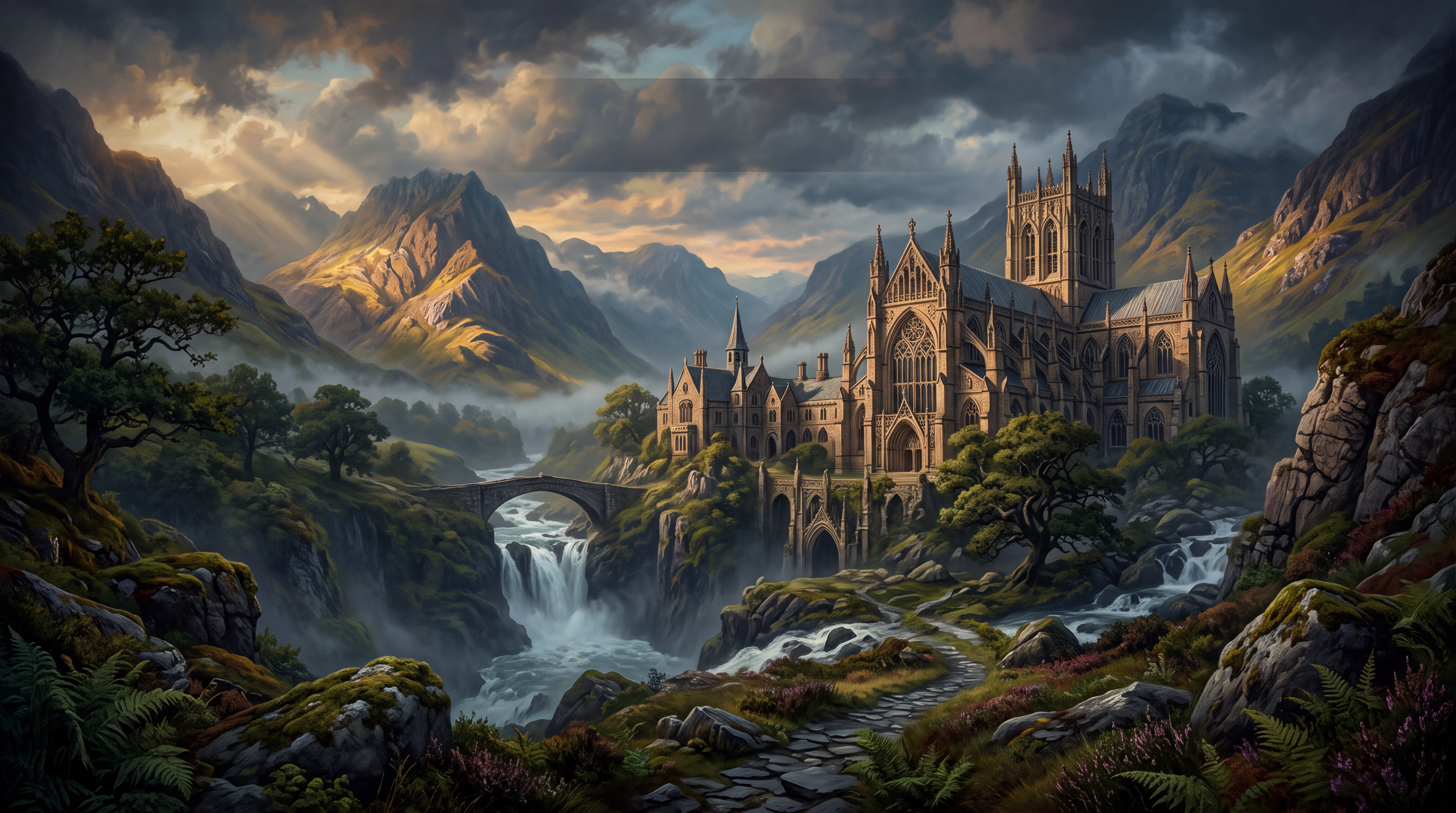
Throughout the late 1840s and 1850s, Ruskin expanded his critical focus to architecture, producing landmark works such as 'The Seven Lamps of Architecture' (1849) and the three-volume 'The Stones of Venice' (1851–1853). He championed Gothic architecture as an expression of authentic craftsmanship, individual worker autonomy, and spiritual integrity, directly contrasting it with the perceived soullessness and dehumanization of industrial-era design. His famous chapter 'The Nature of Gothic' became a foundational text for the Arts and Crafts movement led by William Morris.
In the 1860s, Ruskin turned increasingly toward social reform and political economy, famously articulated in his 1860 essays collected as 'Unto This Last'. He launched fierce critiques against classical laissez-faire economics, arguing that true wealth lies in life, well-being, and ethical labor rather than mere material accumulation. This moralized economic vision profoundly influenced later social movements, early British socialism, and international figures such as Mahatma Gandhi.
In his later years, Ruskin established the Guild of St George to promote agrarian communities and ethical education, and served as the first Slade Professor of Fine Art at Oxford. Though his final years were clouded by severe mental illness and seclusion at his Lake District home, Brantwood, his voluminous writings on art, ecology, architecture, and sociology left an indelible mark on modern cultural and environmental thought.
Portrayal characteristics
Saved editorial descriptions used for the reconstruction; these are not authenticated statements by the depicted person.
- Visionary
- Moralistic
- Meticulous
- Eloquent
- Idealistic
- Passionate
Images & artwork 4
Known for
- Authoring Modern Painters in defense of J. M. W. Turner
- Writing The Stones of Venice and The Seven Lamps of Architecture
- Pioneering critique of industrial capitalism in Unto This Last
- Inspiring the Arts and Crafts Movement and Pre-Raphaelite Brotherhood
- Advocating for environmental conservation and labor reform
Episodes featuring or mentioning this figure
No eligible published episode featuring this figure is currently in the library.