



Mimar Sinan
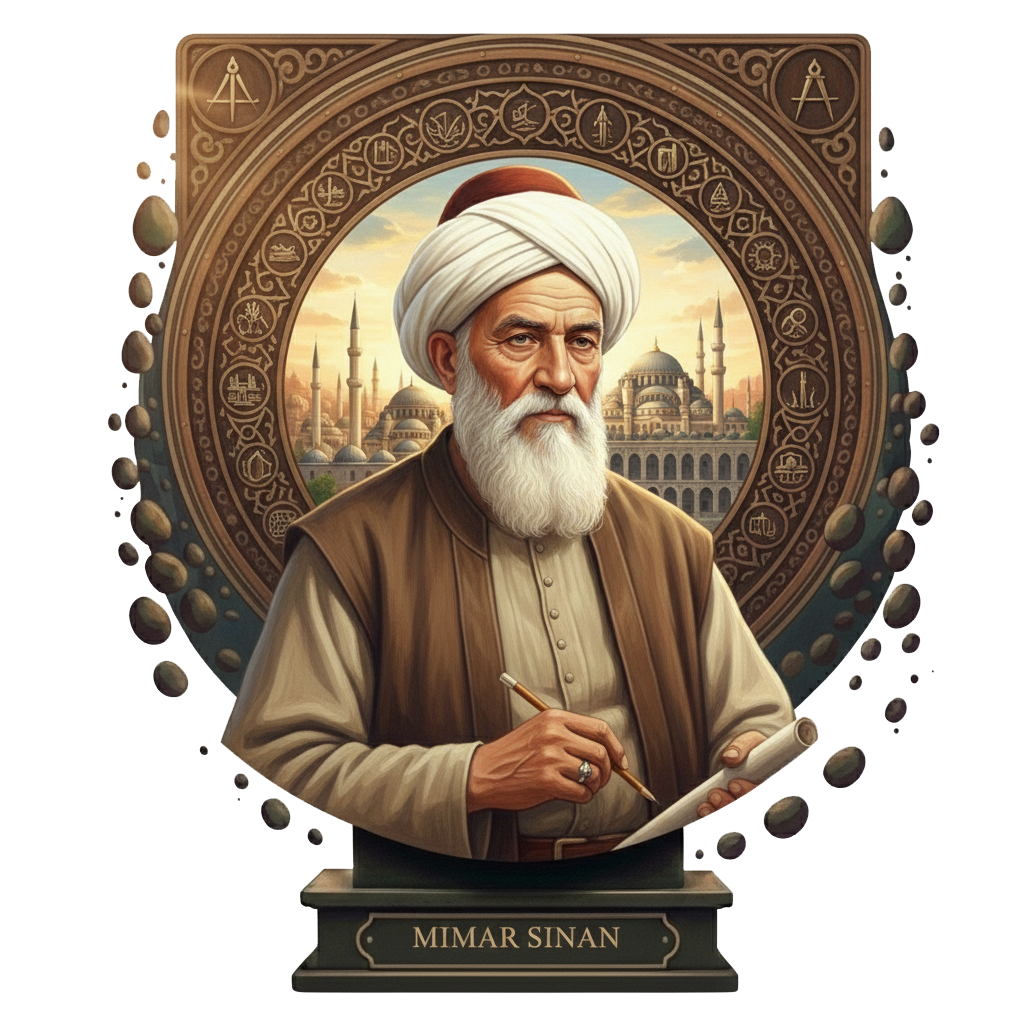
The legendary chief Ottoman architect who designed masterpieces like the Süleymaniye and Selimiye mosques.
At a glance
- Born
- c. 1489 CE
- Died
- 1588 CE
- Era classification
- 99
- Homeland
- Ottoman Empire
- Period
- 1489–1588 CE
- Field
- Arts & Architecture
- Language
- Ottoman Turkish
- Religion
- Islam
- Gender
- male
Biography
Born around 1489 in Ağırnas, near Kayseri, Sinan was conscripted into the Ottoman Janissary corps through the devşirme system. He served as a military engineer and commander, gaining extensive experience in constructing fortifications, bridges, and aqueducts during various campaigns across the empire. His military engineering prowess and problem-solving abilities quickly caught the attention of the royal court.
In 1538, he was appointed as the Chief Court Architect (Mimarbaşı) to Sultan Suleiman the Magnificent, a position he held for half a century under three successive sultans: Suleiman, Selim II, and Murad III. During his tenure, Sinan transformed the architectural landscape of the Ottoman Empire, synthesizing and perfecting the domed basilica form. He is credited with the design and construction of over 300 major structures, including mosques, palaces, schools, aqueducts, and bathhouses.
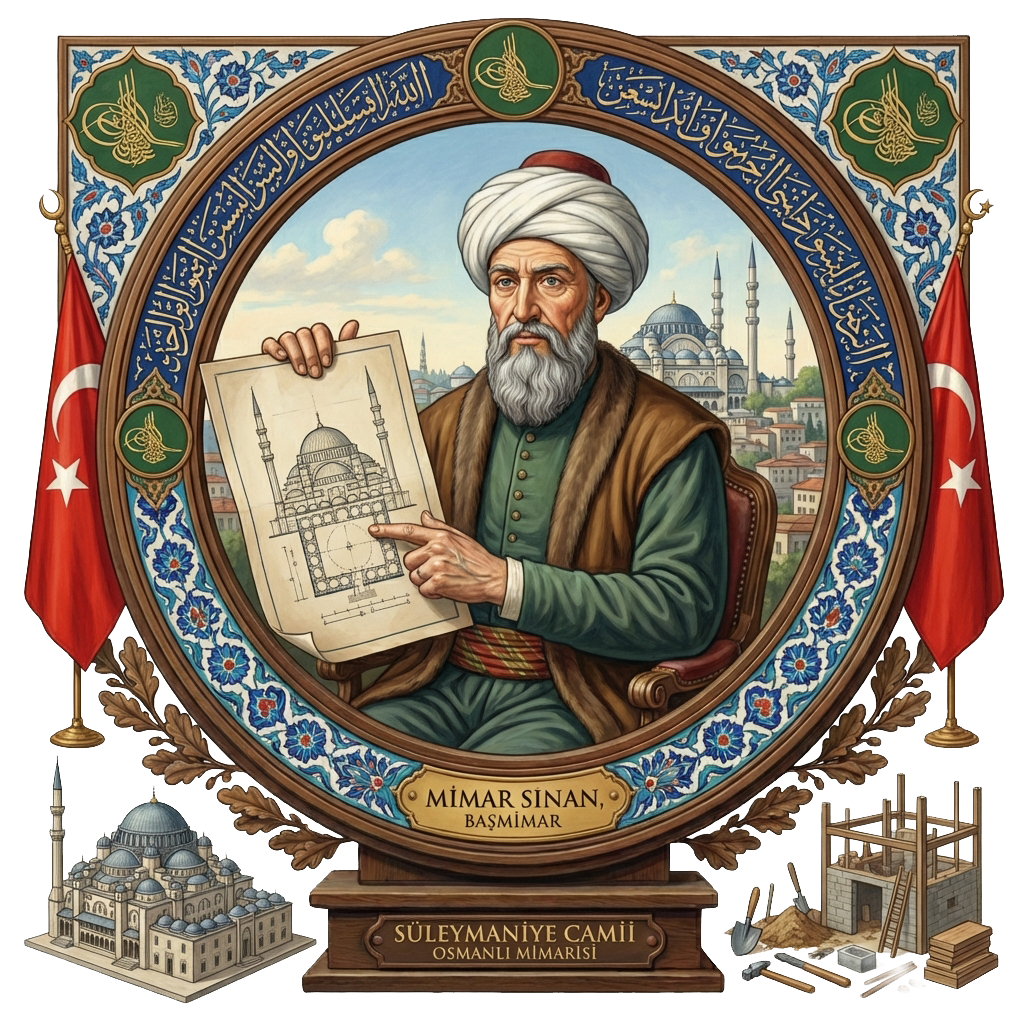
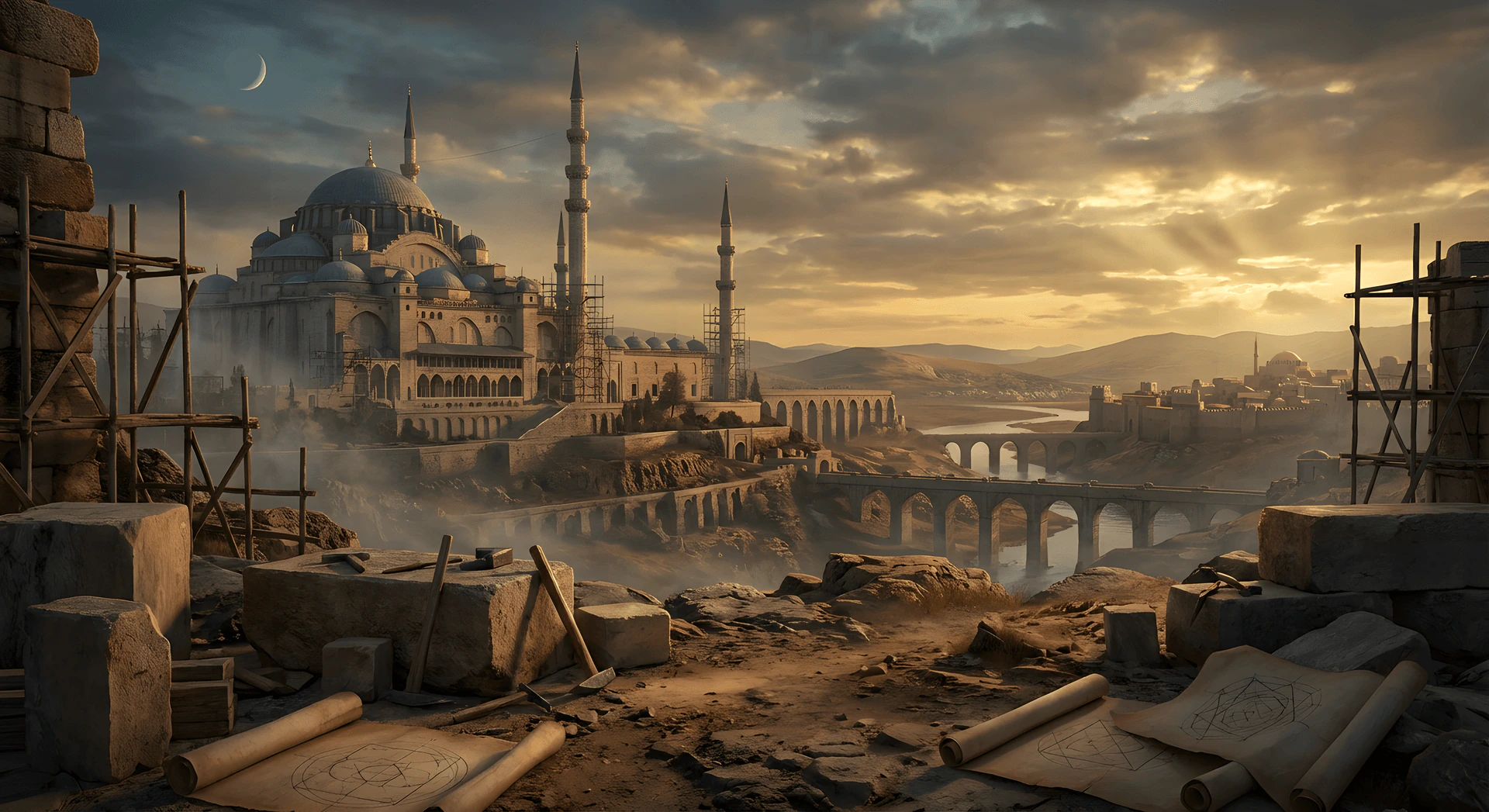
Sinan's masterpieces, notably the Süleymaniye Mosque in Istanbul and the Selimiye Mosque in Edirne, are considered the absolute pinnacle of classical Ottoman architecture. His innovative use of light, space, and structural geometry not only defined the aesthetic of the empire but also left an enduring legacy that influenced Islamic and global architecture for centuries. He died in 1588 at nearly 100 years of age and is buried in a modest tomb of his own design near the Süleymaniye Mosque.
Portrayal characteristics
Saved editorial descriptions used for the reconstruction; these are not authenticated statements by the depicted person.
- Innovative
- Meticulous
- Visionary
- Disciplined
- Prolific
Images & artwork 4
Connections
Barbaros Hayreddin Pasha
Court Contemporaries
The chief architect Sinan designed the funerary complex and mosque for Barbaros Hayreddin Pasha.
As contemporaries in the Ottoman imperial court, Sinan was commissioned to build the Barbaros Hayreddin Pasha Mosque and his tomb (türbe) in Beşiktaş, Istanbul, which remains a landmark dedicated to the admiral's legacy.
Evliya Çelebi
Chronicler of Works
Çelebi documented and praised the architectural legacy of Mimar Sinan in his travelogues.
Writing a century after Sinan's death, Çelebi visited and meticulously described dozens of Sinan's mosques, bridges, and baths. His writings helped cement Sinan's reputation as the 'Great Architect' by recording the awe these structures inspired in 17th-century travelers.
Michelangelo
Architectural Counterparts
Sinan is often historically compared to Michelangelo as the preeminent imperial architect of his respective empire.
While they never met, they were contemporaries who both mastered the use of the great dome—Michelangelo with St. Peter's Basilica and Sinan with the Süleymaniye and Selimiye Mosques.
Suleiman the Magnificent
Chief Architect & Patron
Sinan served as the chief imperial architect for Suleiman, designing his most iconic monuments and mosques.
Under Suleiman's patronage, Sinan reached the peak of his career, constructing the Süleymaniye Mosque complex in Istanbul, which remains a masterpiece of Ottoman architecture and a symbol of the empire's Golden Age.
Barbaros Hayreddin Pasha
Architect of Memorial
Sinan designed and built the mausoleum for the famous Ottoman admiral Barbaros Hayreddin Pasha.
The tomb, located in the Beşiktaş district of Istanbul, was completed by Sinan in the 1540s to honor the naval hero who secured Ottoman dominance in the Mediterranean.
Suleiman the Magnificent
Chief Architect & Patron
Sinan was the chief Ottoman architect under Suleiman, responsible for the empire's most iconic and enduring structures.
Suleiman commissioned Sinan to design the Süleymaniye Mosque in Istanbul, a masterpiece of Islamic architecture that served as a monument to the Sultan's power and the empire's cultural peak.
Known for
- Süleymaniye Mosque
- Selimiye Mosque
- Şehzade Mosque
- Classical Ottoman Architecture
- Designing over 300 major structures
Episodes featuring or mentioning this figure
No eligible published episode featuring this figure is currently in the library.