



Niccolò Machiavelli
Italian Renaissance diplomat and philosopher, best known for his pragmatic political treatise, The Prince.
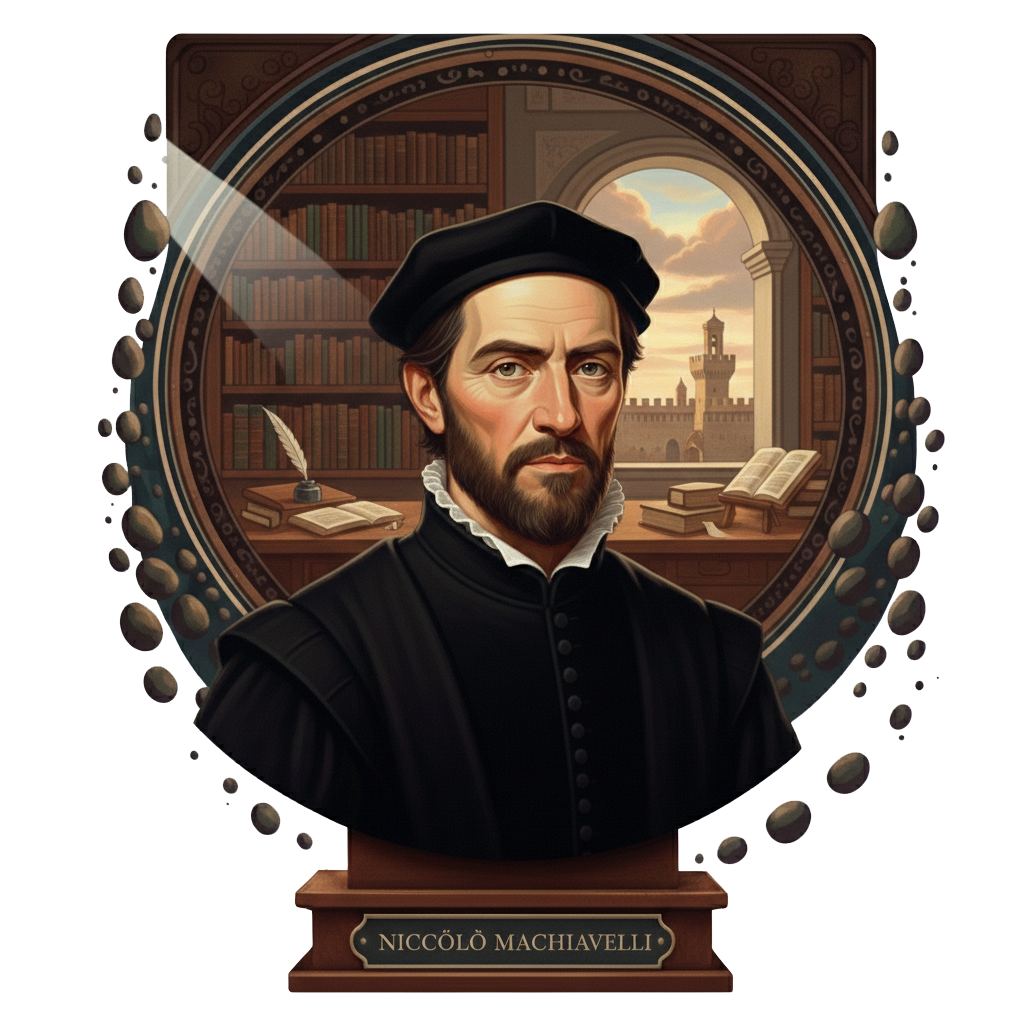
At a glance
- Born
- 1469 CE
- Died
- 1527 CE
- Era classification
- 58
- Homeland
- Republic of Florence (Italy)
- Period
- 1469–1527 CE
- Field
- Philosophy & Ideology
- Language
- Italian
- Religion
- Catholic
- Gender
- male
Biography
Niccolò Machiavelli was born in 1469 in the Republic of Florence during the height of the Italian Renaissance. Receiving a thorough humanist education, he was steeped in the Latin and Greek classics, which profoundly shaped his understanding of history and human nature. His early life coincided with the rule of Lorenzo de' Medici and the subsequent tumultuous years of Girolamo Savonarola's influence.
In 1498, Machiavelli entered the political arena, serving as the Second Chancellor of the Florentine Republic. For fourteen years, he acted as a senior diplomat and military strategist, undertaking crucial missions to the courts of France, the Papacy, and various Italian city-states. He notably interacted with powerful figures like Cesare Borgia, whose ruthless but effective statecraft deeply impressed him and later influenced his political theories. Machiavelli also pioneered the creation of a citizen militia, distrusting the reliance on mercenary armies.
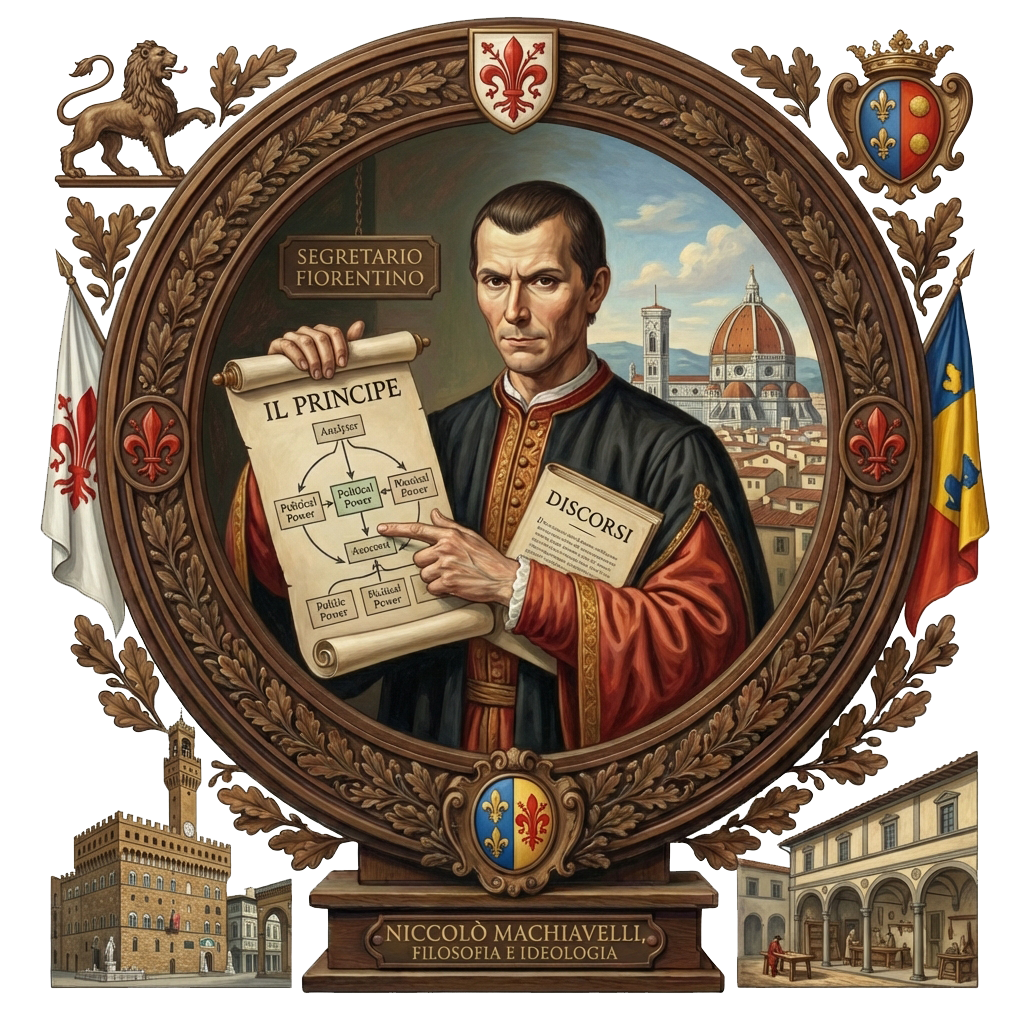
His political career abruptly ended in 1512 when the Medici family, backed by papal troops, overthrew the republic. Machiavelli was dismissed, briefly imprisoned, tortured, and subsequently exiled to his rural estate in San Casciano. It was during this period of forced retirement that he turned to writing, producing his most enduring masterpieces, including 'The Prince' (1513) and 'Discourses on Livy' (1517).
Machiavelli's legacy is complex and enduring. Often hailed as the father of modern political philosophy and political science, his objective, sometimes cynical analysis of power separated politics from traditional ethics. While his name birthed the term 'Machiavellian'—denoting deceit and political manipulation—many modern scholars view his works as a pragmatic examination of republicanism and the harsh realities of statecraft.
Portrayal characteristics
Saved editorial descriptions used for the reconstruction; these are not authenticated statements by the depicted person.
- Pragmatic
- Analytical
- Realist
- Observant
- Cynical
- Astute
Images & artwork 4
Connections
Leonardo da Vinci
Collaborators
Leonardo and Machiavelli worked together in Florence on military and engineering projects for the Republic.
They collaborated on a plan to divert the Arno River to cut off Pisa's access to the sea during a conflict. This partnership combined Leonardo's engineering genius with Machiavelli's political strategy, though the ambitious project was ultimately unsuccessful.
Michelangelo
Contemporary Florentines
Both men were prominent citizens of Florence during its transition between the Medici rule and the Republic.
While their direct interactions are less documented, they moved in the same political and social circles; Michelangelo even worked on the city's fortifications during the same period Machiavelli was active in Florentine defense.
Leonardo da Vinci
Collaborators
Machiavelli and Leonardo worked together on military and civil engineering projects for the Florentine Republic.
The two collaborated on a plan to divert the Arno River to bypass Pisa during a war, and Machiavelli likely helped Leonardo secure his position as a military engineer for Cesare Borgia, a figure Machiavelli famously analyzed in 'The Prince'.
Michelangelo
Contemporary Florentines
Machiavelli and Michelangelo were both prominent figures in the political and cultural life of Renaissance Florence.
While their direct interactions are less documented than those with Leonardo, they both served the Florentine Republic during the same period. Machiavelli was a high-ranking diplomat while Michelangelo worked on major civic commissions like the 'David'.
Julius Caesar
Historical Subject
Machiavelli used Julius Caesar as a primary case study for his theories on power and leadership.
In 'The Prince' and 'Discourses on Livy,' Machiavelli analyzed Caesar's transition from a republican general to a dictator, using him to illustrate the necessity of 'virtù' and the dangers of political corruption.
Known for
- The Prince
- Discourses on Livy
- Father of modern political science
- Separating politics from ethics
- Florentine diplomacy
Episodes featuring or mentioning this figure
No eligible published episode featuring this figure is currently in the library.