



Plato
Classical Greek philosopher who founded the Academy in Athens and laid the foundations of Western philosophy.
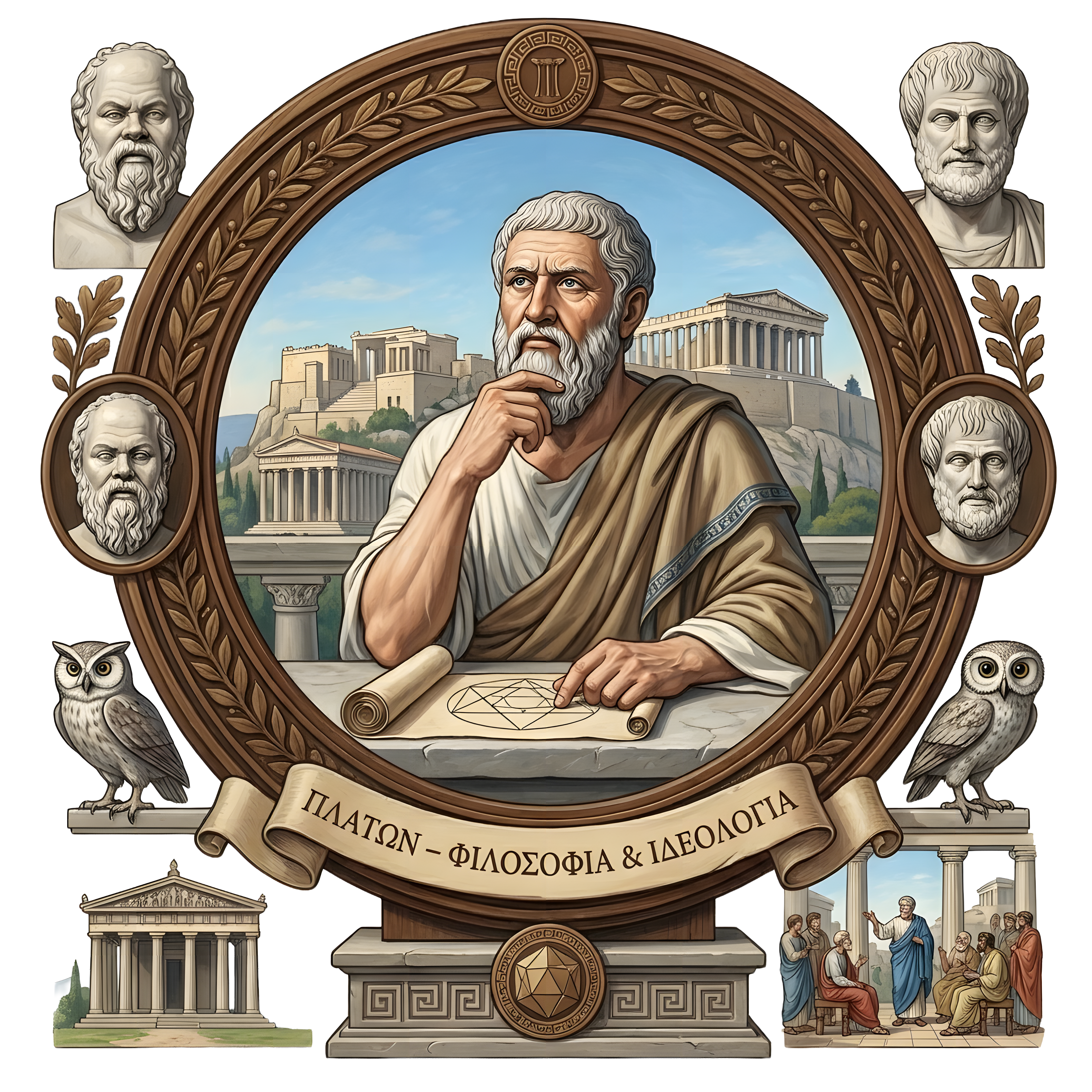
At a glance
- Born
- 427 BCE
- Died
- 347 BCE
- Era classification
- Ancient
- Occupation
- Philosopher
- Homeland
- Greece
- Period
- Classical Greece
- Field
- Philosophy & Ideology
- Language
- Ancient Greek
- Religion
- Ancient Greek Religion
- Gender
- male
Biography
Plato was a classical Greek philosopher who was a student of Socrates and the teacher of Aristotle. He founded the Academy in Athens, which was the first institution of higher learning in the Western world. His philosophical work is primarily presented in the form of dialogues, where Socrates is often the main character, exploring various ethical and metaphysical questions.
One of Plato's most significant contributions is the Theory of Forms, which suggests that the physical world we perceive is merely a shadow of a higher, truer reality consisting of abstract, perfect forms. In his most famous work, "The Republic," he describes his vision of an ideal state ruled by philosopher-kings. He also explored the nature of the soul, the importance of education, and the concept of justice.
Plato's influence on Western philosophy is immeasurable. His ideas provided the framework for much of Western thought, including theology, political theory, and science. His writings have been studied for over two millennia, and he remains a central figure in the history of human intellect.
Portrayal characteristics
Saved editorial descriptions used for the reconstruction; these are not authenticated statements by the depicted person.
- Analytical
- Idealistic
- Influential
- Prolific
- Dialectical
Images & artwork 3


Known for
- The Republic
- Theory of Forms
- Founding the Academy
- Allegory of the Cave
Episodes featuring or mentioning this figure
No eligible published episode featuring this figure is currently in the library.