



Frederick Douglass
An escaped slave who became a prominent activist, author, and public speaker in the American abolitionist movement.
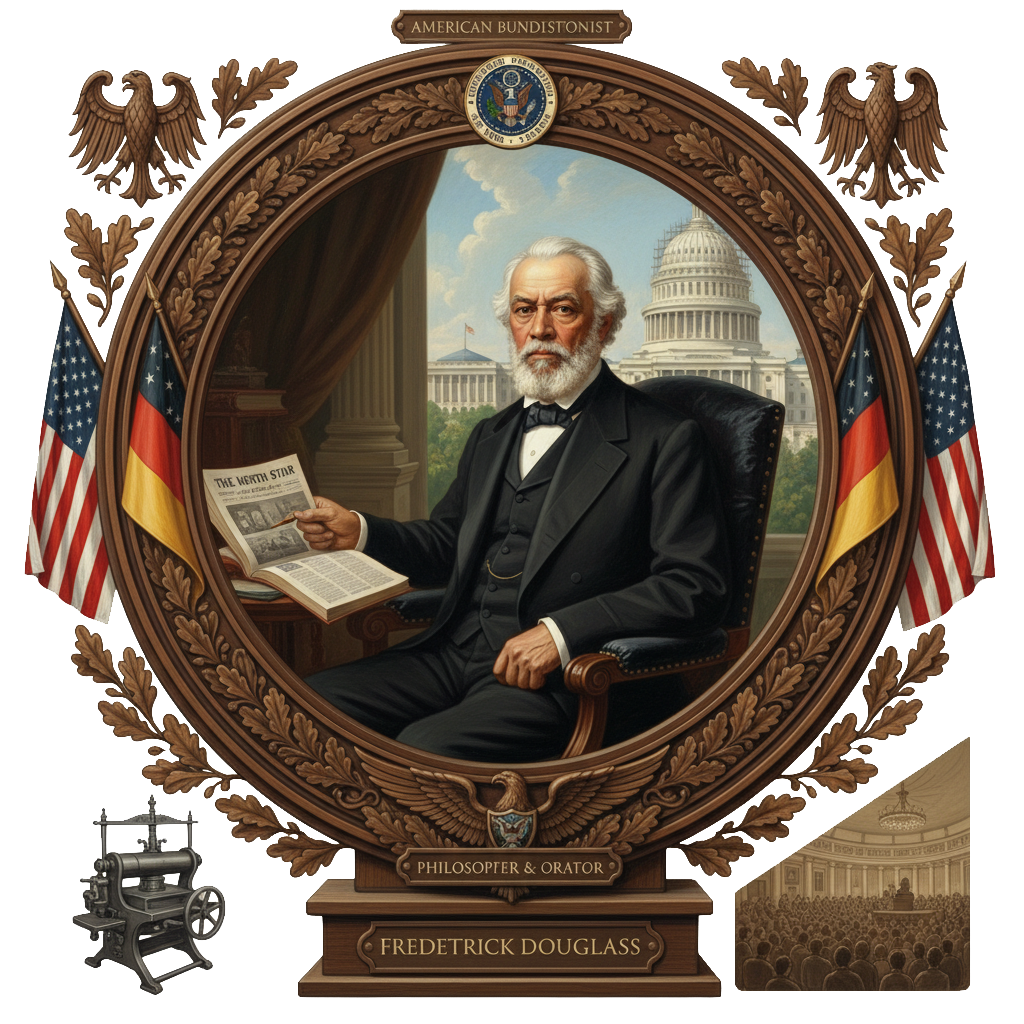
At a glance
- Born
- 1818 CE
- Died
- 1895 CE
- Era classification
- Modern
- Homeland
- United States
- Period
- 19th Century
- Field
- Philosophy & Ideology
- Language
- English
- Religion
- Christianity
- Gender
- male
Biography
Born into slavery in Maryland, Frederick Douglass experienced the brutal realities of bondage firsthand. Despite laws forbidding it, he taught himself to read and write, realizing early on that education was the pathway to freedom. In 1838, he successfully escaped to the North by disguising himself as a sailor.
Douglass soon became a renowned orator and writer, captivating audiences with his eloquence and powerful indictments of slavery. He published his first autobiography, 'Narrative of the Life of Frederick Douglass, an American Slave', in 1845, which became a bestseller and provided undeniable proof of his intellect and the horrors of slavery.
During and after the Civil War, Douglass continued to fight for the rights of African Americans and women. He conferred with President Abraham Lincoln on the treatment of Black soldiers and later served in several government positions, remaining a tireless champion for equality until his death.
Portrayal characteristics
Saved editorial descriptions used for the reconstruction; these are not authenticated statements by the depicted person.
- Eloquent
- Courageous
- Inspiring
- Intellectual
- Resolute
Images & artwork 3


Connections
Abraham Lincoln
Political Advisors
Douglass met with Lincoln several times to advocate for the rights of Black soldiers and the abolition of slavery.
Initially a critic of Lincoln's caution, Douglass eventually became a trusted advisor and friend. He pushed the President to issue the Emancipation Proclamation and to ensure equal pay and treatment for African American troops in the Union Army.
Harriet Tubman
Abolitionist Allies
Both were formerly enslaved people who became leading figures in the American abolitionist movement.
Douglass and Tubman shared a deep mutual respect; Douglass famously wrote a letter to her in 1868 stating that while he had received public applause, she had worked 'almost alone' and in 'the midnight sky' for the cause of freedom.
Susan B. Anthony
Civil Rights Allies
They were long-time collaborators in the movements for both abolition and women's suffrage.
Douglass was the only African American to attend the Seneca Falls Convention in 1848, where he supported Anthony's demand for the right to vote. Though they split over the 15th Amendment's exclusion of women, they reconciled later in life and continued to support each other's causes.
Harriet Tubman
Abolitionist Allies
Tubman and Douglass were mutual admirers and key figures in the American abolitionist movement.
In an 1868 letter, Douglass praised Tubman's bravery, noting that while he sought public acclaim for his work, she worked in 'midnight' secrecy to save lives. They collaborated on several occasions to assist escaped slaves and promote the cause of freedom.
Mark Twain
Friends & Allies
Twain was a friend and financial supporter of the abolitionist leader Frederick Douglass.
Twain helped pay for the education of Black students and was a key supporter of Douglass's efforts to publish his memoirs. Their relationship reflected Twain's deep commitment to racial justice, a theme that permeated his most famous literary works.
Susan B. Anthony
Abolitionist Allies
Anthony and Douglass were close friends and long-time collaborators in the movements for abolition and women's suffrage.
Despite a temporary rift over the 15th Amendment, which granted voting rights to Black men but not women, they remained lifelong allies in the fight for universal civil rights and human dignity.
Known for
- Abolitionist leadership
- Autobiographies detailing slavery
- Advocacy for equal rights
Episodes featuring or mentioning this figure
No eligible published episode featuring this figure is currently in the library.