



Harriet Tubman
An American abolitionist and political activist who rescued enslaved people using the Underground Railroad.
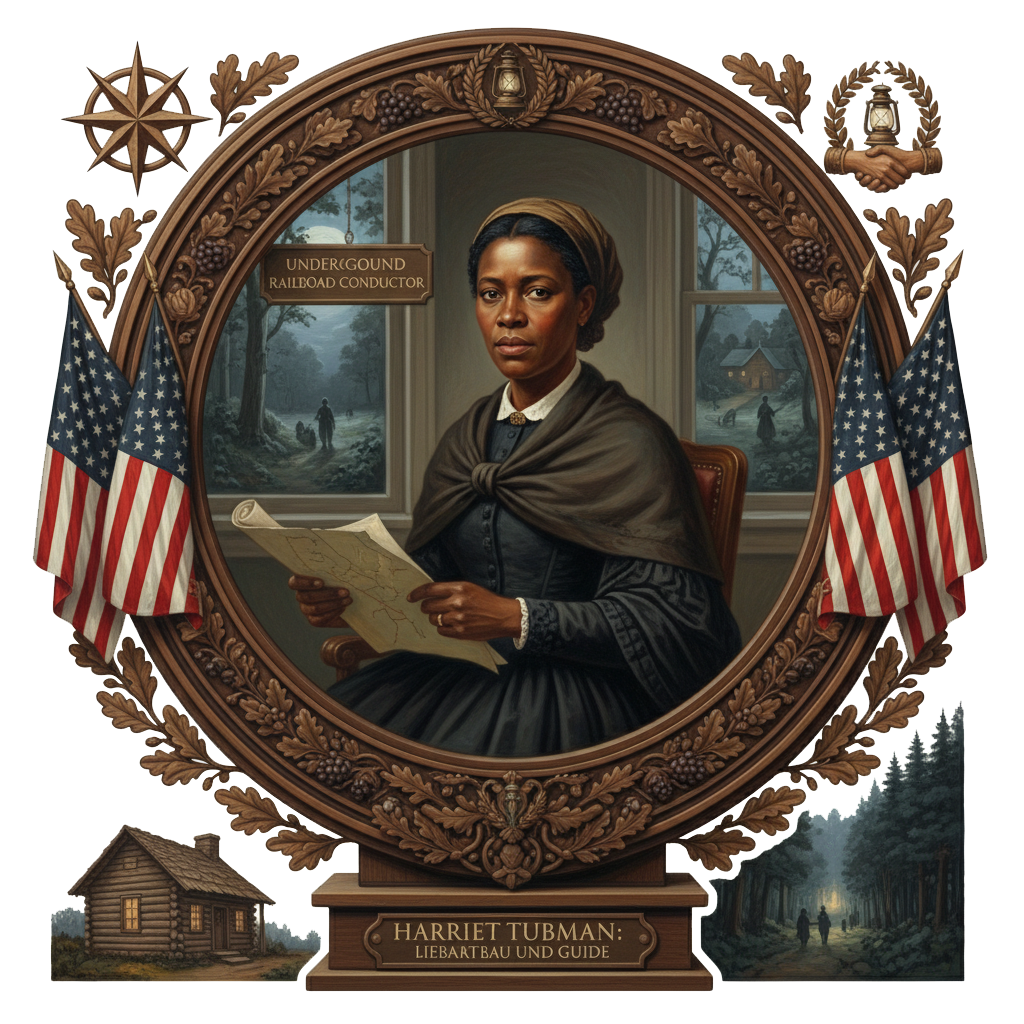
At a glance
- Born
- 1822 CE
- Died
- 1913 CE
- Era classification
- Modern
- Homeland
- United States
- Period
- 19th Century
- Field
- Ethics & Culture
- Language
- English
- Religion
- Christianity
- Gender
- female
Biography
Born into slavery in Dorchester County, Maryland, Harriet Tubman endured harsh conditions and physical violence throughout her early life. A severe head injury inflicted by an overseer caused her to suffer from lifelong seizures and vivid visions, which she interpreted as divine revelations guiding her path.
After escaping to Philadelphia in 1849, Tubman bravely returned to Maryland approximately 13 times to rescue family members and others. She became the most famous 'conductor' of the Underground Railroad, a secret network of safe houses. She famously claimed she 'never lost a passenger' on her perilous journeys to freedom.
During the American Civil War, Tubman served as a scout, spy, and nurse for the Union Army. She was the first woman to lead an armed assault during the war, guiding the Combahee River Raid, which liberated over 700 enslaved people. In her later years, she became a prominent activist in the women's suffrage movement.
Portrayal characteristics
Saved editorial descriptions used for the reconstruction; these are not authenticated statements by the depicted person.
- Brave
- Selfless
- Resilient
- Determined
- Resourceful
Images & artwork 3


Connections
Frederick Douglass
Abolitionist Allies
Both were formerly enslaved people who became leading figures in the American abolitionist movement.
Douglass and Tubman shared a deep mutual respect; Douglass famously wrote a letter to her in 1868 stating that while he had received public applause, she had worked 'almost alone' and in 'the midnight sky' for the cause of freedom.
Frederick Douglass
Abolitionist Allies
Tubman and Douglass were mutual admirers and key figures in the American abolitionist movement.
In an 1868 letter, Douglass praised Tubman's bravery, noting that while he sought public acclaim for his work, she worked in 'midnight' secrecy to save lives. They collaborated on several occasions to assist escaped slaves and promote the cause of freedom.
Susan B. Anthony
Suffragist Allies
In her later years, Tubman worked closely with Susan B. Anthony in the fight for women's suffrage.
Tubman frequently spoke at suffrage conventions alongside Anthony, linking the struggle for racial equality with the struggle for women's rights. Anthony famously helped Tubman with her finances and supported her efforts to establish a home for the elderly.
Abraham Lincoln
Wartime Service
Tubman served as a scout, spy, and nurse for the Union Army during Lincoln's presidency.
While it is debated if they had a formal private meeting, Tubman's military contributions were vital to the Union effort that Lincoln led. She was the first woman to lead an armed assault during the Civil War, the Combahee River Raid, which liberated over 700 slaves.
Susan B. Anthony
Suffrage Comrades
Tubman worked alongside Anthony in the later years of her life to advocate for women's right to vote.
Anthony hosted Tubman at her home in Rochester and they appeared together at several suffrage conventions, where Tubman was a celebrated speaker representing the intersection of racial and gender equality.
Known for
- Underground Railroad conductor
- Union spy during the Civil War
- Women's suffrage activism
Episodes featuring or mentioning this figure
No eligible published episode featuring this figure is currently in the library.