



Benjamin Franklin
A Founding Father of the United States, renowned polymath, inventor, diplomat, and leading author.
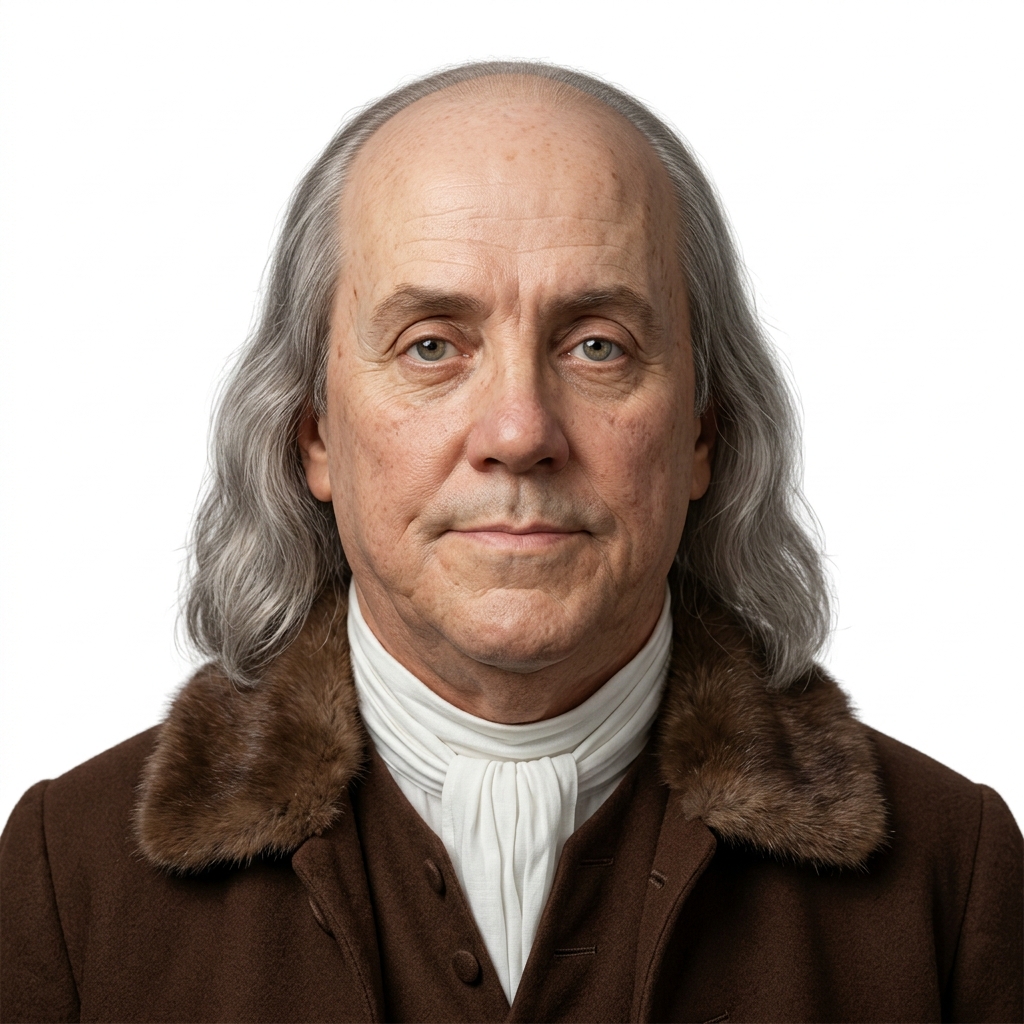
At a glance
- Born
- 1706 CE
- Died
- 1790 CE
- Era classification
- Modern
- Homeland
- United States
- Period
- 18th Century
- Field
- Science & Innovation
- Language
- English
- Religion
- Deism
- Gender
- male
Biography
Benjamin Franklin was born in Boston in 1706 and apprenticed as a printer before running away to Philadelphia. Through hard work and a brilliant mind, he became a successful newspaper editor, publisher, and author, most notably publishing 'Poor Richard's Almanack', which showcased his wit and pragmatic philosophy.
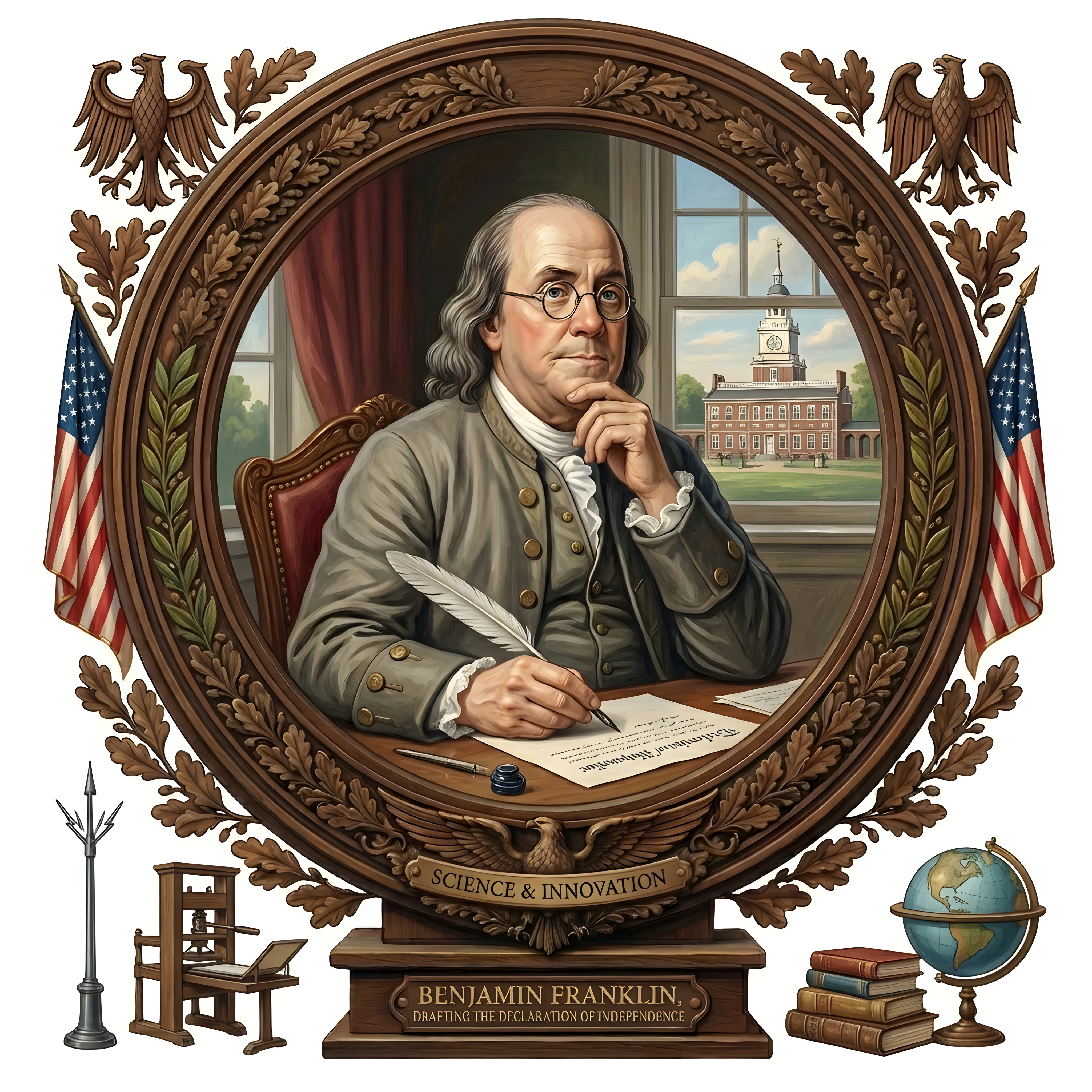
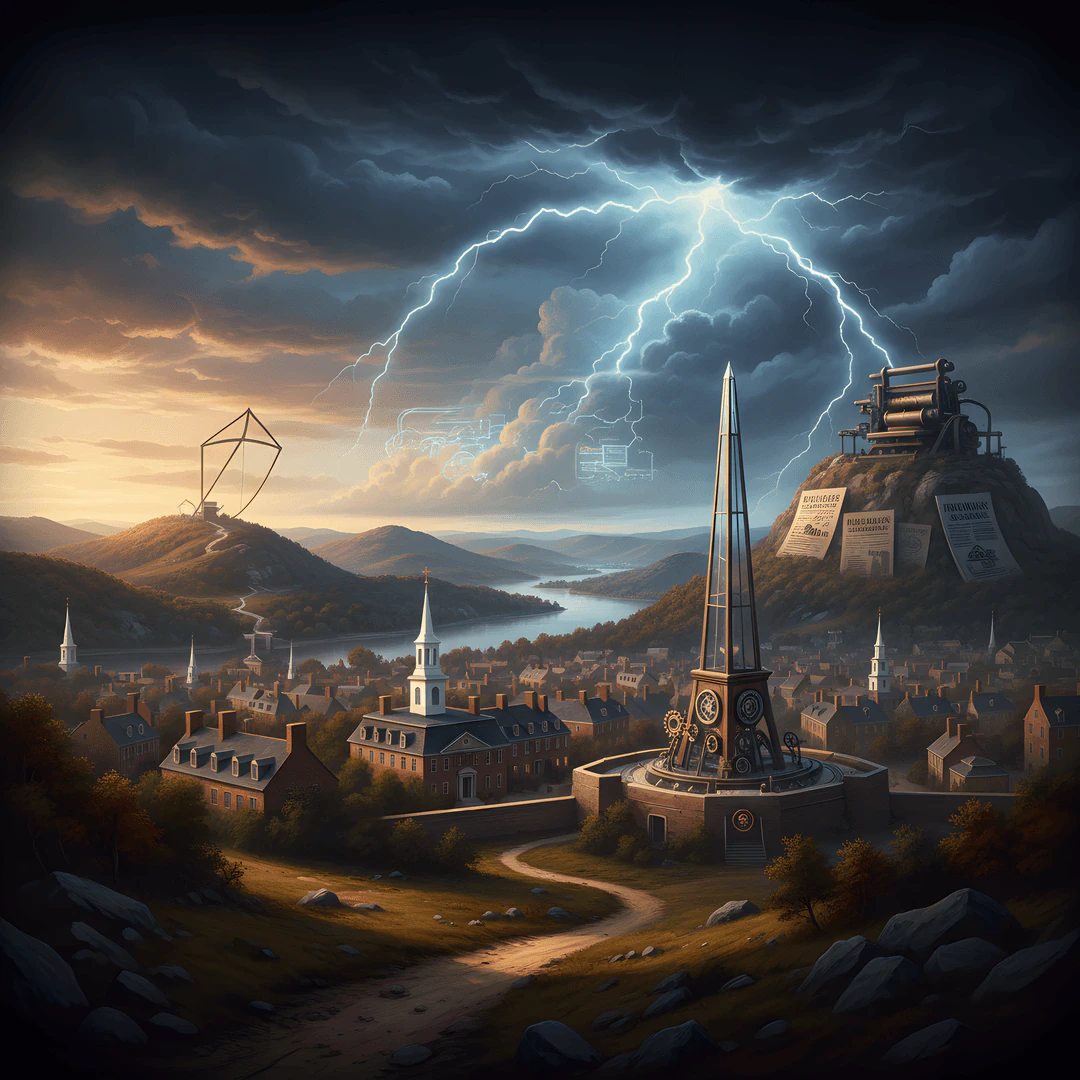
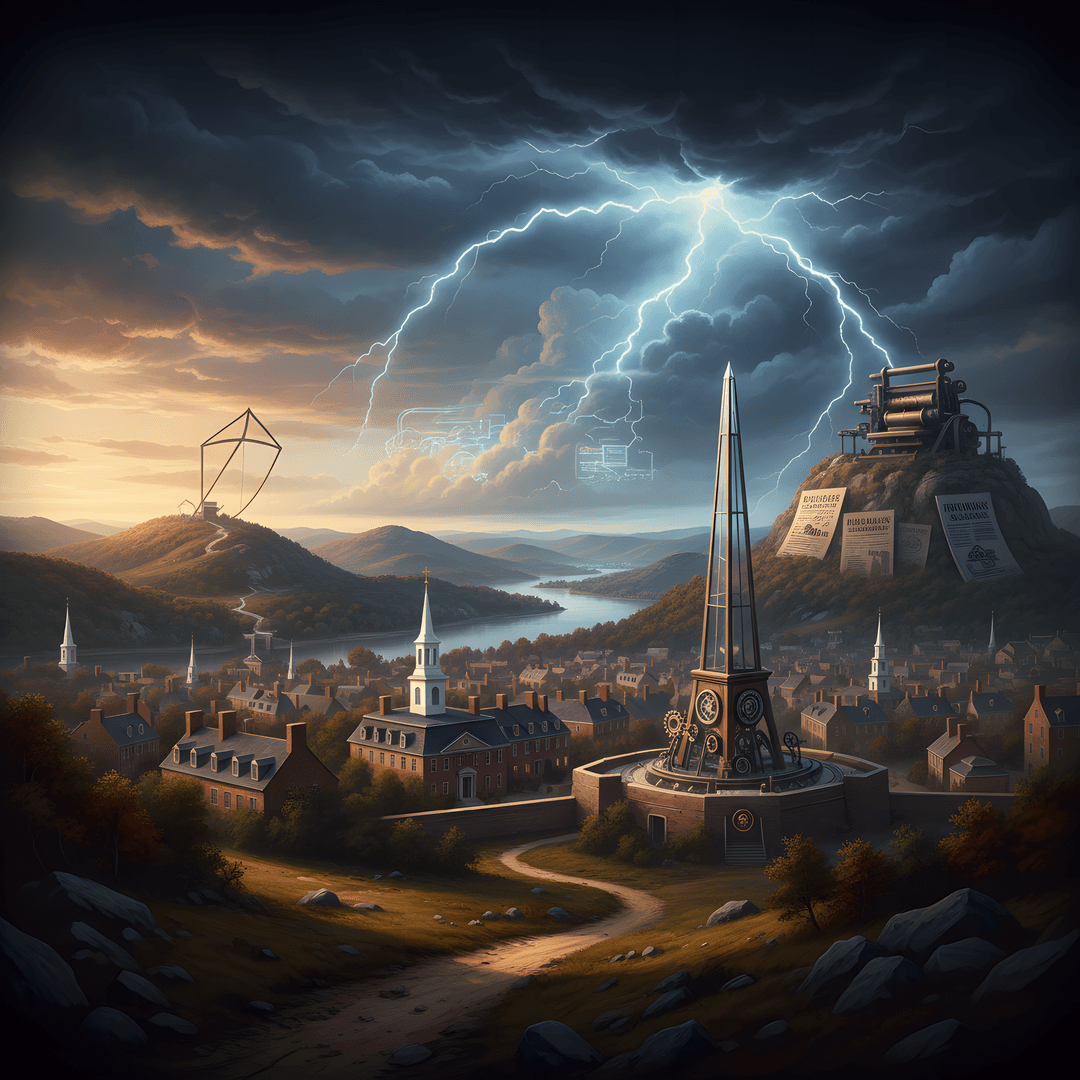
A true polymath, Franklin made groundbreaking discoveries in the field of electricity, famously proving that lightning is electrical. His inventive genius led to the creation of the lightning rod, bifocals, and the Franklin stove. He also founded many civic organizations, including a fire department, a university, and a public library.
As a diplomat, Franklin was crucial to the American cause. He spent years in France securing vital military and financial support for the American Revolution. He was the only Founding Father to sign all four key documents establishing the US: the Declaration of Independence, the Treaty of Alliance with France, the Treaty of Paris, and the US Constitution.
Portrayal characteristics
Saved editorial descriptions used for the reconstruction; these are not authenticated statements by the depicted person.
- Inventive
- Witty
- Diplomatic
- Curious
- Industrious
Images & artwork 4
Connections
Alexander Hamilton
Contemporary Ally
Hamilton and Franklin were both key delegates at the Constitutional Convention of 1787.
Though from different generations, both were staunch nationalists who sought a stronger central government. They both signed the U.S. Constitution and were members of the Pennsylvania Society for Promoting the Abolition of Slavery, reflecting shared progressive views for the era.
George Washington
Contemporary Allies
Franklin and Washington were key collaborators in the founding of the United States.
Franklin provided the essential diplomatic support in France that secured the funding and military aid Washington needed to win the Revolutionary War. They later worked together at the Constitutional Convention of 1787 to stabilize the new nation's government.
Thomas Jefferson
Contemporary Allies
They served together on the committee to draft the Declaration of Independence.
Franklin famously edited Jefferson's draft of the Declaration, changing 'sacred and undeniable' to 'self-evident.' Jefferson later succeeded Franklin as the United States Minister to France, famously remarking that he was merely Franklin's successor, as no one could truly replace him.
Voltaire
Enlightenment Peers
The two iconic figures of the Enlightenment met in a famous public encounter in Paris in 1778.
Their meeting at the Académie des Sciences was a major cultural event where the two were urged by the crowd to embrace. This symbolic union of American pragmatism and French philosophy was hailed as the 'embrace of Solon and Sophocles.'
David Hume
Close Friends
Franklin and Hume were close personal friends and intellectual correspondents.
During Franklin's time in Great Britain, he stayed with Hume in Scotland and the two engaged in deep discussions on philosophy and science. Hume was a vocal admirer of Franklin's scientific discoveries and supported his early efforts to reconcile the American colonies with the British Crown.
Alexander Hamilton
Contemporary Allies
Both were influential delegates at the 1787 Constitutional Convention.
Despite their age difference and differing views on the strength of the executive branch, both men were instrumental in the ratification of the U.S. Constitution. Franklin's final speech at the convention helped persuade reluctant delegates to sign the document that Hamilton would later defend in the Federalist Papers.
George Washington
Contemporary Allies
Washington and Franklin were the two most prominent figures of the American Revolution, collaborating at the Constitutional Convention.
Franklin's diplomatic success in France provided the military support Washington needed to win the war. Later, at the 1787 Constitutional Convention, Franklin's prestige and moderating influence helped secure the compromises necessary to create the office of the Presidency for Washington.
Thomas Jefferson
Co-Authors of Independence
Jefferson and Franklin served together on the Committee of Five that drafted the Declaration of Independence.
Jefferson was the primary author, but Franklin provided crucial edits, including the famous change of 'sacred and undeniable' to 'self-evident.' They also served together as diplomats in France.
Voltaire
Contemporary Allies
The two Enlightenment icons met in Paris in 1778, a meeting famously described as the embrace of the Old World and the New World.
Their meeting at the French Academy of Sciences was a major symbolic event; Voltaire reportedly blessed Franklin's grandson in the name of 'God and Liberty,' signifying their shared commitment to rationalism and freedom.
Known for
- Discoveries in electricity
- Inventing the lightning rod
- Drafting the Declaration of Independence
Episodes featuring or mentioning this figure
No eligible published episode featuring this figure is currently in the library.