



Alexander Hamilton
An American statesman, influential interpreter of the US Constitution, and founder of the nation's financial system.
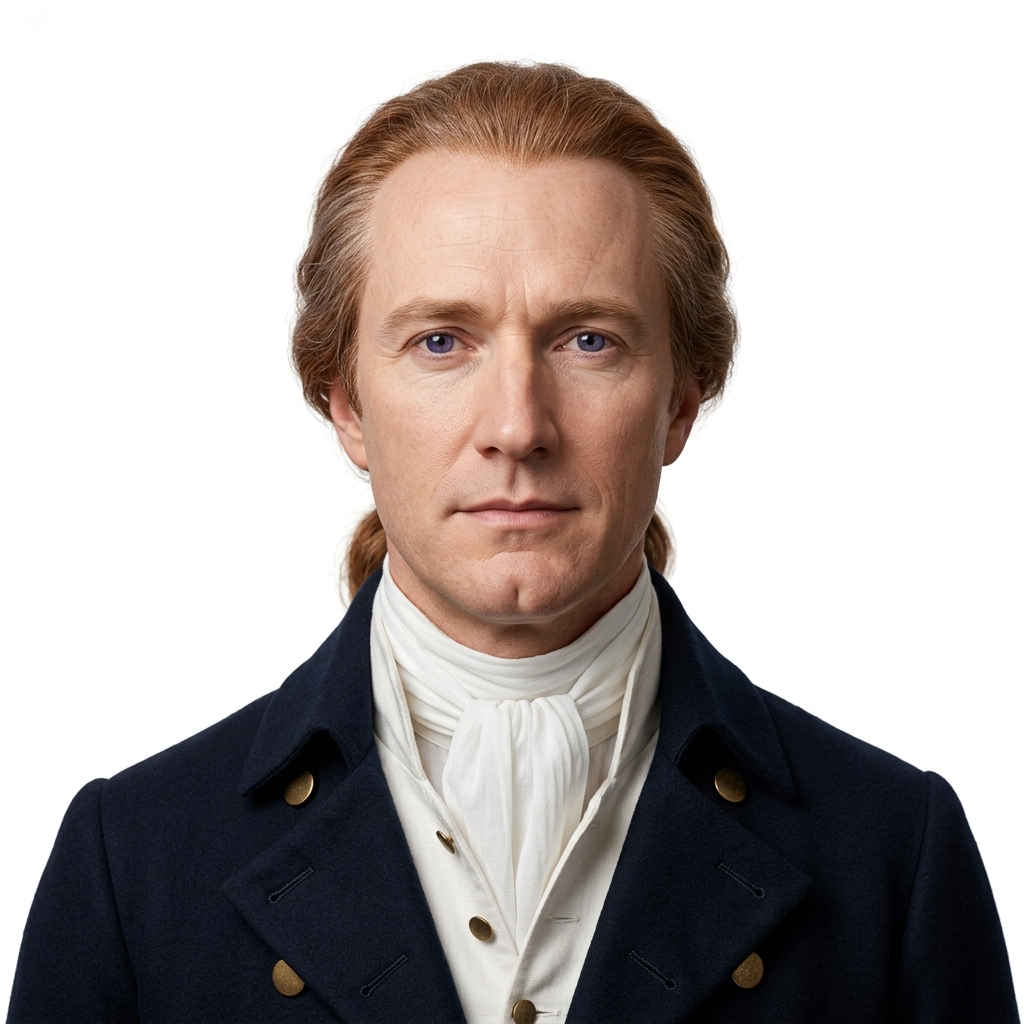
At a glance
- Born
- 1755 CE
- Died
- 1804 CE
- Era classification
- Modern
- Homeland
- United States
- Period
- 18th Century
- Field
- Politics & Leadership
- Language
- English
- Religion
- Christianity (Episcopalian)
- Gender
- male
Biography
Born out of wedlock in the West Indies and orphaned as a child, Alexander Hamilton's brilliant mind and relentless drive caught the attention of local benefactors who sponsored his education in New York. When the Revolutionary War broke out, he joined the militia and quickly rose to become George Washington's trusted aide-de-camp.
After the war, Hamilton became a leading advocate for a strong central government. He was a key delegate at the Constitutional Convention and wrote the majority of the Federalist Papers, a masterful series of essays that successfully urged the ratification of the US Constitution.
As the first Secretary of the Treasury, Hamilton designed the American financial system, establishing a national bank, a system of tariffs, and friendly trade relations with Britain. His aggressive political style made him many enemies, culminating in a fatal duel with Vice President Aaron Burr in 1804.
Portrayal characteristics
Saved editorial descriptions used for the reconstruction; these are not authenticated statements by the depicted person.
- Brilliant
- Ambitious
- Prolific
- Combative
- Visionary
Images & artwork 3


Connections
George Washington
Political Ally & Aide
Hamilton served as Washington's indispensable aide-de-camp during the Revolution and his first Treasury Secretary.
Washington relied heavily on Hamilton's administrative genius and writing skills during the war. As President, Washington consistently backed Hamilton's controversial financial plans, which established the credit of the United States and the first National Bank.
Thomas Jefferson
Political Rivals
Hamilton and Jefferson represented the fundamental ideological divide in early American politics.
Their fierce disagreements over the power of the federal government, the creation of a national bank, and foreign policy led to the formation of the first political parties: the Federalists and the Democratic-Republicans. Their rivalry defined the American debate between industrialization and agrarianism.
Benjamin Franklin
Contemporary Ally
Hamilton and Franklin were both key delegates at the Constitutional Convention of 1787.
Though from different generations, both were staunch nationalists who sought a stronger central government. They both signed the U.S. Constitution and were members of the Pennsylvania Society for Promoting the Abolition of Slavery, reflecting shared progressive views for the era.
Benjamin Franklin
Contemporary Allies
Both were influential delegates at the 1787 Constitutional Convention.
Despite their age difference and differing views on the strength of the executive branch, both men were instrumental in the ratification of the U.S. Constitution. Franklin's final speech at the convention helped persuade reluctant delegates to sign the document that Hamilton would later defend in the Federalist Papers.
George Washington
Political Allies
Hamilton served as Washington's indispensable aide during the Revolutionary War and later as his primary economic advisor and first Secretary of the Treasury.
Washington relied heavily on Hamilton's administrative brilliance to manage the Continental Army and later to establish the financial foundations of the United States. Their partnership was the driving force behind the Federalist policies of the 1790s.
Thomas Jefferson
Political Rivals
Their conflicting visions for the future of the United States led to the birth of the first American political parties.
Hamilton's preference for a strong central government and industrialization clashed with Jefferson's vision of a decentralized, agrarian society. Their bitter disputes within Washington's cabinet defined early American political discourse.
Alexis de Tocqueville
Intellectual Influence
Tocqueville relied heavily on the writings of Alexander Hamilton, particularly 'The Federalist Papers,' to understand and explain the American constitutional system.
When writing 'Democracy in America,' Tocqueville needed to explain the complex mechanics of American federalism to a French audience accustomed to centralized power. He turned extensively to 'The Federalist Papers,' heavily citing Alexander Hamilton. Tocqueville deeply admired Hamilton's constitutional architecture, particularly his arguments for a strong, independent judiciary as a bulwark against the passions of the democratic mob. Hamilton's vision of a balanced republic that could check the 'tyranny of the majority' perfectly aligned with Tocqueville's own political anxieties. Through Tocqueville's masterpiece, Hamilton's pragmatic institutional designs were introduced to European political philosophy as the premier solution to the dangers of unchecked democratic equality.
Known for
- First Secretary of the Treasury
- Writing the majority of the Federalist Papers
- Establishing the US Mint
Episodes featuring or mentioning this figure
No eligible published episode featuring this figure is currently in the library.