



Jeremy Bentham
English philosopher and jurist who founded modern utilitarianism and championed progressive social and legal reforms.
At a glance
- Born
- 1748 CE
- Died
- 1832 CE
- Era classification
- Modern
- Occupation
- Philosopher
- Homeland
- England
- Period
- 18th-19th Century
- Field
- Philosophy & Ideology
- Language
- English
- Religion
- Atheist
- Gender
- male
Biography
Jeremy Bentham was born in London in 1748 into a wealthy legal family. Recognized early on as a child prodigy, he began studying Latin as a toddler and entered The Queen's College, Oxford, at the age of twelve. Although trained in the law and called to the bar, Bentham quickly grew disillusioned with the irrationality, complexity, and tradition-bound nature of the English legal system, choosing instead to devote his life to legal and philosophical reform.
Bentham is best remembered as the father of modern utilitarianism, an ethical theory predicated on the 'greatest happiness principle.' He argued that actions and laws should be evaluated solely based on their consequences, defining moral good as that which produces the greatest pleasure and minimizes pain for the greatest number of sentient beings. To operationalize this, he devised the 'felicific calculus,' an attempt to scientifically quantify pleasure and pain based on factors such as intensity, duration, certainty, and extent.
Far ahead of his time, Bentham was a radical social reformer. He advocated for individual and economic freedoms, the separation of church and state, freedom of expression, equal rights for women, the right to divorce, and the decriminalization of homosexual acts. He was also among the earliest Western philosophers to argue for animal welfare and rights, asserting that moral consideration should depend not on whether beings can reason or talk, but whether they can suffer. Among his famous architectural designs was the Panopticon, an institutional inspection-house model meant to reform prison management.
Bentham's ideas profoundly influenced subsequent generations of thinkers, notably his protégé John Stuart Mill, and shaped the foundations of modern legal theory, welfare economics, and liberalism. In accordance with his final will, Bentham's body was preserved and displayed after his death in 1832 as an 'auto-icon,' which remains preserved at University College London today as a monument to his eccentric and uncompromising rationality.
Portrayal characteristics
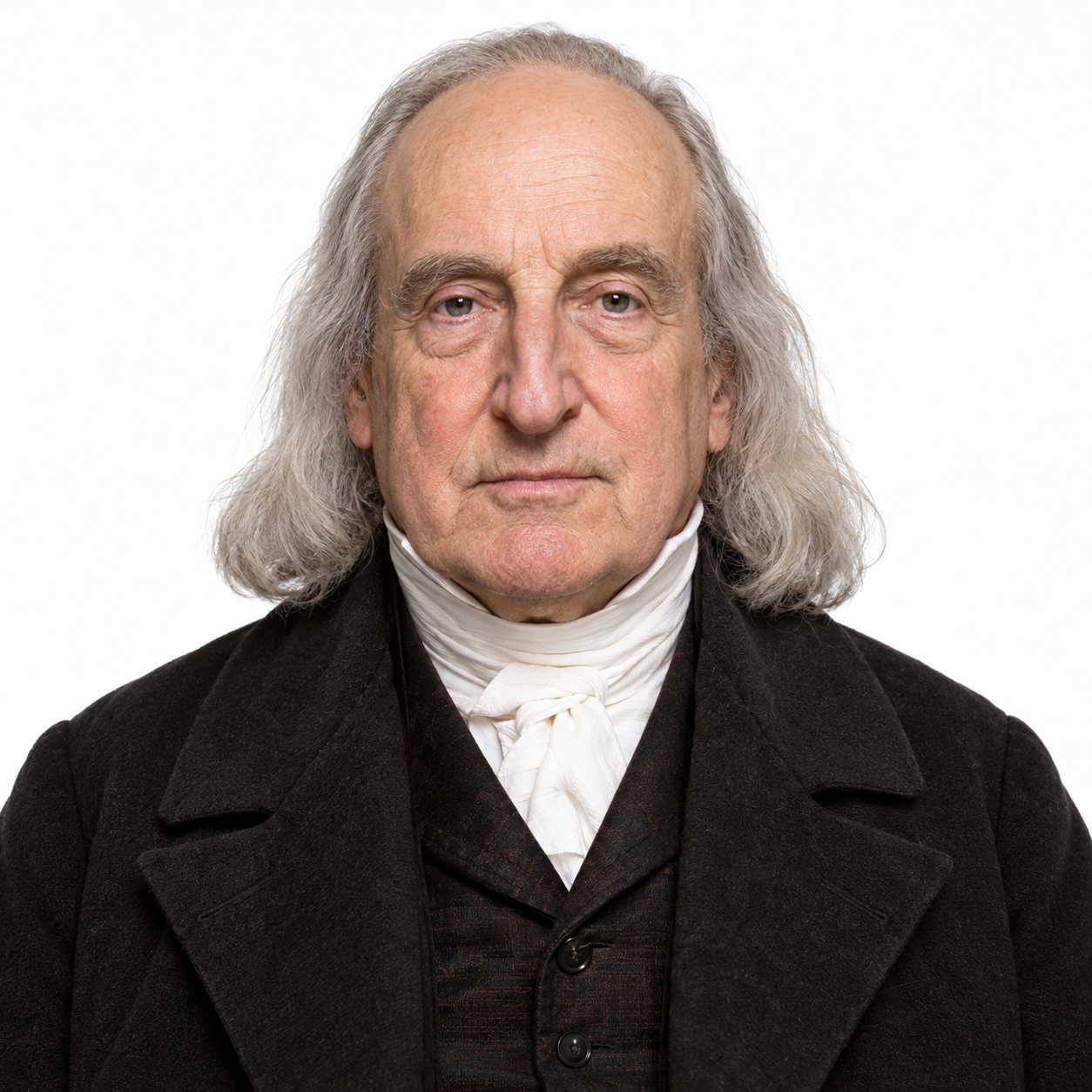
Saved editorial descriptions used for the reconstruction; these are not authenticated statements by the depicted person.
- Rationalist
- Radical Reformer
- Systematic Thinker
- Progressive
- Eccentric
- Humanitarian
Images & artwork 4


Known for
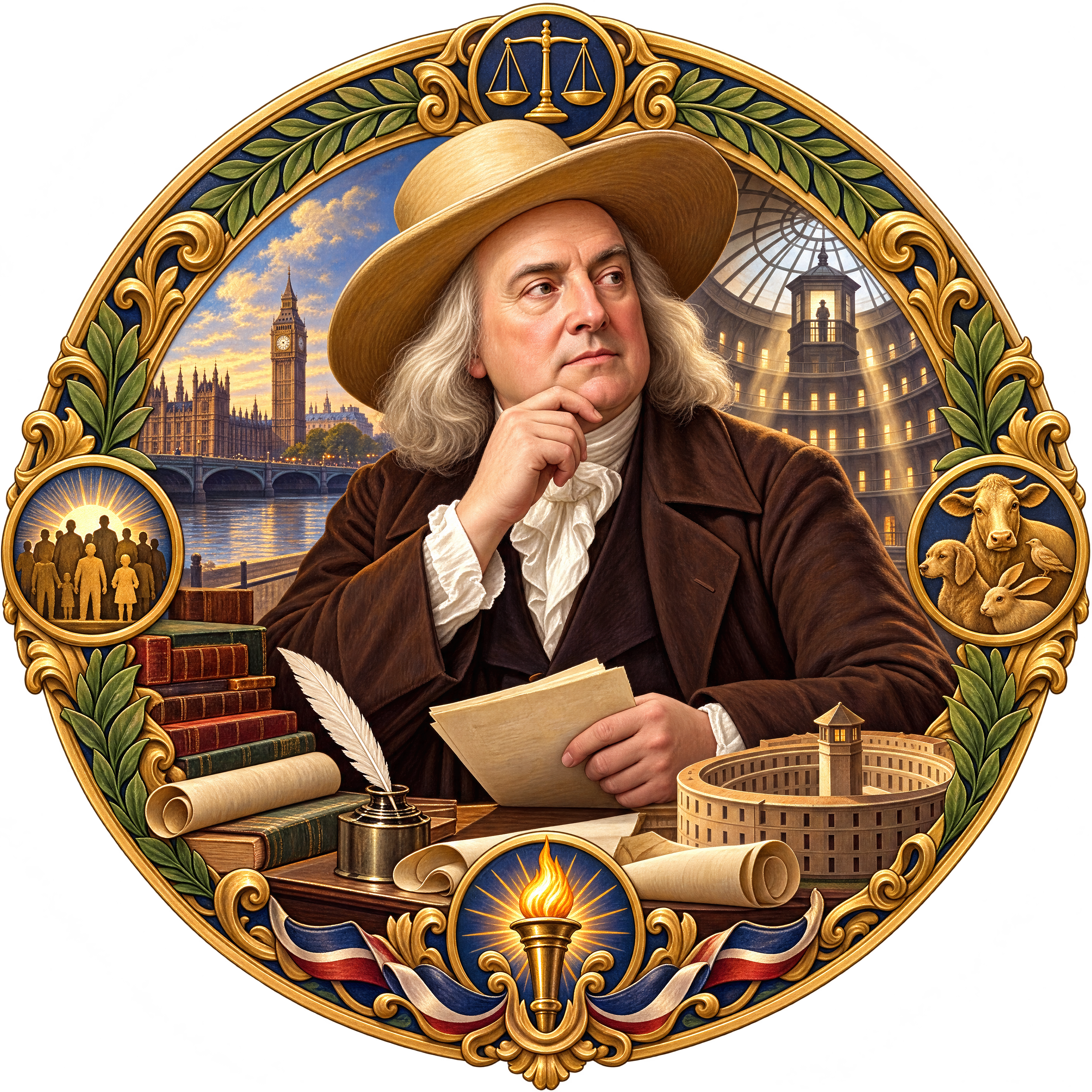
- Founding modern utilitarianism
- Formulating the principle of the greatest happiness for the greatest number
- Designing the Panopticon prison concept
- Pioneering advocacy for animal rights and welfare
- Advocating legal codification, women's equality, and secularism
Episodes featuring or mentioning this figure
No eligible published episode featuring this figure is currently in the library.