



John Dewey
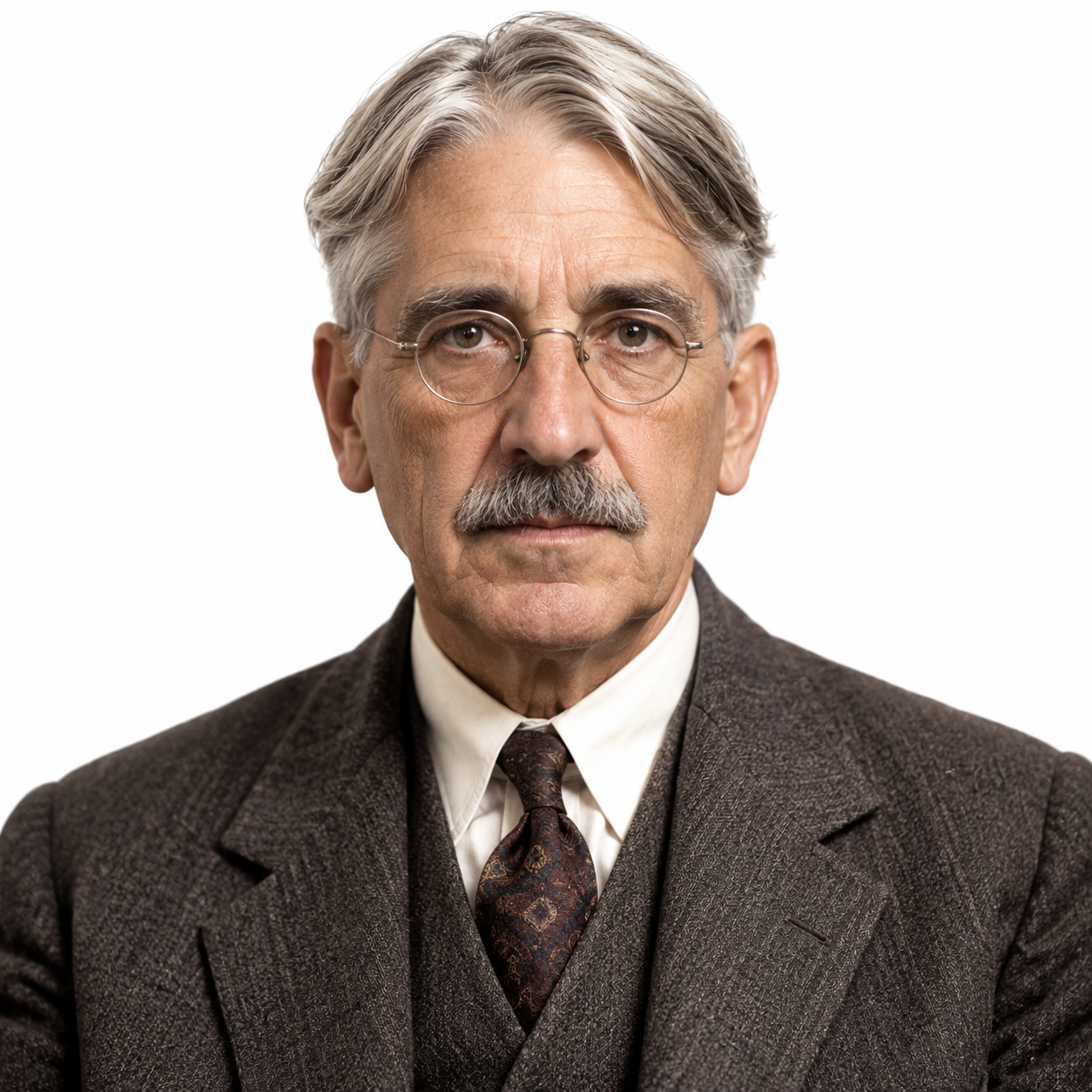
American philosopher and educator who pioneered pragmatism, functional psychology, and progressive educational reform.
At a glance
- Born
- 1859 CE
- Died
- 1952 CE
- Era classification
- Modern
- Occupation
- Philosopher
- Homeland
- United States
- Period
- 19th–20th Century
- Field
- Philosophy & Ideology
- Language
- English
- Religion
- Secular Humanism
- Gender
- male
Biography
John Dewey was born in Burlington, Vermont, in 1859. He pursued his higher education at the University of Vermont and completed his doctorate at Johns Hopkins University in 1884. Early in his academic career, Dewey was influenced by Hegelian idealism, but his intellectual trajectory soon pivoted toward experimental psychology, evolutionary biology, and the emerging philosophy of pragmatism, where he found his lasting intellectual home alongside thinkers like Charles Sanders Peirce and William James.
Dewey became one of the primary architects of American pragmatism, which he termed 'instrumentalism.' He argued that knowledge is not a passive reflection of an external reality, but an active, experimental tool used by human beings to solve problems and adapt to changing environments. In epistemology, ethics, and aesthetics, he emphasized the continuity of experience, advocating for scientific inquiry as a social and moral method applicable to all human problems rather than an esoteric academic exercise.
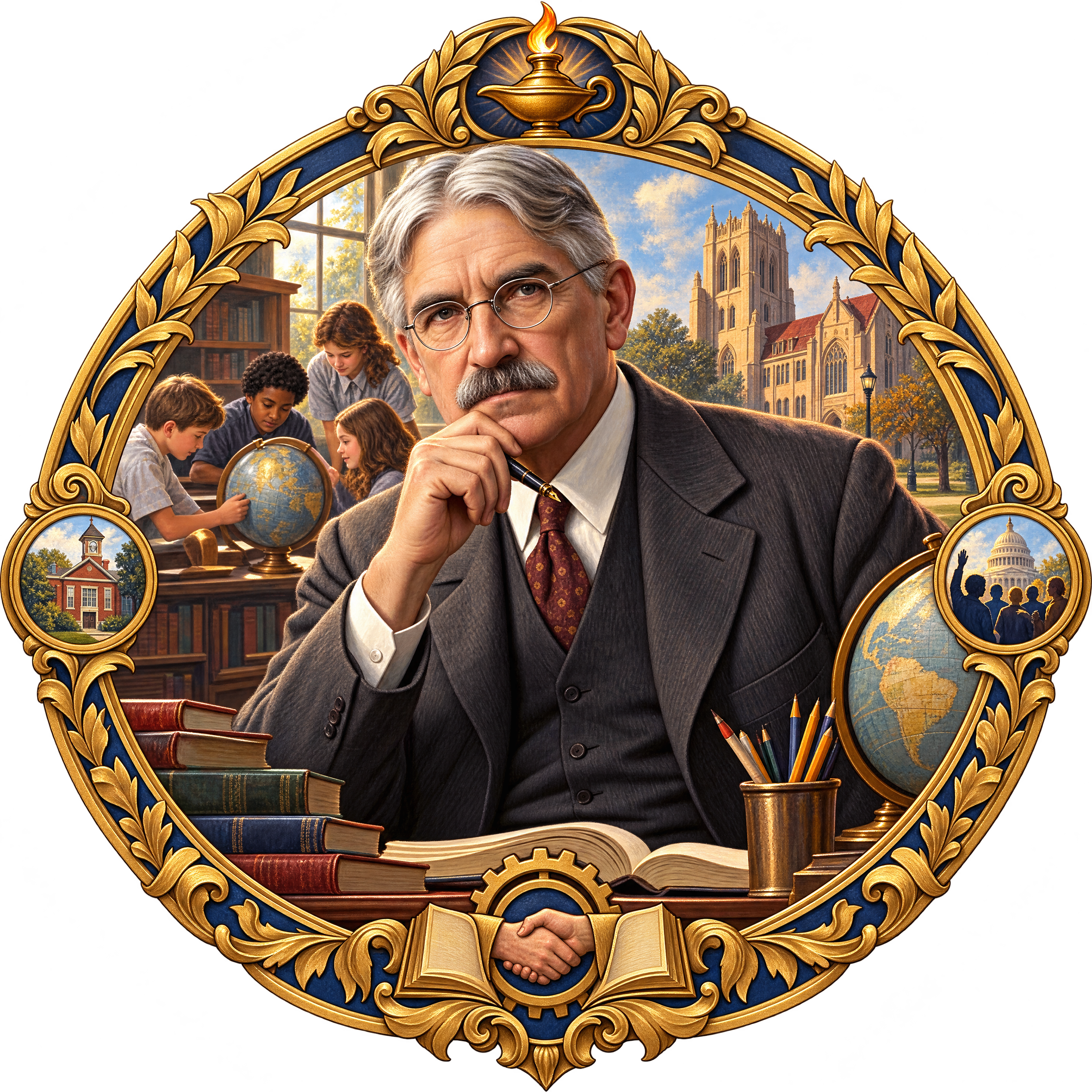
As an educational reformer, Dewey made profound contributions during his tenure at the University of Chicago, where he established the famous University Laboratory Schools. He championed 'learning by doing,' arguing that authoritarian rote memorization stifled critical thinking and moral agency. In seminal works such as 'Democracy and Education' (1916), Dewey asserted that democratic societies require an engaged, reflective populace cultivated through collaborative, inquiry-based education.
Throughout his long life, Dewey remained an energetic public intellectual and social activist. He co-founded influential institutions including the New School for Social Research and the American Civil Liberties Union (ACLU), and chaired the 1937 commission investigating the charges against Leon Trotsky in the Moscow Trials. Dewey passed away in New York City in 1952, leaving behind an immense body of work that continues to shape educational philosophy, democratic theory, and pragmatic philosophy worldwide.
Portrayal characteristics
Saved editorial descriptions used for the reconstruction; these are not authenticated statements by the depicted person.
- Pragmatic
- Inquisitive
- Reform-minded
- Egalitarian
- Prolific
- Collaborative
Images & artwork 4


Known for
- Co-founding the philosophical school of Pragmatism (Instrumentalism)
- Pioneering Progressive Education and experiential learning
- Authoring 'Democracy and Education' and 'Experience and Nature'
- Founding the University of Chicago Laboratory Schools
- Co-founding the New School for Social Research and the ACLU
Episodes featuring or mentioning this figure
No eligible published episode featuring this figure is currently in the library.