



Karl Popper
Influential Austrian-British philosopher celebrated for his theory of falsifiability and defense of liberal democracy.
At a glance
- Born
- 1902 CE
- Died
- 1994 CE
- Era classification
- Modern
- Occupation
- Philosopher
- Homeland
- Austria
- Period
- 20th Century
- Field
- Philosophy & Ideology
- Language
- German
- Religion
- Agnostic
- Gender
- male
Biography
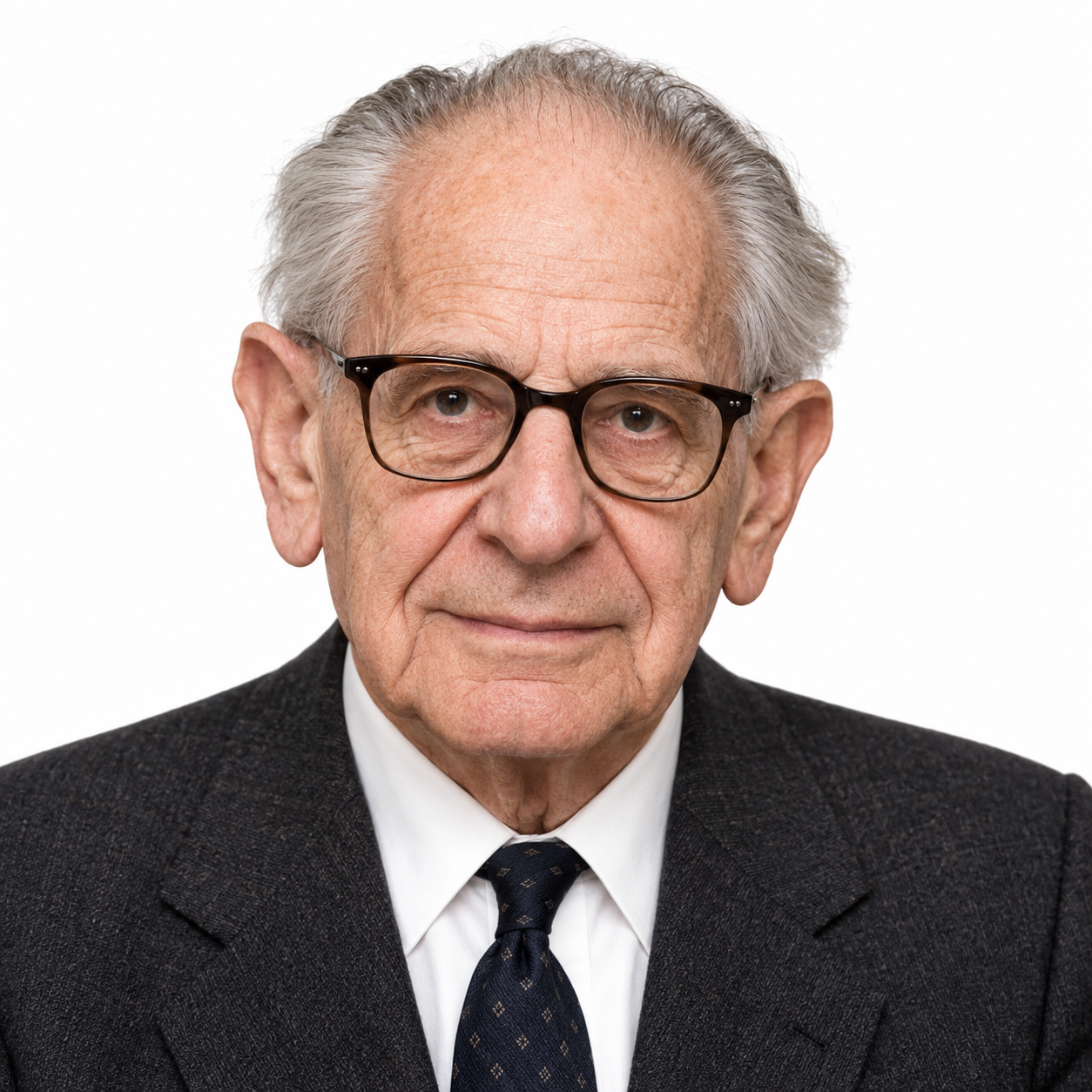
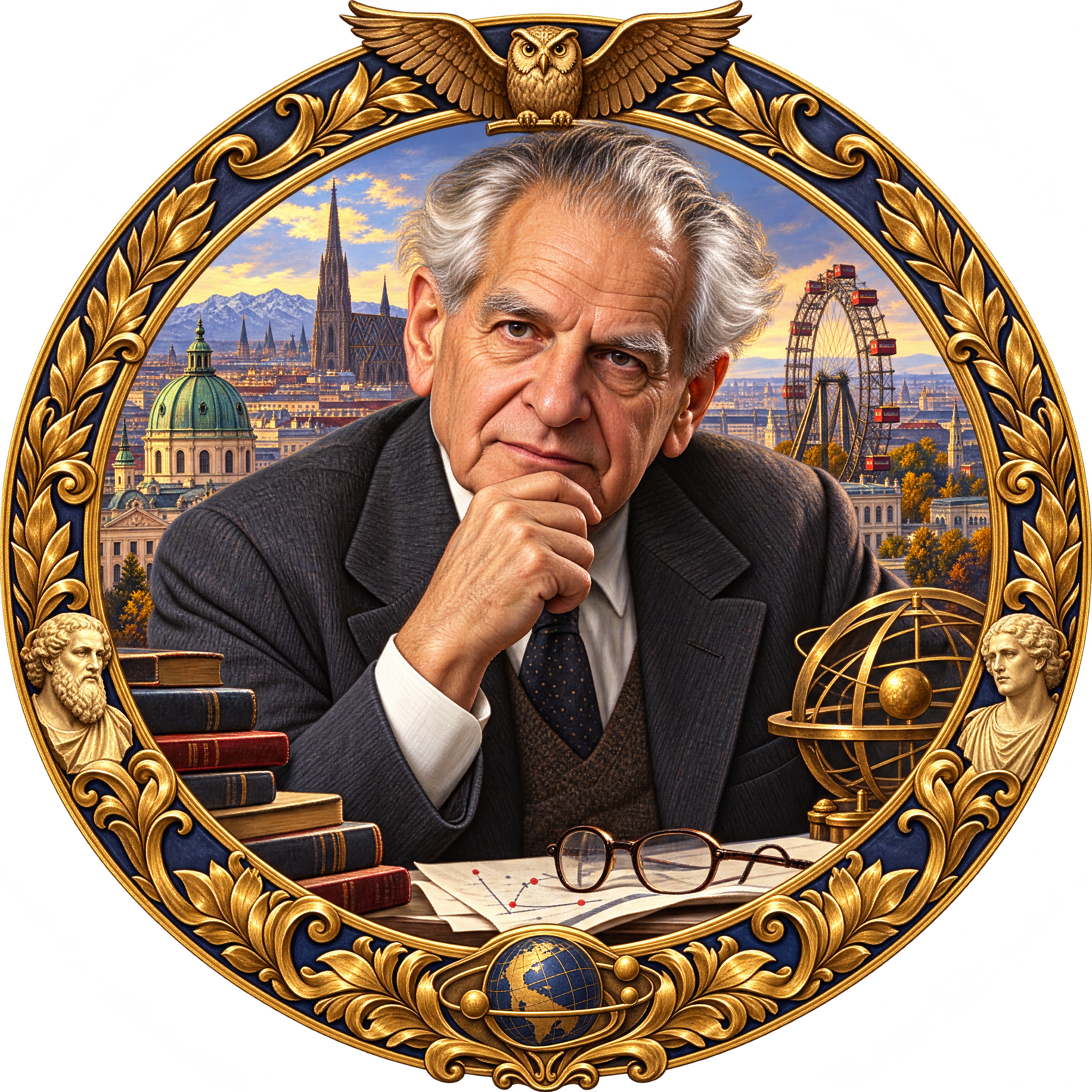
Sir Karl Raimund Popper was born in Vienna in 1902 into an assimilated Jewish family that had converted to Lutheranism. In his youth, Popper engaged deeply with mathematics, physics, and psychoanalysis, while briefly flirting with Marxism before rejecting it as dogmatic. He developed a keen interest in epistemology and the philosophy of science, publishing his groundbreaking work 'Logik der Forschung' (The Logic of Scientific Discovery) in 1934, which fundamentally challenged the prevailing logical positivist view that scientific theories could be confirmed through empirical verification.
With the rise of Nazism in Europe, Popper anticipated the annexation of Austria and fled to New Zealand in 1937, where he taught philosophy at Canterbury University College. During the Second World War, he composed his monumental political works, 'The Poverty of Historicism' and 'The Open Society and Its Enemies'. In these treatises, Popper vehemently attacked totalitarian ideologies and criticized thinkers such as Plato, Hegel, and Marx for constructing closed, deterministic systems that stifled human agency, reason, and social progress.
In 1946, Popper relocated to England to teach at the London School of Economics, eventually becoming Professor of Logic and Scientific Method until his retirement. Knighted by Queen Elizabeth II in 1965, he remained an intellectually vigorous figure throughout his life, defending critical rationalism and fallibilism—the view that absolute certainty is unattainable and that science advances strictly through bold conjectures and rigorous attempts at refutation.
Portrayal characteristics
Saved editorial descriptions used for the reconstruction; these are not authenticated statements by the depicted person.
- Critically rational
- Intellectually rigorous
- Anti-authoritarian
- Methodical
- Outspoken
Images & artwork 4


Known for
- Criterion of falsifiability
- The Open Society and Its Enemies
- The Logic of Scientific Discovery
- Formulation of critical rationalism
- Critique of historicism and totalitarianism
Episodes featuring or mentioning this figure
No eligible published episode featuring this figure is currently in the library.