



Marshall McLuhan
Canadian philosopher of communication theory renowned for coining the concept 'the medium is the message'.
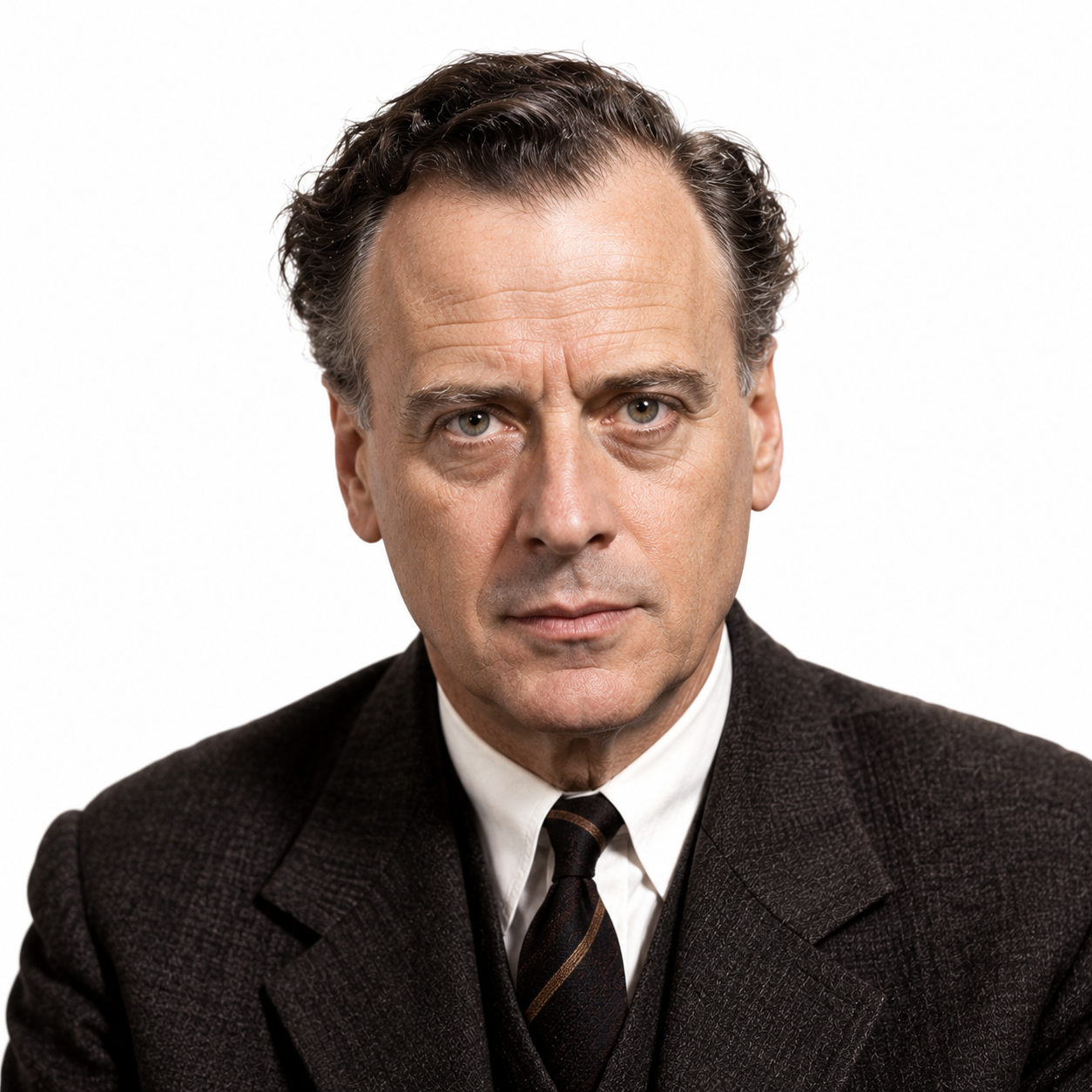
At a glance
- Born
- 1911 CE
- Died
- 1980 CE
- Era classification
- Modern
- Occupation
- Media Theorist / Professor
- Homeland
- Canada
- Period
- 20th Century
- Field
- Philosophy & Ideology
- Language
- English
- Religion
- Roman Catholicism
- Gender
- male
Biography
Herbert Marshall McLuhan was born in Edmonton, Alberta, in 1911 and raised in Winnipeg, Manitoba. He initially studied engineering before switching to English literature and history at the University of Manitoba. He subsequently earned his bachelor's, master's, and doctoral degrees at Emmanuel College, Cambridge, where he studied under I. A. Richards and F. R. Leavis. His Cambridge doctoral dissertation analyzed the history of the verbal arts (the classical trivium) and the work of Elizabethan writer Thomas Nashe. During his studies in England, McLuhan converted to Roman Catholicism in 1937, a faith that deeply informed his worldview and academic career.
After teaching at several universities in the United States and Canada, McLuhan joined the faculty of St. Michael's College at the University of Toronto in 1946. In Toronto, he became a central figure of the Toronto School of communication theory, collaborating closely with political economist Harold Innis and anthropologist Edmund Carpenter. McLuhan established the Centre for Culture and Technology at the university in 1963, serving as its director. His major publications—notably 'The Mechanical Bride' (1951), 'The Gutenberg Galaxy' (1962), and 'Understanding Media' (1964)—brought him worldwide prominence for analyzing the transformative cognitive and social effects of print and electronic technologies.
McLuhan's core arguments posited that communication technologies function as extensions of human sensory faculties, summarized by his aphorism 'the medium is the message.' He introduced concepts such as the 'global village' to describe how electronic interconnectedness collapses spatial and temporal distance, and he categorized media into 'hot' and 'cool' based on sensory engagement. Following a debilitating stroke in 1979 that impaired his speech, McLuhan died in Toronto on December 31, 1980, remaining one of the foundational figures of media ecology and 20th-century intellectual history.
Portrayal characteristics
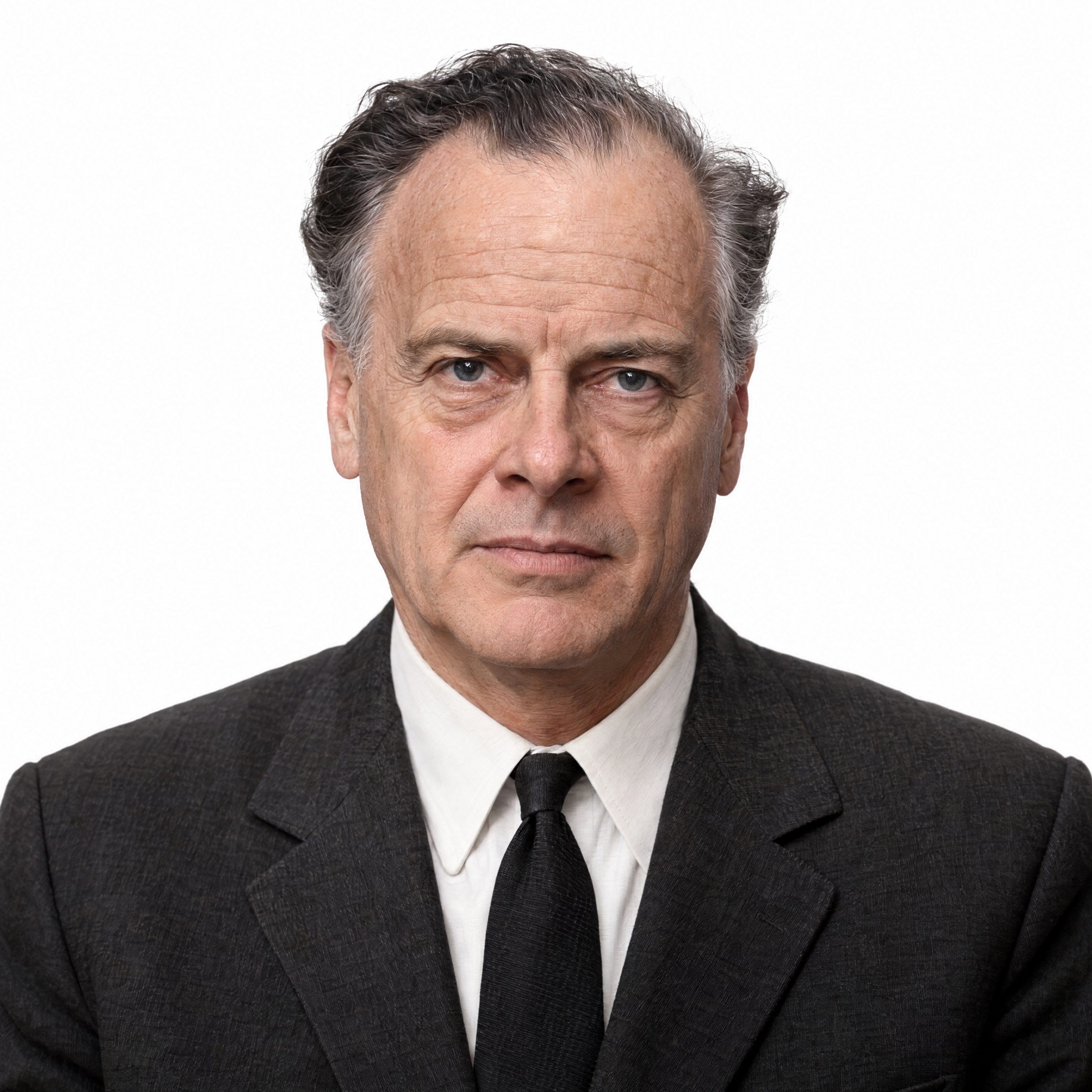
Saved editorial descriptions used for the reconstruction; these are not authenticated statements by the depicted person.
- Provocative aphorist
- Interdisciplinary thinker
- Perceptive cultural critic
- Synthesizing scholar
Images & artwork 2
Known for
- Coining the concept 'the medium is the message'
- Formulating the concept of the 'global village'
- Authoring 'Understanding Media: The Extensions of Man' (1964)
- Authoring 'The Gutenberg Galaxy' (1962)
- Directing the University of Toronto Centre for Culture and Technology
Episodes featuring or mentioning this figure
No eligible published episode featuring this figure is currently in the library.