



Michel Foucault
Influential French philosopher who critically analyzed the relationship between power, knowledge, and social control.
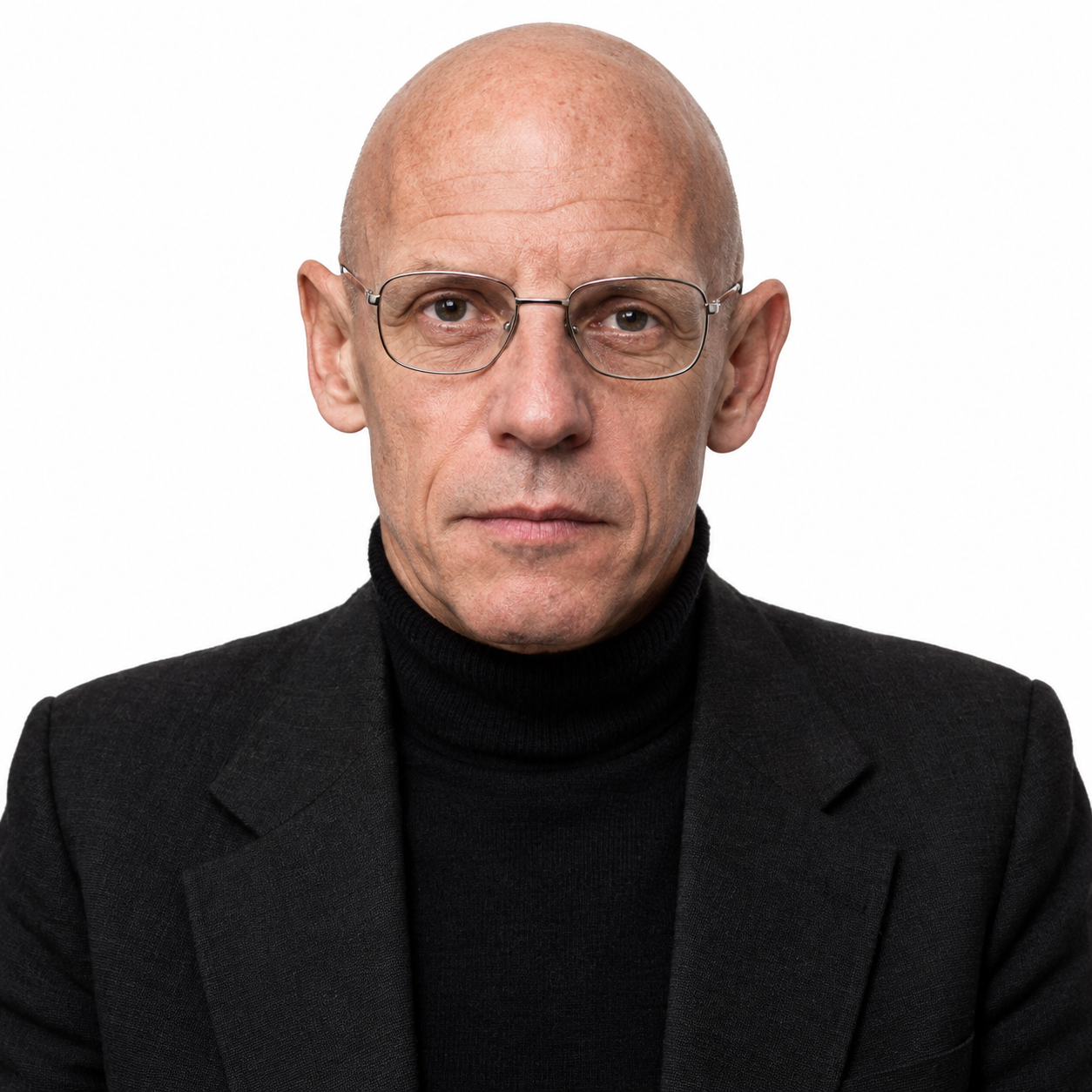
At a glance
- Born
- 1926 CE
- Died
- 1984 CE
- Era classification
- Modern
- Occupation
- Philosopher
- Homeland
- France
- Period
- 20th Century
- Field
- Philosophy & Ideology
- Language
- French
- Religion
- Atheism
- Gender
- male
Biography
Paul-Michel Foucault was born in Poitiers, France, in 1926. Educated at the prestigious École Normale Supérieure in Paris, he studied philosophy and psychology under figures like Louis Althusser and Jean Hyppolite. Overcoming early personal crises and feelings of alienation, Foucault became deeply interested in the margins of society—particularly the treatment of the mentally ill, criminality, and institutional power.
Foucault surged to intellectual fame in the 1960s with landmark publications such as 'Madness and Civilization' and 'The Order of Things'. Employing what he called an 'archaeological' method, he examined historical archives to uncover the epistemes—the unconscious structures of thought and discourse—that dictate what is considered true or reasonable in different historical epochs, challenging teleological views of human progress.
In the 1970s, after securing a chair at the Collège de France, Foucault developed his 'genealogical' approach to analyze the deep entanglement of knowledge and power. In groundbreaking texts like 'Discipline and Punish' and 'The History of Sexuality', he introduced concepts such as the Panopticon, disciplinary power, and biopolitics, arguing that modern institutions govern populations by shaping internalized norms and subjectivities rather than merely through top-down physical coercion.
Throughout his later career, Foucault engaged in political activism, notably advocating for prison reform and civil liberties. He passed away in Paris in 1984 from AIDS-related complications. His radical critiques of institutional authority, discourse, and the nature of subjectivity transformed numerous disciplines, cementing his legacy as one of the 20th century's most defining thinkers.
Portrayal characteristics
Saved editorial descriptions used for the reconstruction; these are not authenticated statements by the depicted person.
- Intellectually subversive
- Iconoclastic
- Methodical
- Skeptical
- Radical
Images & artwork 4



Known for
- Analysis of power-knowledge dynamics
- Discipline and Punish
- The History of Sexuality
- Theories of biopolitics and governmentality
- Archaeology and genealogy as historical methods
Episodes featuring or mentioning this figure
No eligible published episode featuring this figure is currently in the library.