



Martin Heidegger
Influential German philosopher whose work revolutionized phenomenology, hermeneutics, and existentialism.
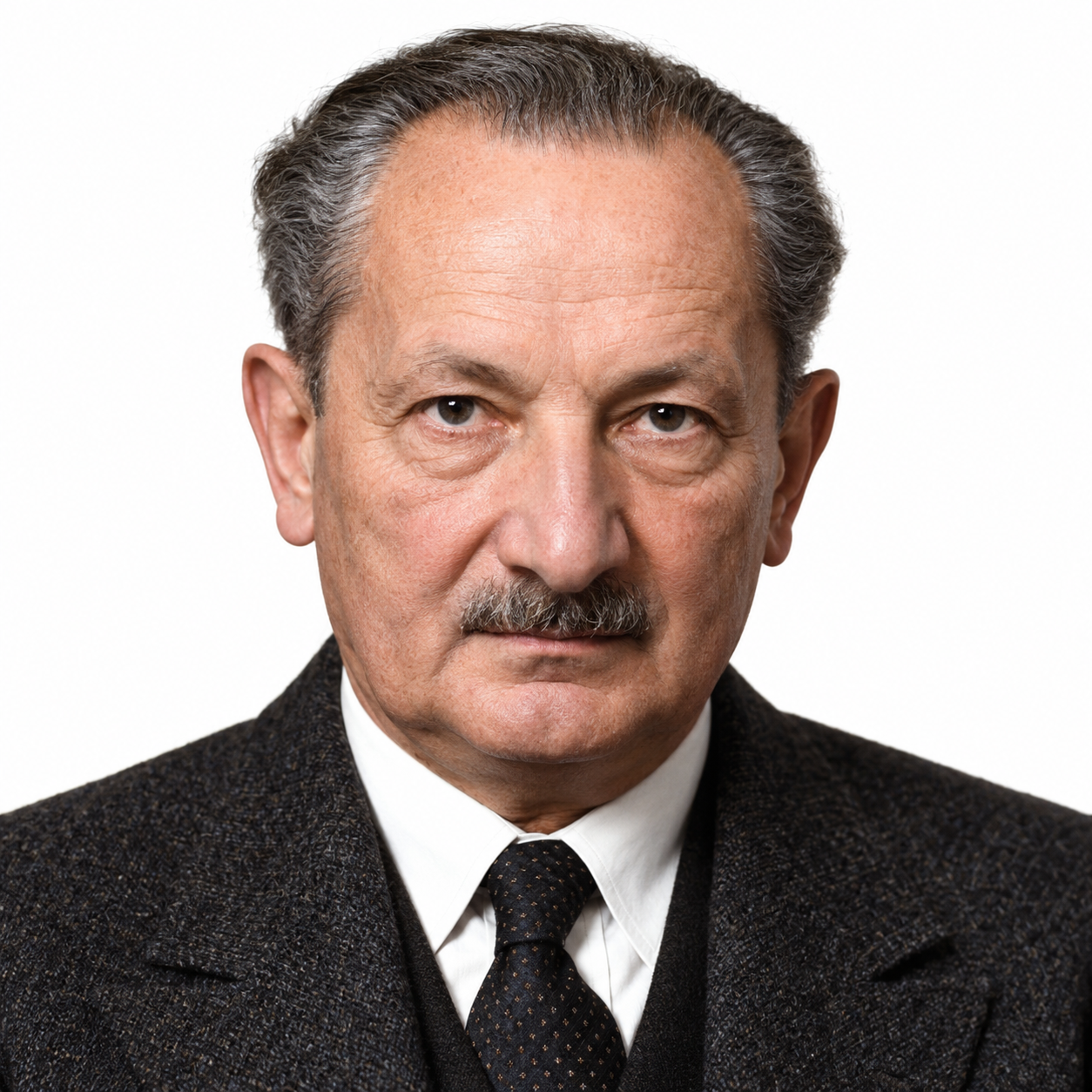
At a glance
- Born
- 1889 CE
- Died
- 1976 CE
- Era classification
- Modern
- Occupation
- Philosopher
- Homeland
- Germany
- Period
- 20th Century
- Field
- Philosophy & Ideology
- Language
- German
- Religion
- Roman Catholic (lapsed)
- Gender
- male
Biography
Martin Heidegger was born in Meßkirch, Germany, into a devout Roman Catholic family. Initially pursuing theological studies at the University of Freiburg, he soon shifted his focus to philosophy, studying under prominent figures including the neo-Kantian Heinrich Rickert and later becoming the protégé and assistant of Edmund Husserl, the founder of phenomenology. Heidegger developed an intense intellectual independence, seeking to transcend Husserl's descriptive method to uncover the fundamental question of the meaning of 'Being'.
In 1927, Heidegger published his magnum opus, 'Being and Time' (Sein und Zeit), which transformed 20th-century continental philosophy. In this work, he shifted the locus of philosophical inquiry away from the abstract Cartesian subject toward 'Dasein' (being-in-the-world), analyzing human existence through structures of temporality, care, anxiety, and mortality. The radical originality of 'Being and Time' earned him international acclaim and the philosophy chair at Freiburg in 1928, succeeding Husserl.
Heidegger's legacy was deeply compromised by his affiliation with the Nazi Party. In 1933, he was elected Rector of the University of Freiburg and joined the NSDAP, delivering speeches aligning university life with the regime's ideology. Though he resigned the rectorate in 1934, he maintained party membership until the end of World War II. Following the war, a denazification tribunal briefly banned him from teaching, and his wartime actions and lack of explicit postwar remorse remain subjects of intense controversy and scrutiny.
In his later philosophical period, often termed 'The Turn' (die Kehre), Heidegger moved away from the existential analytic of Dasein toward questions of language, art, poetry, and the destiny of Being. His influential essays on technology, such as 'The Question Concerning Technology', critiqued modern instrumental rationality (Enframing or Gestell) as a reduction of reality to raw resources. Despite his political controversies, Heidegger's insights profoundly shaped existentialism, deconstruction, hermeneutics, and postmodern thought, heavily influencing thinkers such as Jean-Paul Sartre, Maurice Merleau-Ponty, Hans-Georg Gadamer, and Jacques Derrida.
Portrayal characteristics
Saved editorial descriptions used for the reconstruction; these are not authenticated statements by the depicted person.
- Introspective
- Radical
- Controversial
- Systematic
- Hermetic
Images & artwork 4



Known for
- Author of 'Being and Time' (Sein und Zeit)
- Concept of Dasein and existential phenomenology
- Critique of Western metaphysics and ontotheology
- Philosophical critique of modern technology (Gestell)
- Pioneering hermeneutic phenomenology
Episodes featuring or mentioning this figure
No eligible published episode featuring this figure is currently in the library.