



Margaret Boden
English cognitive scientist and philosopher renowned for pioneering work on artificial intelligence and creativity.
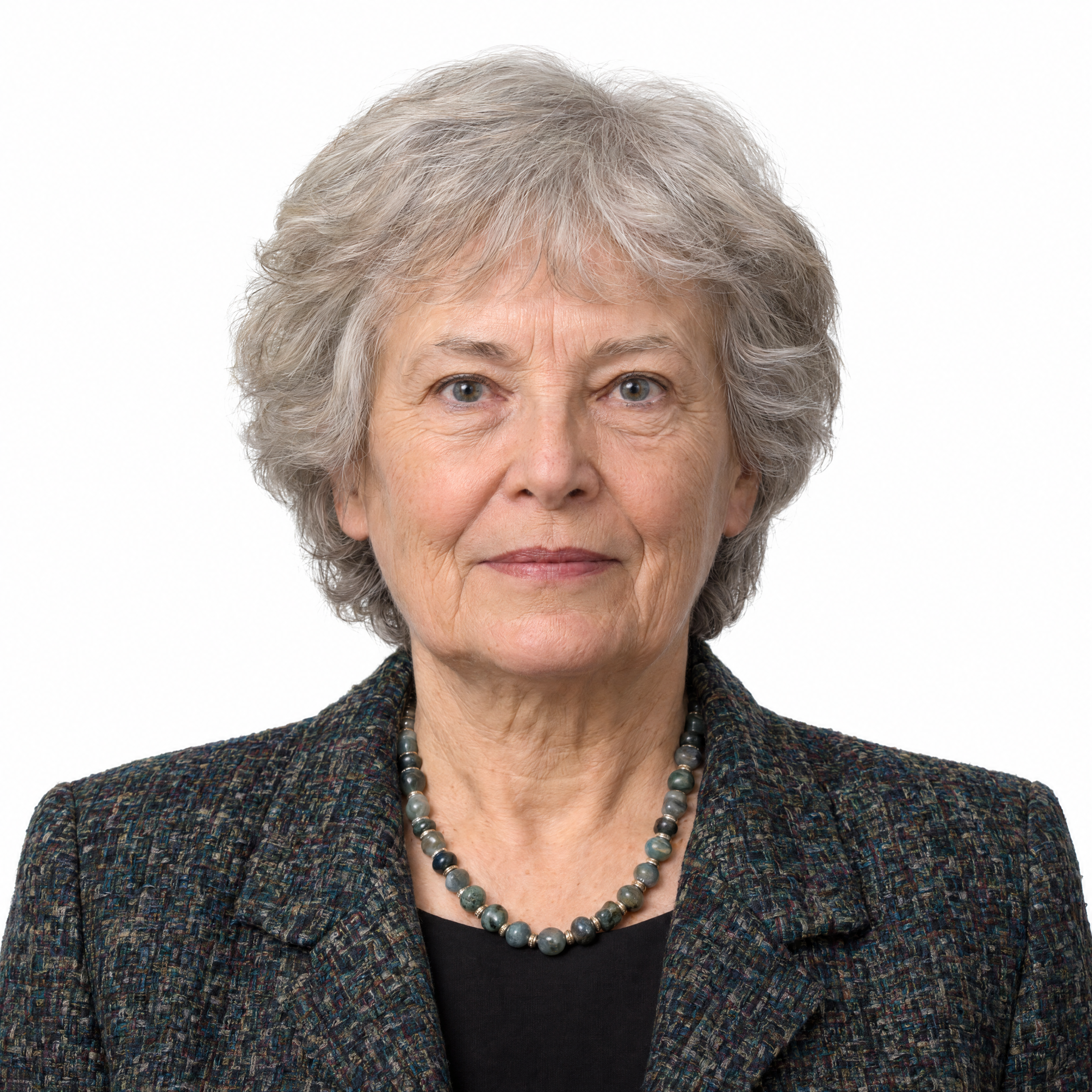
At a glance
- Born
- 1936 CE
- Died
- 2025-07-18
- Era classification
- Modern
- Occupation
- Cognitive Scientist and Philosopher
- Homeland
- United Kingdom
- Period
- Contemporary
- Field
- Philosophy & Ideology
- Language
- English
- Religion
- Not documented
- Gender
- female
Biography
Margaret Ann Boden was born in London in 1936. She attended the City of London School for Girls before studying medical sciences and philosophy at Newnham College, Cambridge, where she achieved first-class honors. She subsequently earned a doctorate in social psychology from Harvard University in 1968, establishing a rare interdisciplinary foundation that united philosophical analysis with empirical psychology and emerging theories of computational modeling.
In 1965, Boden joined the faculty at the University of Sussex as a lecturer in philosophy and psychology. Recognizing that a comprehensive understanding of human cognition required integration across traditionally separate fields, she helped develop Sussex into an international center for cognitive studies. In 1987, she became the founding dean of the School of Cognitive and Computing Sciences (COGS), fostering collaboration among researchers in artificial intelligence, linguistics, neuroscience, and philosophy.
Boden is widely celebrated for her pioneering theories on the nature of human and computational creativity. In foundational publications, including "The Creative Mind: Myths and Mechanisms" (1990), she introduced influential distinctions between psychological creativity (P-creativity) and historical creativity (H-creativity), categorizing creative processes into combinational, exploratory, and transformational types. In 2006, she published the encyclopedic two-volume study "Mind as Machine: A History of Cognitive Science", which remains a standard historical reference in the field.
Throughout her career, Boden has addressed the societal, ethical, and philosophical ramifications of artificial intelligence. Appointed an Officer of the Order of the British Empire (OBE) in 2001 and elected a Fellow of the British Academy, she has maintained a prominent voice in discussions on machine autonomy, arguing consistently for clear conceptual boundaries between human intentionality and automated computation.
Portrayal characteristics
Saved editorial descriptions used for the reconstruction; these are not authenticated statements by the depicted person.
- Interdisciplinary
- Analytical
- Pioneering
- Systematic
- Scholarly
Images & artwork 1
Sources & biographical evidence
- Celebrating the life and work of Professor Margaret Boden — University of Sussex COGS
- Margaret Boden died on 18 July 2025. The University of Sussex COGS memorial identifies her as its founder. Official memorial body read by Hedy on 18 October 2026; this supports identity and death date, not modern research claims.
Source check recorded ·
- Obituary: Professor Maggie Boden — University of Sussex, 28 July 2025
- Institutional obituary confirms death aged 88, birth in 1936, arrival at Sussex in 1965, interdisciplinary cognitive science/AI work and contributions to computational creativity. Its substantive body was read on 18 October 2026. This limited check does not verify every existing biography sentence or endorse modern opinions in her name.
Source check recorded ·
Known for
- Conceptual framework of computational creativity (exploratory, combinational, transformational)
- Distinction between psychological (P-) and historical (H-) creativity
- Authoring 'Mind as Machine: A History of Cognitive Science'
- Founding the School of Cognitive and Computing Sciences at the University of Sussex
- Pioneering philosophical inquiries into artificial intelligence and human agency
Episodes featuring or mentioning this figure
No eligible published episode featuring this figure is currently in the library.