



Marcus Aurelius
Roman Emperor and prominent Stoic philosopher whose personal writings immortalized the ideal of the philosopher king.
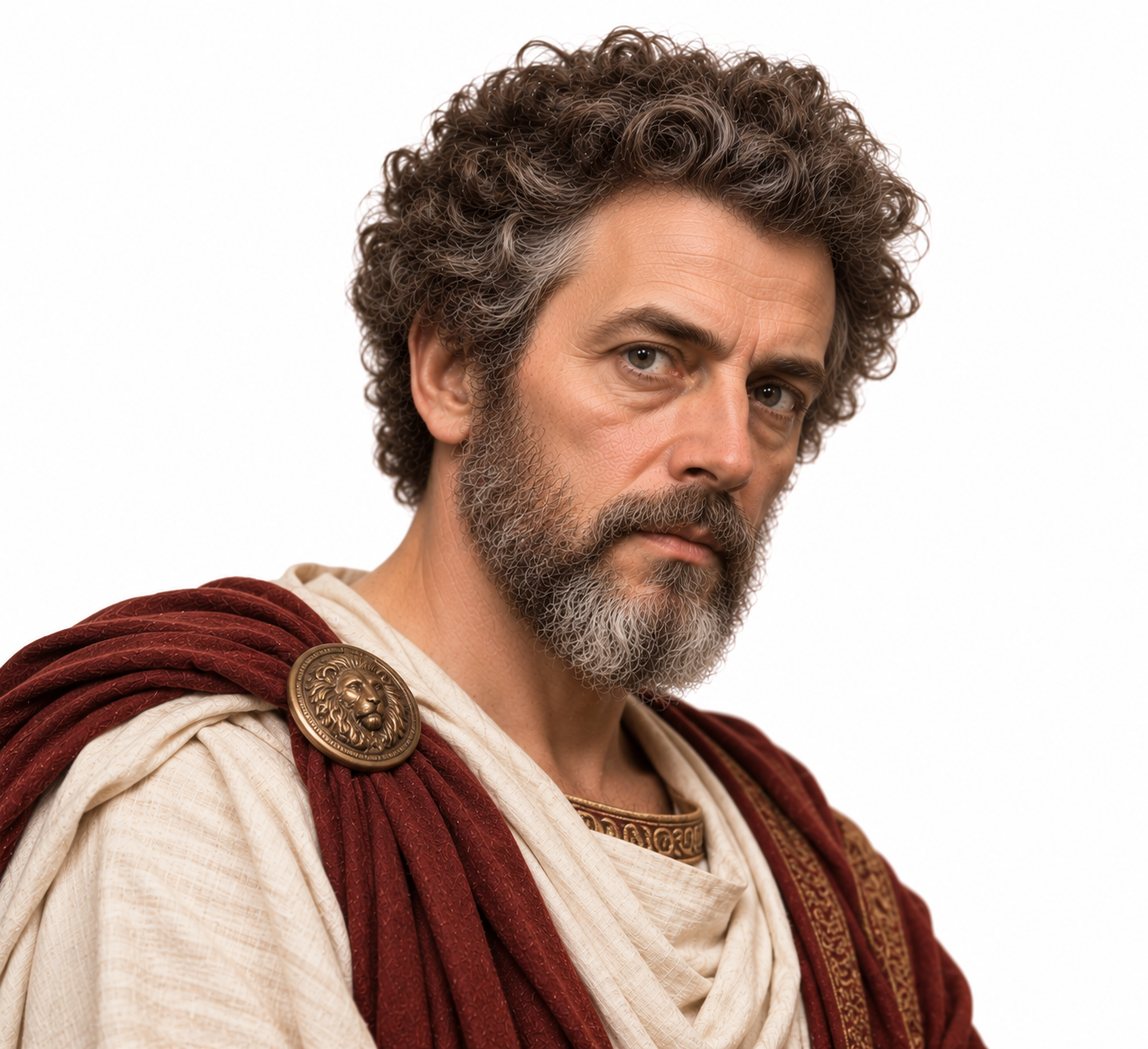
At a glance
- Born
- 121 CE
- Died
- 180 CE
- Era classification
- Ancient
- Occupation
- King / Queen / Emperor
- Homeland
- Roman Empire
- Period
- Imperial Rome
- Field
- Philosophy & Ideology
- Language
- Latin
- Religion
- Roman Polytheism
- Gender
- male
Biography
Marcus Aurelius was born in Rome into an aristocratic family with strong ties to the imperial court. Recognizing his intellectual potential and moral seriousness from an early age, Emperor Hadrian marked him for future succession. He was formally adopted by Antoninus Pius in 138 CE, receiving a rigorous education in rhetoric and philosophy. Under the mentorship of Stoic teachers, particularly Junius Rusticus, he cultivated a profound commitment to virtue, reason, and self-restraint.
Upon Antoninus Pius's death in 161 CE, Marcus ascended the throne alongside his adoptive brother, Lucius Verus, marking the first time the Roman Empire was ruled by co-emperors. His reign was immediately beset by continuous crises, including the outbreak of the Antonine Plague, an economic strain across the empire, and major conflicts with the Parthian Empire in the east. Despite the immense pressures, he maintained a reputation for fair governance, legal reform, and judicial conscientiousness.
Much of Marcus Aurelius's later rule was consumed by the Marcomannic Wars against Germanic and Sarmatian tribes threatening the Danube frontier. While commanding legions under harsh campaigning conditions, he maintained personal journals intended not for publication, but for his own moral guidance and reflection. These writings, later titled 'Meditations', explored themes of duty, impermanence, cosmic harmony, and maintaining inner peace amidst chaos.
Marcus Aurelius died in 180 CE, marking the conclusion of the Pax Romana and the era of the 'Five Good Emperors'. His legacy endures worldwide as the quintessential embodiment of Plato's philosopher king, whose enduring reflections remain a cornerstone of Stoic practical ethics.
Portrayal characteristics
Saved editorial descriptions used for the reconstruction; these are not authenticated statements by the depicted person.
- Introspective
- Duty-bound
- Disciplined
- Pragmatic
- Resilient
- Philosophical
Images & artwork 1
Known for
- Authoring the Stoic philosophical work 'Meditations'
- Last of the 'Five Good Emperors' of Rome
- Leading Rome through the Marcomannic Wars
- Guiding the Empire through the Antonine Plague
- Reforming Roman civil and administrative law
Episodes featuring or mentioning this figure
No eligible published episode featuring this figure is currently in the library.