



Carl von Clausewitz
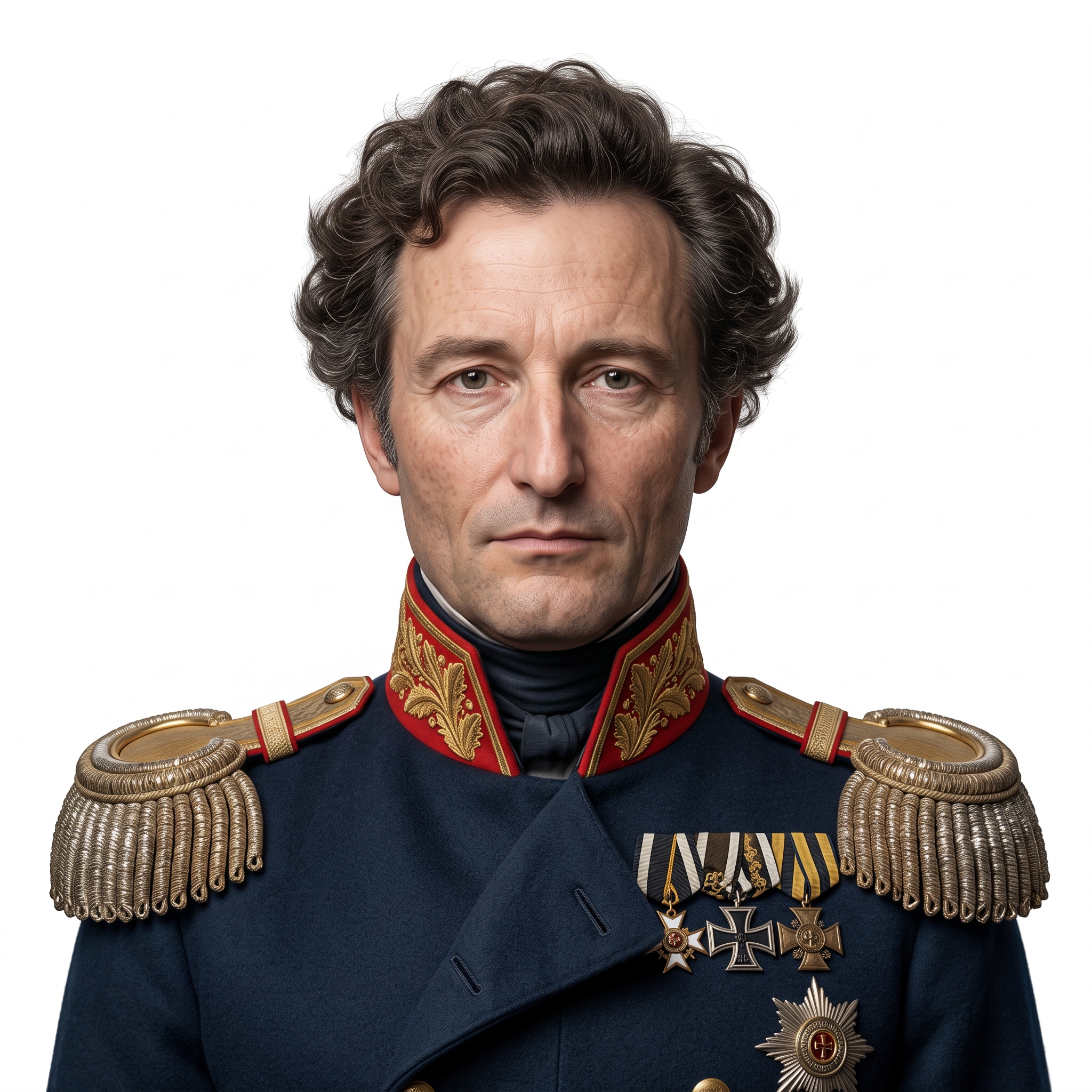
Prussian general and military theorist celebrated for his magnum opus 'On War' analyzing the nature of conflict.
At a glance
- Born
- 1780 CE
- Died
- 1831 CE
- Era classification
- Modern
- Occupation
- Military General
- Homeland
- Kingdom of Prussia
- Period
- 18th–19th Century
- Field
- Politics, Leadership & War
- Language
- German
- Religion
- Protestant Christianity
- Gender
- male
Biography
Carl Philipp Gottfried von Clausewitz was born in Burg near Magdeburg into a middle-class Prussian family. Entering the Prussian Army as a lance-corporal at the age of twelve, he experienced combat early in the Rhine campaigns of 1793–1794. Recognizing his keen intellect, mentors helped him gain admission to the Berlin War Academy in 1801, where he became the protégé and intellectual heir of Gerhard von Scharnhorst, a leading reformer of the Prussian military.
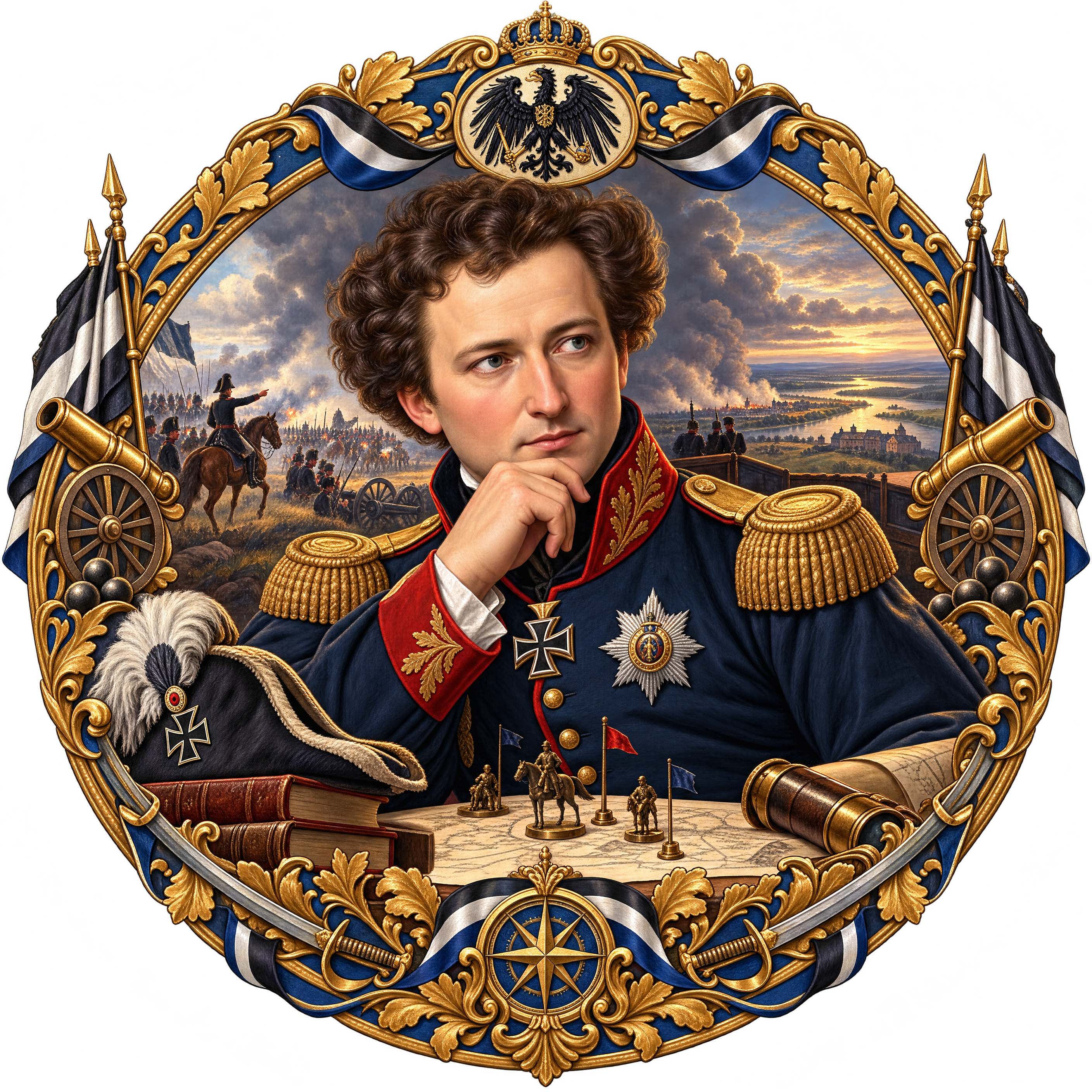
Clausewitz fought in the Napoleonic Wars, participating in the disastrous Battle of Jena-Auerstedt in 1806, where he was captured by the French. After his release, he assisted Scharnhorst in reforming Prussia's military system. Opposing King Frederick William III's forced alliance with Napoleon against Russia in 1812, Clausewitz resigned his Prussian commission to serve in the Imperial Russian Army, aiding in the defense against the French invasion and negotiating the historic Convention of Tauroggen. He was later readmitted to Prussian service, serving as chief of staff to General Johann von Thielmann at the Battle of Ligny and Wavre during the Waterloo campaign.
In 1818, Clausewitz was appointed director of the Prussian Military Academy (Kriegsakademie) in Berlin and promoted to major general. During this extended peacetime posting, he systematically synthesized his wartime experiences and philosophical readings into a comprehensive treatise on military strategy. He sought to understand war not as a rigid set of geometric rules, but as an unpredictable, violent, and inherently social phenomenon.
Clausewitz died of cholera in Breslau in 1831 at the age of 51. His unfinished masterpiece, 'Vom Kriege' (On War), was meticulously organized and published posthumously by his wife, Marie von Brühl. His insights—including the idea that war is the continuation of politics by other means, the psychological concept of friction, and the paradoxical trinity of passion, chance, and reason—firmly established him as the most influential military philosopher in modern Western history.
Portrayal characteristics
Saved editorial descriptions used for the reconstruction; these are not authenticated statements by the depicted person.
- Analytical
- Philosophical
- Pragmatic
- Disciplined
- Observant
- Strategic
Images & artwork 4
Known for
- Author of the seminal military treatise 'On War' (Vom Kriege)
- Concept of 'War as the continuation of politics by other means'
- Theories of 'Friction' and the 'Fog of War'
- The Clausewitzian Trinity (people, military, government)
- Concept of the operational 'Center of Gravity'
Episodes featuring or mentioning this figure
No eligible published episode featuring this figure is currently in the library.