



Christopher Columbus
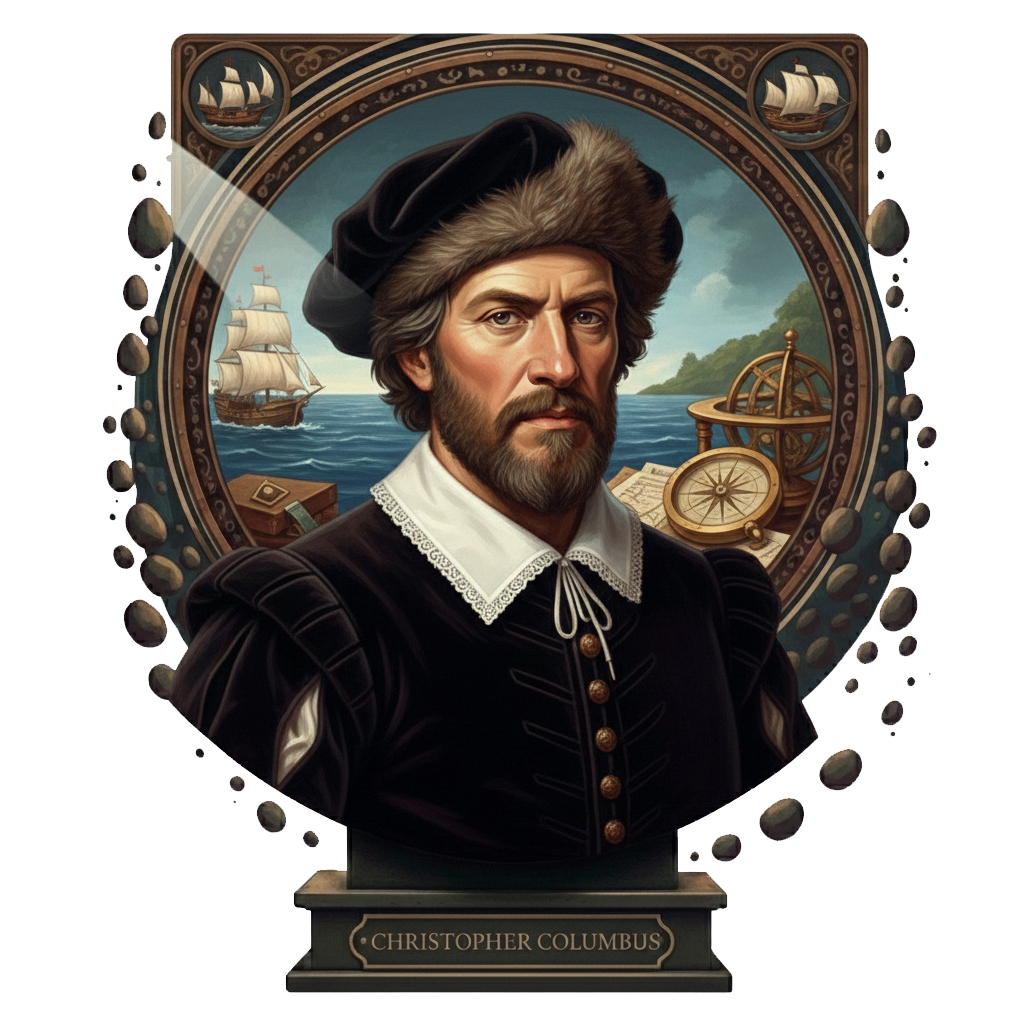
Italian explorer whose 1492 transatlantic voyage opened the Americas to European exploration and colonization.
At a glance
- Born
- c. 1451 CE
- Died
- May 20, 1506 CE
- Era classification
- 54
- Homeland
- Republic of Genoa (Italy)
- Period
- 1451–1506 CE
- Field
- Politics, Leadership & War
- Language
- Ligurian, Spanish
- Religion
- Catholic
- Gender
- male
Biography
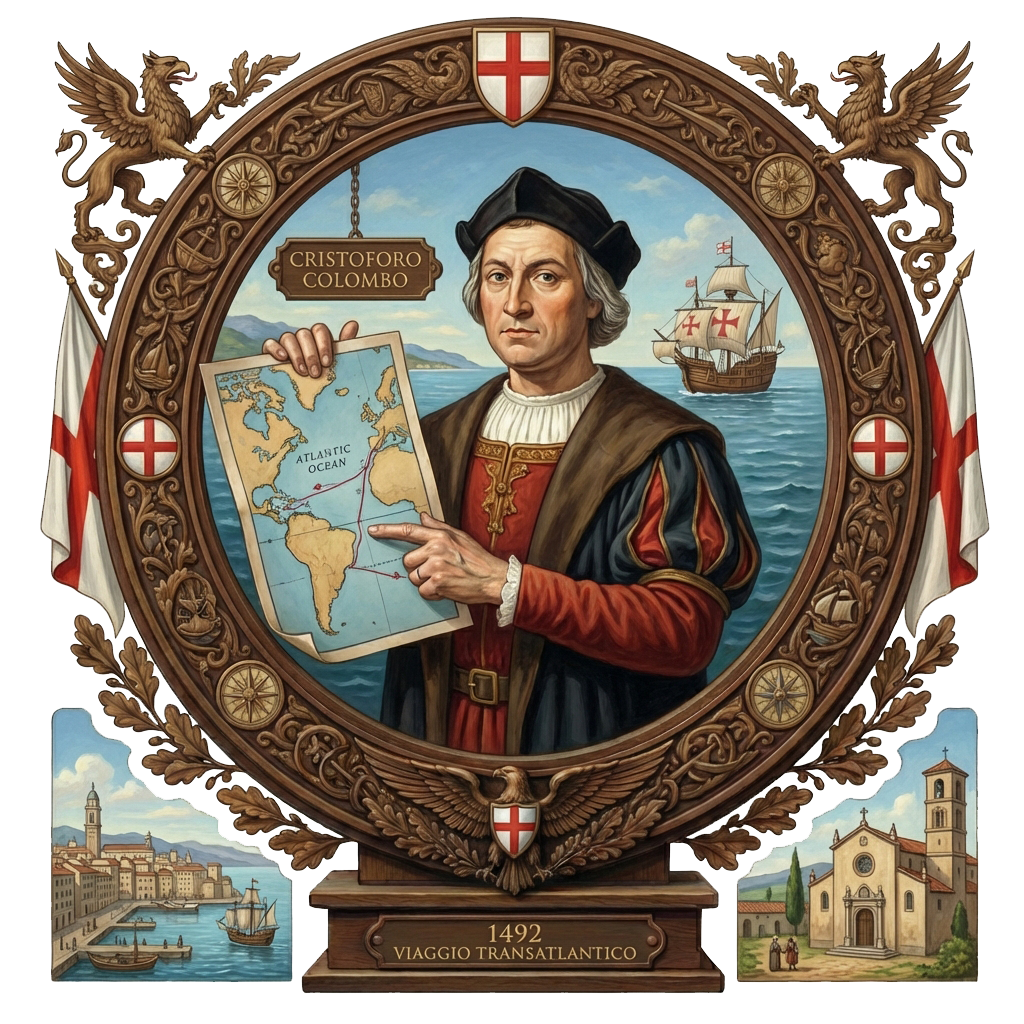
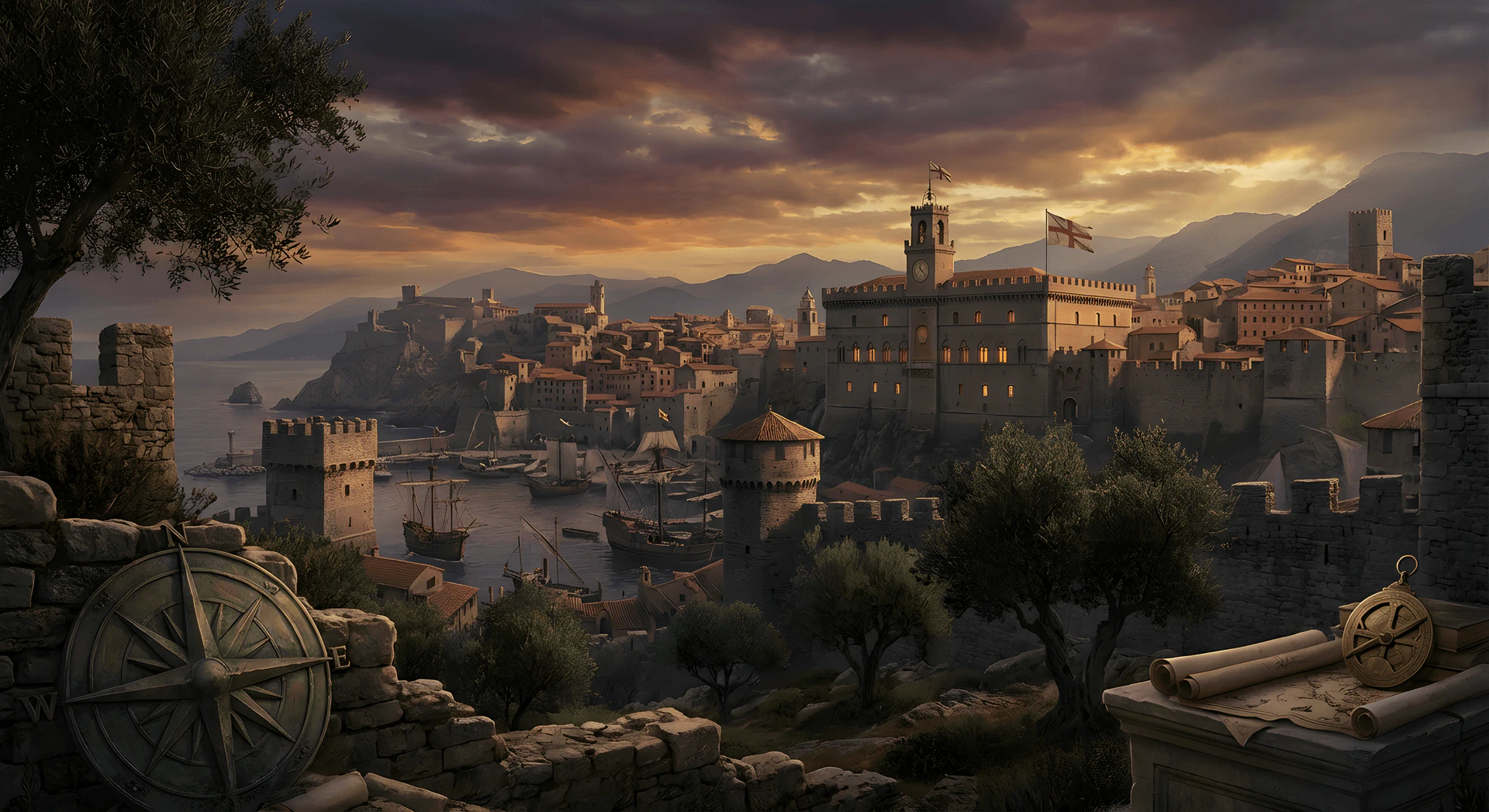
Christopher Columbus was born in the Republic of Genoa in 1451. Taking to the sea at a young age, he traveled extensively along the coasts of Europe and Africa, acquiring a deep, self-taught knowledge of navigation, astronomy, and cartography. Driven by a desire to find a lucrative western sea route to the spice-rich East Indies, he spent years lobbying European monarchs to fund his ambitious 'Enterprise of the Indies.'
After facing rejections in Portugal and elsewhere, Columbus finally secured the patronage of the Catholic Monarchs of Spain, Queen Isabella I and King Ferdinand II. In August 1492, he set sail with three ships—the Niña, the Pinta, and the Santa María. On October 12, 1492, the expedition made landfall in the Bahamas, marking the beginning of sustained European contact with the Americas, though Columbus himself believed he had reached the outer islands of Asia.
Columbus undertook three more voyages to the New World, exploring the Caribbean, the northern coast of South America, and the Central American isthmus. He established the first permanent European settlements in the Americas, including La Isabela on the island of Hispaniola. However, his tenure as governor of the Indies was marred by accusations of tyranny, mismanagement, and extreme brutality toward the indigenous Taíno population, leading to his temporary arrest and return to Spain in chains in 1500.
Columbus died in 1506, largely marginalized and still insisting he had discovered a new route to Asia rather than a completely new continent. Today, his legacy is profoundly complex; he is historically monumental for initiating the Columbian Exchange and the modern era of global interconnectedness, yet he is heavily criticized for inaugurating the devastating European colonization and exploitation of indigenous peoples.
Portrayal characteristics
Saved editorial descriptions used for the reconstruction; these are not authenticated statements by the depicted person.
- Ambitious
- Persistent
- Visionary
- Devout
- Controversial
Images & artwork 4
Connections
Piri Reis
Cartographic Influence
The Ottoman admiral Piri Reis utilized maps created by Columbus to produce his own highly accurate world map in 1513.
Piri Reis explicitly stated in his writings that he consulted a map drawn by 'Colombo' to chart the coasts of the Americas. This connection is significant as it shows how quickly geographical knowledge from Columbus's voyages spread to the Ottoman Empire.
Moctezuma II
Indirect Historical Link
Columbus's voyages initiated the era of Spanish exploration that led directly to the arrival of conquistadors in Moctezuma's empire.
While the two never met, Columbus's 1492 landing in the Caribbean established the Spanish presence in the Americas. This paved the way for Hernán Cortés to reach the Aztec capital of Tenochtitlan in 1519, leading to Moctezuma's downfall.
Piri Reis
Cartographic Source
Piri Reis utilized a lost map by Christopher Columbus to create his famous 1513 world map.
In the annotations of his world map, Piri Reis explicitly credits a map drawn by 'Colombo' for the depiction of the Antilles and the American coast. This makes Piri Reis's work one of the most important surviving records of Columbus's early cartographic knowledge.
Known for
- 1492 transatlantic voyage
- Initiating the Columbian Exchange
- Opening the Americas to European colonization
- Establishing the first European colonies in the New World
Episodes featuring or mentioning this figure
No eligible published episode featuring this figure is currently in the library.