



Al-Farabi
Renowned Islamic Golden Age polymath and philosopher celebrated as the 'Second Teacher' after Aristotle.
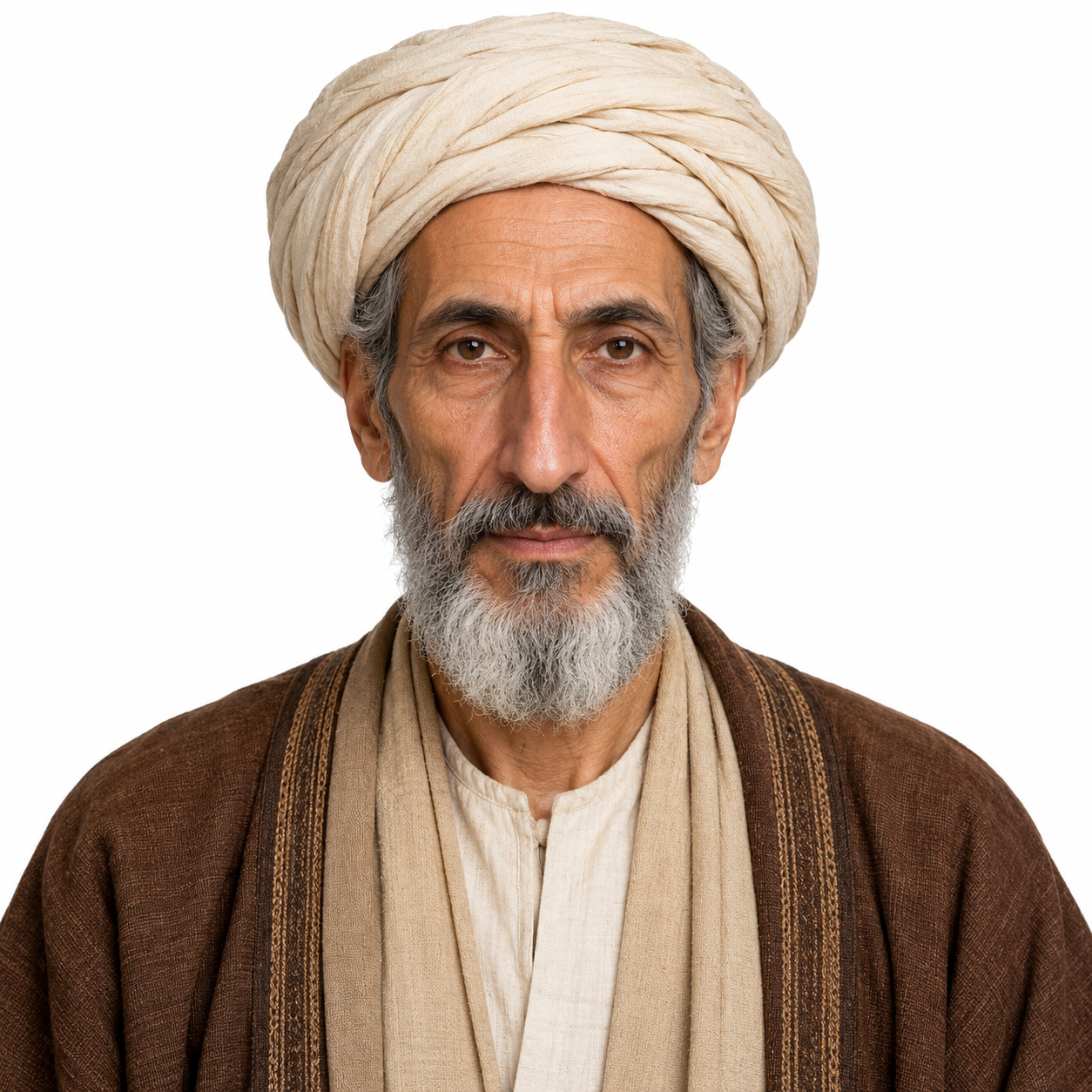
At a glance
- Born
- c. 872 CE
- Died
- c. 950 CE
- Era classification
- Medieval
- Occupation
- Philosopher
- Homeland
- Farab (modern-day Kazakhstan)
- Period
- Islamic Golden Age (Abbasid Era)
- Field
- Philosophy & Ideology
- Language
- Arabic
- Religion
- Islam
- Gender
- male
Biography
Abu Nasr Muhammad al-Farabi was born around 872 CE in Farab (modern-day Kazakhstan) and became one of the foremost philosophers and polymaths of the Islamic Golden Age. He traveled extensively in pursuit of knowledge, eventually settling in Baghdad, the intellectual capital of the Abbasid Caliphate. There, he mastered the Arabic language and studied grammar, logic, and philosophy under leading scholars of diverse backgrounds, including the Christian logician Abu Bishr Matta.
Al-Farabi played a foundational role in the preservation, commentary, and advancement of classical Greek philosophy in the Islamic world. By harmonizing the doctrines of Plato and Aristotle with Neoplatonic thought and Islamic monotheism, he created a unified philosophical system. His profound mastery of logic and Aristotle's *Organon* earned him the prestigious title 'The Second Teacher' (al-Mu'allim al-Thani), second only to Aristotle himself.
Beyond metaphysics and logic, Al-Farabi made pioneering contributions to political philosophy and music theory. In his seminal work *The Virtuous City* (*Kitab Ara' Ahl al-Madina al-Fadila*), he adapted Platonic political ideals to conceive a state ruled by an enlightened philosopher-prophet dedicated to the ultimate happiness of its citizens. His massive treatise *The Great Book of Music* (*Kitab al-Musiqa al-Kabir*) systematized music theory, acoustic science, and organology, leaving an enduring mark on both Middle Eastern and European musical scholarship.
In his later years, Al-Farabi resided in Damascus and Aleppo under the generous patronage of the Hamdanid ruler Sayf al-Dawla. He lived an ascetic and modest life until his death around 950 CE. His extensive writings deeply influenced later giants of philosophy, including Avicenna (Ibn Sina), Averroes (Ibn Rushd), and Maimonides, effectively shaping the trajectory of both Islamic and Western scholastic thought.
Portrayal characteristics
Saved editorial descriptions used for the reconstruction; these are not authenticated statements by the depicted person.
- Polymathic
- Systematic
- Ascetic
- Contemplative
- Harmonizing
Images & artwork 2
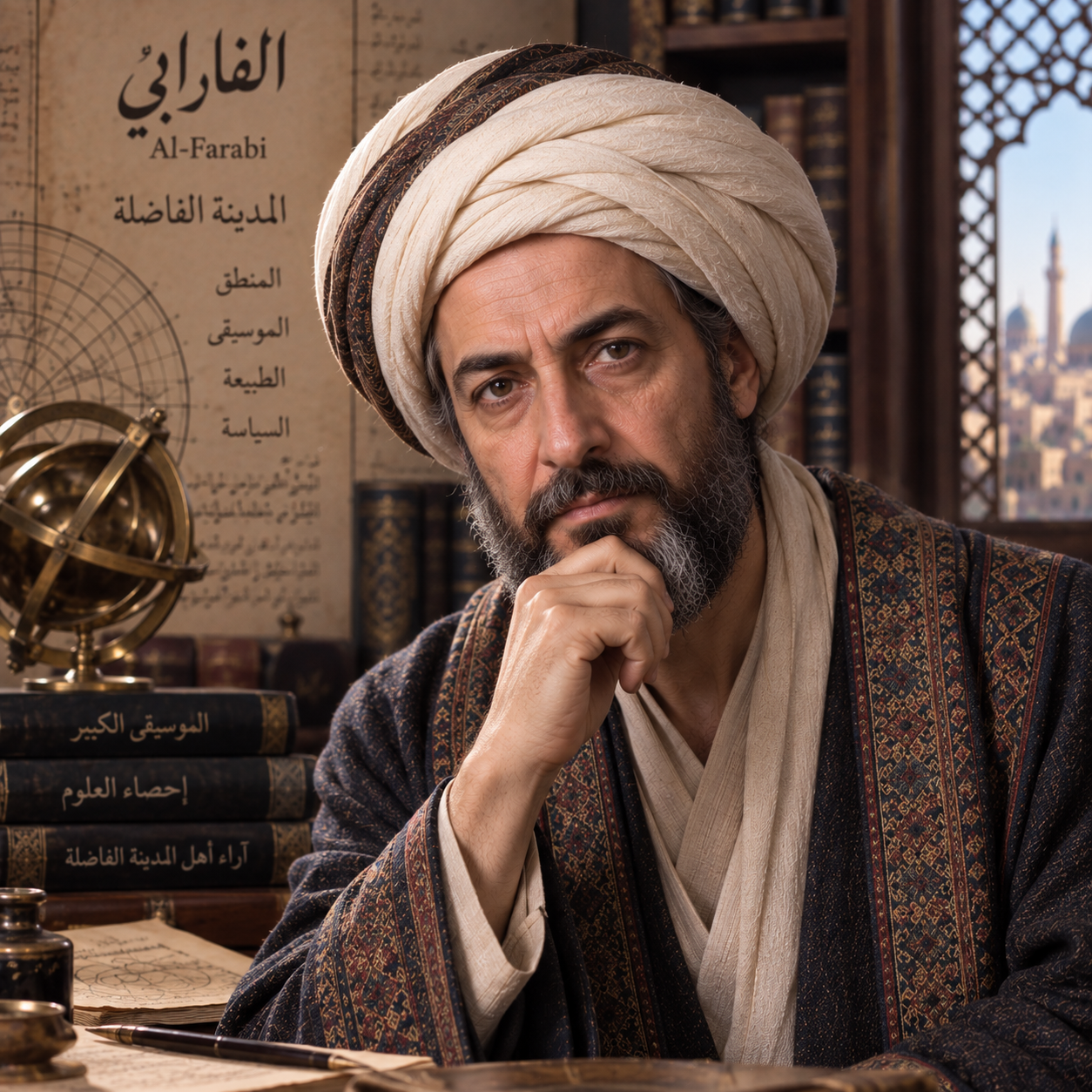
Known for
- Earned the title 'The Second Teacher' for his mastery of Aristotelian logic
- Authored 'The Virtuous City' (Al-Madina al-Fadila)
- Pioneered musicology with 'Kitab al-Musiqa al-Kabir'
- Synthesized Classical Greek philosophy with Islamic theology
- Heavily influenced the philosophical systems of Avicenna and Maimonides
Episodes featuring or mentioning this figure
No eligible published episode featuring this figure is currently in the library.