



Adam Smith
Scottish economist and philosopher known as the 'Father of Economics' for his work 'The Wealth of Nations.'
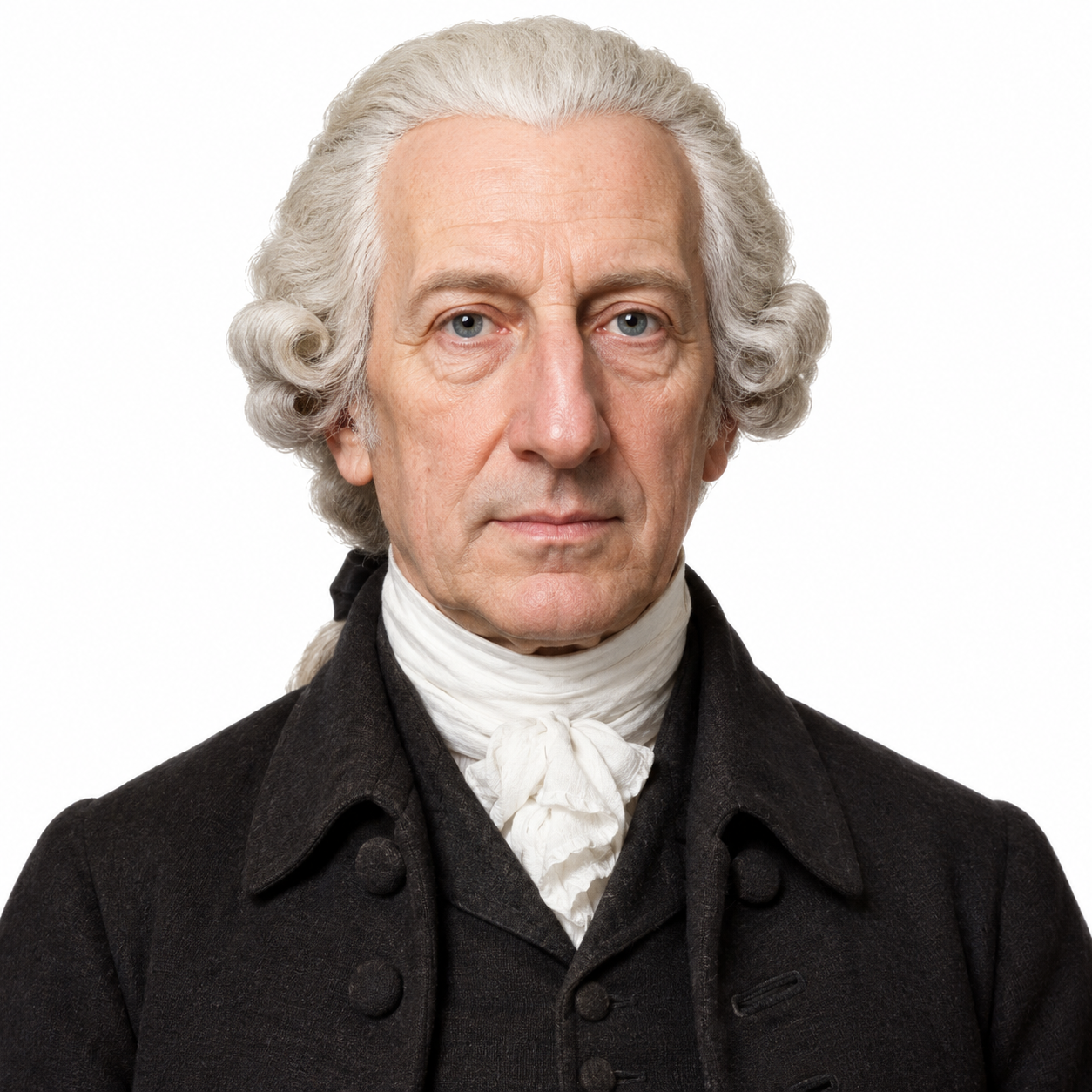
At a glance
- Born
- 1723 CE
- Died
- 1790 CE
- Era classification
- Modern
- Occupation
- Philosopher
- Homeland
- Scotland
- Period
- Enlightenment
- Field
- Philosophy & Ideology
- Language
- English
- Religion
- Deism
- Gender
- male
Biography
Adam Smith was a Scottish philosopher and economist who is widely regarded as the father of modern economics. Born in Kirkcaldy, Scotland, he studied at the University of Glasgow and Oxford. He became a professor of moral philosophy at Glasgow, where he published his first major work, "The Theory of Moral Sentiments," which explored the psychological basis of ethics and human sympathy.
In 1776, Smith published his magnum opus, "An Inquiry into the Nature and Causes of the Wealth of Nations." This book laid the foundation for classical economics by arguing that free markets, driven by individual self-interest, could lead to general prosperity through a process he called the "invisible hand." He emphasized the importance of the division of labor, free trade, and the limitation of government intervention in the economy.
Smith's work revolutionized how nations understood wealth and production. He transitioned economic thought from mercantilism to a system based on productivity and market exchange. His legacy continues to shape economic policy and theory globally, making him one of the most influential thinkers in history.
Portrayal characteristics
Saved editorial descriptions used for the reconstruction; these are not authenticated statements by the depicted person.
- Observant
- Systematic
- Rational
- Liberal
- Intellectual
Images & artwork 4



Known for
- The Wealth of Nations
- The Theory of Moral Sentiments
- The Invisible Hand concept
- Classical Economics
Episodes featuring or mentioning this figure

The Architecture of Electrical Power: Edison vs Tesla
AI jury: 3 members
Does the future of electrical infrastructure belong to localized direct-current microgrids or vast, interconnected alternating-current networks?