



Vecihi Hürkuş
Pioneering Turkish aviator and engineer who designed and built Turkey's first indigenous airplanes.
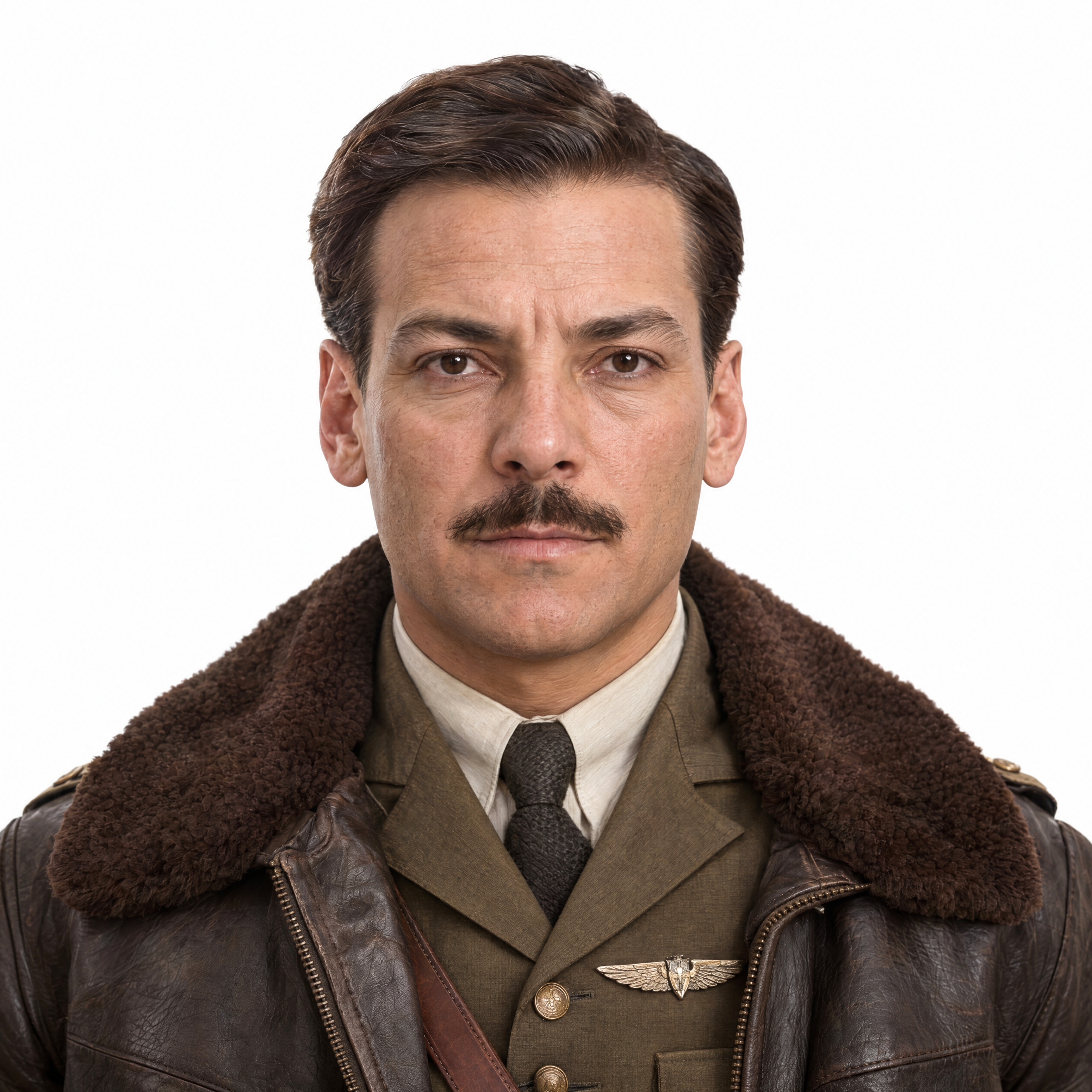
At a glance
- Born
- 1896 CE
- Died
- 1969 CE
- Era classification
- Modern
- Occupation
- Aviator & Aeronautical Engineer
- Homeland
- Ottoman Empire / Turkey
- Period
- Early 20th century
- Field
- Science, Medicine & Engineering
- Language
- Turkish
- Religion
- Islam
- Gender
- male
Biography
Vecihi Hürkuş was born on January 6, 1896, in Constantinople (now Istanbul) within the Ottoman Empire. After initial training as a military mechanic, he graduated as a military pilot in 1916 during World War I. Stationed on the Caucasian front, he became the first Turkish pilot credited with shooting down an enemy aircraft in that theater. After being brought down and captured behind Russian lines in late 1917, he was interned on Nargin Island in the Caspian Sea, from which he successfully escaped and made his way back to Ottoman territory.
Following the Ottoman armistice and the subsequent Allied occupation, Hürkuş joined the nationalist movement led by Mustafa Kemal Atatürk during the Turkish War of Independence. Flying reconnaissance, ground-attack, and courier sorties in poorly equipped and repaired aircraft, he provided critical aerial intelligence during major offensives such as the Battle of Sakarya and the Great Offensive. For his battlefield service, he received three separate commendations from the Grand National Assembly and was awarded the Medal of Independence.
Dedicated to developing a domestic aviation industry, Hürkuş designed and built Turkey's first indigenous airplane, the Vecihi K-VI, in 1924 using salvaged engine parts and domestic timber. He conducted its successful maiden flight in January 1925; however, because the fledgling military aviation committee lacked the technical expertise to inspect and license the prototype, he was penalized for an unauthorized flight. Undaunted, he constructed the Vecihi XIV in 1930 and flew it across Europe to Czechoslovakia to secure international airworthiness certification from the Czechoslovak Ministry of Public Works.
Throughout the 1930s and 1950s, Hürkuş pioneered civilian flight infrastructure in the Turkish Republic. In 1932, he established Turkey's first private civil aviation school, the Vecihi Sivil Tayyare Mektebi, where he trained Turkey's first female aviator, Bedriye Tahir Gökmen. In 1954, he founded Turkey's first private airline, Hürkuş Hava Yolları. Despite enduring chronic bureaucratic obstacles, financial ruin, and lack of institutional backing throughout his career, he is remembered as a founding figure of Turkish aeronautics.
Portrayal characteristics
Saved editorial descriptions used for the reconstruction; these are not authenticated statements by the depicted person.
- Inventive
- Tenacious
- Daring
- Resourceful
- Enterprising
Images & artwork 1
Known for
- Designing and building the Vecihi K-VI, the first domestically produced Turkish aircraft
- Serving as a combat pilot and flying ace in World War I and the Turkish War of Independence
- Designing the Vecihi XIV and obtaining European airworthiness certification
- Founding the Vecihi Sivil Tayyare Mektebi, Turkey's first private flight school
- Establishing Hürkuş Hava Yolları, Turkey's first private airline
Episodes featuring or mentioning this figure
No eligible published episode featuring this figure is currently in the library.