



Queen Elizabeth I
The Virgin Queen who led England through a golden age of exploration, cultural flourishing, and Protestant establishment.
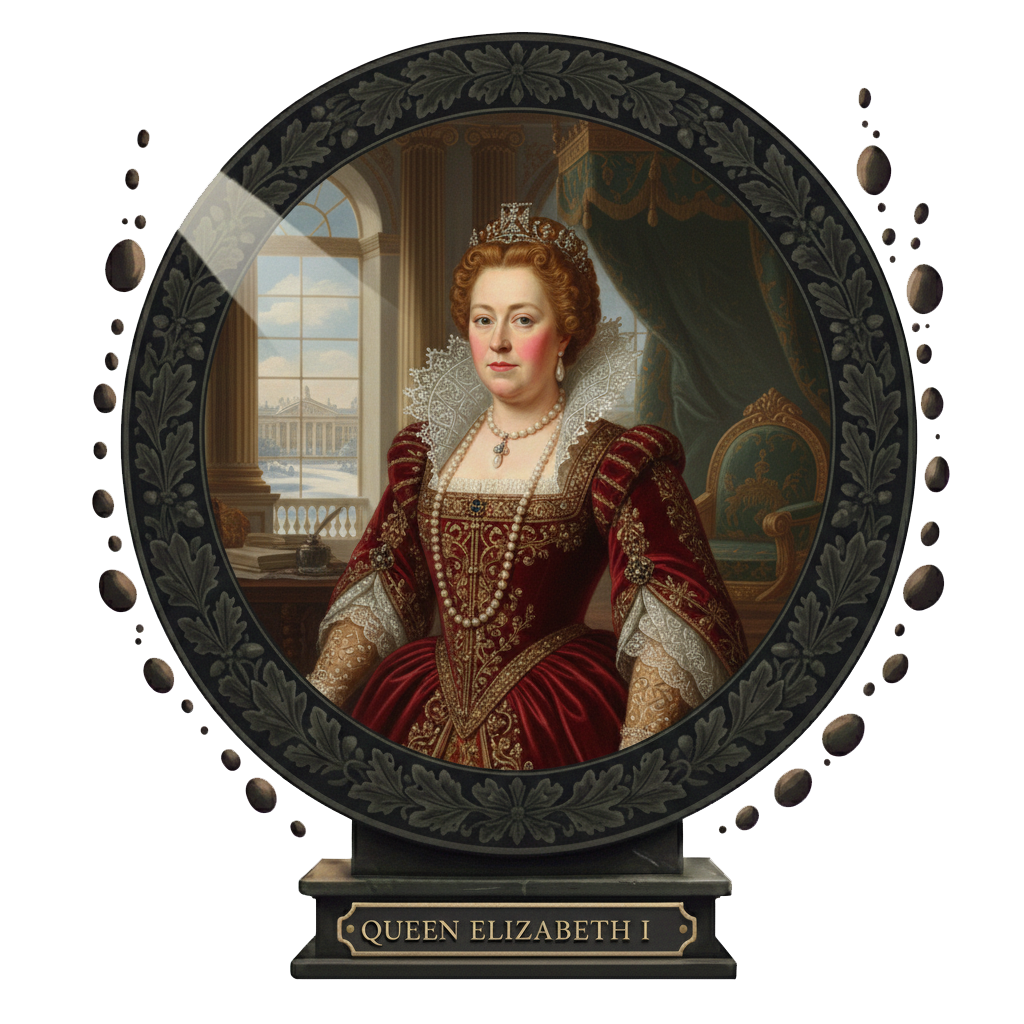
At a glance
- Born
- 1533 CE
- Died
- 1603 CE
- Era classification
- 69
- Homeland
- Kingdom of England
- Period
- 1533–1603 CE
- Field
- Politics, Leadership & War
- Language
- English
- Religion
- Anglican
- Gender
- female
Biography
Elizabeth I was born in 1533 to King Henry VIII and Anne Boleyn. Following her mother's execution, she was declared illegitimate and endured a precarious youth, including imprisonment in the Tower of London during the reign of her Catholic half-sister, Mary I. Against the odds, Elizabeth ascended to the throne in 1558, inheriting a deeply divided and economically strained realm.
Upon taking power, Elizabeth quickly enacted the Elizabethan Religious Settlement, establishing a moderate Protestant Church of England with herself as its Supreme Governor. This pragmatic compromise quelled widespread religious violence and laid the foundation for a stable society. Her reign, subsequently known as the Elizabethan Era, witnessed a massive cultural renaissance, most notably in English literature and drama, championed by figures like William Shakespeare and Christopher Marlowe.
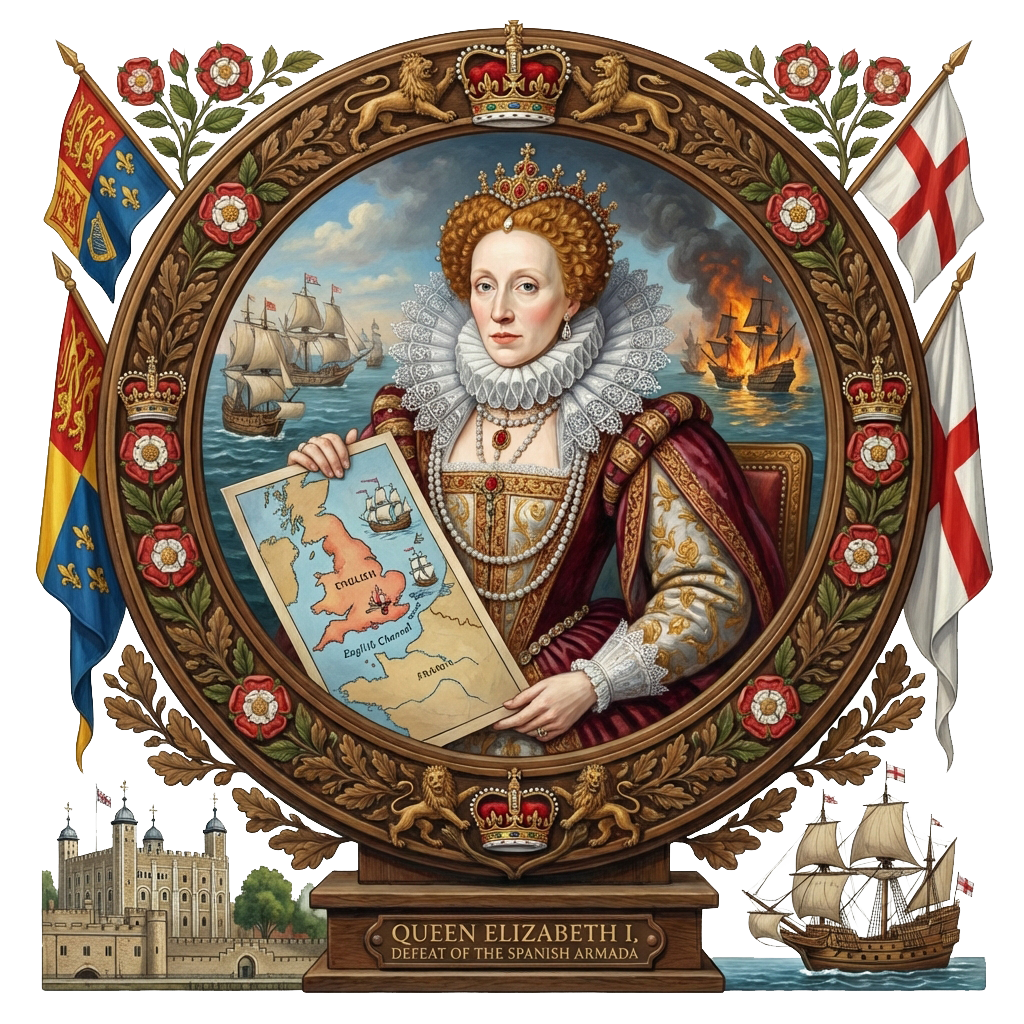
In foreign affairs, Elizabeth was a cautious but brilliant diplomat who masterfully played rival European powers against one another. Her defining moment came in 1588 when the English navy, aided by fierce storms, defeated the invading Spanish Armada sent by King Philip II. This monumental victory cemented England's reputation as a rising global and naval power.
Never marrying, she cultivated the persona of the 'Virgin Queen' who was wedded solely to her nation. By the time of her death in 1603, Elizabeth had transformed England from a marginalized, fractured kingdom into a prosperous, confident, and unified world power, leaving a legacy that would endure for centuries.
Portrayal characteristics
Saved editorial descriptions used for the reconstruction; these are not authenticated statements by the depicted person.
- Pragmatic
- Charismatic
- Resilient
- Cautious
- Independent
- Astute
Images & artwork 5



Connections
Suleiman the Magnificent
Diplomatic Allies
Elizabeth I sought an alliance and trade agreements with the Ottoman Empire to counter the power of Catholic Spain.
The two monarchs were contemporaries for several years, and Elizabeth's court established the Levant Company to facilitate trade with the Ottomans, marking a period of Anglo-Ottoman cooperation against the Habsburgs.
Shah Abbas the Great
Diplomatic Contemporaries
Shah Abbas I sought a strategic alliance with Queen Elizabeth I to counter the power of the Ottoman Empire.
Through the mediation of the Sherley brothers, Abbas attempted to coordinate military and trade efforts with England. This era marked the beginning of significant Persian-European diplomacy, aimed at opening a second front against their mutual Ottoman rivals.
Suleiman the Magnificent
Diplomatic Allies
Elizabeth I and Suleiman (and his immediate successors) shared a mutual enmity toward the Spanish Empire, leading to diplomatic correspondence.
The two powers explored a 'Protestant-Islamic' alliance against Catholic Spain, facilitating trade and political cooperation that helped both nations resist Habsburg hegemony in Europe.
Known for
- Defeat of the Spanish Armada
- Elizabethan Religious Settlement
- Fostering the English Renaissance
- Establishing English naval dominance
- The Virgin Queen persona
Episodes featuring or mentioning this figure
No eligible published episode featuring this figure is currently in the library.