



Shapur I
Second Sasanian King of Kings who consolidated imperial power and famously defeated three Roman emperors.
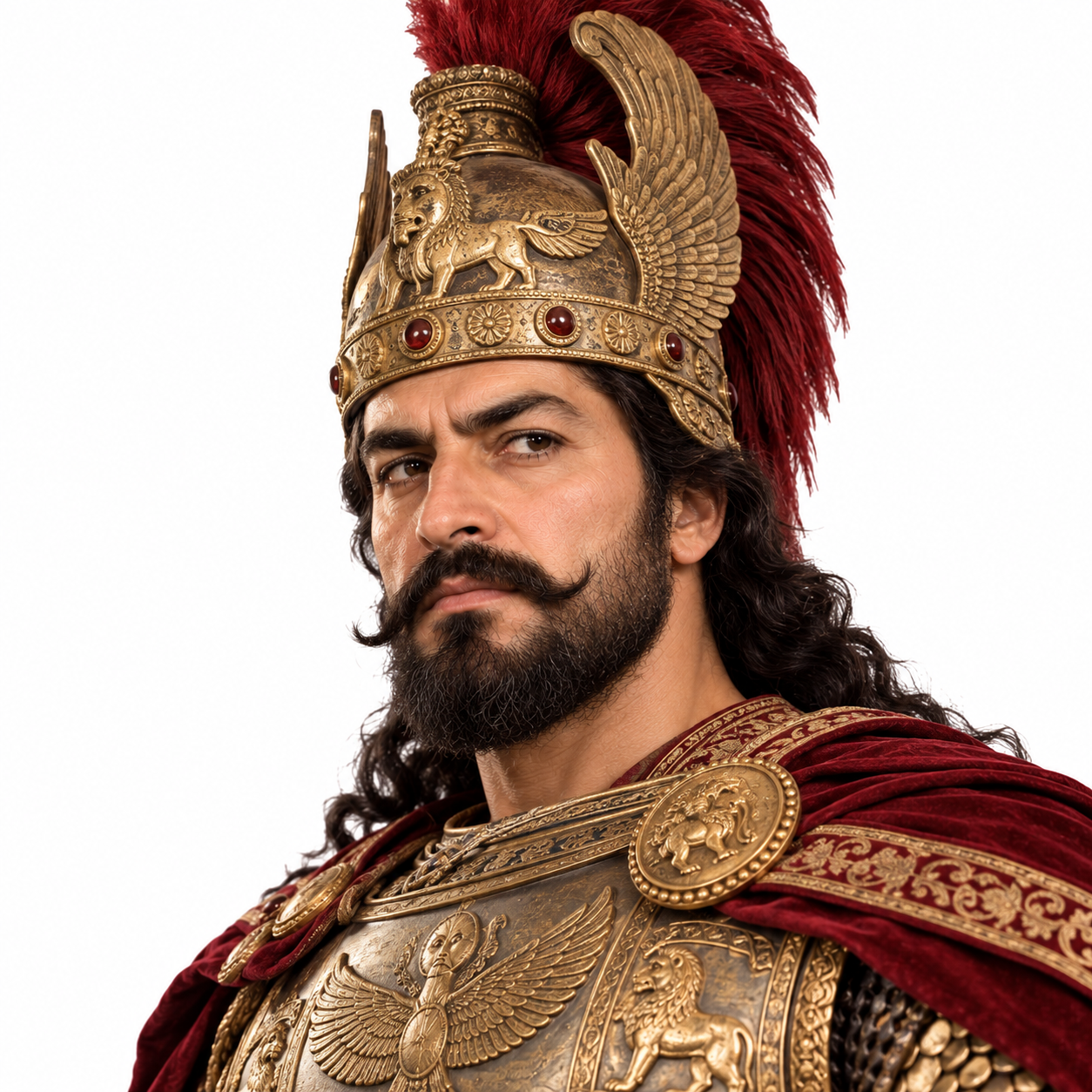
At a glance
- Born
- c. 215 CE
- Died
- 270 CE
- Era classification
- Ancient
- Occupation
- King / Queen / Emperor
- Homeland
- Sasanian Empire
- Period
- 3rd century CE
- Field
- Politics, Leadership & War
- Language
- Middle Persian
- Religion
- Zoroastrianism
- Gender
- male
Biography
Shapur I was the second King of Kings (Shahanshah) of the Sasanian Empire, ruling from c. 240 until his death in 270 CE. The son and successor of Ardashir I, the founder of the Sasanian dynasty, Shapur served as co-regent during the final years of his father's reign. Upon assuming sole rule, he set out to consolidate central authority over the Iranian plateau, reorganize provincial governance, and secure imperial frontiers against Roman pressure to the west and Kushan authority to the east.
His reign was defined militarily by three major campaigns against the Roman Empire. In 244 CE, Sasanian forces halted an invasion by Emperor Gordian III at the Battle of Misiche, compelling his successor, Philip the Arab, to sue for peace, pay a substantial indemnity, and cede control of Armenia. Shapur campaigned again in the 250s, capturing Antioch, and achieved an unprecedented triumph in 260 CE at the Battle of Edessa, where he defeated and captured Emperor Valerian—marking the first time a Roman emperor was taken alive by a foreign adversary. These victories were immortalized in the monumental trilingual inscription at the Ka'ba-ye Zartosht and rock reliefs at Naqsh-e Rustam and Bishapur.
Following these victories, Shapur directed the resettlement of thousands of Roman prisoners of war, including skilled engineers, architects, and artisans, across Khuzestan and Fars. These deportees were integrated into major infrastructure programs, including the construction of civic structures, hydraulic projects like the Band-e Kaisar at Shushtar, and newly founded imperial cities such as Bishapur and Gundeshapur (Weh-Andiok-Shapur), which later evolved into renowned intellectual and medical centers.
While Shapur adhered to Zoroastrianism and founded numerous sacred fires, he maintained a remarkably pragmatic and tolerant domestic policy toward religious minorities. He permitted Jewish, Christian, and Buddhist communities to practice their faiths without systematic persecution and granted imperial patronage and safe conduct to the religious visionary Mani, the founder of Manichaeism. Shapur's policies established the Sasanian Empire as a durable, highly organized administrative superpower on equal footing with Rome.
Portrayal characteristics
Saved editorial descriptions used for the reconstruction; these are not authenticated statements by the depicted person.
- Strategic military planner
- Pragmatic administrator
- Patron of urban engineering
- Religiously pluralistic
- Imperial state-builder
Images & artwork 2

Known for
- Defeating and capturing Roman Emperor Valerian at the Battle of Edessa
- Extracting humiliating concessions and tribute from Roman Emperor Philip the Arab
- Founding the imperial cities of Bishapur and Gundeshapur
- Authoring the trilingual Res Gestae Divi Saporis inscription at Ka'ba-ye Zartosht
- Extending royal protection and patronage to the prophet Mani
Episodes featuring or mentioning this figure
No eligible published episode featuring this figure is currently in the library.