



Norbert Wiener
American mathematician and philosopher who founded cybernetics and pioneered the study of feedback systems.

At a glance
- Born
- 1894 CE
- Died
- 1964 CE
- Era classification
- Modern
- Occupation
- Mathematician
- Homeland
- United States
- Period
- 20th Century
- Field
- Mathematics & Logic
- Language
- English
- Religion
- Agnostic
- Gender
- male
Biography
Norbert Wiener was an American mathematician and philosopher celebrated as the father of cybernetics. Born in Columbia, Missouri, as a recognized child prodigy under the intense tutelage of his father, Wiener graduated from Tufts College at age fourteen and earned his Ph.D. in mathematical logic from Harvard University at the remarkably young age of eighteen. He subsequently traveled to Europe, where he studied under luminaries such as Bertrand Russell at Cambridge and David Hilbert at Göttingen, refining his rigorous approach to logic and analysis.
In 1919, Wiener joined the faculty of the Massachusetts Institute of Technology (MIT), where he spent the remainder of his academic career. During the 1920s and 1930s, he made profound contributions to pure and applied mathematics, particularly in harmonic analysis, potential theory, and stochastic processes. His mathematical formalization of one-dimensional Brownian motion, now known as the Wiener process, became a cornerstone of modern probability theory, statistical mechanics, and quantitative finance.
During World War II, Wiener's work on antiaircraft fire control systems led him to analyze communication, feedback, and information processing. This interdisciplinary research culminated in the publication of his landmark 1948 book, 'Cybernetics: Or Control and Communication in the Animal and the Machine.' By synthesizing concepts across mathematics, engineering, biology, and cognitive science, Wiener established a unified framework for understanding control mechanisms in both living organisms and artificial systems.
In his later years, Wiener became deeply concerned with the ethical, philosophical, and societal ramifications of automation and artificial intelligence. In works like 'The Human Use of Human Beings' and 'God & Golem, Inc.,' he warned against the perils of autonomous weapon systems and the economic displacement of workers, advocating for technological developments that preserve human dignity and freedom.
Portrayal characteristics
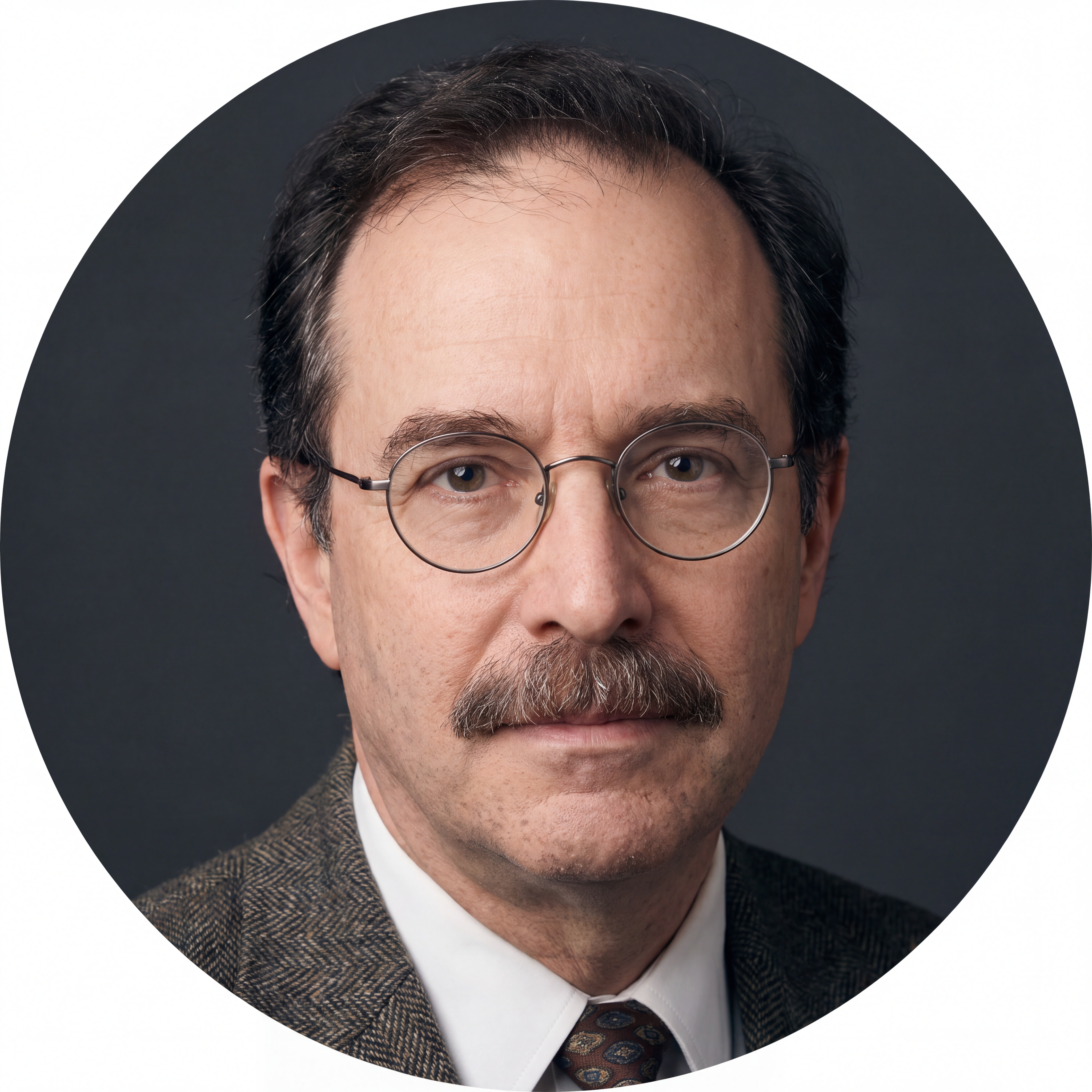
Saved editorial descriptions used for the reconstruction; these are not authenticated statements by the depicted person.
- Prodigious intellect
- Interdisciplinary thinker
- Socially conscious
- Visionary
- Philosophically minded
Images & artwork 2
Known for
- Founding the field of cybernetics
- Development of the Wiener process (mathematical Brownian motion)
- Pioneering work in feedback loops and control theory
- Invention of the Wiener filter for signal processing
- Early philosophical and ethical critiques of automation and AI
Episodes featuring or mentioning this figure
No eligible published episode featuring this figure is currently in the library.