



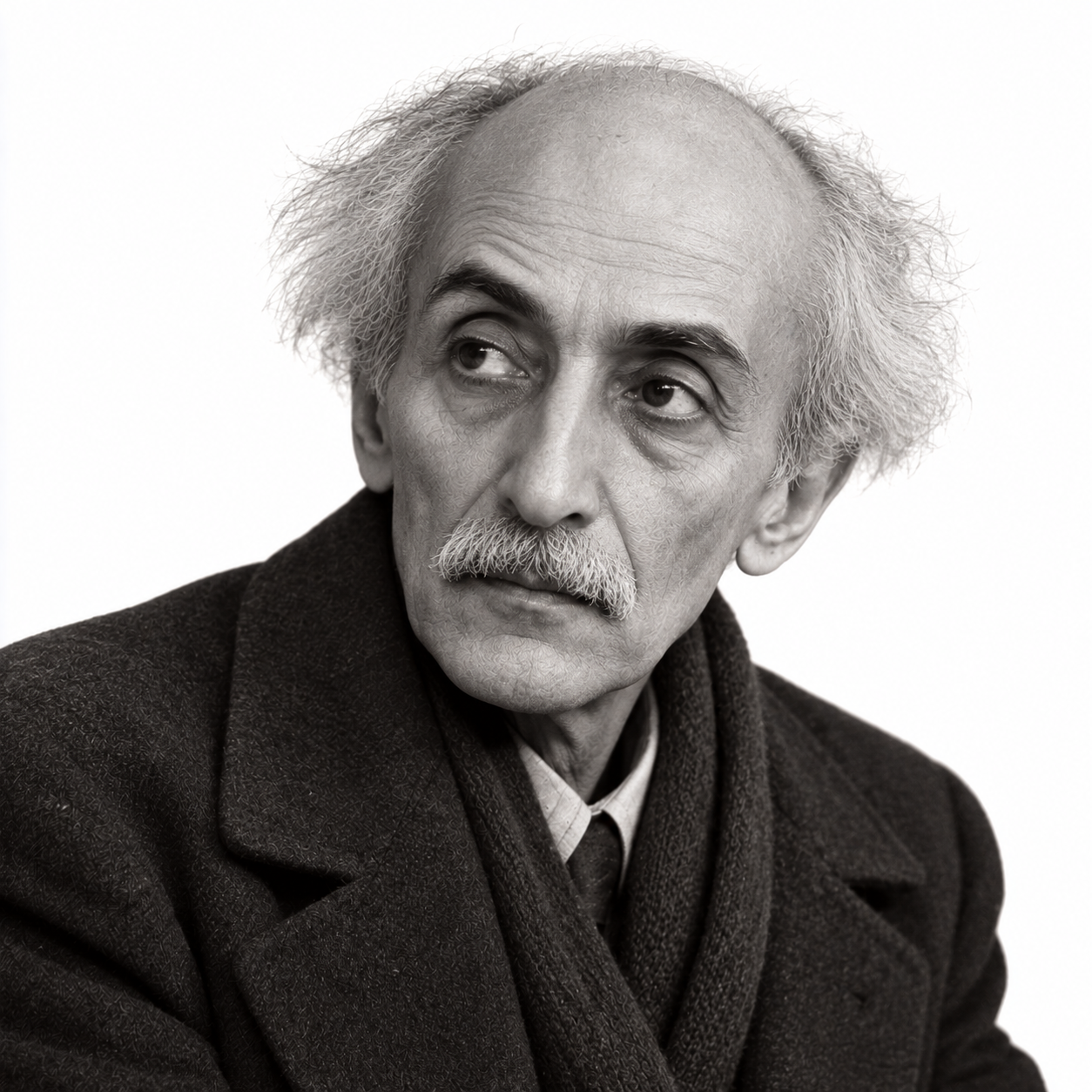
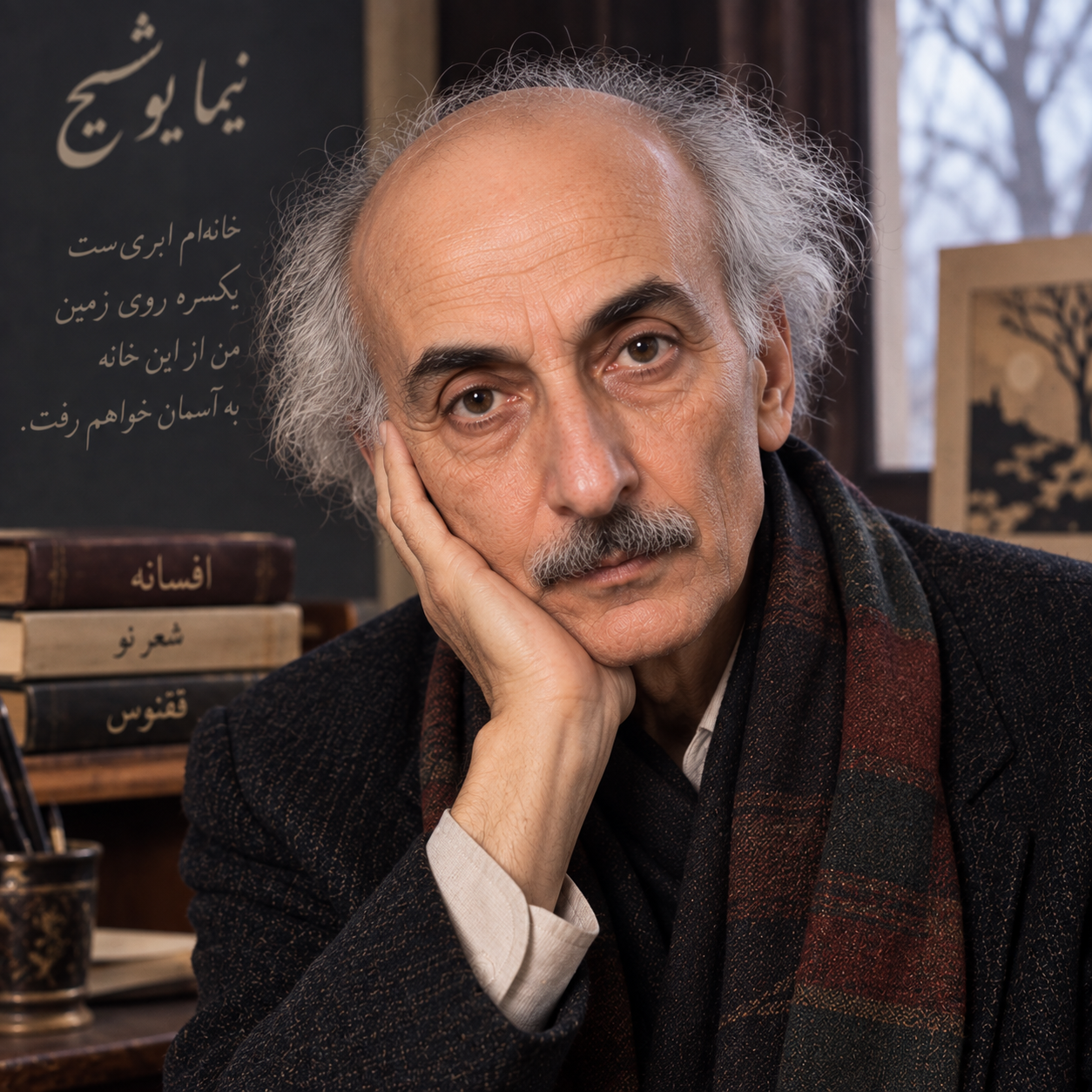
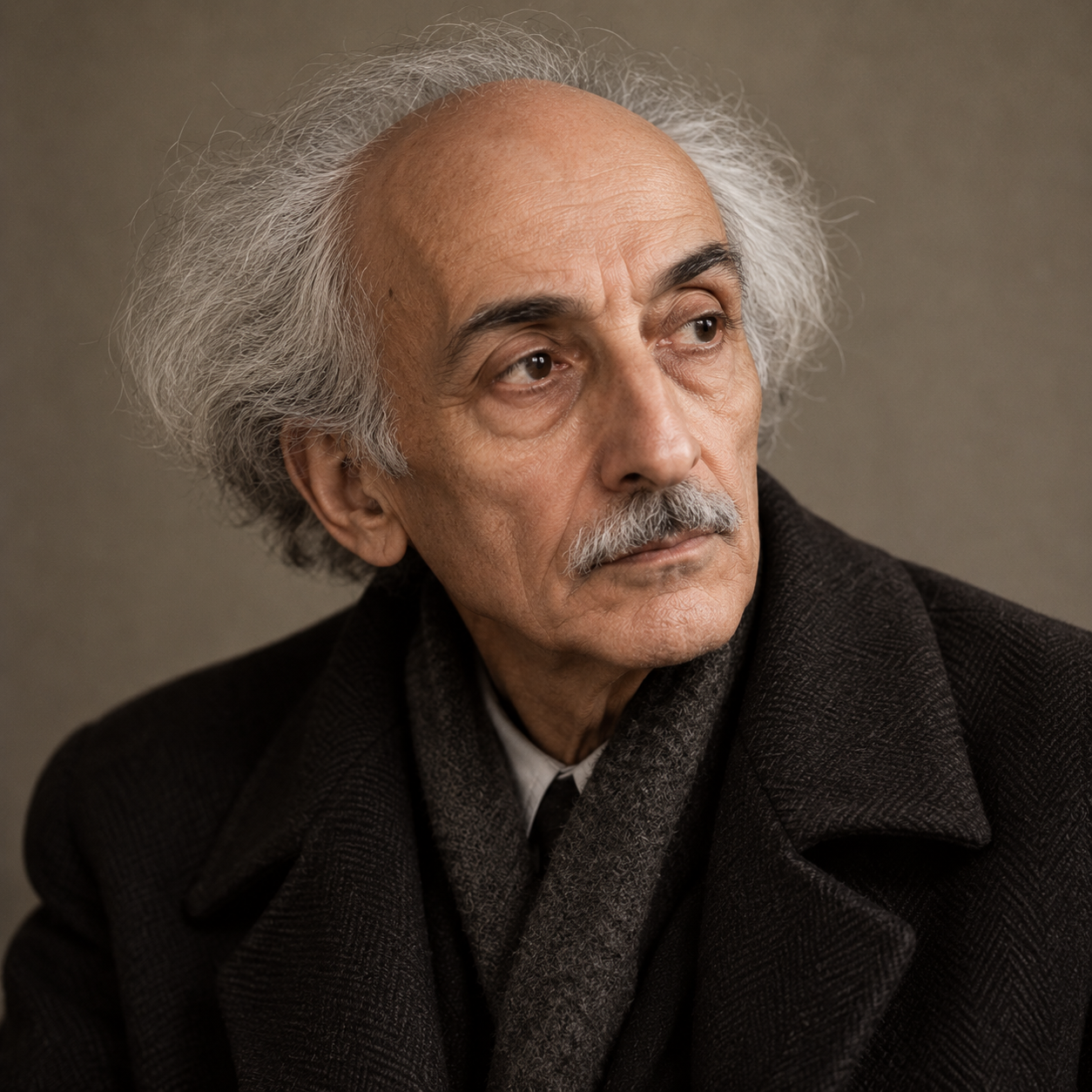
Nima Yooshij
Pioneering Iranian poet who founded modern Persian verse by breaking free from rigid classical prosodic conventions.
At a glance
- Born
- 1897 CE
- Died
- 1960 CE
- Era classification
- Modern
- Occupation
- Poet
- Homeland
- Iran
- Period
- 20th century
- Field
- Poetry, Art & Ethics
- Language
- Persian
- Religion
- Islam
- Gender
- male
Biography
Born Ali Esfandiari in the village of Yush in Mazandaran province, Nima Yooshij grew up immersed in the rural life and landscape of northern Iran's Alborz mountains. He moved to Tehran for his formal education at the Saint Louis school, a French Catholic institution, where he was exposed to French literature, Romanticism, and modern European poetic forms. This encounter with Western verse provided him with alternative frameworks that contrasted sharply with the strict formal conventions that had governed Persian poetry for over a millennium.
In 1921, Nima published his seminal poem 'Afsaneh' (Myth), widely regarded as the cornerstone of modern Persian poetry (She'r-e No). Rather than abandoning traditional Persian prosody altogether, Nima adapted the classical quantitative meter (aruz) by varying line lengths and liberating rhyme from fixed intervals. His new structural paradigm, known as the Nimaic form (She'r-e Nimaa'i), prioritized imagery, organic rhythm, and subjective psychological experience over rigid hemistich uniformity, allowing poets to address contemporary social, political, and human realities.
Nima's radical departure from traditional aesthetics provoked intense criticism and mockery from established literary circles in Iran, who viewed his innovations as a degradation of classical heritage. Despite professional ostracism, financial hardship, and political suspicion under the Pahlavi regime, he remained steadfast in his artistic mission. Through theoretical writings, letters, and collections such as 'Harfha-ye Hamsayeh' (Neighbor's Words), he articulated a comprehensive philosophy of modern poetic consciousness.
By the time of his death from pneumonia in 1960, Nima's formal and conceptual reforms had permanently transformed Persian literature. His pioneering work paved the way for subsequent generations of iconic modern Iranian poets, including Ahmad Shamlou, Mehdi Akhavan-Sales, Forough Farrokhzad, and Sohrab Sepehri. Today, he is universally recognized as the father of modern Persian poetry.
Portrayal characteristics
Saved editorial descriptions used for the reconstruction; these are not authenticated statements by the depicted person.
- Innovative
- Nonconformist
- Resilient
- Introspective
- Observant
Images & artwork 3
Known for
- Father of modern Persian poetry (She'r-e No)
- Developing the flexible Nimaic poetic form
- Authoring the landmark modernist poem 'Afsaneh'
- Challenging rigid classical prosody (aruz)
- Mentoring and inspiring a generation of Iranian modernist poets
Episodes featuring or mentioning this figure
No eligible published episode featuring this figure is currently in the library.