



Hugo Grotius
Dutch humanist and jurist whose seminal works laid the foundations for modern international and maritime law.
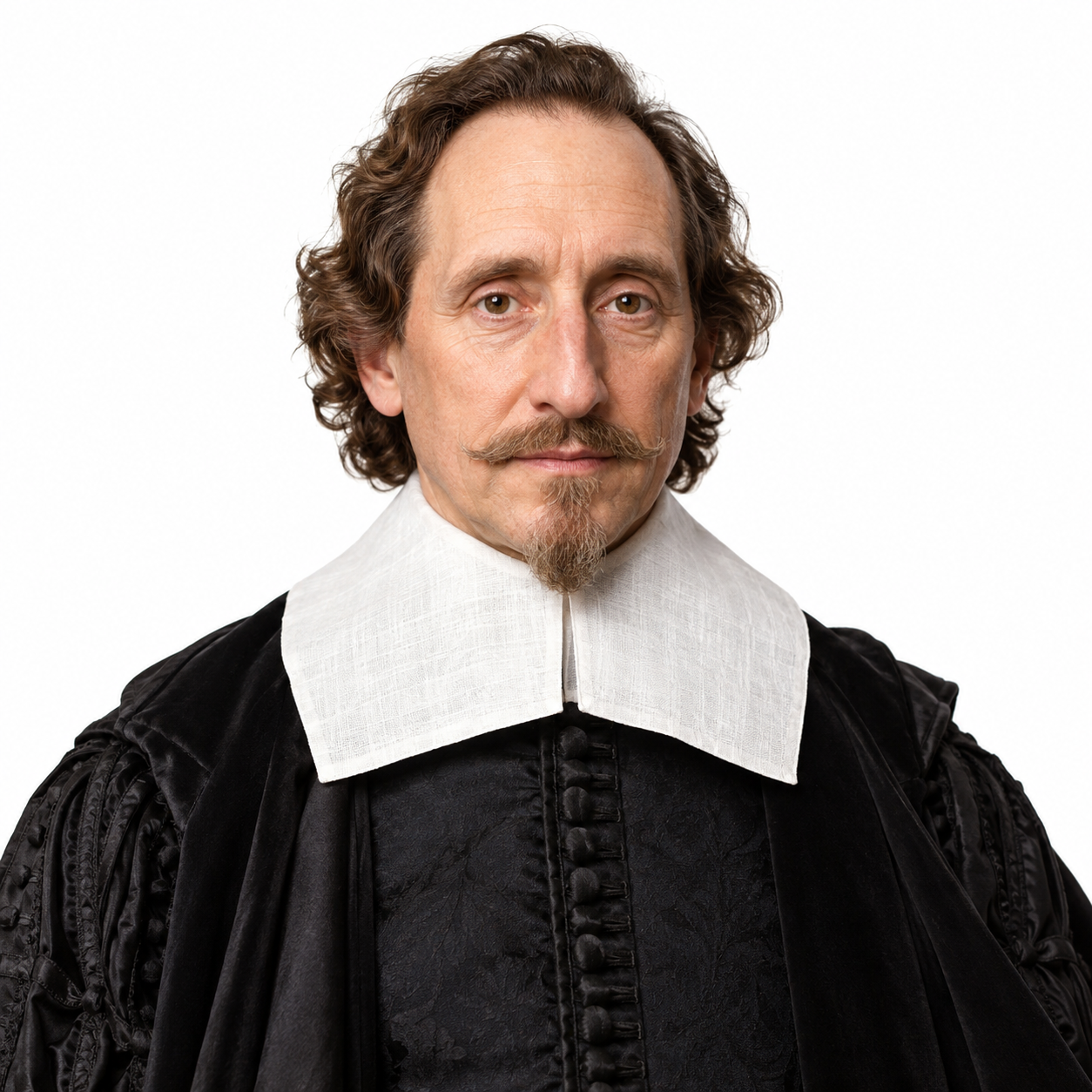
At a glance
- Born
- 1583 CE
- Died
- 1645 CE
- Era classification
- Modern
- Occupation
- Philosopher
- Homeland
- Dutch Republic
- Period
- 17th Century
- Field
- Philosophy & Ideology
- Language
- Dutch
- Religion
- Christianity (Arminian / Protestant)
- Gender
- male
Biography
Hugo Grotius was born in Delft during the height of the Dutch Golden Age. Recognized as a child prodigy, he entered Leiden University at the age of eleven and published his first scholarly work at sixteen. Grotius quickly established himself as a brilliant legal scholar, humanist, and historian, entering public service and advising prominent Dutch statesmen, including Johan van Oldenbarnevelt.
His rising career was abruptly halted by religious and political upheaval within the Dutch Republic between orthodox Calvinists (Counter-Remonstrants) and the more moderate Arminians (Remonstrants). Siding with the Remonstrants, Grotius was arrested in 1618 and sentenced to life imprisonment in Loevestein Castle. In 1621, with the daring assistance of his wife Maria van Reigersberch, he famously escaped hidden inside a chest of books and fled to Paris.
In exile, Grotius authored his most influential masterwork, 'De Jure Belli ac Pacis' ('On the Law of War and Peace', 1625). The treatise formulated a comprehensive system of international law based on natural law rather than divine revelation, arguing that universally binding principles of justice govern sovereign states in both peace and warfare. Earlier, his 1609 work 'Mare Liberum' established the enduring principle of freedom of the seas.
Later in life, Grotius served as the ambassador of Sweden to the Kingdom of France, playing a notable diplomatic role during the Thirty Years' War. Widely celebrated for systematizing international jurisprudence and promoting religious tolerance, Grotius remains recognized as one of the foundational thinkers of modern legal theory and political philosophy.
Portrayal characteristics
Saved editorial descriptions used for the reconstruction; these are not authenticated statements by the depicted person.
- Intellectually precocious
- Erudite
- Diplomatic
- Systematic
- Tolerant
Images & artwork 4
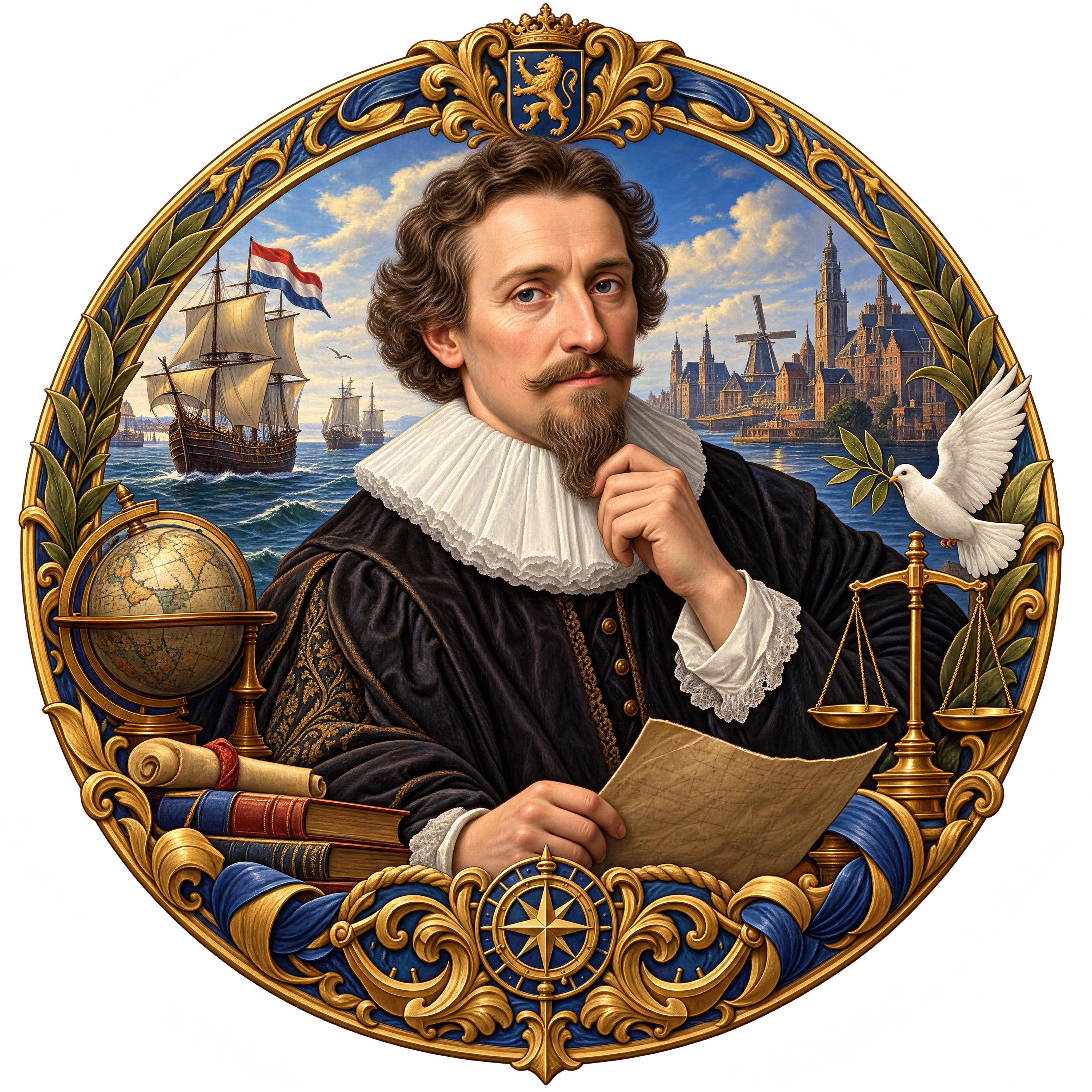
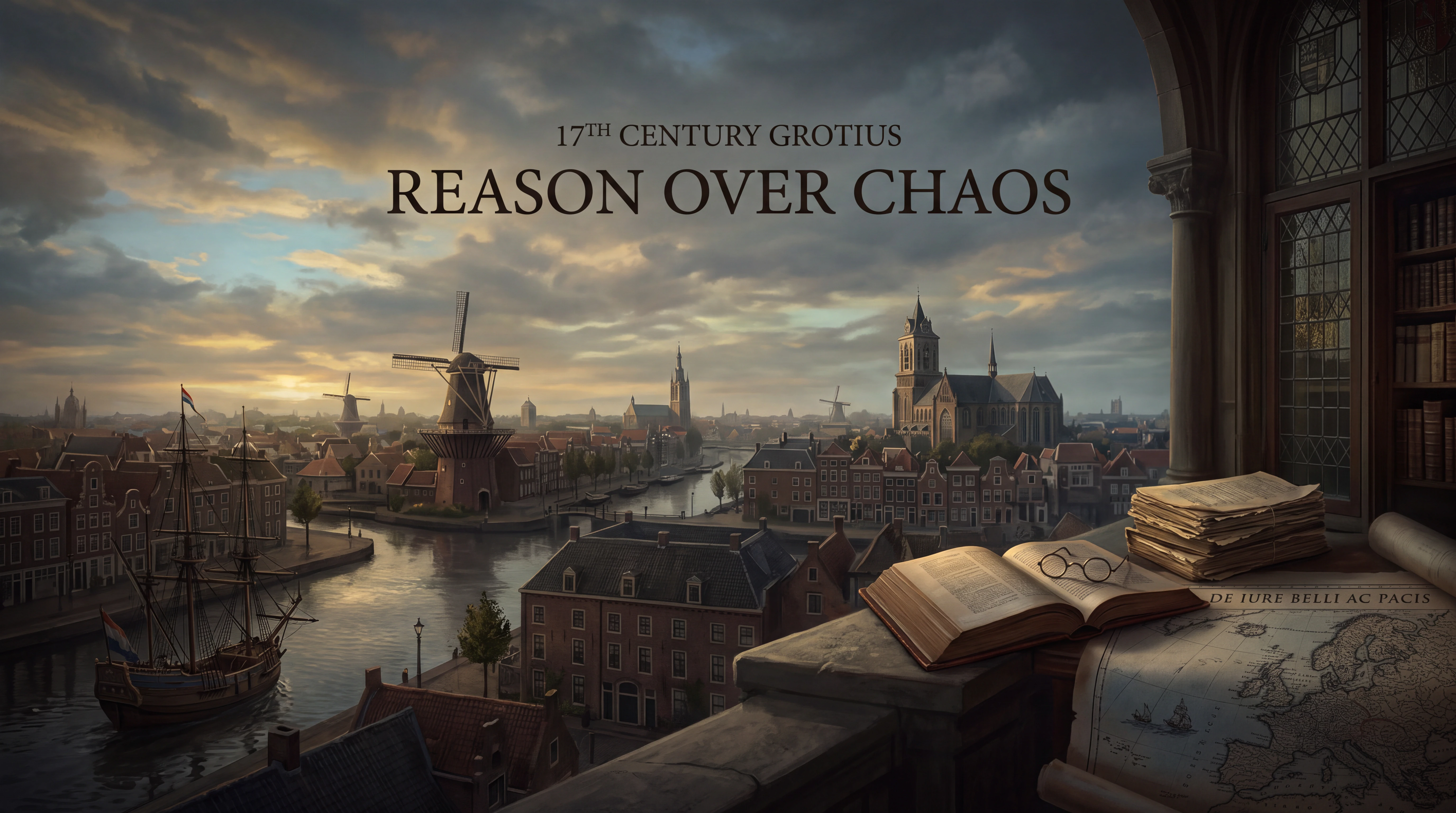
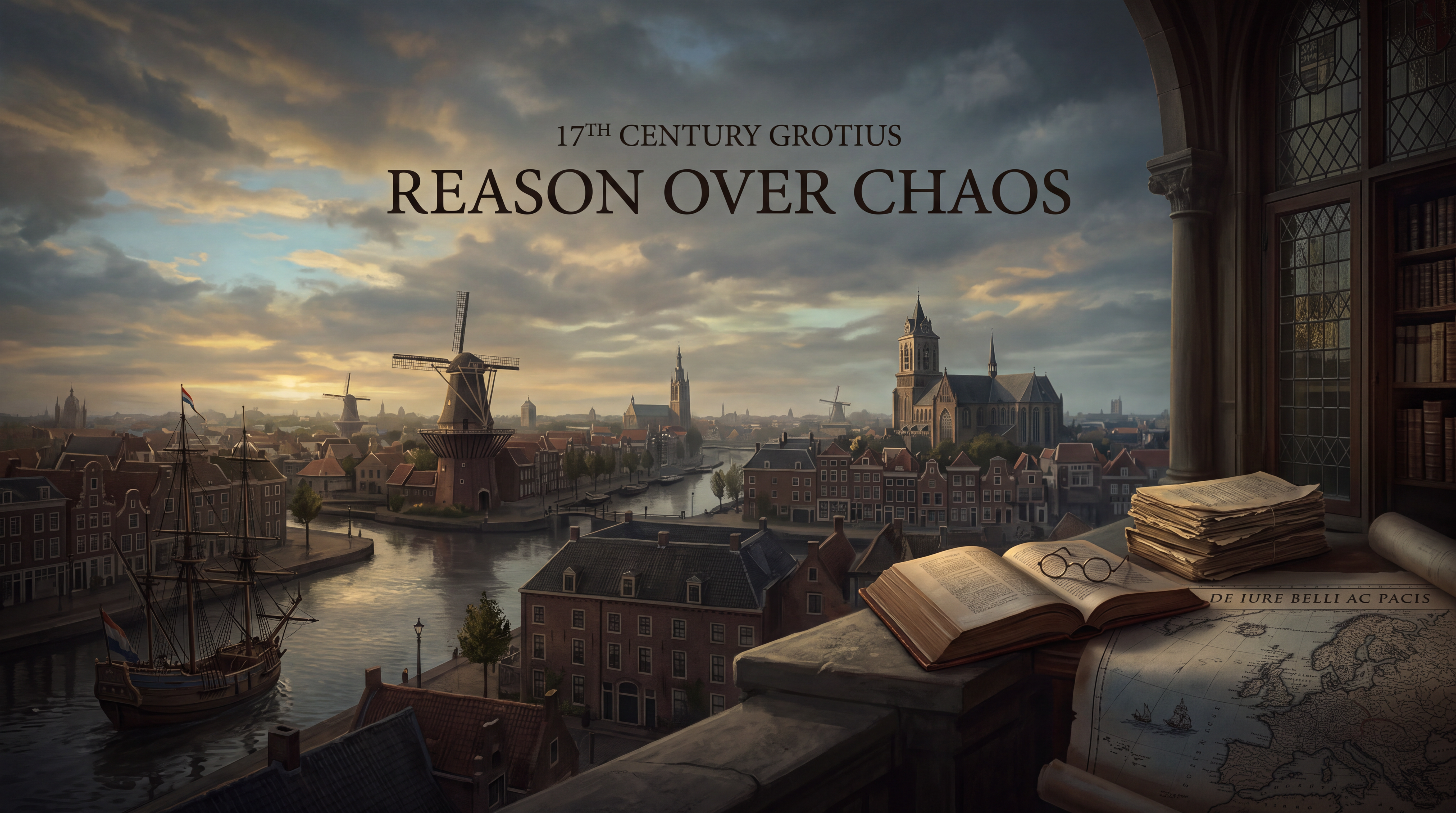
Known for
- De Jure Belli ac Pacis (On the Law of War and Peace)
- Mare Liberum (Freedom of the Seas doctrine)
- Founding modern international law
- Secularization of natural law theory
- Advocacy for Christian ecumenism and religious tolerance
Episodes featuring or mentioning this figure
No eligible published episode featuring this figure is currently in the library.