



Grigori Perelman
Russian mathematician who solved the century-old Poincaré conjecture and Thurston's geometrization conjecture.
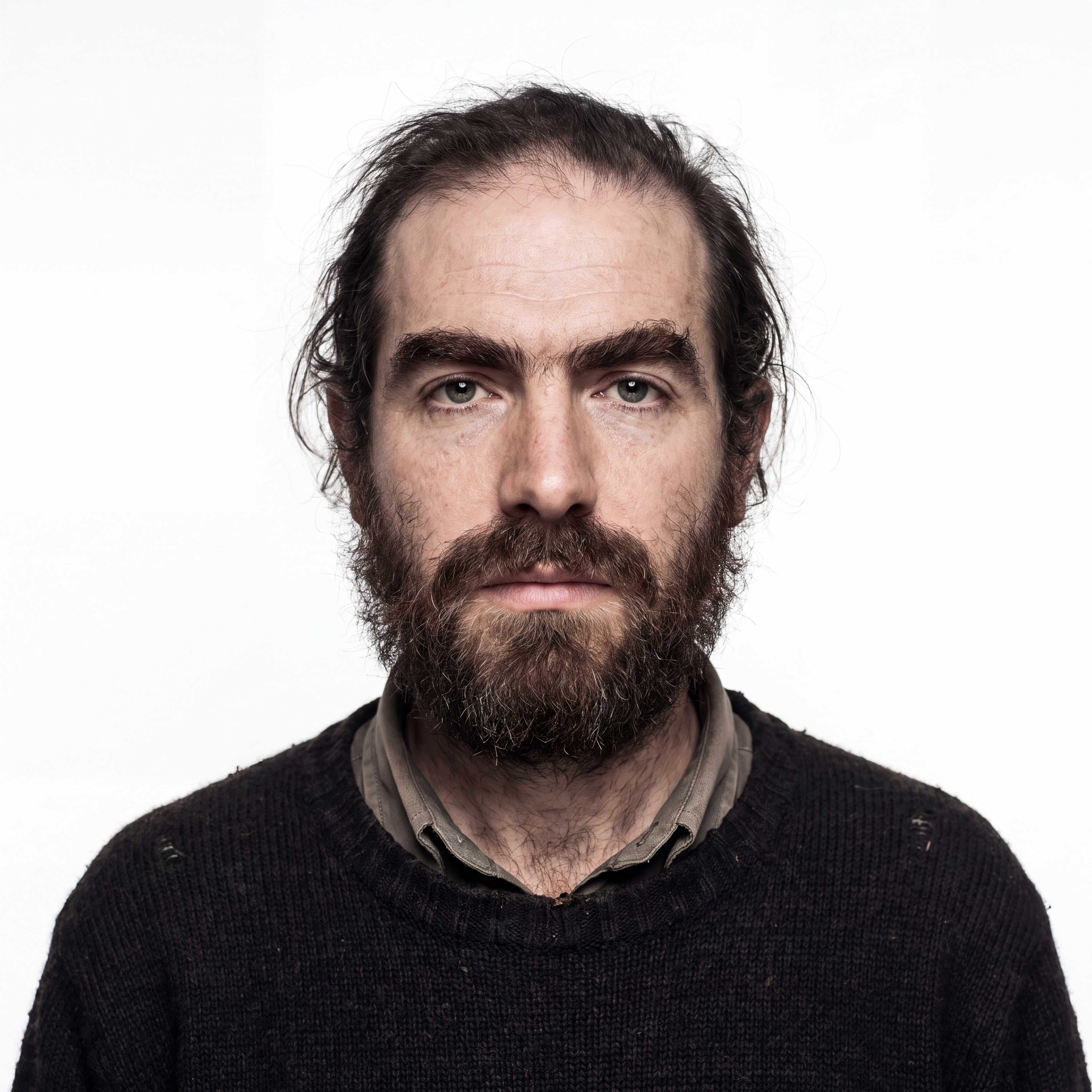
At a glance
- Born
- 1966 CE
- Era classification
- Modern
- Occupation
- Mathematician
- Homeland
- Russia
- Period
- Late 20th–21st century
- Field
- Mathematics & Logic
- Language
- Russian
- Religion
- Undisclosed
- Gender
- male
Biography
Grigori Yakovlevich Perelman was born on June 13, 1966, in Leningrad, Soviet Union (now Saint Petersburg, Russia). Displaying extraordinary mathematical talent early in life, he attended Leningrad's Specialized Mathematics School No. 239. In 1982, as a high school student, he achieved a perfect score and won a gold medal at the International Mathematical Olympiad in Budapest. He subsequently enrolled in the School of Mathematics and Mechanics at Leningrad State University, completing his doctoral degree before joining the St. Petersburg Department of the Steklov Institute of Mathematics.
During the late 1980s and early 1990s, Perelman established a strong reputation in differential geometry, particularly through his work on Aleksandrov spaces with curvature bounded below. In 1994, while holding research fellowships at institutions in the United States, including the Courant Institute and the University of California, Berkeley, he proved the Soul Conjecture in Riemannian geometry using a remarkably concise and elegant argument. Despite receiving prestigious academic offers in the United States, he opted to return to the Steklov Institute in Russia in 1995 to work in relative isolation on deep open problems in geometric analysis.
Between November 2002 and July 2003, Perelman published a series of three groundbreaking preprints on the arXiv repository outlining a proof of William Thurston's geometrization conjecture, which subsumed the famous Poincaré conjecture proposed in 1904. Rather than using traditional topological methods, he extended Richard S. Hamilton's program of Ricci flow with surgery, overcoming longstanding analytical obstacles regarding finite-time singularities. Teams of international mathematicians spent years analyzing and verifying his work, confirming that Perelman had indeed resolved one of the most prominent open problems in mathematics.
Following the verification of his proof, Perelman largely withdrew from professional mathematics and the public sphere. In 2006, he declined the Fields Medal, stating that the prize was irrelevant to him if the proof was correct. In 2010, he similarly turned down the Clay Mathematics Institute's one-million-dollar Millennium Prize, stating that his contribution was no greater than Hamilton's and expressing ethical dissatisfaction with the organized mathematical community.
Portrayal characteristics
Saved editorial descriptions used for the reconstruction; these are not authenticated statements by the depicted person.
- Reclusive
- Rigorous
- Ascetic
- Principled
- Intellectually independent
Images & artwork 1
Known for
- Proof of the Poincaré conjecture
- Proof of Thurston's geometrization conjecture
- Proof of the Soul Conjecture
- Advancements in Ricci flow with surgery
- Declining the Fields Medal and Millennium Prize
Episodes featuring or mentioning this figure
No eligible published episode featuring this figure is currently in the library.