



Al-Biruni
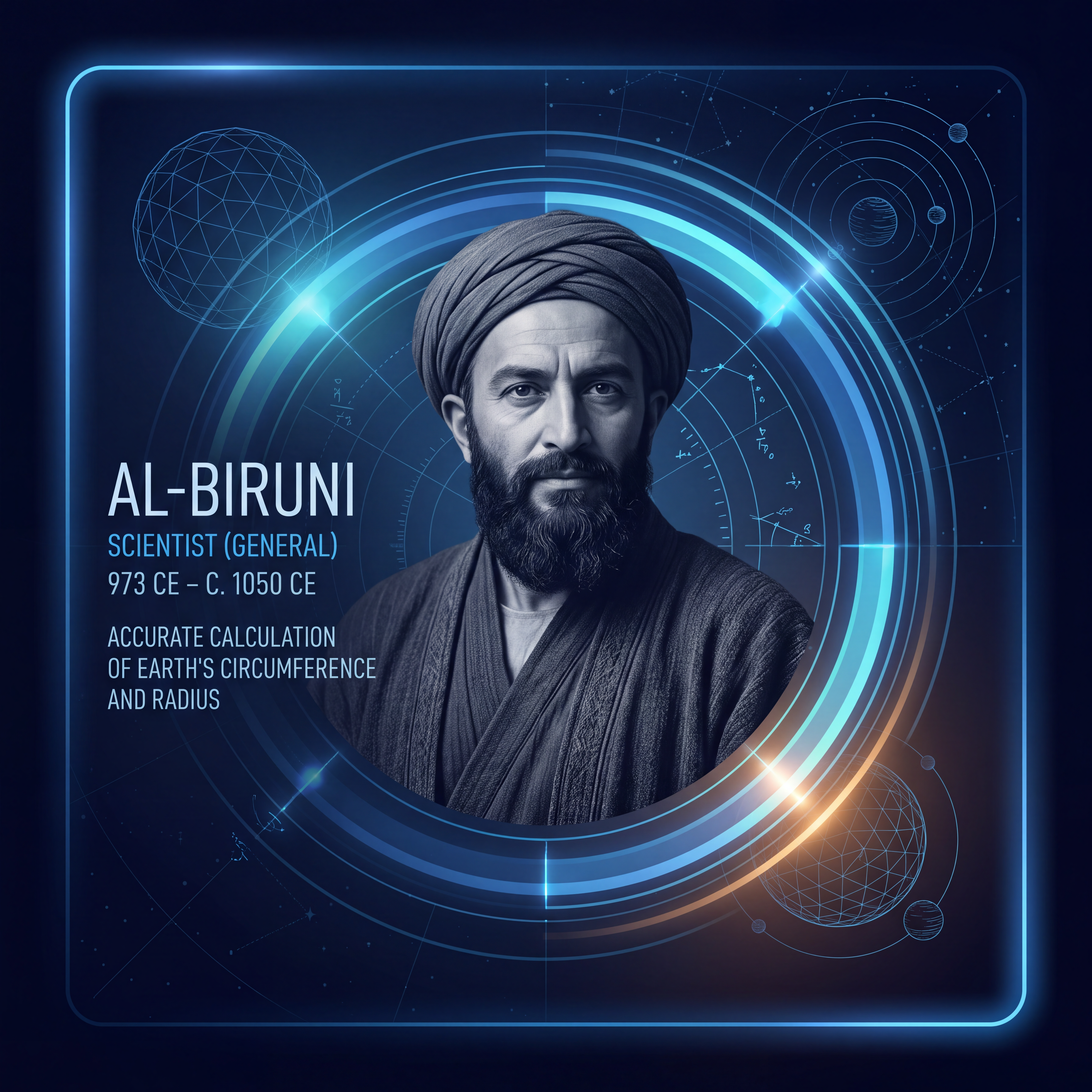
Brilliant polymath who pioneered geodesy, comparative anthropology, and accurately calculated the Earth's radius.
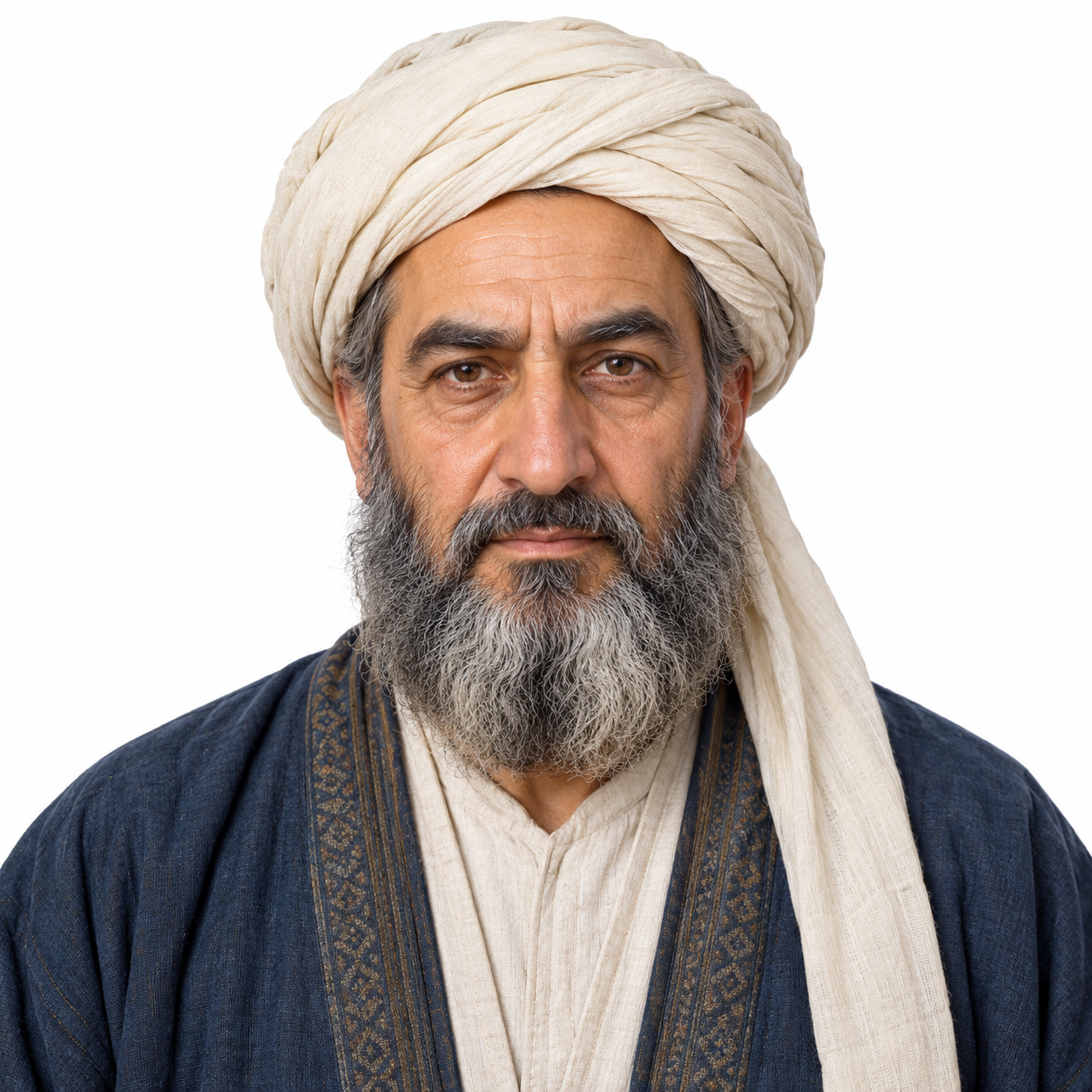
At a glance
- Born
- 973 CE
- Died
- c. 1050 CE
- Era classification
- Medieval
- Occupation
- Scientist (General)
- Homeland
- Khwarazm
- Period
- Islamic Golden Age
- Field
- Science & Innovation
- Language
- Arabic
- Religion
- Islam
- Gender
- male
Biography
Abu Rayhan al-Biruni was born in 973 CE in Kath, Khwarazm (modern-day Uzbekistan). From a young age, he showed extraordinary aptitude in sciences and languages, studying mathematics, astronomy, and medicine under eminent scholars of the Islamic Golden Age. Political instability in Central Asia forced him to move frequently among various regional courts, including the Samanids, Ziyarids, and eventually the Ghaznavids under Sultan Mahmud of Ghazni.
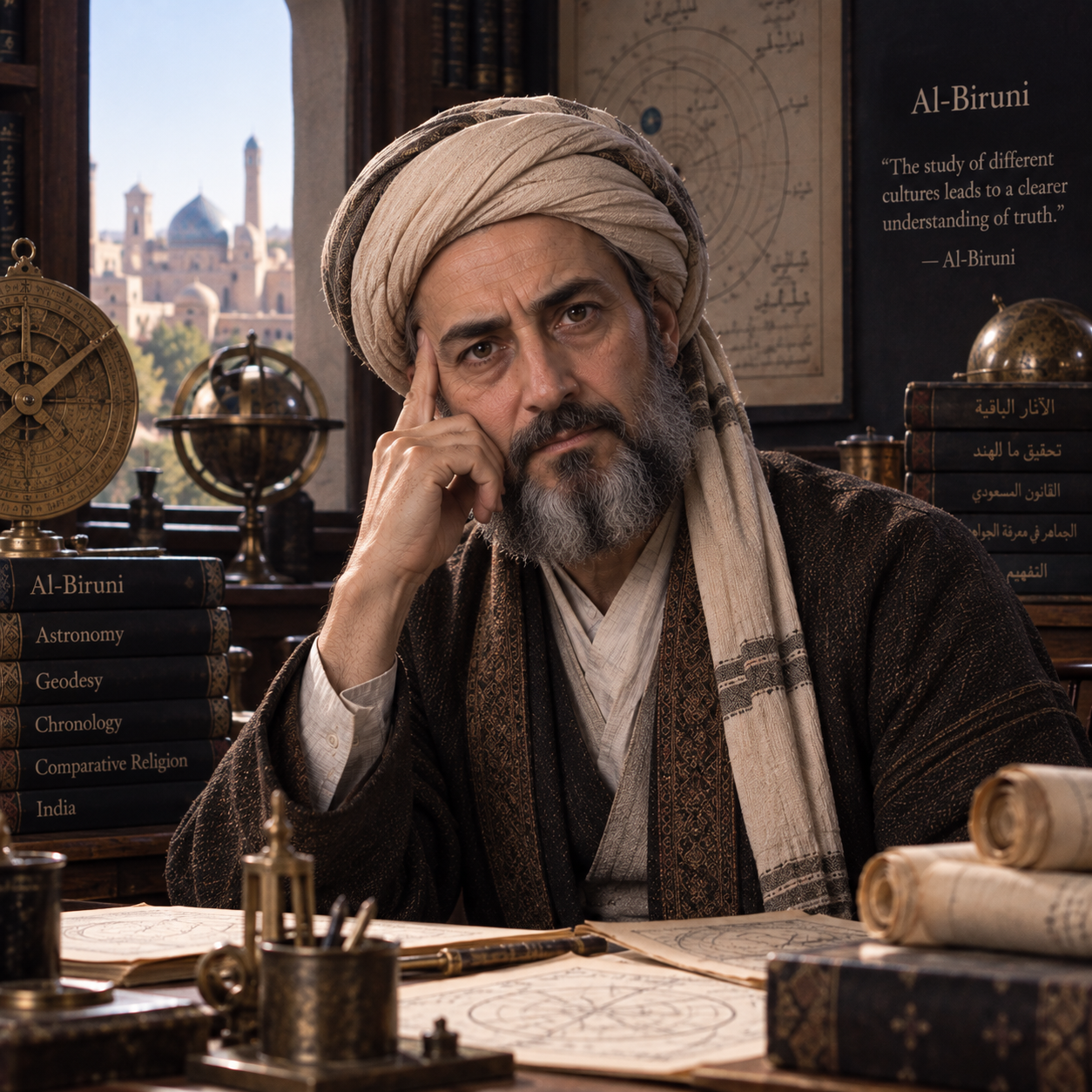
While affiliated with the Ghaznavid court, Al-Biruni accompanied Sultan Mahmud on expeditions into the Indian subcontinent. Unlike many conquerors of his era, Al-Biruni immersed himself in Indian culture, mastered Sanskrit, and conducted meticulous ethnographic, religious, and philosophical studies. This resulted in his masterpiece 'Kitab al-Hind' (Indica), a seminal and remarkably objective work that earned him recognition as the father of Indology and a pioneer of comparative religion and anthropology.
Al-Biruni's contributions to the physical and exact sciences were equally monumental. Using innovative trigonometric calculations from a mountaintop in Nandana (modern-day Pakistan), he computed the Earth's radius to within a fraction of a percent of modern satellite measurements. He authored foundational treatises in astronomy ('Al-Qanun al-Mas'udi'), pharmacology, and mineralogy, measuring specific gravities of numerous metals and gems with unprecedented empirical precision.
Characterized by his insistence on objective inquiry, repeatable experimentation, and intellectual honesty, Al-Biruni stood as one of the most versatile and forward-thinking minds of medieval world history. He passed away around 1050 CE in Ghazni, leaving behind an encyclopedic legacy that bridged civilizations and fundamentally advanced the course of global science.
Portrayal characteristics
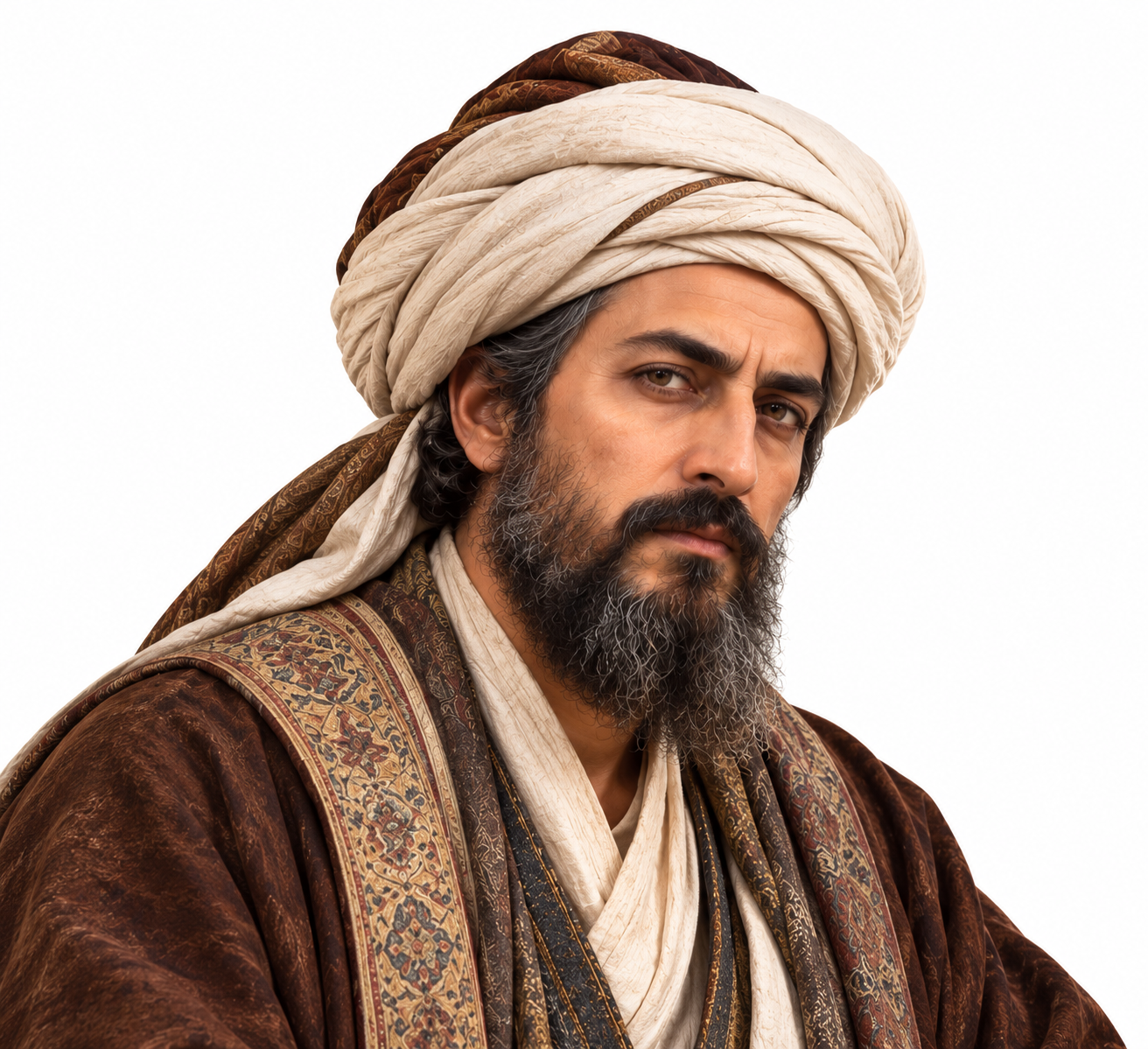
Saved editorial descriptions used for the reconstruction; these are not authenticated statements by the depicted person.
- Empirical
- Intellectually Rigorous
- Polymathic
- Objective
- Inquisitive
- Methodical
Images & artwork 6


Known for
- Accurate calculation of Earth's circumference and radius
- Founding the field of Indology with 'Kitab al-Hind'
- Pioneering geodesy and specific gravity measurements
- Comprehensive astronomical encyclopedia 'Al-Qanun al-Mas'udi'
- Advancing the experimental scientific method
Episodes featuring or mentioning this figure
No eligible published episode featuring this figure is currently in the library.